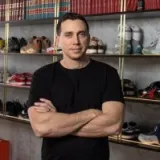
Simon Beard is an entrepreneur focused on ecommerce and consumer brands. Beard shares practical views on scaling online retail, creator-led marketing and using AI to improve business operations.
Simon Beard is most useful for practical ecommerce operating advice on scaling, creator-led distribution, TikTok Shop and AI operations.
Best for
Consumer brands already doing a few million a year wanting product economics, channel mix and expansion advice.
Not for
B2B software or services firms with modest budgets, and brands below the stated revenue threshold.
Key takeaways
Beard replaced a costly Magento site with Shopify, questioning custom systems kept due to sunk cost.
For TikTok Shop, Beard recommends focusing on hero products and inventory because viral demand can fade.
Beard says AI tools help bridge the gap between business knowledge and code.
Check first: Confirm price, commission, contract terms and recent follower demographics before contacting.
Main ideas
Distribution range has replaced product range · TikTok Shop behaves like a power law: hold a narrow catalogue deep · Rebuild rather than repair: the sunk-cost trap is the expensive mistake
Simon Beard is an entrepreneur whose public posts focus on ecommerce, consumer brands, creator-led distribution and AI in business operations.
They turn operating experience into practical arguments: replace technology when it no longer fits, connect business knowledge with software skills, and use creator content and distribution to grow a product.
They refer to building Culture Kings and describe current work involving Creator Army and One Life Club.
Readers can follow their work for specific examples and operating advice, including analysis of TikTok Shop and AI workflows.
Beard links concrete business episodes to decisions founders can act on.
They recount replacing a costly Magento site with Shopify, then question whether businesses should keep custom systems simply because they invested in them.
In another post, they explain how business edge cases can get lost between operators and developers, and argue that AI tools make it more practical for people to bridge that gap.
Their ecommerce analysis pairs clear recommendations with the reasoning behind them: for TikTok Shop, they recommend concentrating on hero products and inventory because viral demand can fade before replenishment arrives.
In their Toplux example, they give creator, sales and Amazon figures while noting that Amazon sales cannot be attributed to TikTok without the brand’s own analytics.
That distinction makes the analysis more useful.
Their posts also include commercial offers and recruitment, so readers should distinguish operating analysis from promotion.
Simon Beard writes about ecommerce, creator-led distribution and AI-run operations as an operator who has built consumer brands, most visibly Culture Kings.
Read more
Across their posts, they argue that retail leverage has shifted from what a brand stocks to how many creators, hooks and videos it puts into feeds, and from hiring people to run systems to using AI agents to decide faster.
They also favour disposal over protection: throw away expensive builds that no longer match current tools, even very recent ones.
Beard treats demonstrated, specific use of a tool as the only real credential and tests public claims by rebuilding the mechanism behind them.
Their commercial offers—audits, partnerships and a manufacturing-to-consumer founder search—all centre on content distribution and shared infrastructure.
Distribution range has replaced product range
Beard argues that most DTC brands are still playing an old game: pulling people onto a website, offering a wide range and letting them browse, even as the buying journey starts in the feed.
Read more
The advantage now comes not from how many products a brand carries but from how many creators, hooks, stories and pieces of content it puts in front of people.
They see a large affiliate network as a system for taking many shots, not a bet that every creator will win: nobody knows in advance which creator, hook or video will break out.
They also argue that measurement is too narrow: platform-attributed revenue misses demand created in one place and captured in another, so branded search, Amazon organic sales and direct traffic belong alongside it.
Beard tears down magnesium supplement Toplux, which a scraper estimates generated about $46.1M in TikTok Shop GMV through 15,600 affiliates and nearly 50,000 shoppable videos, with a 25% commission paid only when a creator makes a sale.
The top 100 creators produced almost two-thirds of the total.
The same product, they note, had more than 40,000 Amazon purchases in a month and is Amazon's Choice.
To verify whether TikTok drove an Amazon halo, ask the brand for its analytics.
TikTok Shop behaves like a power law: hold a narrow catalogue deep
Beard describes TikTok Shop as the spikiest sales channel they have worked with: one viral video can clear stock in minutes.
Read more
They argue this breaks wide-catalogue brands: a spike invites a large reorder, and the algorithm has usually moved on by the time the stock lands. Their advice is to sell hero products only, keep a narrow catalogue at real depth, push heavy content volume and treat the platform as a halo channel that lifts direct, Amazon and wholesale sales rather than something to depend on, since any platform can change the rules overnight.
A brand with 200 units live gets a viral hit and sells out, so it reorders 5,000 to 10,000 units.
Six to eight weeks later, the stock arrives after the moment has passed, leaving inventory bought for a wave that is gone.
Beard links this cycle to oversells, delayed shipping, refunds and eroding trust.
They read TikTok's tightening of fulfilment logistics—with brands said to need to move by March 31—as a deliberate copy of Amazon's trust-through-fulfilment play.
Rebuild rather than repair: the sunk-cost trap is the expensive mistake
Beard argues that owners overvalue systems because of the time and money they cost, and stop asking what those systems are worth now.
Read more
They say the agentic coding layer has made much recently built internal software cheap to replace, that non-technical operators can direct the work with AI as a patient teacher, and that the willingness to discard sunk work—not the ability to protect it—is the deciding skill.
In 2015, Beard spent a million dollars on a custom-built Magento site with developers working around the clock, then abandoned it for a free Shopify store—a decision they say was worth more than $100M.
They apply the same reasoning to software built six months ago that could be rebuilt better in a weekend with Claude Code, OpenClaw or similar tools.
They are doing it to their own systems now and expect to do it again in six months.
Beard presents the 2015 Magento decision as the template and applies it to systems built only recently, making disposal a standing practice rather than a one-off story.
The gap between business knowledge and code is where the opportunity is
Beard argues that software projects fail less from bad engineering than from lost context: developers were never required to learn the business, and the edge cases and business logic in an experienced operator's head never made it into the code.
Read more
They say AI coding changes both sides of that gap, and the winning move is now to go wide rather than deep: a developer who learns the business process and can run several AI coding agents, or a long-tenured operator who learns enough software fundamentals to direct an AI build.
At Culture Kings, Beard hired full front-end and back-end teams plus project managers.
They say most of what the teams built never worked the way the business needed, even though the engineers were good.
Every build broke on the small things: undocumented edge cases and the logic long-serving staff carry in their heads.
They split the opportunity between traditional developers who learn business processes and subject-matter experts in operations, sales, finance or logistics who can now direct an AI build.
AI agents are decision infrastructure, and the bar is having already built
Beard argues that an AI agent is not a smarter assistant but a system wired into the data a business already runs on, and that its value lies in better decisions: more inputs, faster pattern recognition and visibility across everything that creates value.
Read more
In practice, that means connecting it to ad accounts, P&L, CRM and attribution data and letting it surface what needs a call. They draw a hard line on who benefits: the opportunity is for operators who have already built things and can run agents themselves, not people learning on the job.
After six weeks of daily use of OpenClaw, Beard put an agent into group messages as a project manager, chasing ownership, deadlines and the steps they skip.
They say the connected setup produces a morning report on which creative is fatiguing and where to push or pull back.
The same bar appears in their hiring and event posts: an operations role at One Life Club asks candidates to arrive able to run agents wired into calendar, inbox, CRM and docs, and to apply with a five-minute Loom walking through their current AI setup.
Meanwhile, 18 seats on a yacht during Retail Fest go to founders, CMOs and ecommerce heads already shipping with AI who can describe a specific tool, workflow and result.
Beard's habit with public claims is to reconstruct the mechanism rather than accept or dismiss the headline, often using AI agents to do the mapping.
Read more
They then look for the cost the headline leaves out, because that cost is usually what makes the result reproducible—or not.
After Grant Cardone said on a podcast that his education company does $150M, Beard built an agent swarm to map the business end to end.
They concluded the figure is real but sits behind roughly $50M a year in advertising.
Their read is that it is a network of funnels—cheap lead capture, tripwires, retargeting, then high-ticket offers supported by a phone sales team—rather than a single video sales letter.
The $150M claim is Cardone's, as reported by Beard; the funnel breakdown and cost estimate are their own analysis.
Beard argues that Australia's high wages, high taxes, high freight costs, strict laws, small population and brutal competition—plus Temu and Shein—make it a hard training ground, so a profitable brand built there has capabilities that travel.
Read more
The trap, they say, is mistaking a small market for the whole market. Beard turns this argument into a commercial offer, and the same instinct informs their partnership model: they supply capital, systems, distribution and content infrastructure to founders who can already run the whole engine themselves.
Beard and Tahnee built Culture Kings in Australia before expanding overseas.
They say the size of the opportunity changed completely once they left.
Beard now offers a small number of international expansion audits covering Shopify, ad accounts, product economics, freight, returns, margins, SKUs, positioning, markets and channel mix to brands already turning over a few million a year.
They say a review they do not like still leaves the founder with the playbook, while serious opportunities could lead to partnering, investing or bringing in Creator Army.
In a separate post, they are looking for one full-stack founder to build manufacturing-to-consumer brands with them.
The founder must already have skills in Meta, TikTok, Shopify, MCP, agentic workflows, data loops, creative testing, margin and cashflow.
Beard brings capital, pattern recognition, systems and network, the Creator Army content engine, an AI layer across the group, and China 3PL shipping described as three to five days across 46 countries.
The terms are a small base, real equity and a heavy profit incentive.
This is the clearest statement of Beard's approach to technology choices: keep the value, discard the build.
Read more
A newcomer who reads only one post should read this one: the replace-your-stack argument runs through everything else they write about AI and ecommerce.
Beard describes spending a million dollars on a custom Magento store with developers on rotation, then abandoning it for a free Shopify site — a decision they say was worth more than $100M.
The post uses that episode to argue that the same mistake is repeating now, with business owners holding onto custom software and internal tools because of what they cost to build.
They claim the agentic coding layer lets a non-technical operator rebuild a lot of that six-month-old software in a weekend, and that the willingness to discard sunk work is the deciding skill.
For brands planning a campaign
For a platform, tooling or migration offer, the angle is replacement and rebuild, not incremental improvement of an existing system. The proof point is a named, specific decision with a number attached, not a general claim about innovation.
It explains where Beard's authority on this topic comes from and why AI coding matters to operations people, not just engineers.
Read more
Read it to understand what they mean by closing the gap between the two sides.
Beard describes spending millions on front-end and back-end teams and project managers at Culture Kings, and says most of what they built never worked the way the business needed.
The engineers were good, but edge cases and business logic that lived in an operator's head never made it into the code.
The post divides the opportunity between traditional developers, who should learn the business process, and long-serving operators, who can now direct an AI build.
The unlock, they conclude, is width, not depth.
For brands planning a campaign
Useful for AI tooling, training and enablement campaigns aimed at operators or mid-career technical staff. The message is horizontal skill-building, so the creative should show a named operator building something rather than a developer demo.
This shows the hands-on version of Beard's AI claims, including the specific workflows and the community around them.
Read more
Readers wondering whether the AI talk is practical or promotional should start here.
Beard reports six weeks of daily use, setting up four more agents for team members, and putting an agent into group messages as a project manager — chasing ownership, deadlines and the steps they say they skip.
Connected to ad accounts, P&L, CRM and attribution data, the agent produces a daily report on creative fatigue and where to push spend, they say.
Beard frames the value as better inputs, faster pattern recognition and visibility across the value chain.
They also mention weekly OpenClaw calls inside One Life Club.
For brands planning a campaign
For an AI product, the credible angle is workflow wiring — connecting existing business data — rather than assistant-style prompts. The daily creative-fatigue report is a concrete, demonstrable use case for an ecommerce audience.
It is the most detailed public analysis in the set, showing Beard's method and conclusions, including where the data runs out.
Read more
Read it to see how they quantify creator-led distribution and describe the halo effect.
Beard breaks down a magnesium supplement that their scraper estimates generated $46.1M in TikTok Shop GMV through 15,600 affiliates and nearly 50,000 shoppable videos, with a 25% commission paid only on a sale.
The top 100 creators produced almost two-thirds of the total.
They note that the same product had 40,000-plus purchases on Amazon in a month and is Amazon's Choice.
To verify Amazon attribution, ask for the brand's own analytics.
Beard argues that the advantage has shifted from product range to distribution range, and that measuring only platform-attributed revenue undervalues the content.
For brands planning a campaign
For creator-network, affiliate or marketplace campaigns, lead with volume of content and creator shots tested rather than a small roster. For measurement, compare branded search, Amazon organic sales and direct traffic with platform-attributed revenue; ask for the brand's own analytics to verify cross-channel impact.
It is a worked example of how Beard reasons about platform risk and inventory, using a live rule change rather than theory.
Read more
Read it to understand the operating advice behind their comments on TikTok Shop.
Beard explains TikTok Shop's power-law behaviour: one viral video clears stock in minutes, a brand re-orders 5,000 to 10,000 units, and by the time stock lands the algorithm has moved on.
They link that cycle to oversells, delayed shipping, refunds and damaged trust, and read TikTok's tightening of fulfilment and logistics — with brands needing to move by March 31 — as a deliberate copy of Amazon's trust-through-fulfilment play.
Their stated response for brands: hero SKUs only, a narrow catalogue with deep inventory, heavy content volume, and no dependency on a single platform.
For brands planning a campaign
For brands selling on TikTok Shop, the creative angle is concentration — fewer products, deeper stock, content volume — and a halo strategy that lifts direct, Amazon and wholesale channels. For platforms and logistics providers, the trust-and-fulfilment message is the opening.
It is the clearest public description of Beard's commercial work, including the shape of the engagement and who it is for.
Read more
Read it before assuming their role is that of a commentator rather than an operator who works directly with brands.
Beard argues that high wages, taxes, freight costs, strict laws, a small population and competition from Temu and Shein make Australia a hard training ground for consumer brands — and that surviving here builds capability that travels.
They reference building Culture Kings in Australia with Tahnee before expanding outside it.
The post describes opening a small number of international expansion audits, covering Shopify, ad accounts, product economics, freight, returns, margins, SKUs, positioning, markets and channel mix, with a stated revenue threshold of a few million a year.
Beard says some deals they review do not appeal to them, and that partnering, investing or bringing Creator Army in may follow if the opportunity is serious.
For brands planning a campaign
For B2B and services audiences, the angle is the audit as a route to partnership or investment, with the audit framed as useful even when the answer is no. For consumer brands weighing international expansion, the Australian proving-ground argument is the hook.
Beard sets out the operating model they are currently building, including the named assets involved.
Read more
Read it to understand what they mean by Creator Army and manufacturing-to-consumer before evaluating any partnership proposal.
Beard describes a shift from buy to build and a search for one full-stack founder to build manufacturing-to-consumer brands with them: a narrow brand, a singular product focus, profitable first-order customers and scale through content.
They list what the founder must already be able to do — Meta and TikTok ads, Shopify, MCP, agentic workflows, data loops, content production, creative testing, margin and cashflow — and what they bring: capital, ecommerce pattern recognition, systems and network, the Creator Army content engine and an AI layer being built across the group.
They cite China 3PL arrangements, 3 to 5 day shipping and reach across 46 countries.
For brands planning a campaign
For founders, recruiters and venture audiences, the angle is the specific skill stack and the equity-plus-profit structure rather than a general startup pitch. For content and creator platforms, the Creator Army reference is the entry point to Beard's distribution model.
Simon Beard argues that most DTC brands are still playing an old ecommerce game — get people to the site, give them enough products, let them browse — when the buying journey now starts in the feed.
Read more
The conclusion: advantage has shifted from product range to distribution range — more creators, hooks, stories and content.
The case draws on a scraped TikTok Shop teardown of a Toplux magnesium supplement, put at roughly $46.1M in GMV from 15,600 affiliates across nearly 50,000 shoppable videos on a 25% commission paid only on a sale, with the top 100 creators generating almost two-thirds of the total.
They point to a halo effect into Amazon and warn that measuring only direct TikTok Shop GMV undervalues the content.
Beard works from pulled creator-level data rather than platform dashboards, and separates what the data shows from what it cannot prove: their Amazon halo is presented as a pattern that would need the brand's own Amazon analytics to confirm.
For brands planning a campaign
The most directly usable topic for a brand weighing a high-volume affiliate or creator programme. It reframes creator and content volume as the deliverable, not a by-product, and supplies a measurement checklist — branded search, Amazon organic sales and direct traffic alongside platform-attributed revenue — for judging whether content works beyond the platform where it ran.
TikTok Shop as a power-law channel with inventory risk
Beard describes TikTok Shop as the spikiest sales channel they have worked with: one viral video can clear stock in minutes.
Read more
The failure mode is a wide-catalogue brand that sells out on a spike, reorders 5,000–10,000 units, then holds inventory bought for a wave that has passed six to eight weeks later. The recommended response: hero SKUs only, a narrow catalogue held at depth, heavy content volume, and treating TikTok as a halo channel that lifts DTC, Amazon and wholesale rather than one to depend on.
Part of the advice is tied to a platform policy change — TikTok tightening control and pushing fulfilment through its own logistics, with brands said to need to move by March 31 — rather than a permanent principle.
For brands planning a campaign
Useful for a brand evaluating inventory and channel strategy before a creator push. It sets out the operational risk — deep stock committed after an algorithm-driven spike — and the trade-off between catalogue breadth and depth on products a brand can actually hold.
AI agents run as an operating system for decisions
After six weeks of daily use of OpenClaw, Beard reports setting up agents for team members and identifies the biggest unlock as putting an agent into group messages as project manager: catching loose threads and forcing decisions about ownership, deadlines and timelines.
Read more
Wired into ad accounts, P&L, CRM and attribution data, the agent produces a daily report on creative fatigue and where to push or pull back. They call the real value decision-making — better inputs, faster pattern recognition, clearer visibility across the value chain — and run weekly OpenClaw calls inside One Life Club.
The argument draws on one operator's own setup — what was connected, what the daily report covers, how the agent behaves in group chats — rather than vendor claims or general AI commentary.
For brands planning a campaign
For a founder assessing credibility on AI-enabled operations, this shows a concrete configuration rather than a stance on AI. It is Beard's clearest example of an implemented system, more useful for a strategy proposal than abstract opinions about AI.
Beard recounts spending a million dollars on a custom Magento build in 2015 and discarding it for a free Shopify store — a decision they say was worth more than $100M — then applies the pattern to owners protecting custom systems built six months earlier that could be rebuilt better in a weekend with Claude Code, OpenClaw or similar tools.
Read more
A companion post draws on their experience hiring full front-end, back-end and project management teams at Culture Kings, where most of what was built never worked as the business needed because developers never learned the business and context was lost between the person who understood the problem and the person writing the code.
They identify two groups who now profit: developers who learn the business process and can run multiple AI coding agents, and long-tenured operators who can direct an AI build.
The advice: go wide rather than deep.
For brands planning a campaign
This is the topic to test if a brand is considering a build-versus-buy or systems-replacement proposal.
Beard's position is consistent and specific: business context beats technical specialisation, and last year's build should be treated as disposable.
It also flags the sunk-cost framing they use when recommending replacement, which a brand should weigh against its own switching costs.
How Beard defines credible expertise and selects rooms
A hiring post for an operations role at One Life Club sets the bar at arriving able to run your own personal AI agents wired into calendar, inbox, CRM and docs, with processes documented so agents can execute them and humans moved further up the value chain; the application is a five-minute Loom walking through the candidate's current AI setup.
Read more
A separate post offers 18 seats on a yacht during Retail Fest, open only to founders, CMOs and ecommerce heads already shipping with AI who can describe a specific tool, process and result — no ticket, no pitch, and Beard reads every application.
Both posts use the same selection mechanism: demonstrated live use of a specific tool in a specific process, not stated interest or credentials.
For brands planning a campaign
The clearest statement of what Beard treats as real expertise. A brand judging whether a partner operates at the level of systems or slogans can apply the same filter — ask for the tool, process and result — and expect that standard from Beard's own work.
Australia as a proving ground and international expansion audits
Beard argues Australia is the ultimate gym for a consumer brand — high wages, high taxes, high freight costs, strict laws, a small population, brutal competition, demanding customers, plus Temu and Shein — so a profitable brand built there has built real muscle, but can be mistaken for the whole game when it is tiny globally.
Read more
They describe building Culture Kings in Australia with Tahnee before pushing overseas, and now offer a small number of International Expansion Audits covering Shopify, ad accounts, product economics, freight, returns, margins, SKUs, positioning, markets and channel mix, with a threshold of already turning over a few million a year.
The post is also a commercial offer: audits may lead to Beard partnering, investing, bringing Creator Army in or helping operate the international growth path, so the advice also describes how deals are sourced.
For brands planning a campaign
Relevant for a brand considering expansion beyond its domestic market, particularly one using Australia or a similarly small, high-cost market as a test. It shows the criteria Beard applies when assessing a brand — product economics, freight, returns and margins before positioning — and the scale at which they will engage.
Competitor funnels reconstructed with agent swarms
Beard recounts being pulled into a Grant Cardone funnel by an unusually aggressive closer.
Read more
Years later, after Cardone mentioned a $150M education business on a podcast, they built an agent swarm to map the machine end to end.
The teardown concludes the number is real, but the business spends roughly $50M a year on advertising.
It runs a network of funnels — cheap lead capture, tripwires, retargeting, then high-ticket offers backed by a phone sales team — rather than a single video sales letter.
They publish the full breakdown to a Substack.
A competitor's acquisition and ascension system reconstructed from public signals and traced by an agent swarm, then written up as what can be taken without copying the ethics.
For brands planning a campaign
Shows how Beard approaches competitive and market research: reverse-engineering a sales machine from public evidence, then naming the cost behind the headline number. For a brand commissioning strategy work, it demonstrates a preference for mechanism and economics over reported revenue claims.
Manufacturing-to-consumer partnerships and the Creator Army
Beard says the needle has swung harder from buy to build than at any point they have seen, and is looking for one full-stack founder to build manufacturing-to-consumer brands with them: narrow brand, narrow offer, singular product focus, profitable first-order customers, scale through content.
Read more
The proposed model pairs the founder's hands-on skills — Meta, TikTok, Shopify, MCP, agentic workflows, data loops, creative testing, margin, cashflow — with their capital, ecommerce pattern recognition, systems and network, the Creator Army content engine, an AI layer across the group, and China 3PL infrastructure described as shipping in three to five days across 46 countries. The stated terms are a small base, real equity and a heavy profit incentive.
For brands planning a campaign
The clearest statement of how Beard structures commercial relationships: capital, distribution and infrastructure in exchange for a founder who can run the whole engine.
A brand or founder evaluating a partnership proposal should read the skill list as the bar: the role is for someone already qualified, not learning on the job.
The shipping and content claims describe what the partnership is meant to supply.
Beard’s posts document two businesses they say they built—Culture Kings and Creator Army—and an affiliation with One Life Club.
Read more
They also describe using OpenClaw daily and running weekly OpenClaw calls. Ask whether any commercial relationship, sponsorship or affiliate arrangement is involved.
Culture Kings
Owned business
Beard says they and Tahnee built Culture Kings in Australia before taking the brand international.
Read more
They also describe spending millions hiring developers at Culture Kings. Their posts present the business as one they helped build and run.
Simon Beard's posts read as an operator's field notes on two changes happening at once in retail ecommerce.
Read more
The first is distribution: they argue the buying journey now starts in a creator's feed, so a brand's advantage comes from how many creators, hooks and videos it puts in front of people rather than how wide its catalogue is.
They work that argument through data on a TikTok Shop supplement brand.
The second is operations: they describe AI agents as systems wired into ad accounts, P&L, CRM and attribution data that improve the calls a business makes, and treat agentic coding as a reason to rebuild internal software rather than protect it.
To explore the work, follow the concrete examples rather than the opinion posts.
The TikTok Shop pieces show how they reason from numbers and where they say the data cannot prove a claim; the Magento-to-Shopify story and the Culture Kings hiring story explain why they recommend replacing systems and who they think should do the building; the Grant Cardone teardown shows how they test a public revenue claim by rebuilding the mechanism behind it.
The posts on AI agents are the most specific about an implemented setup and the fastest way to judge whether their operating advice matches how they work.
They write as a commercial operator as well as a commentator, so posts about expansion audits, founder partnerships and open roles double as offers and are worth reading with that in mind.
Three creators cover nearby ground from different seats: a commerce platform specialist writing migration and upgrade guidance for Shopify and Magento merchants, a marketer showing step by step how to build your own AI-assisted website and landing pages, and an agentic engineering practitioner building open-source software factories.
Each is a useful next follow if a particular thread of Beard's work brought you here.
Writes for the same Shopify and DTC merchant audience about keeping a commerce platform working, with a preference for specifics over generalities: warning that Shopify Scripts stop working on 30 June 2026 and naming exactly which discounts, shipping rules and payment methods break, then walking through what Magento 2.4.9 requires and recommending against rushing it to production.
Read more
Khalid is a technical platform specialist writing migration and upgrade guidance for merchants through a commerce agency. Simon Beard writes strategy and distribution economics from a founder and investor seat, with commerce advice focused on where demand comes from rather than how the platform is configured.
Practical AI enablement for marketers, taught as a sequence of concrete steps: three ways to build a landing page using ChatGPT Sites, Vercel and Neon, and a website rebuilt by Codex that pulls podcasts into blog posts, runs surveys into a CRM and sets up split tests.
Read more
Beard brings the same instinct for describing a specific tool, setup and result.
Sanchez shows a single operator how to build their own marketing tooling cheaply and lists what each option costs per month. Simon Beard applies agents to operating decisions across brands and partnerships, writing for founders and ecommerce teams rather than one hands-on builder.
Agentic engineering reported from a system Medin actually runs: an AI software factory where an issue goes in and a pull request comes out, plus an open-source factory they are building so people can download something that works out of the box.
Read more
Medin also weighs teaching the skill against handing over the finished tool, a tension Beard resolves by selecting people who can already build.
Medin focuses on software development itself, for developers building agent workflows. Simon Beard points agents at commerce problems such as creative fatigue, attribution and channel decisions, writing for founders and operators rather than engineers.
Start with the only measured figure available: Simon Beard's LinkedIn account showed 40,455 followers on 9 October 2026.
Read more
That settles one part of a placement decision—LinkedIn is where a professional ecommerce and AI-operations audience would find this content—but a follower count does not reveal who those followers are.
The posts show who the writing targets.
They address founders, CMOs and ecommerce heads already using AI, recruit a full-stack founder to build manufacturing-to-consumer brands, and advertise an operations role inside an Australian AI-first business community, requiring applicants to already run their own agents.
The subject matter points the same way: creator-led DTC distribution, AI coding agents replacing hand-built internal tools, TikTok Shop stock dynamics, and international expansion for Australian consumer brands.
The intended reader is a brand owner or senior ecommerce operator, not a general consumer.
The posts establish an Australian business context but do not provide follower geography, age, gender, employer, job title or seniority, engagement counts, demographics or survey results.
If those matter to a campaign, ask for recent follower demographics or an audience survey, plus results for posts comparable to yours in topic, depth and format.
The routes for working with this account are operational rather than advertising: an international expansion audit, access to the Creator Army creator-content network, a founder-level operating partnership with equity, and the One Life Club business community and its events.
Ask directly about price, commission and contract terms.
The expansion audit is for businesses already doing a few million dollars a year that will open their Shopify store, ad account and product economics to review.
Beard says founders will be told if a deal does not work; a serious opportunity may lead to investing, partnering, bringing Creator Army in or operating the international growth path.
Creator Army is described as a content engine a founder plugs into, not sponsorship inventory to buy.
Beard's TikTok Shop analysis argues that brands leaning on viral spikes need a narrow catalogue, deep inventory on hero SKUs and a halo-channel plan instead of dependence on one platform.
International expansion audit
Buyer requirement
Open to brands already running a few million dollars a year.
Beard and a team dig through the Shopify store, ad account, product economics, freight, returns, margins, SKUs, positioning, markets and channel mix, then give a go/no-go read and a playbook.
They say founders are told if a plan will not work; a serious opportunity can lead to partnering, investing, bringing Creator Army in or operating the international growth path.
Creator Army content distribution
Buyer requirement
Brands plug into an existing creator-content pipeline rather than recruiting and managing creators themselves.
It is described as the content engine behind the manufacturing-to-consumer model and as an option Beard can bring into a brand.
Agree commercial terms directly.
Founder-level operating partnership
Buyer requirement
Aimed at one full-stack founder building manufacturing-to-consumer brands with Beard: a narrow brand and offer, a single-product focus, profitable first-order customers and growth through content.
The partner must already run Meta and TikTok ads, Shopify, data loops, landing pages, agentic workflows and the content pipeline; this is not a learn-on-the-job role.
The offer is a small base, real equity and a heavy profit incentive.
One Life Club community and events
Buyer requirement
One Life Club is described as an AI-first business community of 500+ members, with weekly calls, lunch-and-learns and summits.
Members are expected to run their own AI agents from day one.
The Retail Fest yacht event brought 18 operators together for a three-hour afternoon with no ticket, pitch or cost; applicants were selected solely on the quality of their specific AI play.
This content best suits a consumer brand already turning over several million dollars a year that wants an outside read on product economics, channel mix and expansion plans.
Read more
The case rests on the scope of Beard’s commercial offer: the international expansion audit examines a Shopify store, ad account, product economics, freight, returns, margins, SKUs, positioning, markets and channel mix.
They say founders are told if the deal will not work.
That gives founders weighing a strategy proposal a defined, inspectable scope, with a stated floor: the brand should already be doing a few million a year.
The operations side is another fit.
For brands asking whether AI-enabled operations are real or performative, Beard describes a concrete setup: six weeks of daily OpenClaw use, agents for team members, and an agent in group messages acting as project manager by chasing ownership, deadlines and skipped steps.
They also wired that agent into ad accounts, a P&L, CRM and attribution data to produce a daily report on creative fatigue and where to push or pull back spend.
It is one operator’s own setup, not a vendor claim, but it offers a basis for testing how they think about systems work.
Distribution is a third fit.
Brands weighing a creator or affiliate programme can look to Beard’s analysis of a magnesium supplement, estimated at $46.1M in TikTok Shop GMV through 15,600 affiliates and nearly 50,000 shoppable videos, with a 25% commission paid only on a sale.
The top 100 creators produced almost two-thirds of the total.
They also describe an Amazon halo, while noting it cannot be proven without the brand’s own analytics.
Beard lays out the inventory trap for wide-catalogue brands on TikTok Shop: a viral spike prompts a 5,000–10,000 unit reorder, which arrives six to eight weeks later, after the algorithm has moved on.
The response: hero SKUs only, a narrow catalogue held at depth, heavy content volume and no dependence on one platform.
For brands assessing a creator-led distribution proposal, that is usable reasoning with its limits stated.
Commercial fit needs to be established directly: the posts publish no price, commission or contract term.
When to choose a specialist
A business-to-business software or services company with a modest budget seeking a paid sponsorship series for enterprise technology buyers is a poor match, as is a brand below the stated revenue threshold.
Read more
The posts publish no sponsorship menu.
The routes they do show are operational: an international expansion audit, access to the Creator Army creator-content network, a founder-level operating partnership with equity, and the One Life Club community and events.
None has a listed price, package or booking process.
Several posts direct readers to a link in the comments, which does not provide a verifiable inquiry route or confirm terms, availability or format.
Audience is another limitation.
The only measured figure is 40,455 LinkedIn followers recorded on 9 October 2026.
That supports LinkedIn as a channel for a professional ecommerce audience, but says nothing about who those followers are.
The posts include no engagement figures, follower demographics or audience survey.
The content targets founders, CMOs and ecommerce heads already using AI.
A One Life Club hiring post requires applicants to arrive already running their own agents wired into calendar, inbox, CRM and docs; the Retail Fest yacht event was limited to 18 operators who could name a specific tool, workflow and result.
These formats deliberately narrow the room rather than broaden reach, so they do not serve a need for volume exposure to a general or enterprise-IT audience.
The subject matter is also concentrated in consumer ecommerce and DTC: creator and affiliate distribution, TikTok Shop stock and fulfilment dynamics, Australian consumer brands going international, and replacing hand-built internal software with AI-assisted rebuilds.
The posts do not show work with regulated industries, enterprise procurement, developer-audience marketing or non-consumer B2B buying cycles.
A small pre-revenue brand is also a poor fit on Beard’s own terms.
The expansion audit is for businesses already doing a few million a year, and the manufacturing-to-consumer partnership is explicitly not a learn-on-the-job role.
It requires a founder who already runs Meta and TikTok ads, Shopify, data loops, landing pages, agentic workflows and a content pipeline.
A worked campaign example
Need: A direct-to-consumer supplements brand at roughly $20M in annual revenue, mostly selling through its own store and Amazon, wants to test creator-led distribution in the United States and is deciding whether to hire an agency or work with an operator.
Angle: Treat the engagement as an expansion audit first and a creator programme second.
That matches how Beard frames the work: dig through the numbers, give a go-or-no-go read, then decide whether a partnership follows.
Alongside it, publish a public distribution teardown of the brand’s category, in the style of the Toplux analysis, to establish the operating hypothesis before buying a programme.
Step one is data access, the actual gate.
Prepare Shopify, the ad account, product economics, freight, returns, margins, SKU list, positioning, target markets and channel mix before the first call.
Agree in writing what happens to the findings if the answer is no: Beard says founders keep the playbook even when the deal is rejected.
Step two is creator programme design.
Build for volume of shots rather than a small, curated roster.
In the Toplux case, 15,600 affiliates produced nearly 50,000 shoppable videos on a 25% commission paid only on a sale, while the top 100 creators generated almost two-thirds of the total.
The programme therefore needs to be cheap to enter, easy to join and tolerant of most creators failing, with the expectation that a small group carries the revenue.
Step three is inventory discipline before any TikTok Shop push.
Hold hero SKUs only, keep depth on the best product, and avoid a wide catalogue where a viral spike triggers a 5,000–10,000 unit reorder that arrives six to eight weeks later, after demand has moved.
Treat any TikTok Shop success as a halo that lifts the DTC store, Amazon and wholesale, not as a channel to depend on.
Step four is measurement, set before launch.
Track branded search, Amazon organic sales and direct traffic alongside platform-attributed revenue.
Write down in advance that Amazon attribution cannot be proven without the brand’s own analytics.
Beard makes the same caveat about the Toplux halo; adopting that caution is part of the method.
Step five is the decision point.
Ask any partner for a specific tool, workflow and result, in line with the filter Beard applies to their own hires and events.
Confirm fees, scope and current availability directly; the posts publish none of these details.
Before committing budget, close two gaps: the posts document no rate card or contract term, and provide no publication dates, so Beard’s current offers cannot be dated from them.
Khalid is the better choice when the founder faces a dated platform obligation rather than a commercial strategy question.
Read more
Both posts read like engineering bulletins with deadlines: Shopify Scripts stop working on 30 June 2026 and cannot be edited after 15 April, while Magento 2.4.9 drops PHP 8.3 and MySQL 8.0 support, and Magento 2.4.6 reaches end of life in August 2026.
Each post names what breaks — buy-one-get-one deals, tiered and volume pricing, location-based shipping rates, and payment methods hidden for certain customer types — and offers a free migration or upgrade readiness checklist used in client audits.
A founder who needs a technical migration plan and a date to work to will get more from this than from an expansion audit.
The scope stops at the platform: Khalid's material assumes an existing store to repair, not a business model to change or a market to enter, and does not assess whether a brand should use a given platform.
The checklist routes are presented as agency work.
Ask directly about price, contract term and availability; none appears in the posts.
Sanchez is the better choice when the founder wants to modernize their own website, landing pages and lead flow and intends to build it themselves.
Read more
The two posts specify tools and costs: live static lead-capture pages through ChatGPT Sites with a CRM form embed; a Codex build pushed to GitHub and hosted free on Vercel; or a paid Vercel plus Neon stack at around $40 a month that supports split testing and lead management.
The site can later connect to podcast-to-blog automation, surveys, dynamic assessments and a CRM.
Sanchez points readers to a recorded walkthrough with Michael Stelzner on AI Explored for the full process.
For a founder who wants a working site and a repeatable build method rather than an outside read on the business, this is closer to the job.
This is a marketer's toolchain guide, not a commercial assessment.
The posts focus on what the tools can do, with no client results, measured outcomes or costs beyond tooling subscriptions.
Sanchez shortens the build, not the strategic decision; a founder weighing a strategy proposal should ask for the proposed strategy and its supporting evidence.
No engagement offer, price or availability appears in the posts.
Medin is the better choice when the operations question is software delivery and the founder wants an in-depth engineering account.
Read more
The two posts describe a working software factory: a release planned as 10–20 tickets; a loop where a GitHub issue goes in and a pull request comes out; user-style testing; extensive code review; CI-gated merges to staging; parallel laps watched by a manager agent; and holdout test scenarios the builder never sees, so the code is not engineered to pass them.
Medin says he ran one all year to build and maintain an AI tutor app without reading its code, and is now building an open source factory alongside Archon.
Where Beard's posts describe buying agents and putting one in group messages, Medin explains how to make an entire development pipeline reliable — the deeper treatment for anyone who wants to understand how software gets built.
The Beard material stays focused on the development pipeline, not on what to sell or where to sell it.
The posts show a direction change — from teaching people to build to shipping a tool intended to work out of the box — so the format a buyer would get is still in motion.
Ask about price, licence and support terms; none appears in the posts.
Simon Beard's LinkedIn posts, observed on 9 October 2026, cover creator and affiliate distribution economics, TikTok Shop mechanics, AI agents and workflow automation, hiring and events, international expansion, a competitor teardown, and a manufacturing-to-consumer partnership model.
Similar-creator comparisons use the individual posts cited in those sections.
The posts do not show publication dates, so themes are grouped rather than treated as a dated chronology.
No video transcripts or long-form articles are available here.
No rate card is published in the posts here, and they do not state a sponsorship policy, engagement figures or audience demographics.
Names, revenue figures, shipping arrangements and platform policy dates appear as Beard states them and were not independently verified.