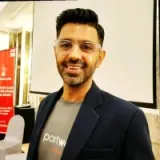
They are useful for talks and posts on B2B marketing integration, AI search, events and digital commerce.
Best for
A B2B SaaS company tying an annual conference and webinars into one plan.
Not for
A paid social video series with guaranteed delivery, reach, and published rates.
Key takeaways
Marketing teams should engineer one revenue experience across events and digital, not standalone events.
Visibility is shifting from traditional SEO to AI search, and brands need to respond now.
Owned commerce versus marketplace selling is a conditional choice, and most brands land on a hybrid.
Check first: Ask for a recording or deck, examples, fees, and format terms.
Main ideas
Marketing teams should engineer one revenue experience across events and digital, not run events as a standalone activity · Visibility is shifting from traditional SEO to AI-powered search, and brands need to respond now · Owned commerce versus marketplace selling is a conditional trade-off, and most brands land on a hybrid
Rohan Kamra writes and speaks about how B2B marketing connects with the way customers discover, evaluate and buy.
Their LinkedIn posts trace a consistent interest from digital selling and e-commerce in 2020 to AI-powered search in 2025 and the integration of events and digital campaigns in 2026.
Follow their work for a view of marketing as a connected customer experience, rather than a set of separate channels or events.
Kamra’s distinctive thread is connecting channel choices to commercial outcomes.
In a 2020 post, they argue that the choice between marketplaces and owned e-commerce depends on factors such as a brand’s market, product and e-commerce maturity; many brands may need a hybrid approach, while brands with strong customer pull may have more reason to build direct routes to buyers.
Another 2020 post links digitally led self-service with consistent experiences across physical and virtual touchpoints, while noting that the research came from McKinsey.
Later conference announcements extend that integration theme to AI: first, AI-powered search and B2B brand visibility; then, using AI to connect events and digital campaigns.
For campaign evaluation, ask for examples from the talks and results.
Across four LinkedIn posts from 2020, 2025 and 2026, Rohan Kamra returns to one theme: B2B buyers and channels should be treated as a connected system rather than separate silos.
Read more
In 2020, Kamra argued that the pandemic had compressed years of digital change into months and that omnichannel buying—sales, support, e-commerce and a consistent experience across physical and virtual touchpoints—would become the norm.
They also weighed when a brand should sell through marketplaces like Amazon and when it should build its own route to the customer.
By 2025, the same integration argument had moved to search and visibility, framed as a shift from traditional SEO to AI-powered search optimisation.
By 2026, Kamra was building a conference session around the idea that the strongest marketing teams engineer a single revenue experience across events and digital, with AI as the connective tissue.
The recurring reasoning is to name the common practice, contrast it with a better-integrated alternative, and test it with named company examples rather than prescribe a single rule.
Kamra frames these as open problems being worked through and draws on third-party research or practitioner examples to support a view.
Marketing teams should engineer one revenue experience across events and digital, not run events as a standalone activity
Kamra's clearest current statement of their priority is that the difference between average and commercially advanced marketing teams is whether events and digital are wired together.
Read more
Unifying the two, with AI as the connective tissue, is how a team maximises the commercial return on every campaign investment.
The problem is integration and measurement, not event logistics.
The public post states the premise of a session rather than presenting evidence; ask for examples and results.
Announcing a session for the B2B Marketing Leaders Forum Sydney on 20–21 May 2026, Kamra described its topic as why and how the most commercially advanced marketing teams are engineering integrated revenue experiences rather than just running events. The session would explore how AI can help maximise the commercial return of each campaign investment.
This is the 2026 version of an argument visible in 2020, when Kamra expected a consistent experience across physical and virtual touchpoints to become standard. The later post adds AI as the mechanism and commercial return as the test.
Visibility is shifting from traditional SEO to AI-powered search, and brands need to respond now
Kamra treats AI assistants as a live change in how B2B buyers find brands, describing the shift from traditional SEO to AI-powered search optimisation as a problem marketers are grappling with.
Read more
The stance is practitioner-led: Kamra says they would share examples of what their team is doing and what early success looks like. Ask for those examples and results; the post states the claim of early success but does not demonstrate it.
Ahead of the B2B Marketing Leaders Forum in Sydney on 21–22 May 2025, Kamra said the session would cover B2B brand visibility in the era of AI and share examples of how their team is responding. The post used hashtags naming ChatGPT, Gemini, Claude, Perplexity and LLMs.
The 2026 session on AI as connective tissue across events and digital extends the 2025 focus on AI-driven discovery, moving from how buyers find a brand to how campaigns are joined up once they do.
Owned commerce versus marketplace selling is a conditional trade-off, and most brands land on a hybrid
Kamra argues there is no single right channel.
Read more
The answer depends on the market, competition, product offering, customisation and e-commerce maturity, and most brands use both owned e-commerce and large marketplaces. The reasoning distinguishes reach from control: most retailers will not leave marketplaces like Amazon soon because that audience is hard to rebuild, but brands with strong direct customer pull can justify moving toward their own routes to own customer data and stop adding traffic to a marketplace's channels.
Using Dyson and Lenovo as examples, Kamra weighed owned e-commerce against marketplaces and concluded the right answer was a hybrid. They named Nike and Ikea as consumer brands with enough customer sway to build a more direct route, own the data and avoid feeding marketplace traffic.
A shock like the pandemic permanently accelerates digitally led B2B selling and omnichannel buying
Kamra's 2020 argument was that the pandemic acted as a catalyst, compressing three to four years of digital transformation into a few months and moving B2B buying toward digitally led self-service and remote operating models.
Read more
Kamra expected omnichannel sales and support, integrated e-commerce, and a consistent experience across physical and virtual touchpoints to become the new normal. The trend claim relied on external research rather than Kamra's own data; the contribution was the interpretation and prediction, not the underlying figures.
The post credited and linked to findings from a multi-country McKinsey & Company study, arguing that the pandemic had pushed buyers and sellers toward remote, self-service and integrated channel models.
The 2025 and 2026 posts show the same integration instinct applied later to AI search and to events-plus-digital campaigns, suggesting continuity rather than a change of direction — though posts from 2021 to 2024 do not document the path between them.
A stated method: set up opposing options, test them against real companies, then give a conditional answer
Across the posts, Kamra avoids one-size-fits-all advice.
Read more
They frame a choice as two alternatives, work through it using named companies or third-party research, and land on a recommendation that depends on the brand's situation rather than declaring a universal rule. The posts also invite input—the 2020 commerce post asks readers to add their views—positioning Kamra as a practitioner working through problems rather than issuing settled doctrine.
In the commerce post, Kamra set owned e-commerce against marketplace selling, worked through Dyson, Lenovo, Nike and Ikea, and concluded the answer depends on market, competition, product offering, customisation and e-commerce maturity. The post ended with an invitation for other views.
Talks are framed as open, current problems rather than finished answers
Both conference posts describe topics Kamra is actively working on, not results being announced.
Read more
In 2025 the framing was that AI-driven search is something everyone is grappling with and that Kamra would share what their team is trying at an early stage.
In 2026 the session asks how AI can act as connective tissue rather than claiming a proven model.
Ask for delivered findings or verified outcomes; the posts state topics and positions, not results.
Kamra wrote that the AI search session would share examples of what the team is doing, with some early success, and said the 2026 session would explore various facets of unifying events and digital. Ask for the examples, recording or slide deck; neither post includes them.
What does Kamra say marketing teams should change about how events and digital work together, and where does AI fit?
Read more
This is the clearest current statement of the theme for a campaign about bringing those channels together.
Kamra announced a session for the B2B Marketing Leaders Forum Sydney, held 20–21 May 2026, titled around why and how the most commercially advanced marketing teams are engineering integrated revenue experiences rather than just running events.
The session explores unifying events and digital, and asks how AI can act as the connective tissue that maximises the commercial return of every campaign investment.
The post links to forum registration and credits founder Emma Roborgh.
For brands planning a campaign
Directly on-brief for a B2B SaaS company planning an integrated revenue experience: Kamra is already building a talk around this topic, so a session could extend it rather than start from scratch. Before commissioning anything, ask whether a session recording or slides are available.
How does Kamra approach AI’s effect on search and brand visibility in B2B?
Read more
This post shows the topic they were working on a year before the 2026 session.
In a post ahead of the B2B Marketing Leaders Forum in Sydney on 21–22 May 2025, Kamra says they will explore B2B brand visibility in the era of AI, describing the shift from traditional SEO to AI-powered search optimisation as something marketers are grappling with.
They write that their team is responding with some early success, and point readers to the 22nd for a panel including Anol Bhattacharya.
The hashtags mention ChatGPT, Gemini, Claude, Perplexity and LLMs.
Ask for the examples behind the early-success claims before commissioning a session on the topic.
For brands planning a campaign
Useful if a SaaS campaign covers how buyers discover products through AI assistants and search. Before building a session around the ‘early success’ claims, ask for the actual examples.
What is Kamra’s view on where a brand sells and who owns the customer relationship?
Read more
This 2020 post shows the commerce reasoning behind the later integration argument.
Kamra weighs whether brands should sell through marketplaces like Amazon or run their own e-commerce, using Dyson and Lenovo as examples.
The conclusion: it depends on the market, competition, product offering, customisation and e-commerce maturity, and most brands land on a hybrid.
They argue most retailers will not leave large marketplaces soon because that reach is hard to rebuild, while brands with strong customer pull—naming Nike and Ikea—are building their own routes to consumers to own the data and avoid adding traffic to marketplace channels.
The post invites other views and links to an article.
For brands planning a campaign
Offers a concrete piece of commerce reasoning for clients deciding between marketplace reach and owned channels, or between event and digital channels where the same control-versus-reach trade-off applies. It shows breadth beyond campaign messaging, though the post names brands rather than presenting data.
Where does Kamra’s interest in integrated channel experiences come from?
Read more
This 2020 post is the earliest of the reviewed pieces and sets up the later work.
Writing in 2020, Kamra argues the pandemic changed B2B sales and marketing by compressing three to four years of digital transformation into a few months, pushing the needle toward digitally led self-service and remote operating models.
They argue that omnichannel sales and support, integrated e-commerce, and a consistent experience that toggles between physical and virtual touchpoints will become the new normal.
The post credits inputs from a multi-country McKinsey & Company study and links to it.
For brands planning a campaign
Background for anyone briefing Kamra on events-plus-digital integration: this is the earliest evidence that the unification theme predates the AI framing. It offers a conversational entry point with a client that still runs events and digital as separate tracks, though the supporting research is McKinsey’s, not Kamra’s own.
Kamra’s 2026 conference session describes the gap between marketing teams that run events and those that engineer integrated revenue experiences.
Read more
Their argument is that unifying events and digital work, with AI acting as the connective tissue, is how commercially advanced teams maximise the return on each campaign investment.
A before-and-after framing: name the common practice (running events), then contrast it with the practice Kamra recommends (engineering a single revenue experience across channels).
For brands planning a campaign
This is the closest match to a B2B SaaS campaign focused on joining event and digital programmes. Build a session around Kamra’s framing, asking them to explain how events and digital are wired together and where AI does real work versus decorative work.
A 2025 session announcement states the topic as B2B brand visibility in the era of AI, framed explicitly as a shift from traditional SEO to AI-powered search optimisation.
Read more
Kamra says the session would include examples of what their team is doing about it, with early success.
Positions the change as a live problem Kamra is working on rather than a settled answer, and offers practitioner examples alongside the framing.
Before using outcomes in a campaign, ask for the delivered session and its results data.
For brands planning a campaign
Relevant if AI visibility is part of a campaign. Treat the claimed early success as positioning; ask for current evidence and numbers before building a campaign argument around it.
A 2020 post weighs running a brand’s own e-commerce against selling through large marketplaces such as Amazon, using Dyson and Lenovo as the examples.
Read more
Kamra’s conclusion is that the answer depends on market, competition, product offering, customisation and e-commerce maturity, and that most brands end up with a hybrid. They note that consumer brands with direct customer pull, such as Nike and Ikea, were moving toward owned routes to control customer data and stop feeding marketplace traffic.
Sets up opposing options, tests them against named company examples, then lands on a conditional recommendation rather than a single rule.
For brands planning a campaign
Useful for channel and commerce decisions. Expect example-led trade-off analysis; ask Kamra to apply the same framing to the brand’s own category and maturity level.
A 2020 post on how the pandemic changed B2B sales and marketing argues that three to four years of digital transformation happened in months, accelerating digitally led self-service and remote operating models.
Read more
Kamra expects omni-channel sales and support, integrated e-commerce, and a consistent experience that toggles between physical and virtual touchpoints to become the new normal. The post cites a multi-country McKinsey study as an input.
Draws on third-party research for the trend claim, then states a personal view on what persists.
For brands planning a campaign
Shows the integration argument dates back to 2020, useful for continuity in a session. It also shows Kamra draws on external research, not just personal anecdote.
Rohan Kamra's four available LinkedIn posts disclose no sponsorship, affiliate, client, investment, ownership or employment relationship.
Read more
The recurring association they announce is a speaking slot at the B2B Marketing Leaders Forum in Sydney, listed for 2025 and again for 2026.
Kamra is presented as a speaker, not as a staff member or contractor of the event.
Dyson, Lenovo, Nike, Ikea, Amazon and McKinsey & Company appear in their analysis of digital commerce and B2B buying as case examples or cited research, not as brands they say they work for or with.
B2B Marketing Leaders Forum
Disclosed partnership · 2025
Kamra announced speaking sessions at the B2B Marketing Leaders Forum in Sydney, described in the posts as APAC's largest conference for B2B marketers.
Read more
The 2025 session covered B2B brand visibility in AI-driven search; the 2026 session covers how commercially advanced marketing teams unify events and digital as integrated revenue experiences.
Both announcements name the event's founder, Emma Roborgh.
Ask for the commercial terms of the speaking arrangement.
In a 2020 post comparing owned e-commerce with selling on large marketplaces, Kamra uses Dyson as one of two worked examples, arguing that the right balance depends on market, competition, product offering, customisation and e-commerce maturity.
Read more
Dyson is a public case study; no working relationship is claimed. Nike and Ikea are named in the same post as brands moving away from marketplace dependence.
A 2020 post on how the pandemic changed B2B sales and marketing cites multi-country research by McKinsey & Company as the basis for Kamra's observations on omni-channel support, integrated e-commerce and consistent physical and virtual experiences.
Read more
The post cites research; it does not disclose a commercial relationship.
The older layer covers B2B channel strategy: a 2020 post weighing a brand's own e-commerce against selling on marketplaces such as Amazon, and another on how the pandemic pushed buyers toward self-service and mixed physical-and-digital journeys.
The newer layer examines how buyers find and choose: a 2025 conference announcement on the shift from traditional search optimisation to AI-powered search visibility, and a 2026 announcement arguing that the strongest marketing teams engineer one revenue experience across events and digital rather than treat events as a standalone activity.
Start with the 2020 commerce post, which works through Dyson, Lenovo, Nike and Ikea, then read the two later posts to see how the argument has developed.
Follow them for conditional, example-led takes on B2B channel and visibility decisions.
Both write for B2B marketing leaders and argue that marketing should run as a disciplined system, not a series of isolated campaigns.
Read more
Schmukler frames executive hesitation as a risk problem and pushes consistent execution and measurement; Kamra frames the challenge as wiring channels into one revenue experience, with AI doing the connecting.
Schmukler writes from the perspective of leading a B2B marketing agency, focusing on buyer-side objections, agency accountability and employee advocacy. Kamra's posts cover channel and visibility choices—marketplaces versus owned commerce, AI-era search, and events plus digital—and stay closer to go-to-market mechanics than agency-client dynamics.
Both write explanatory posts about e-commerce and marketplace selling for a business audience.
Read more
Both warn that selling on Amazon is harder than it looks because competing sellers can undercut on price.
Ducie's posts are foundational explainers aimed at readers getting oriented: what separates digital marketing from e-commerce, and why retail arbitrage and wholesale on Amazon are punishing.
Kamra's commerce post lays out a conditional strategic trade-off using named brand examples.
Their later work turns to AI search and integrated event-and-digital campaigns rather than e-commerce basics.
Both work at the commercial technology end of B2B and examine where AI genuinely changes a business process.
Read more
Meads asks which procurement decisions AI should be allowed to make and where a human should stay in the loop; Kamra asks how AI changes the way buyers find brands and how it can join events and digital into one revenue experience.
Meads is anchored in procurement technology: ideal customer profile discipline, outbound spend, sales team readiness and agentic procurement software.
Kamra stays in marketing, covering commerce channels, search visibility, and events-plus-digital campaign design.
Their AI questions overlap in spirit but sit in different buying processes.
The only measured figure is a LinkedIn follower count of about 4,100, shown on the profile on 8 October 2026; the posts publish no impressions, engagement rates, video performance or audience demographics.
They do show content aimed at B2B marketing leaders in APAC: two selected examples are Kamra’s conference speaking announcements for the B2B Marketing Leaders Forum in Sydney (May 2025 and May 2026), framed for that practitioner audience and tagged #b2bmktgapac and #marketingleadership, with peers such as Anol Bhattacharya, Lexie Walker and Bernice Muncaster addressed.
This indicates topic appeal around B2B event and digital marketing leadership, not who reads or attends.
For a B2B SaaS campaign integrating events and digital, the follower count alone cannot establish channel reach.
Before committing budget, ask for recent results on comparable work: per-post impressions and engagement for the 2025 and 2026 conference posts, session attendance or registration numbers for the B2B Marketing Leaders Forum appearances, and any organiser audience survey covering job role, seniority, company size, country, geography, employer, occupation and gender.
LinkedIn followers
4107
LinkedIn profile snapshot of the linked account · 2026-10-08
Rohan Kamra’s posts do not advertise a brand sponsorship or paid partnership offer.
Read more
They show a conference-speaking pattern: Kamra announced sessions at the B2B Marketing Leaders Forum in Sydney for 21–22 May 2025 on B2B brand visibility in AI-era search, and for 20–21 May 2026 on unifying events and digital into integrated revenue experiences.
Both announcements promote their own events; neither states whether a sponsor is involved or how a brand can book them.
Before engaging them, ask for their fees, available formats, lead time, audience details and booking contact.
Strong fit for the session. Kamra is already building a talk around almost exactly this question, so the brief extends existing work rather than requiring a new area of expertise.
Read more
Brief
A B2B SaaS company with an annual customer conference and a year-round webinar programme wants one plan tying its events to digital campaigns, using AI to connect the two. It is looking for a session speaker who can show how that works in practice.
Reasons
Kamra's announced 2026 session at the B2B Marketing Leaders Forum in Sydney (20-21 May 2026) asks why and how the most commercially advanced marketing teams engineer integrated revenue experiences rather than just run events, and how AI can act as connective tissue to maximise return on each campaign investment. That is the brief in their own words.
The AI angle has a second year behind it. Kamra's May 2025 session at the same forum covered B2B brand visibility in the era of AI, describing a shift from traditional SEO to AI-powered search optimisation and promising examples of how their team is responding.
The integration argument is not new positioning. A February 2020 post argued that the pandemic compressed three to four years of digital transformation into months, and that omni-channel sales and support, integrated e-commerce and a consistent experience across physical and virtual touchpoints would become normal. That gives the session a long-running thread rather than a trend-piece premise.
The working method suits a planning session. Kamra's posts set up opposing options, test them against named companies (Dyson, Lenovo, Nike, Ikea), and land on a conditional answer shaped by market, competition, product range, customisation and maturity rather than a single rule.
Kamra cites outside research as an input, including a multi-country McKinsey study in the 2020 post, giving the session a defensible trend claim alongside personal experience.
Limits
Neither announced session has a transcript, recording or slide deck in Kamra's posts, so the stage delivery is described, not demonstrated. Ask for a recording or deck from a comparable talk before building the agenda around specific claims.
Kamra's posts publish no booking route, fee, format menu, lead time or sponsorship offer. Establish the terms directly before booking.
Kamra's 2025 claim of “early success” in AI-era visibility is not supported by examples in the posts. Ask for the underlying examples if the session is meant to lean on results.
When to choose a specialist
Do not shortlist based on the available posts. They do not describe the deliverables, terms or audience measurements this campaign depends on.
Read more
Brief
A brand wants a creator to produce a four-part short-form video series for paid social, with guaranteed delivery inside a month and reach among a defined buyer group in a named market, in exchange for a fee at a published rate card.
Reasons
Kamra's posts publish no commercial format, sponsorship terms, rate card, format specification or inquiry channel. There is no basis for pricing a paid content series.
The only audience measure is a LinkedIn follower count of about 4,100, recorded from the profile on 8 October 2026. There is no engagement or impression data, video performance, or information on geography, seniority, employer, occupation or age. Ask for per-post performance and an audience report before assessing reach among a defined buyer group.
The reviewed output is written posts and conference sessions, not short-form video. The material shows no video production or paid-social distribution capability.
The visible audience signal points to B2B marketing practitioners in the APAC market around the B2B Marketing Leaders Forum in Sydney, tagged #b2bmktgapac and #marketingleadership. That differs from an unspecified paid-social buyer group.
There is no evidence of a previous brand campaign delivered at this scale. Ask for comparable campaign examples before relying on this format.
What would change it
A documented format menu, fee range and booking contact.
Per-post impressions and engagement, or a third-party audience report covering role, seniority, company size and country.
Two or three references for comparable paid content work, with the brief and delivered assets.
A worked campaign example
Angle
Build the session around Kamra's before-and-after framing: the common practice of running events versus engineering an integrated revenue experience where events and digital form one system. Use the SaaS conference as the worked case.
Confirm before commissioning
Ask whether a recording or slide deck from the May 2026 or May 2025 forum session exists, so the argument can be assessed rather than inferred from the announcement.
Fee, format, lead time and booking contact.
Ask whether the “early success” examples from the 2025 AI-search talk can be shared under the client's confidentiality terms.
Fit to brief
Matches a B2B SaaS company that runs an annual customer conference plus ongoing webinars and wants those efforts to feed a single pipeline, with AI used where it does real work.
Materials to prepare
One SaaS conference example with before-and-after pipeline numbers, anonymised if necessary.
A one-page diagram showing where event and digital data connect.
Two or three AI uses, each with the tool category and required input.
Structure
Detail
State the two operating models plainly: running events as standalone campaigns versus treating events and digital as one revenue system. Explain why the difference shows up in cost per pipeline, not attendance.
Step
Open with the contrast
Detail
Walk through the join points a SaaS company controls: which conference content becomes always-on digital material, how registration and on-demand viewing share a data path, and where the follow-up sequence hands off to sales.
Step
Show what connecting them looks like
Detail
Give two or three concrete uses—matching session topics to account segments, turning audience questions into campaign copy, and routing engagement signals into follow-up—and name one place where AI adds no value to keep the argument credible.
Step
Position AI as connective tissue, not decoration
Detail
Tie the changes to return per campaign investment, using the commerce logic Kamra applies elsewhere: the right answer depends on market, competition, product range and maturity. Offer a conditional recommendation, not a universal rule.
Step
Answer the commercial question
Detail
Leave the room with a short list of changes a marketing team could start next quarter, each paired with the data needed to prove it worked.
Step
Close with a shortlist of first moves
Detail
Invite the room to test the model against its own event calendar and channel mix.
Step
Q&A
Title
Session proposal: Wiring events and digital into one revenue story
Choose Schmukler when the SaaS company's real obstacle is executive buy-in and internal participation, not campaign plumbing.
Read more
In a 1 July 2026 post, Schmukler draws on 25-plus years leading a B2B marketing agency to recast common objections to marketing spend as objections about risk: wasted budget, murky returns and strategies that looked good in a deck.
They argue for a disciplined system with clear focus, consistent execution and realistic measurement rather than a leap of faith.
A 10 June 2026 post makes the case for opening thought leadership beyond the C-suite to account managers, strategists, creatives and subject-matter experts, arguing that employee voices widen reach and make the brand more human.
For a conference-plus-webinar brief where the blocker is getting leadership to fund the plan or staff to contribute, this is closer to the need than a session on AI connective tissue.
Neither post addresses events, event-to-digital data paths or AI as a connector between channels, so Schmukler would not bring the integration argument needed for a 45-minute session on how events and digital feed one pipeline.
Both posts promote newsletters through general agency experience; neither offers a worked client example or describes conference sessions, and neither provides audience or commercial detail.
For this session, Schmukler could help with programme design and objection handling, but is not a substitute speaker on the topic.
Consider Ducie if the need shifts from event-and-digital integration to a channel decision about where the company sells.
Read more
A 25 January 2023 post distinguishes digital marketing, online marketing and e-commerce, using the example of an e-commerce site built to sell, versus ads and emails designed to build the brand, and notes that the two complement each other.
A 21 December 2022 post warns that selling on Amazon invites undercutting, that wholesale gains leverage only through logistics you own, and that a brand seeking long-term e-commerce success should sell on its own site or use Amazon as an affiliate channel.
For a SaaS company building a marketplace or self-serve buying path alongside its events, that reasoning maps onto a real decision about owning the customer relationship.
The material, written for readers encountering these terms for the first time, dates from 2022 and 2023.
It says nothing about AI, AI-era search, B2B events or conference speaking.
It does not address the buyer's task of joining events and digital campaigns into one revenue system, so choosing Ducie means changing the session question rather than swapping one answer for another.
Ask for evidence of presentation work, audience data and a delivered campaign before booking.
Reach for Meads when the audience is procurement or finance and the question is how far AI should be allowed to decide.
Read more
A 25 September 2026 post asks whether AI should be given decision authority and where a human stays in the loop.
It describes the shift from software that supports analysis to agentic AI that performs parts of the work, and raises governance, decision rights and the capabilities organisations will need.
The post is attached to a live webinar with named panelists.
A 27 September 2026 post uses a badly targeted ad aimed at Meads to argue that converting an existing lead is cheaper than creating a new one; clear market knowledge and a sharp ideal-customer profile beat any clever strategy, while a sales team able to handle technical procurement questions closes deals.
That combination of a real webinar format and a lead-conversion argument suits a company whose webinar programme is underperforming.
The AI content focuses on decision authority inside procurement workflows, not on connecting events and digital campaigns; the conversion post focuses on outbound targeting and sales capability.
Meads writes from inside procurement technology for procurement leaders, so a B2B SaaS company selling elsewhere would be borrowing the framing, not the audience.
Ask for evidence of conference keynote or event-delivery experience, and for terms, rates and audience measurements; the posts publish none for Meads or the other two creators.
Rohan Kamra's posts include four LinkedIn posts: two from 2020 (one weighing owned e-commerce against marketplace selling, one on pandemic-driven change in B2B sales and marketing), a May 2025 post announcing a B2B Marketing Leaders Forum session on AI-powered search, and a 2026 post announcing a forum session on integrating events and digital.
Public posts from comparable creators (Mark Schmukler, Brendan Ducie and James Meads) provide context for the similar-creator section, and a LinkedIn follower count of about 4,100 was observed on 8 October 2026.
Neither announced session has a transcript, recording or slide deck published in the posts here; no posts from 2021 to 2024 are included, so the development of Kamra's thinking across that period cannot be described; and no sponsorship terms, rates or booking route are published in the posts here.