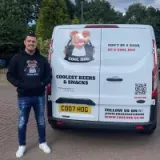
Luke Moriarty is the founder of Cool Hog, a UK snack business selling through ecommerce, TikTok Shop and wholesale. They share the work of building the brand and discuss founder-led marketing and ecommerce growth.
Luke Moriarty is useful for founder-led content and practical ecommerce growth lessons from building Cool Hog.
Best for
A UK snack brand launching a range with founder-fronted content and ecommerce growth.
Not for
A paid reach campaign needing measured delivery, audience data, or proven conversion expertise.
Key takeaways
They started Cool Hog on WordPress and got platform, pricing and audience wrong.
They argue showing the founder can make a DTC brand feel human.
They frame site conversion improvements as an open problem, not a proven playbook.
Check first: Ask for evidence of results and audience analytics before applying their marketing recommendations.
Main ideas
A founder's face is a marketing decision, not ego · Content is only worth doing when it is tied to sales · Fix the conversion you already have before buying more traffic
Luke Moriarty is the founder of Cool Hog, a UK snack business.
Their posts share the company’s growth and the practical work behind it, from early mistakes and late-night packing to ecommerce, marketing and fulfilment.
Follow their work for a founder’s account of building a consumer brand and their views on putting the founder at the centre of DTC marketing.
Moriarty connects founder storytelling to the day-to-day demands of running Cool Hog.
They describe early setbacks: starting on WordPress, getting the platform, pricing and audience wrong, and packing orders at 2 a.m.
They also discuss the operational planning needed as the business grows across ecommerce, TikTok Shop and wholesale.
Moriarty argues that showing the founder can make a DTC brand feel more human, while their CRO post frames site improvements as an open problem rather than a proven playbook.
Ask for evidence of results before applying their marketing recommendations.
Luke Moriarty writes about building Cool Hog, a UK snack brand.
Read more
The ideas most repeated across the posts are how a founder-led consumer brand should be run and marketed: the founder should be visible and honest about the process; content is worth doing only when tied to sales; and growth depends as much on operations and conversion as on attention.
A founder's face is a marketing decision, not ego
Moriarty argues that direct-to-consumer brands without a visible human face struggle because people buy from people they trust, not logos.
Read more
Showing up on camera, telling the brand's story and taking people behind the scenes is a deliberate strategy to build loyalty, improve ad performance and make the brand feel human.
Anyone hiding behind a logo is, in their framing, leaving money on the table.
Moriarty makes the argument in first person and in the format they recommend, inviting disagreement rather than claiming proof.
In "If your DTC brand doesn't have a face, you're going to struggle" Moriarty writes that this applies especially in 2025 "when AI noise is everywhere and trust is the new currency," then lists what founder visibility buys: loyalty, better-performing ads and a brand that feels human. Moriarty closes by asking readers to agree or disagree.
Content is only worth doing when it is tied to sales
A second recurring priority is judging content work and creative by commercial outcomes, not output.
Read more
Moriarty describes the Cool Hog content role as planning, filming, editing and publishing across TikTok, Instagram, Facebook, YouTube and LinkedIn; producing Meta and TikTok ad creative; and researching trends and competitors — all with the aim of driving sales and growing the audience. Videography skill alone is not enough: the post calls it "more than a videographer role," requiring a creative mindset and an understanding of what makes content perform.
The Content & Creative Marketing Manager hiring post lists responsibilities including producing Meta and TikTok ad creatives and contributing "ideas for organic content and paid ads," then says the role is judged on content "that drives sales, grows our audience and strengthens the Cool Hog brand."
Fix the conversion you already have before buying more traffic
Moriarty says Cool Hog is getting strong traffic but leaving revenue on the table, identifying user experience, layout, offers, the customer journey, trust building and overall site experience as areas to examine.
Read more
The focus shifts from acquisition to conversion, alongside the brand's investment in more content and paid creative: attention is already sufficient, and the bottleneck is what happens after the click.
In the CRO post, Moriarty writes, "We're doing strong traffic numbers, but I know there's more revenue sitting on the table through better UX, layout, offers, customer journey, trust building and overall site experience," and asks people with experience scaling ecommerce brands to get in touch.
Read alongside the content-manager hiring post, the two positions show the brand working both sides at once: more content and paid creative on one hand, better conversion on the other. Neither is treated as a substitute for the other.
Moriarty tells the Cool Hog origin story as a sequence of early errors rather than a polished rise: the wrong platform, pricing and audience for the first two years, plus late-night packing shifts while they figured it out.
Read more
Their lesson for other builders is that a chaotic, slow or messy period is what progress usually looks like at the start, and that mistakes are survivable while quitting is not. Ask for dates and figures to verify the timeline and size claim.
"I didn't start Cool Hog on Shopify.
I started on Wordpress, and made a tonne of mistakes in my first two years," the post begins.
It describes the business as now multi-million pound and advises builders that if things feel "messy, chaotic or slow, good.
That's usually what it looks like when it's working."
Growth means operational capacity, not just marketing
A further theme is that scaling a consumer brand is largely an operations problem.
Read more
Moriarty describes Cool Hog moving quickly from a small operation to a multi-channel ecommerce business across direct-to-consumer, TikTok Shop, subscriptions and wholesale.
The hiring posts show what that transition demands: forecasting order volume, planning staffing and capacity ahead of demand, building and improving fulfilment processes, and leading a ground-level team.
The operations role is explicitly framed as "not a maintenance role," reflecting a focus on work still to be done.
The Operations Manager post asks for someone comfortable with data, spreadsheets and forecasting, able to translate the senior leadership team's order projections, campaigns and launches into staffing levels and workflows "ahead of demand rather than reacting to it."
Want to know how Moriarty tells Cool Hog’s origin story?
Read more
This post shows the personal, candid style of their founder content.
Moriarty describes starting on WordPress, getting the platform, pricing and audience wrong, and packing orders at 2 a.m. before building Cool Hog into what the post calls a multi-million-pound brand. Their direct, mistake-by-mistake account makes the early work of building the business more concrete than a polished success story.
For brands planning a campaign
For a founder-led campaign, this supports a progress narrative grounded in real setbacks and operational details. Verify performance claims before repeating them, and avoid turning the post’s persistence message into a promise of results.
Wondering what Moriarty believes founder content is for?
Read more
This post gives their clearest rationale and shows how they frame a debatable marketing opinion.
Moriarty argues that showing the founder and taking people behind the scenes can build trust, loyalty and a more human-feeling brand.
They present founder visibility as a marketing choice, not an ego exercise, and end by inviting disagreement.
Ask for results or evidence before relying on those claims.
For brands planning a campaign
This is a useful starting point for a campaign testing founder-led creative against product-only messaging. Agree in advance on the founder’s role, content boundaries and measures; treat the post’s performance claims as hypotheses to test.
Looking for the business problem Moriarty says they are working on now?
Read more
This post names the conversion areas they want to improve.
Moriarty says Cool Hog has strong traffic but sees room to improve revenue through site experience, including UX, layout, offers, the customer journey and trust. Rather than presenting a finished playbook, they describe an open problem and ask for experienced help.
For brands planning a campaign
For an ecommerce-growth brief, this points toward auditing the full purchase journey rather than assuming more traffic is the answer. The post does not document a CRO intervention or its results; ask for examples before treating it as proof of CRO expertise.
Want to see what business challenges sit behind the founder story?
Read more
This post explains the operational demands Moriarty associates with Cool Hog’s growth.
The hiring post links Cool Hog’s growth across direct-to-consumer ecommerce, TikTok Shop and wholesale to a need for forecasting, fulfilment capacity and stronger operations. It shows that Moriarty’s account discusses the work behind scaling, not only content and marketing.
For brands planning a campaign
A campaign for an ecommerce tool or service could explore the practical pressures of coordinating channels, launches and fulfilment. The post is a hiring brief, not evidence that a particular tool or service is used.
Need a practical picture of the content work Cool Hog wants to do?
Read more
The role spells out the formats, channels and commercial goals in one place.
This role combines filming and editing with trend research, creative strategy, organic content and paid ads. It also calls for founder and behind-the-scenes material across several social platforms, suggesting Moriarty wants content production connected to commercial growth rather than treated as video output alone.
For brands planning a campaign
For a creative or production partnership, this offers a concrete discussion agenda: how concepts move from founder stories and product footage into organic posts and paid tests. It describes the role’s remit, not confirmed campaign results or a partnership offer.
Founder-led marketing: putting a face on a DTC brand
Luke Moriarty argues that DTC brands without a visible human face struggle because buyers trust people more than logos.
Read more
Showing up on camera and telling the story behind Cool Hog is presented as strategy, not ego, and credited with building loyalty, improving ad performance and making the brand feel human. Camera-shy founders, they argue, are leaving money on the table.
Makes the case in the first person and in the format it recommends, demonstrating founder-led content.
For brands planning a campaign
Brands seeking founder-fronted content can position the founder as the primary on-camera asset, with a clear business rationale for why their presence matters.
Building in public: early mistakes and persistence
Luke Moriarty describes starting Cool Hog on WordPress, getting the platform, pricing and audience wrong for the first two years, and continuing through late-night packing shifts until the business reached multi-million pound scale.
Read more
Their takeaway for other builders: a messy, chaotic or slow start is normal, and mistakes become fatal only when someone quits.
The posts state that the business reached multi-million pound scale but give no dates or figures. Ask for the timeline and supporting figures.
For brands planning a campaign
The origin story offers an asset for audience-building campaigns, with a focus on persistence and lessons learned rather than polished tactical advice.
A hiring post for an Operations Manager describes Cool Hog's rapid growth from a small operation to a multi-channel ecommerce business spanning direct-to-consumer, TikTok Shop and wholesale.
Read more
The role covers forecasting order volume, planning staffing and capacity ahead of demand, and building operational processes, with the founder working alongside the senior leadership team.
Recruits publicly through their own LinkedIn posts, with applications sent directly to the founder's company email address.
For brands planning a campaign
The business content draws on the practical work of running and scaling a DTC operation, making it a fit for campaign angles on growth, fulfilment and the realities behind a consumer brand—not just lifestyle content.
Content and paid creative as an in-house growth function
A job post for a Content & Creative Marketing Manager outlines the brand's content operation: planning, filming, editing and publishing across TikTok, Instagram, Facebook, YouTube and LinkedIn, as well as producing Meta and TikTok ad creative and researching trends and competitors.
Read more
The work is tied to driving sales and growing the audience, not videography alone; ecommerce experience is listed as a bonus, not a requirement.
For brands planning a campaign
Signals in-house investment in organic and paid creative, and treats performance content as a distinct role—useful context when scoping collaboration formats with the founder or brand.
Conversion rate optimisation and the limits of traffic
Luke Moriarty says Cool Hog is seeing strong traffic but believes revenue is being left on the table through user experience, layout, offers, customer journey and trust building.
Read more
They invite people with CRO experience at scaling ecommerce brands to get in touch. The focus is converting existing attention rather than acquiring more.
For brands planning a campaign
Place creator content alongside conversion work in the campaign brief: the stated bottleneck is converting traffic, not reaching new audiences.
Cool Hog is the business Luke Moriarty built and runs, and it is the only brand relationship described in the posts.
Read more
They write as the founder about starting the brand on WordPress, moving to Shopify, reaching multi-million-pound scale, and hiring for operations and content roles. Ask Moriarty about any sponsorship, affiliate, client or investment relationships not covered in the posts.
Cool Hog
Owned business
Cool Hog is the UK snack brand Luke Moriarty founded and runs, selling pork scratchings, pork crunch, sweets and other snacks through Shopify, TikTok Shop, subscriptions and wholesale.
Read more
They write about the brand in the first person, describing its early years on WordPress before Shopify, two years of wrong platform, pricing and audience choices, and reaching multi-million-pound revenue.
Recruitment posts for an operations manager and a content and creative marketing manager are written on Cool Hog’s behalf, with applications directed to a coolhog.co.uk address.
Moriarty also asks directly for conversion-rate-optimisation help for the coolhog.co.uk store.
Luke Moriarty's posts chronicle the growth of Cool Hog, a UK snack brand: launching on the wrong platform, getting pricing and audience wrong, then scaling into a multi-channel business across direct-to-consumer, TikTok Shop and wholesale.
Read more
Start with their argument that a DTC brand needs a visible human face, which sets out the position underlying many of their other posts.
The build-in-public origin post shows the experience behind that position, including what went wrong early.
The hiring and conversion posts show the operating side: recruiting an operations manager for forecasting and fulfilment, recruiting a content and creative marketing manager to produce organic and paid video, and asking for conversion rate optimisation help because traffic is already strong.
Together, the posts show a founder who publishes open problems rather than finished playbooks and treats content, creative and operations as one growth system.
Shonn writes about growing product-based ecommerce brands on TikTok.
Read more
Their five lessons cover the same ground as Moriarty's interest in TikTok Shop as an acquisition channel: awareness, content volume, fast product testing and live selling. Both publish practical posts for brands trying to turn social commerce into revenue, and both recruit specialist TikTok and social commerce roles publicly.
Shonn works agency-side, auditing or managing TikTok for many brands and building a service model around creator, affiliate and live-selling programmes.
Their posts offer structured lessons drawn from a client base.
Luke Moriarty writes from inside one snack brand, in a first-person founder voice, about hiring, operations and conversion as well as marketing.
Vacic's posts cover the creative side of DTC ecommerce advertising: hiring video editors who understand hooks, pacing, offers, retention and creative testing, rather than editors who only make videos look good.
Read more
That is the distinction Moriarty draws when they say the Cool Hog content role is 'more than a videographer role' and judge creative by whether it drives sales.
Vacic's material covers sourcing and placing performance video editors and AI-first creative workflows for other brands, making the case through cost and editor performance. Moriarty's creative argument is about who should appear on camera and why, framed around founder visibility and brand trust rather than production staffing.
Simonyan writes for DTC ecommerce and runs a performance marketing agency.
Read more
Their posts touch on two things Moriarty also covers: the operational scaffolding a growing business needs, such as forecasting, process and margin, and cheap creative testing for DTC ads. Both treat operations and creative as connected concerns, and both recruit senior operations roles publicly.
Simonyan's operations content covers running a marketing agency — P&L, SOPs, utilisation and delivery frameworks — while his creative advice covers ad formats such as text-wall ads that test quickly. Moriarty's operations content covers physical fulfilment and capacity planning for a consumer goods brand; their creative advice is about a founder showing up in person.
Luke Moriarty’s posts may suit a campaign about founder-led DTC growth: they discuss building Cool Hog, putting a founder’s face into brand marketing, and improving ecommerce conversion.
Read more
The posts do not provide dated audience-composition data, so request recent platform analytics for geography and demographics, plus audience survey results or another documented source if the campaign requires professional roles, employers, or seniority.
Luke Moriarty's posts don't describe a sponsorship or partnership format.
Read more
The five posts cover running and hiring for Cool Hog: two recruitment posts for an Operations Manager and a Content & Creative Marketing Manager, both hired directly by the founder; a request for a conversion-rate-optimisation specialist for Cool Hog's ecommerce site; a post about starting the brand on WordPress and making early mistakes; and an argument that DTC brands need a visible human face.
None announces a rate card, sponsored-content package, affiliate arrangement, brand-collaboration slot or other paid partnership offer.
For buyers considering a paid collaboration, the posts provide no commercial terms, deliverables or partner-facing process; confirm these directly before building them into a plan.
A UK snack brand launching a new range wants a founder-fronted content and ecommerce growth push: on-camera video, behind-the-scenes footage and advice on selling through its own site, TikTok Shop and wholesale.
Read more
Decision: a strong fit with Luke Moriarty’s posts, subject to agreeing commercial terms.
Luke Moriarty runs Cool Hog, a UK snack brand selling pork scratchings, pork crunch and sweets through Shopify, TikTok Shop, subscriptions and wholesale, and hires for the business through their own posts.
This campaign’s strategy — a person on camera instead of a logo — is one they argue for in public and demonstrate at the same time.
Their founder-visibility post says they show their face, tell their story and take people behind the scenes of building Cool Hog.
They frame that as strategy rather than ego, crediting it with building loyalty, improving ad performance and making the brand feel human.
The campaign also needs someone who can talk about the commercial machinery behind consumer content, and the posts cover that ground.
The origin post walks through starting on WordPress and getting the platform, pricing and audience wrong for two years before the business reached what it calls multi-million pound scale — a usable spine for a launch story about figuring things out in public.
The hiring posts show what the content operation is meant to do: plan, film, edit and publish across TikTok, Instagram, Facebook, YouTube and LinkedIn; produce Meta and TikTok ad creative; and research trends and competitors, all tied to driving sales.
The operations post links multi-channel growth to forecasting, fulfilment capacity and building processes rather than reacting to demand.
The conversion-rate post names a live growth problem in their own words: strong traffic, with revenue left on the table through UX, layout, offers, customer journey and trust.
A campaign asking for founder-led content plus a working view of ecommerce growth is close to what they already do and talk about.
Before briefing, agree terms directly: their posts contain no sponsorship offer, rate card, deliverables list or partner process.
Ask for evidence behind the claims of better-performing ads and multi-million pound scale before using them in campaign messaging; the posts provide no figures or dates.
A weaker variation is a brand that wants polished, product-only creative with the founder kept off camera.
That requirement works against the core argument in the posts: hiding behind a logo leaves money on the table.
When to choose a specialist
A consumer electronics or household brand wants a paid creator for a reach campaign with measured delivery: agreed posting slots, impressions against a defined UK buyer segment and a rate card to contract against.
Read more
Decision: the posts do not support this fit.
Luke Moriarty’s posts do not identify who sees the content.
They provide no engagement figures, audience demographics, geographic breakdown or media kit; the LinkedIn account has about 1,200 followers.
That is not enough to price or plan a measured-reach campaign, and the posts do not show consumer-brand distribution at scale.
The visible audience activity is business hiring and peer discussion about running a snack company.
Ask for audience and performance data before considering a reach buy.
A second poor match is a campaign needing proven conversion-rate expertise to lead an optimisation programme.
The only conversion-related post asks for a CRO specialist to get in touch because traffic is strong but revenue is leaking through UX, layout, offers, customer journey and trust.
That describes an open problem, not a completed intervention or a result, so it does not support a claim of delivered CRO work.
A third weak case is a campaign requiring verified performance numbers before contracting — for example, guaranteed lifts in return on ad spend.
The multi-million pound scale claim in the origin post has no figures or dates, and the ad-performance benefits described in the founder-visibility post are presented as belief, not reported results.
Finally, a non-consumer, highly technical category with no founder-story angle has little support in the posts.
The strongest content is first-person business narrative and opinion about running and growing a consumer brand; there is no technical teaching, how-to series or documented campaign work for other companies to point to.
A worked campaign example
Worked angle for the good-fit campaign. Hypothetical client: a UK DTC sauce brand preparing its first wholesale push, with a founder willing to appear on camera but no content system.
The pitch: "The two bad years."
A four-part vertical series in which the founder walks through one specific early decision they got wrong — the ecommerce platform, the price, the packaging or who they were selling to — and explains what they changed and what it cost.
Film each episode where that work actually happens: the packing bench, the stockroom or the first trade order being loaded.
The series borrows the structure Luke Moriarty already uses for Cool Hog: mistakes, the wrong platform and pricing, and late packing shifts told plainly, with persistence rather than polish as the lesson.
They front or co-host the series and run the on-camera plan, bringing a format they have already advocated in public: showing the founder, telling the story and going behind the scenes as a marketing decision that builds loyalty and makes the brand feel human.
The second half of the engagement focuses on growth.
Take the strongest episode and cut two paid variants for Meta and TikTok, matching the organic-plus-paid split the Cool Hog content role is built around.
Then run one working session on where the brand is losing revenue, using the areas named in the conversion post as the agenda: user experience, page layout, offers, customer journey and trust building.
Add an operations check on whether the wholesale push can be fulfilled without reacting to demand — the forecasting and capacity problem behind multi-channel growth.
Measures: average watch-through and saves per episode against the brand’s existing product-only posts; click-through and cost per purchase on the two paid cutdowns against the current best-performing ad; and conversion rate on the specific pages changed after the session, not site-wide traffic.
First step and boundaries: their posts publish no sponsorship terms, rate card or deliverables, so start with a direct conversation to agree scope and payment, not a quote pulled from a page. Agree the founder’s on-camera boundaries before filming, treat stated performance claims as things to test rather than facts to repeat, and do not present a booked campaign as proof of past conversion results.
Choose Will Shonn instead when the job is running TikTok Shop day to day rather than telling the founder's story.
Read more
The posts show an operator who audits product-based ecommerce brands weekly, says they have worked with nearly 50 brands through TikTok and also runs their own ecommerce brand.
They describe how to judge the channel: treat TikTok Shop as a customer acquisition machine, not a standalone profit line, because of the halo across the website, Amazon and retail; and use live selling to build community, which they say took their own brand from zero to hundreds of thousands of followers in six months.
The hiring post shows the same operating model from the inside: an account manager owns affiliate and creator recruitment, live commerce, listings and promotions, with GMV, return on ad spend and conversion rate as the scoreboard.
A snack brand that already has its founder on camera and needs the channel recruited, staffed and optimised is a better match here than a brand buying a new founder-led series.
The tradeoff is distance from the founder's own story.
The posts focus on channel strategy and a recruitment advert for an account manager: they show how a TikTok Shop operation is staffed and measured, not a founder taking a snack brand's customers behind the scenes of building it.
If the campaign needs the founder as the face of the brand, that has to come from the client's own team or another partner.
Ask directly for a sponsorship offer, rate card and deliverables list; none appears in the posts.
Choose Sava Vacic instead when the bottleneck is the cost and volume of ad video rather than on-camera presence.
Read more
The posts address overpaying for creative that does not sell: brands hiring local editors at around $500 per video and still losing money on Meta, versus editors who understand hooks, pacing, offer, retention and creative testing.
The hiring post sets out the role: a high-output ecommerce video editor on an AI-first workflow, producing multiple short-form ad variations a week across Meta, TikTok, Instagram and YouTube, using UGC, testimonials, product demos, founder footage and short-form VSLs, and iterating on winning ads from performance data.
For a snack brand whose founder is already willing to be filmed and needs a steady stream of tested ad cutdowns, this is a more direct answer to the production problem than a content and growth plan.
The posts focus on creative production: finding and briefing performance editors more cheaply, and continually testing ad variants.
For a founder-led brand campaign, the client would need to source the founder's story, media plan and channel decisions elsewhere.
This is a recruiting route for a role, not one person fronting the campaign.
Choose Ernest Simonyan instead when the need is paid creative testing at volume, run through an agency.
Read more
The posts describe ScaleLoop, a boutique performance marketing agency covering Meta ads management, creative strategy and creative production for DTC ecommerce and info-product businesses.
One post argues for a specific low-cost format: text-wall ads that read like an ordinary post, avoid the ad-evaluation reaction and can be made in about an hour, letting a brand test ten or more angles before committing production budget to a single creator video.
A snack brand whose priority is finding which angles and offers sell, quickly and cheaply, is a better match here than one buying a founder's personal story.
The tradeoff is authorship and brand-side experience.
The posts focus on agency hiring and direct-response format commentary; they do not show a founder running a consumer brand, handling fulfilment and channel mix, or appearing on camera.
The text-wall format also runs counter to the founder-fronted approach this campaign assumes: a client choosing this route is buying tested creative output, not a person who becomes the public face of the brand.
This page draws on five LinkedIn posts written by Luke Moriarty: a hiring post for an operations manager at Cool Hog, a hiring post for a content and creative marketing manager, a request for conversion-rate-optimisation help on the Cool Hog store, an argument that DTC brands need a visible founder, and a build-in-public post about starting on WordPress and getting platform, pricing and audience wrong early on.
Luke Moriarty's posts are available here as full text.
The posts do not give publication dates, so the order in which these themes developed and how current they are cannot be checked.
The business details here — the product range, the channels, the recruitment needs — come from those posts and nowhere else, and claims inside them, such as multi-million pound revenue or better-performing ads, are reported as the poster's own statements rather than verified results.
The posts here do not publish a media kit, rate card, engagement metrics, audience demographics, sponsorship terms or documented client campaign work, so nothing of that kind is asserted.
Comparisons with other creators use posts by Will Shonn, Sava Vacic and Ernest Simonyan, judged on ideas, approach and format only.
One gap remains open: a search for this name can also turn up other signature work, such as books, shows or earlier roles, and this page does not investigate that kind of identity.
Where a reader's interest lies outside the Cool Hog material, this page does not answer it.