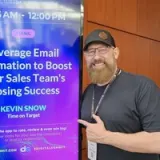
Kevin Snow writes about improving B2B sales execution: making follow-up visible, capturing CRM data consistently, and using AI to strengthen sales processes rather than add more tasks.
Keep the next step visible instead of relying on reps to remember it · Standardize CRM information before expecting it to reveal patterns · Use AI to tighten a sound process, not multiply its activity
Kevin Snow writes about making B2B sales execution more reliable.
In three LinkedIn posts, they focus on visible follow-up, consistent CRM notes, and using AI to improve a sales process rather than add more tasks.
The examples make the argument practical: a handwritten list stays in view, inconsistent call notes cannot reveal patterns across deals, and buried next steps are easy to miss.
Follow their work for concrete explanations of how the design of a sales process affects what teams actually do.
Snow connects everyday sales behaviors to the systems around them.
Rather than blaming reps for missed follow-up or disorganized work, they ask whether the next step is visible and information is captured consistently enough to use.
The paper to-do list post illustrates the point through a personal routine; the CRM-data post shows why complete notes may still be unusable for comparing deals; and the AI post argues that automation can amplify a weak process instead of fixing it.
Together, these posts offer a clear lens for evaluating sales tools and AI: do they make the next action clearer and reduce friction, or just add activity?
Kevin Snow’s posts return to a practical question: does the sales process make the next useful action clear and easy to complete?
Read more
They argue that visible follow-up and consistent CRM notes matter more than adding reminders, collecting more data, or layering AI onto a weak process.
Keep the next step visible instead of relying on reps to remember it
Snow frames missed follow-up as a design problem, not proof that reps lack effort.
Read more
When a task is buried in a CRM and someone has to remember to check for it, it is easy to postpone. The goal is to keep the next action in view and reduce the effort needed to complete it.
Snow describes writing a weekly to-do list in a notebook kept on the desk and crossing off finished tasks with a red pen. The point is not to abandon CRMs: they use one regularly, but argue that a task kept in view is harder to ignore than one buried behind dashboards.
Standardize CRM information before expecting it to reveal patterns
Call notes are not the same as comparable data.
Read more
Snow argues that teams cannot reliably spot why deals stall or move forward if each rep records conversations differently. More data collection will not fix that inconsistency; teams need a shared structure to compare deals.
Snow recounts trying to map deal trends in a CRM where calls were logged and notes filled in, but records ranged from paragraphs to single sentences to next steps alone. The notes were not necessarily wrong, but their inconsistent formats made them hard to compare and analyze.
Use AI to tighten a sound process, not multiply its activity
Snow argues that AI does not fix unclear execution.
Read more
Adding tasks, reminders, or automation to a process with buried next steps can scale the same problem. They say useful AI should reduce decisions, clarify what happens next, and make the handoff from interaction to action easier.
Snow warns that telling reps to be more organized is not coaching when the process makes follow-up easy to miss. The post ends with practical diagnostic questions: where does the next step live, how often is it missed, and what happens automatically after an interaction?
Answers “what does Kevin Snow think sales tooling should actually do?”
Read more
Start here: it is the most concrete and personal example in the reviewed set, and states the idea the other posts build on.
Snow describes keeping a handwritten to-do list in a notebook, rewriting it every Monday and adding to it through the week, then crossing items off with a red pen—while otherwise using current phones, tablets and synced tools.
The argument is not nostalgia for paper.
They say a sales team’s follow-up problem is usually visibility rather than effort: when the next step lives behind CRM dashboards and reports, it competes with everything else in the day and becomes optional.
Writing something down creates commitment, and physically crossing it off creates closure that reinforces finishing the work.
They call this a design problem rather than a technology problem, and say a system that requires reps to remember, check and manage their own next steps has already made execution harder than it needs to be.
For brands planning a campaign
For a CRM or sales-execution vendor, this is the clearest statement of where Snow stands: they use and like the CRM, but treat “the next step is always in front of the rep” as the thing worth designing for. A collaboration could take that as its brief—showing what a follow-up tool actually makes unavoidable—instead of asking for general product enthusiasm.
Answers “where does Kevin Snow stand on AI in sales?”
Read more
Read it when the decision depends on AI positioning: it puts a clear condition on when AI helps and when it only accelerates a broken process.
Snow argues that telling reps to be more organized is a symptom of a process that is not doing its job, not coaching.
AI makes this visible: in their framing, it does not fix execution problems; it exposes them.
Teams that answer a slipped deal by adding tasks, reminders and now AI are, in their view, scaling the same problem faster.
Reps do not ignore work because they do not care; they ignore it because the system makes ignoring it easy.
The teams they say get results from AI use it to tighten the system—fewer decisions, clearer next steps, less friction between what just happened and what needs to happen next.
The post closes with three questions: where does the next step live, how often does it get missed, and what happens automatically after every interaction?
For brands planning a campaign
This is the natural anchor for an AI-in-sales collaboration, and it also sets the terms. Snow will judge an AI feature by whether it removes decisions and steps rather than adding activity, so a vendor should expect to be measured on that, not on model capability.
Answers “what does Kevin Snow say about CRM data quality, and why does it matter for AI?”
Read more
Start here for the data-quality half of a brief: it names the failure mode concretely and separates missing data from unusable data.
Snow describes trying to use CRM data rather than just read it—identifying where deals stall and which conversations move forward—and finding that the data would not line up.
Calls were logged and notes were filled in, so from a distance the team looked diligent.
The failure was consistency: each rep documented calls differently, some with a paragraph, some with a sentence, some with only a next step.
The notes were not wrong; they just were not structured enough to compare across deals, so no patterns were visible.
They extend this to AI: teams focus on collecting more data when the real issue is how data is captured in the first place, and AI cannot turn inconsistent individual perspectives into a clear signal.
The closing question—would your pipeline data actually line up today?—is the reader’s test.
For brands planning a campaign
Directly relevant to a content collaboration on CRM data quality. The usable angle is capture standards and shared note structure across reps, not more data collection; a piece could work through what “lining up” requires before any AI analysis of pipeline is worth running.
Snow argues that missed follow-up is often a visibility problem, not a lack of effort.
Read more
In one post, they contrast tasks buried in a CRM with a handwritten list that stays in view; in another, they say telling reps to be more organized leaves a weak process unchanged.
Snow starts with a concrete work habit or coaching phrase, connects it to a process failure, and asks where the next step lives and what happens after an interaction.
For brands planning a campaign
A sales execution or CRM brand could collaborate on practical content about making ownership and next actions visible. The examples support a process-design angle, not replacing CRM software with paper.
Snow distinguishes having CRM notes from having data that teams can compare.
Read more
They describe inconsistent call notes that prevent analysis across deals, then argue that adding more data or AI will not fix a process that captures information inconsistently.
Snow walks from an attempted pipeline analysis to the point where it fails, showing how inconsistent inputs block pattern-finding. Their AI posts use the same cause-and-effect approach: more automation can scale a broken process rather than repair it.
For brands planning a campaign
A CRM, sales analytics, or sales-AI company could explore consistent capture of deal information and how usable data supports analysis. A credible collaboration should focus on clearer inputs and next steps, rather than promising that AI alone will improve execution.
The three posts name no brand relationships, sponsor, client, employer, or business Kevin Snow owns or invests in, and disclose no partnership.
Read more
The only brands mentioned are tools they describe using day to day—a CRM, Microsoft Outlook's to-do list, and Samsung Galaxy devices—presented as personal working habits, not commercial relationships.
Kevin Snow writes short, practical posts diagnosing why sales follow-up and CRM records fail in real teams, each built around one concrete scene.
Read more
Start with the post about a handwritten to-do list kept on the desk and crossed off with a red pen: Snow contrasts a task that stays visible with a CRM task list reps have to remember to open.
A post about inconsistent call notes shows how the format—not missing information—keeps anyone from analysing a pipeline.
Another, on telling reps to “be more organized,” explains why Snow thinks AI should tighten an existing process rather than add activity.
Together, the three posts make one consistent argument: when the next step is hard to see and notes are hard to compare, the fix belongs in the system’s design, not in more reminders or individual effort.
Both write short LinkedIn diagnostics of sales execution rather than tips.
Read more
Wright argues that more calls and reminders won’t fix missed targets; weak next steps and soft buyer conversations leak the second half of a year. Like Snow, Wright sees the problem as process and coaching, not a shortage of rep effort, and ends posts with a question for the reader.
Wright starts with actual sales conversations: the questions reps ask, where buyers disengage and which objections keep recurring.
They diagnose the problem by listening to calls.
Snow starts with the system reps work in: whether the next step stays visible and notes are comparable across deals.
Christy reaches a similar conclusion from the marketing side: the problem isn’t effort or expertise but whether customers can see the proof.
Read more
The format matches Snow’s: a short post that names a common assumption, walks through one specific case in detail, then closes with a direct question to the reader.
Christy writes about what customers can see before they buy—recent reviews, success stories, Google Business Profile and LinkedIn activity—and treats confidence as what marketing builds. Snow focuses on the sales team: how reps capture what happened in a deal and what they do next.
Johnson’s posts describe the same gap as Snow’s: what reps learn in conversations rarely reaches the CRM, which was designed for desk workers rather than people moving between accounts. Both treat lost deal detail as a process problem, not a discipline problem, and write short first-person posts from the rep’s point of view.
Johnson’s answer is capture technology.
They describe building CallJune and cite figures on weekly CRM time and data accuracy to argue that the tooling is wrong for field reps.
Snow focuses on the follow-up list and the consistency of the notes, arguing that AI should tighten an existing process rather than add another layer.
For a collaboration on sales execution and CRM data quality, Kevin Snow’s topic focus fits a campaign in those areas, but the posts provide little basis for sizing the audience.
Read more
The only measured audience figure is 4,324 LinkedIn followers on the profile the posts come from, observed 7 October 2026.
That confirms a LinkedIn following but doesn’t show how many people would see a campaign or who they are.
The three posts address sales leaders and revenue-operations professionals who decide how reps follow up and capture deal notes, making their readership a plausible fit for a sales-software company.
The posts have no likes, comments, shares, impressions, or click figures, so reach and engagement are unmeasured.
No platform demographic information (geography, age, gender) or audience survey data on employers, occupations, or seniority appears in the posts.
If those professional attributes matter, ask whether Kevin Snow has audience survey results or another documented source covering job function, seniority, or company size.
Request recent reach and engagement figures for posts on the same themes (AI in sales, CRM data quality, follow-up discipline), along with any audience composition data they can share, and assess fit against those numbers rather than follower count alone.
Nothing in the three posts documents a partnership format for Kevin Snow.
Read more
They are standalone essays on sales execution—CRM data quality, follow-up visibility, and where AI helps or fails—with no sponsored content, brand partnership disclosure, media kit, stated sponsorship terms, rates, deliverables, audience guarantees, exclusivity terms, or contact route for brand work.
Buyers should ask directly about available formats and terms; the posts do not establish whether they accept sponsorships.
A CRM or sales-execution software company wants a content collaboration on sales execution and CRM data quality: practical material about how reps capture deal notes and follow up on next steps.
Reasons
A campaign focused on what Snow writes about fits well. Their three posts explore how inconsistent CRM notes block pipeline analysis, how follow-up tasks become optional when buried in a CRM, and where AI helps or hurts execution. A vendor whose product addresses those problems is asking for content they already write unprompted.
Snow's posts support a specific angle: capture standards and visibility of the next step. They describe trying to use CRM data rather than read it, finding calls logged and notes filled in, yet no patterns visible because each rep documented calls differently. That is a concrete, useful angle for a CRM or Revenue Operations audience, and a topic a data-quality or sales-execution product can legitimately contribute to.
Snow's position gives the collaboration a sharp spine. In the paper-versus-CRM post, the argument is not that CRM is bad—they say they use and like the CRM—but that a system requiring reps to remember, check and manage their own next steps has already made execution harder. A collaboration built around "what should a follow-up tool actually make unavoidable" has a clear point of view rather than generic product enthusiasm.
The AI material adds a second workable half. Snow argues that AI does not fix execution problems; it exposes them. They name what the teams getting results do instead: fewer decisions, clearer next steps, less friction between what just happened and what needs to happen next. A sales-software company can co-develop content that answers three closing questions: where does the next step live, how often does it get missed, and what happens automatically after every interaction?
Cautions
Snow will judge any AI feature by whether it removes decisions and steps rather than adding activity. Expect pushback on messaging that treats more automation as the fix.
Snow's posts do not show sponsored content, partnership disclosures, a media kit or stated terms. Ask directly about scope and terms before planning a collaboration.
What to ask
Ask for recent reach and engagement figures on posts covering AI in sales, CRM data quality and follow-up discipline, plus any audience composition data Snow can share. Subject-matter fit is supported; distribution fit is not, because the posts carry no likes, comments, shares or impression figures.
When to choose a specialist
Poor fit as scoped.
Read more
Brief
A sales-AI vendor wants a launch campaign for an automation product built on measurable reach: guaranteed impressions, paid amplification, video product demos, and a partner who will repeat that the tool improves rep performance, with engagement benchmarks reported after publication.
Reasons
Snow's posts show no reach numbers: the three posts carry no likes, comments, shares, impressions or click figures. The only measured audience fact available is a LinkedIn follower count on the profile the posts come from. Ask for post-level performance data before planning a campaign built on guaranteed impressions or engagement benchmarks.
Snow's posts do not document a partnership format: they contain no sponsored placement, partner disclosure, rate card, deliverables list, exclusivity terms or stated inquiry route for brand work. Ask directly about available formats and terms before planning a performance-and-deliverables campaign.
The requested message runs against the position in Snow's posts. Their AI post says AI does not fix execution problems; it exposes them. They argue that layering more tasks, reminders and now AI onto a slipped deal scales the same problem faster. A launch built on "the automation improves rep performance" would ask them to say the opposite of what the posts argue. A better campaign angle is tightening the system—fewer decisions, clearer next steps—not adding activity.
Snow's posts show no video, demo or long-form content. They are three short written posts, so a video-first launch would rely on a format the posts do not demonstrate.
What to change
Reframe the brief around one execution problem the product genuinely removes, drop the impression and engagement guarantees, and confirm formats and terms directly. If measured distribution matters to the decision, ask for post-level reach and engagement data first.
A worked campaign example
Angle
Use Snow's own test as the structure. Open with the scene from the pipeline post—calls logged, notes filled in, everything looking diligent from a distance—then show the moment it breaks when someone tries to use the data, not read it. The notes were not wrong, only inconsistent: one rep writes a paragraph, one writes a sentence, one captures only a next step. Land the point that missing data and unusable data are different problems, and that adding more data or AI to inconsistent capture does not create a signal.
Brief
Co-authored piece for a sales-execution or CRM data-quality product: "Where does the next step live?" A short article or post series on making deal capture consistent across reps and the next action hard to miss, aimed at sales leaders and revenue operations teams.
Product contribution
The product enters as an answer to one question, not as the subject: what does it take for capture to line up across reps and for the next step to be visible after every interaction? That is where a CRM or sales-execution vendor can demonstrate a real mechanism—shared note structure, an unavoidable next action, something automatic after each interaction. It keeps the piece useful to a reader who never buys, which makes it credible to one who does.
Risks and next steps
Do not pitch the product as fixing execution on its own; Snow's position is that AI and tooling expose weak process rather than repair it. Do not claim paper should replace a CRM—they say the opposite. Confirm first that Snow wants to co-create brand content, then agree terms directly rather than assuming a rate card exists.
Supporting material
Use the paper-versus-CRM post for the visibility half: the handwritten list rewritten every Monday and crossed off in red pen, versus tasks buried behind dashboards where nothing makes the work unavoidable. Quote the design-not-technology framing. Close with the three questions from the AI post—where the next step lives, how often it gets missed, and what happens automatically after every interaction—as a short self-audit readers can run on their own pipeline.
What to test before commit
Run the draft past Snow's stated standard: if a reader finishes it and cannot say where their next step lives or what happens automatically after an interaction, the piece has not delivered.
Why it fits the evidence
Every element comes from the three posts: the capture-inconsistency example, the visibility argument, the AI posture, and the closing questions. It does not need follower counts, performance data or a sponsorship history, none of which Snow's posts provide.
Choose Andrew Wright if the campaign is about diagnosing why sales conversations stall and coaching reps, rather than designing CRM capture or follow-up workflows.
Read more
Andrew recommends listening to sales conversations, examining questions and objections, and finding where buyers lose interest before deciding what to change. That makes this a better fit for a campaign centered on sales coaching and diagnosis.
The posts offer less concrete guidance on CRM data structure and making next steps visible than Kevin Snow’s work. Ask for examples of broader campaign formats and audience reach; the posts include only two posts.
Choose Shawn Johnson if the campaign centers on field reps’ customer-meeting intelligence getting lost before it reaches the CRM.
Read more
One post describes a rep capturing useful buyer details in a notebook, with some information lost before the CRM update; another lists deal signals that hallway conversations reveal but pipeline reviews may miss. That gives a CRM or sales-execution company a more field-workflow-specific angle than Kevin Snow’s focus on consistent notes and visible next steps.
The posts emphasize capturing and surfacing deal intelligence, not the consistency across reps that Kevin Snow identifies as necessary for comparing CRM data or the follow-up design they discuss. Ask for examples of broader campaign formats and audience reach; the posts include only two posts.
Choose Bobby Christy if the campaign’s main goal is helping businesses make their expertise and customer proof visible enough to build buyer confidence.
Read more
The posts discuss reviews, customer stories, educational content and clear explanations as evidence that can reduce uncertainty. That is a better match for a trust-building or authority campaign than a collaboration focused on CRM data quality and sales execution.
The posts address marketing proof and customer confidence rather than CRM note quality, pipeline analysis or rep follow-up.
This is a meaningful shift in campaign subject, not a like-for-like substitute for Kevin Snow on the stated need.
Ask for examples of broader campaign formats and audience reach; the posts include only two posts.
Kevin Snow's three LinkedIn posts cover CRM data quality and pipeline analysis, a handwritten to-do list compared with CRM task queues, and where AI helps or fails at sales execution.
These are complete posts; titles, excerpts, and snippets are not full posts.
The posts have no publication dates, so they do not establish a timeline for these ideas.
The posts do not document sponsorship, client engagement, employment, ownership, or partnership terms; the page's brand section reports that absence, not a claim about all of Snow's work.
No follower or engagement figures appear with the posts, so reach and distribution are not assessed.
Signature books, shows, businesses, or earlier career work do not appear in the posts and remain an open gap.