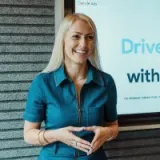
Kate Williams runs KW Marketing, an agency focused on helping food and drink businesses grow their ecommerce sales. The agency's work includes marketing strategy, email and Klaviyo automation, customer retention, and turning growth plans into measurable sales.
Kate Williams is most useful for food and drink ecommerce brands wanting retention, Klaviyo email automation, and growth plans before scaling acquisition.
Best for
Food and drink ecommerce brands selling direct and through retailers, wanting repeat purchase and email revenue growth.
Not for
A large consumer brand seeking paid creator sponsorship with media kit, rates and follower reach guarantee.
Key takeaways
Fix leaks before buying more traffic for a £1m online revenue goal.
Automated lifecycle email does more for retention than another channel or a discount.
Wholesale listings do not build a customer list; QR codes, sampling and recipes can.
Check first: Confirm this is an agency engagement, not creator sponsorship, and ask for earlier signature work examples.
Main ideas
Fix the leaks before buying more traffic · Automated lifecycle email does more for retention than another channel or a discount · Wholesale listings don’t build a customer list
Kate Williams runs KW Marketing, which works with food and drink businesses on ecommerce growth.
Their posts focus on making existing customer relationships and marketing systems work harder: improving conversion and repeat purchases, using email automation, and choosing when to scale acquisition.
Their examples show how they apply that thinking to lifecycle email, wholesale customer retention and turning growth strategy into practical next steps.
Williams connects marketing choices to commercial questions rather than treating reach or new channels as the goal.
In one post, a brand’s £1m online revenue ambition prompts a diagnostic across customer behaviour, website performance, email, paid media, search, repeat purchase and average order value.
The proposed sequence: fix leaks and strengthen retention before scaling acquisition.
In another, a birthday email shows how timely lifecycle messages can work without a large discount.
For food brands selling through retailers, Williams suggests packaging QR codes, sampling, recipes and email capture to build a direct relationship with shoppers.
Their view of AI follows the same logic: it is another buying touchpoint, not a reason to abandon email, Google or paid social.
Ask for examples of their earlier signature work if that matters to your brief.
Kate Williams runs KW Marketing, an agency for food and drink ecommerce brands.
Read more
Their posts return to a few connected arguments.
Growth usually comes from getting more out of existing customers before spending more to find new ones: fix conversion and retention leaks first, then scale acquisition.
They favour automated lifecycle email over discounts and new channels, warn that wholesale listings hand the customer relationship to the retailer, judge marketing by sales rather than reach, and insist that strategy only counts once it becomes a short list of near-term actions.
Fix the leaks before buying more traffic
Williams argues that when a food and drink brand sets a serious online revenue target, acquisition looks like the obvious answer but often isn’t the right first move.
Read more
Bringing together customer behaviour, website performance, email, repeat purchase, paid media, search and average order value usually reveals a bigger opportunity among existing customers.
The recommended order: fix leaks, raise conversion, build retention, grow repeat purchase and get the foundations working harder — then scale acquisition.
This is a commercial decision, not a technical one: good strategy means being brave enough to say the money shouldn’t go there yet.
A working session with a food and drink business targeting £1m in online revenue. Acquisition seemed the obvious starting point; a joined-up diagnostic shifted the recommendation to conversion and repeat purchase first.
Automated lifecycle email does more for retention than another channel or a discount
Email is the subject Williams returns to most.
Read more
Timed, data-driven messages built around where a customer actually is — joining a database, browsing, abandoning a basket, making a first or second purchase, celebrating a birthday or lapsing — outperform discount-led blasts, another acquisition channel or another Q4 campaign.
These moments in the customer journey are opportunities to say something different, not just rows of data.
The same standard applies to agency hiring: they want someone who owns Klaviyo strategy, campaigns, automated flows and Shopify data end to end — not someone handed a calendar and asked to send emails.
A birthday email from Christian Louboutin.
No heavy discount, complicated campaign or “BUY NOW” — just a timely message using data the brand already held.
The point, Williams notes, isn’t the gift; it’s that the basics were working.
Williams draws a hard line between wholesale revenue and customer ownership: the retailer owns the customer; the brand owns the brand.
Read more
Securing listings is a genuine achievement, but when most buyers meet the product on someone else’s shelf, the brand can’t email them, prompt a second purchase, build loyalty or grow lifetime value. The practical response is to capture shoppers and reconnect with them, rather than post more discovery content — giving them a reason to return to the brand itself.
Reporting from the Bread & Jam event, where food and drink founders had landed listings with Ocado, Waitrose & Partners, farm shops, independents and national retailers, and kept asking how to build relationships with customers they never meet. The conversation turned to QR codes on packaging, competitions, sampling, recipes, loyalty and email capture — not algorithms or posting more content.
Judge marketing by sales, and treat early numbers as early
Williams measures the work in sales, repeat purchase and customer lifetime value, not reach, impressions or engagement.
Read more
Behind a sales figure, they lists the questions that produced it: where customers are being lost, what drives a first purchase, what brings them back, where the next pound should go and what doesn’t need doing. Different brands get different answers; Williams sees that as the substance of the job.
Seven days into Q4, Williams reports year-on-year sales lifts of 74%, 77% and 120% across different food and drink clients, drawn from their Shopify dashboards — while stressing it’s too early to declare the quarter won.
Strategy only counts once it becomes three months of action
A strategy document starts the work; it doesn’t finish it.
Read more
Williams describes the follow-up session as the favourite part: sitting around a table with the client team to choose the few things that will actually move the needle in the next quarter, with named levers rather than a positioning deck. A food or drink brand might specify repeat purchase, paid media and seasonal gifting as those levers.
A visit to Flapjackery after the strategy piece, working through what was selling, what drove repeat purchase, where paid media could work harder, how to maximise Christmas gifting and how to turn more of the people already discovering the brand into repeat customers.
AI buying decisions are another touchpoint, not the end of search and email
Williams pushes back on the idea that AI assistants make search or email obsolete.
Read more
Their reading of ChatGPT Ads is that buying decisions are increasingly happening inside AI tools, adding a touchpoint to the customer journey rather than replacing the others. The brands likely to win have a clear proposition, strong customer reviews, helpful content, strong brand awareness and a joined-up marketing strategy — fundamentals that hold whichever route the customer arrives by.
The buying questions people put to AI in the post are everyday food and drink queries — the best hot chocolate for gifting, a protein powder that tastes good, a food marketing agency that understands Shopify. The answer, Williams argues, still depends on the brand having something clear to be found and reviewed.
Kate Williams shows how a diagnostic can shape recommendations for a food and drink brand with a serious online growth target.
Read more
Kate Williams describes a working session with a food and drink business targeting £1m in online revenue.
Acquisition looked like the obvious answer, but joining customer behaviour, website performance, email, repeat purchase, paid media, search and average order value revealed a bigger opportunity in getting more from existing customers.
The recommended sequence: fix leaks, increase conversion, build retention, grow repeat purchase, get the foundations working harder, then scale acquisition.
They frame good strategy as being commercially brave enough to say “don’t spend the money there yet” and “there’s a bigger opportunity over here.”
For brands planning a campaign
A retention brief should start with conversion, repeat-purchase and lifecycle diagnostics before paid acquisition. Ask an agency to show where the leaks are, what the next £1 should fix first, and what should not be funded yet.
A compact explanation of lifecycle email thinking for ecommerce brands.
Read more
A Christian Louboutin birthday email prompts Kate Williams to argue that email automation basics remain among the most effective marketing.
They list customer-journey moments: joining a database, browsing a product, abandoning a basket, first purchase, second purchase, birthday, and stopping buying.
These are opportunities to communicate differently based on what someone is actually doing, not just data points.
They ask whether brands have the basics working before piling on more Q4 campaigns.
The email had no massive discount, no complicated campaign and no “BUY NOW!!!” — just the right message, to the right person, at the right moment.
For brands planning a campaign
For a food and drink brand, the retention plan should name the lifecycle moments to automate in Klaviyo and the message for each, rather than defaulting to discounts or another acquisition channel.
How can food and drink brands retain customers when retail owns the shopper?
Read more
After Bread & Jam, Kate Williams reports that wholesale was the biggest talking point.
Food and drink founders had secured listings with Ocado, Waitrose & Partners, farm shops, independents and national retailers, but repeatedly asked how to build a relationship with customers they never meet.
They draw the distinction: the retailer owns the customer; the brand owns the brand.
Discussion focused on QR codes on packaging, competitions, sampling, recipes, loyalty and email capture — giving customers a reason to come back to the brand — rather than algorithms or posting more content.
For brands planning a campaign
If a brand sells mainly through retailers, the retention campaign should include on-pack and in-store capture routes into owned channels, with a reason to join. Measure owned-audience growth alongside wholesale revenue.
The commercial questions Kate Williams uses to assess whether marketing is working.
Read more
Seven days into Q4, Kate Williams says they are watching clients’ Shopify dashboards.
The post reports year-on-year sales of +74%, +77% and +120% across different food and drink clients, while noting it is too early to declare Q4 won.
They contrast sales with reach, impressions and engagement, and list the questions behind the numbers: where are we losing customers, what drives first purchase, what brings them back, where should the next £1 go, and what does not need doing.
For brands planning a campaign
Set campaign reporting around sales, repeat purchase and contribution, not reach. Treat early Q4 numbers as directional; agree the full test window and avoid locking in conclusions after seven days.
A look at the working rhythm and questions used to turn a KW Marketing strategy presentation into a quarterly action list.
Read more
Kate Williams describes visiting Flapjackery after the big strategy piece to make sure the plan turns into action.
The team looked at what would move the needle over the next three months: what is selling, what is driving repeat purchase, where paid media can work harder, how to maximise Christmas gifting and how to turn more people already discovering Flapjackery into repeat customers.
They call the action part their favourite and also mention sampling products.
For brands planning a campaign
A campaign brief should ask for a three-month action plan with owners and measures, including gifting, repeat purchase and paid-media roles. Strategy is only credible if it converts into those decisions.
Kate Williams’s practical, non-panicked view of new AI channels alongside email and search.
Read more
Kate Williams received an email from OpenAI about ChatGPT Ads and argues the bigger story is that people are increasingly making buying decisions inside AI.
Examples in the post include asking “What’s the best hot chocolate for gifting?”, “Which protein powder actually tastes good?” and “Recommend a food marketing agency that understands Shopify.”
They say this does not mean Meta Ads, email marketing or Google disappear; it means brands need a clear proposition, great customer reviews, helpful content, strong brand awareness and a joined-up marketing strategy.
For brands planning a campaign
Do not fund an AI platform test by cutting retention. First make sure proposition, reviews, product content and lifecycle email are strong enough to influence decisions wherever they happen.
What capabilities does Kate Williams’ agency prioritise?
Read more
Its hiring post highlights hands-on Klaviyo skills and account ownership in retention work.
Williams’ hiring post for KW Marketing says email has become one of the biggest growth channels for its food and drink ecommerce clients.
The role covers email strategy, campaigns and automated flows; Klaviyo and Shopify data; ecommerce and retention; revenue, repeat purchase and customer lifetime value; and client relationships.
The post seeks someone who can read account data, spot opportunities, make recommendations and help clients grow—not someone handed a calendar and asked to send emails.
It lists £30,000–£33,000 plus bonus, full-time minimum 30 hours, and hybrid/flexible working.
For brands planning a campaign
When assessing fit, ask who will actually own the Klaviyo account and how they use Shopify data to find opportunities. The hiring profile offers a checklist of skills to require in a retention brief.
Email and lifecycle automation as the retention engine
Kate Williams returns to email more than any other subject.
Read more
One post walks through a birthday email from Christian Louboutin to argue that timed, data-driven messages—welcome, browse, basket abandonment, first purchase, second purchase, birthday and lapse—do more for revenue than another channel or a discount-led blast.
Brands should get these journeys working before piling on Q4 campaigns.
A hiring post describes email as one of the biggest growth channels for their food and drink ecommerce clients and seeks someone to own Klaviyo strategy, campaigns, automated flows, Shopify data, repeat purchase and customer lifetime value end to end.
A teardown of a real birthday email, lifecycle moments mapped in sequence, and a clear preference for Klaviyo ownership over calendar execution.
For brands planning a campaign
For a retention brief, ask for a lifecycle audit and a flow map from welcome through win-back, tied to Klaviyo and Shopify data—not a single seasonal campaign.
Wholesale growth and the customer the brand never meets
Wholesale dominated the conversation at the Bread & Jam event.
Read more
Founders had secured listings at Ocado, Waitrose, farm shops and independent retailers, but kept asking how to build relationships with customers they never actually meet.
Kate Williams frames the split plainly: the retailer owns the customer; the brand owns the brand.
Discussions turned to QR codes on packaging, competitions, sampling, recipes, loyalty and email capture—ways to give shoppers a reason to come back—rather than algorithms or more content.
Reframing an event-floor problem from discovery to capture and reconnection.
For brands planning a campaign
For a brand with heavy retail distribution, ask for on-pack capture and content that drives a return visit. The campaign plan should name the specific capture mechanism and follow-up journey, not just awareness.
In a worked example, a client with a £1m online revenue ambition arrived expecting acquisition to be the answer.
Read more
After customer behaviour, website performance, email, repeat purchase, paid media, search and average order value were joined up, the recommendation shifted to fixing leaks, raising conversion, building retention and growing repeat purchase first—then scaling acquisition. A separate Q4 post reads client Shopify dashboards and reports year-on-year sales lifts of 74%, 77% and 120% across different food and drink clients, crediting months of decisions about where customers are lost, what drives a first purchase, what brings them back, where the next pound goes and what does not need doing.
A round-table diagnosis joining several data sources, with a deliberate decision not to spend as the strategic recommendation.
Kate Williams notes that the Q4 figures cover the quarter’s first seven days, so they are an early read, not proof the quarter is won.
For brands planning a campaign
Expect a pre-campaign diagnostic and a clear case for where money should not go yet. A brief should allow conversion and retention work alongside acquisition spend.
A client day with Flapjackery shows the step after strategy: the team sat around a table to decide what would move the needle over the next three months—what is selling, what is driving repeat purchase, where paid media can work harder, how to maximise Christmas gifting, and how to turn people already discovering the brand into repeat customers.
Read more
A working session with the client team to choose a small set of near-term priorities.
For brands planning a campaign
Ask for a short action plan with a three-month horizon and named levers, not a positioning deck. A food or drink brief should specify seasonal gifting and repeat purchase as levers.
A post on ChatGPT Ads argues that buying decisions are increasingly happening inside AI tools, without making Meta ads, email or Google irrelevant.
Read more
In this account, the brands likely to win have a clear proposition, strong customer reviews, helpful content, strong brand awareness and a joined-up marketing strategy—whichever route the customer arrives by.
Reading a platform change against a brand’s fundamentals rather than treating it as a replacement channel.
Kate Williams pushes back explicitly on “SEO is dead” and “Google is finished” framing.
For brands planning a campaign
For brands weighing AI-driven discovery, ask for a proposition and review audit plus content that answers buying questions. Add the new touchpoint to an existing plan rather than replacing it.
A hiring post for a digital account manager at KW Marketing sets out the work: email strategy, campaigns and automated flows, Klaviyo and Shopify data, ecommerce retention, revenue, repeat purchase and customer lifetime value, plus end-to-end ownership of client accounts.
Read more
The role is paid £30,000–£33,000 plus bonus, full-time at a minimum of 30 hours, hybrid and flexible.
Explicitly rejects the model in which an account manager gets a calendar and is asked to send emails.
For brands planning a campaign
Expect an account owned by someone who understands Klaviyo and Shopify data, not a calendar-and-send arrangement; test this in a discovery call.
Kate Williams owns and runs KW Marketing, a food and drink ecommerce agency.
Read more
The posts show relationships with the agency, a named client and the ecommerce platforms used in client work. The strongest single commercial signal is the agency relationship with Flapjackery, where Kate describes strategy and planning work delivered with Flapjackery's team.
KW Marketing
Owned business
Kate Williams runs KW Marketing, a food and drink ecommerce agency.
Read more
The posts describe the agency's client base and growth work directly: "We've got an incredibly busy few months ahead at KW Marketing," and a hiring post recruiting a Digital Account Manager to "join us at KW Marketing" for food and drink ecommerce accounts. Kate also writes about being "nearly 10 years into running an agency," describing their own involvement in running the business.
The post describes completing a strategy piece and turning it into a three-month action plan covering what is selling, what drives repeat purchase, where paid media can work harder, and how to maximise Christmas gifting. It shows agency work delivered for Flapjackery.
Klaviyo is the email platform at the centre of KW Marketing's retention work and appears repeatedly as a tool.
Read more
Kate recommends it for building an owned audience when wholesale channels hold the customer data, names it in an email-marketing example about a timed birthday message, and lists "geek out over Klaviyo" as a requirement in the agency's account manager job ad.
Shopify is the storefront Kate names when describing client ecommerce data and performance.
Read more
It appears as the source of customer and sales information for food and drink brands, alongside Klaviyo in the agency's account manager job ad. The references describe the platform clients use.
Kate Williams writes about food and drink ecommerce as an agency owner.
Read more
The clearest way into their work is the commercial argument running across the posts: get more out of existing customers before spending more to find new ones.
Start with posts that show the diagnosis in action: a client with a £1m online revenue ambition whose recommendation shifted from acquisition to conversion, retention and repeat purchase; and a client day at Flapjackery that turned the strategy into three months of named actions.
Email is the most developed thread: a birthday email from Christian Louboutin illustrates the case for timed, data-driven lifecycle messages over a discount or another channel, while a hiring post sets out the Klaviyo, Shopify and repeat-purchase skills the agency wants on an account.
Two themes widen the picture.
One is wholesale: securing retail listings is celebrated, but the retailer owns the customer.
The practical answer is capture and reconnection through packaging QR codes, sampling, recipes and loyalty.
The other is discovery in AI tools, treated as an added touchpoint rather than the end of search or email, with the same fundamentals—a clear proposition, reviews and helpful content—deciding who wins.
Read the shorter commercial posts for the sales-and-repeat-purchase framing, and the event post for the wholesale-versus-ownership problem.
Writes about the same retention and email territory from an ecommerce standpoint: how automations outperform simply sending more campaigns, how customer behaviour should shape the message, and how a changing discovery funnel, including AI-assisted shopping, affects what brands prepare on the product page and in follow-up.
Read more
Like Williams, they argue that responding to existing customer intent beats adding another campaign to the calendar.
Hammed bases their analysis mainly on industry report data and platform-level shifts across ecommerce, presenting trend breakdowns. Williams draws on agency client work in food and drink, leading with commercial decisions and client sales outcomes rather than report statistics.
Works the same email-and-SMS retention ground for DTC brands, treating the channels as relationship builders rather than promotion tools and arguing that coordinated timing across channels lifts revenue without more messages.
Read more
Both teach by walking through a specific sequence or flow rather than stating a principle.
Lopez focuses tightly on sequence and cross-channel orchestration design, with posts that read as consulting explanations and invite reader questions. Williams places email inside a wider growth diagnosis for food and drink brands, connecting it to conversion, paid media, wholesale and repeat purchase.
Makes the closest argument to Williams’ fix-the-leaks-first position: retention cannot out-email a bad acquisition strategy or a product customers do not want to repeat-buy.
Read more
The job is to find why a customer was never going to come back, rather than launch another flow. Both push retention upstream into the whole customer experience.
Salomon writes as a retention practitioner, working through churn accountability and cohort tagging and often addressing how to argue the case internally. Williams develops the same point from the agency growth side, using a £1m revenue diagnostic and three-month action plans to reach it.
Kate Williams' audience picture is specific about subject matter but not who is listening.
Read more
The one measured figure is a LinkedIn following of 5,351, observed on 11 October 2026—a small, specialist base rather than a broad consumer audience.
Seven posts published between 21 July and 7 October 2026 consistently address food and drink brands, retail listings, D2C repeat purchase, Shopify and Klaviyo retention, and Q4 trading.
Together, they point to an audience of food and drink founders, ecommerce and marketing operators, and agency-side practitioners working on wholesale-to-D2C retention problems—a plausible match for a retention-focused campaign.
Before committing budget, ask for LinkedIn follower demographics (location, job function and seniority), any audience survey, and recent reach and engagement figures for retention and Klaviyo posts.
This will help verify whether the audience fits the campaign rather than assuming the follower count represents it.
No sponsorship programme, media kit, rate card or published partnership inquiry route appears in the posts.
Read more
Kate Williams operates KW Marketing, an agency for food and drink ecommerce brands, so the commercially realistic route is an agency engagement rather than a creator sponsorship.
The closest named commercial relationship is Flapjackery, described in an October 2026 post as a client whose strategy work is complete and whose focus has shifted to a three-month action plan covering repeat purchase, paid media and Christmas gifting.
Other posts describe agency work for unnamed clients, including monitoring Shopify dashboards in early Q4 and reporting year-on-year sales increases across different food and drink clients.
An August 2026 hiring post for a Digital Account Manager at £30,000–£33,000 on a minimum 30-hour hybrid contract points to an agency team rather than a one-person operation, a key consideration for a buyer's timeline.
The approach is retention-led: email and Klaviyo automation, repeat purchase and customer lifetime value take priority over additional acquisition spend.
Ask directly about rates, deliverables and availability for any sponsorship-style arrangement.
A food and drink ecommerce brand that sells direct and through retailers wants to grow repeat purchase and email revenue over the next two quarters, and is looking for a Klaviyo-led retention programme rather than another acquisition push.
Read more
This is a strong fit, and the reasons are specific rather than general.
Email and lifecycle automation is the subject Kate Williams returns to most often, and the argument is consistent across the posts here: the welcome, browse, basket abandonment, first purchase, second purchase, birthday and lapse moments are where revenue is already sitting, and they should be working before more Q4 activity is layered on top.
The birthday-email post makes that case with a concrete example and lists the journey steps in sequence.
For a retention programme, that points to a lifecycle audit and a flow map rather than a single campaign.
The diagnostic habit matters too.
In the post about a client chasing £1m in online revenue, the recommendation moved away from acquisition once customer behaviour, website performance, email, repeat purchase, paid media, search and average order value were joined up.
The stated sequence is fix the leaks, raise conversion, build retention, grow repeat purchase, then scale acquisition.
A programme that wants email revenue improved, and is willing to hear where the money should not go yet, matches how this work is described.
The food and drink context is not incidental.
The posts here address retail listings at Ocado, Waitrose and independents, and the problem of building a relationship with customers the brand never meets.
The suggested routes are on-pack QR codes, competitions, sampling, recipes, loyalty and email capture.
A brand that is heavy on wholesale will find that problem already thought through.
Two qualifications belong in the programme.
First, the buyer should ask who will own the Klaviyo account.
The hiring post describes a role built around email strategy, campaigns and automated flows, Klaviyo and Shopify data, repeat purchase and customer lifetime value, and explicitly rejects the model of an account manager handed a calendar.
That is the level of ownership to test in a discovery call.
Second, the same post shows agency staffing on a minimum 30-hour contract, which is the capacity detail that affects timelines.
The audience evidence is thin — one LinkedIn figure of 5,351 observed in October 2026 — but this programme is about agency retention work, not reach, so audience size is not the deciding factor.
When to choose a specialist
A large consumer brand wants a paid creator sponsorship — a set of posts and short video featuring Kate Williams as a named creator voice, aimed at a mass consumer audience, with a media kit, agreed rates and a follower-reach guarantee.
Read more
This is a poor fit for three separate reasons.
No sponsorship offer is documented.
Across the seven posts there is no media kit, no sponsorship policy, no rate card and no published inquiry route for partnership work.
The commercial activity described is agency work for food and drink ecommerce clients, including a named engagement with Flapjackery and unnamed clients whose Shopify dashboards are monitored.
A campaign that assumes published creator rates and deliverables is working from something the posts do not show.
The audience is small and specialist.
The only measured figure is 5,351 LinkedIn followers, observed in October 2026.
The posts address food and drink founders, ecommerce and marketing operators, and agency-side practitioners working on wholesale-to-D2C retention.
A campaign built around mass consumer reach would be pulling against that.
Finally, the subject matter is a mismatch.
The posts are about retention economics — repeat purchase, customer lifetime value, conversion, average order value and where the next pound should go.
A campaign that only wants reach, impressions and engagement is asking for the metrics the Q4 post deliberately contrasts with sales.
That is not a gap in the creator's ability; it is a difference in what the work is for.
A more realistic version of this campaign would be a retention or lifecycle project scoped through the agency, with the deliverable being built journeys and a measurable lift in repeat purchase rather than a package of creator posts.
A worked campaign example
A food and drink brand with strong retail distribution — most sales through supermarkets and independents, a smaller Shopify store — wants to grow email revenue and repeat purchase. The plan is a Klaviyo-focused retention strategy, with a first phase over one quarter.
The angle is to treat the retail shelf as a customer-acquisition channel that currently leaks, and to build the owned-audience path back from it. Start with a diagnostic, not a campaign.
Step one, the diagnostic.
Join the data the brand already has: Shopify order and repeat-purchase rates, Klaviyo list growth and flow performance, average order value, paid media returns, and whatever sell-through or category data is available from retailers.
The questions are where customers are lost, what actually drives a first purchase, what brings them back, and what does not need doing yet.
The £1m revenue post shows this pattern, and the recommendation may well be to hold acquisition spend while conversion and retention are fixed.
Step two, the capture mechanism.
If most customers buy through someone else's channel, the brand owns the brand but not the shopper.
The wholesale post names the practical routes: QR codes on packaging, competitions, sampling, recipes, loyalty and email capture.
Pick one or two and commit to them for the quarter, with a clear reason for a shopper to scan or sign up — a recipe, a gifting guide, a sampling offer — rather than a generic newsletter prompt.
Name the mechanism and the follow-up journey behind it, not just the awareness goal.
Step three, the lifecycle flows in Klaviyo.
Build or repair the sequences described in the posts: welcome, browse abandonment, basket abandonment, first purchase, second purchase, birthday and win-back.
Keep the message proportional — the birthday-email example is a good model: no heavy discount, no complicated campaign, just the right message at the right moment.
For a gifting-heavy food brand, the second-purchase and win-back flows are the ones that carry the quarter.
Step four, the three-month action plan.
The Flapjackery post shows the working rhythm after the strategy piece: a small set of near-term priorities agreed with the client team — what is selling, what is driving repeat purchase, where paid media can work harder, how to maximise Christmas gifting, and how to convert people already discovering the brand.
Attach owners and measures to each lever, and keep the plan short.
Measurement.
Set reporting on sales, repeat purchase and contribution rather than reach, impressions and engagement.
If the quarter starts strongly, treat the early numbers as directional — the Q4 post reports year-on-year lifts of 74%, 77% and 120% across different clients while explicitly saying seven days is too early to call the quarter won.
Agree the test window up front and avoid locking in conclusions from the first week.
Two things to confirm before scoping.
Ask who at the agency will own the Klaviyo account, and test them on how they read Shopify data for opportunities — the hiring post sets out the expected skill set and rejects calendar-and-send account management.
Also agree the engagement route directly, since no partnership terms or rates are published in the posts.
A sensible deliverable at the end of the quarter: an owned-audience growth figure with a named capture mechanism behind it, rebuilt lifecycle flows with open and revenue data, and a repeat-purchase rate compared against the pre-quarter baseline.
Choose Aminat Hammed for a retention programme that needs to be argued with published industry numbers and broadened to reflect how shoppers now find products.
Read more
The posts cite named data rather than assertion: a 2026 ecommerce marketing report covering 150,000 brands, where automations were 2% of email sends and 30% of email-driven revenue, and figures on AI-assisted shopping discovery.
Those figures suit a brand that has to justify its email and flow budget to a sceptical board, or wants retention work joined up with product-page clarity, comparison content and first-party data.
The follow-up recommendation is to ask what customer behaviour the brand is not responding to yet, before adding another campaign to the calendar.
A food and drink brand that also wants its product information made legible to AI-driven discovery would get a broader frame than a flows-only engagement.
The context is ecommerce in general, not food and drink.
The posts do not address retail listings, wholesale distribution or reaching shoppers who buy through a supermarket and never enter the brand's database—the central capture problem for a brand heavy on retail.
They name which flows matter and what the data says, but include no client account, audit or delivery arrangement.
Ask how a programme would be staffed, scoped and priced before treating this as evidence of delivered retention work.
Choose Lindsey Lopez when a programme includes SMS as well as email and the recurring problem is uncoordinated sending.
Read more
The posts work through cross-channel orchestration with a concrete example: an abandoned-cart email, an SMS follow-up two hours later if the email is not opened, and a dynamic product recommendation that evening if the customer opened but did not buy.
They also describe an educational sequence built for a direct-to-consumer client in one product category, run as three parts rather than a single promotion.
That suits a brand whose email and text messages currently overlap or contradict each other, and whose lists are large enough that message discipline matters more than learning another platform.
Their framing of email and SMS as relationship-building channels rather than promotion channels is useful when the internal argument is about sending fewer, better messages.
The posts date to June 2025, roughly sixteen months before the other evidence reviewed here, so they cannot confirm the current state of the thinking.
Neither food and drink nor wholesale retail appears in the two posts, and there is no Klaviyo or Shopify data example to compare with a Klaviyo-first brief.
The cross-channel advice is practical but generic about platforms and tooling.
A brand that needs account-level analysis of Shopify and Klaviyo reporting should ask for a relevant example before proceeding.
Choose Alejandra Salomon when the brand suspects the churn problem starts before retention does.
Read more
The posts argue that a retention team can be held responsible for customers it never had a chance to keep, that customers acquired through heavy discounting churn faster, and that a better win-back flow will not fix a product, pricing or service problem.
The suggested method is concrete: tag customers, show the cohorts and point to where behaviour starts to change, shifting the conversation with leadership from churn in isolation to the story before the churn.
That is the right alternative when a food and drink brand has built the flows but the numbers have not moved, or when the disagreement inside the business is about whether the problem is acquisition, offer or experience.
It is also a useful check before spending the quarter on another lifecycle build.
This is diagnostic and persuasive work rather than a build plan.
The posts do not set out the welcome, second-purchase or replenishment sequences a Klaviyo-led retention programme needs, and give no client-level example of a retention programme being run.
Food and drink, wholesale and retail distribution are absent, so ask how the diagnostic would adapt to a category where repeat purchase depends on shelf availability, gifting seasons and product formats.
Kate Williams's LinkedIn posts from 21 July to 7 October 2026 cover lifecycle and Klaviyo email, repeat purchase and retention, wholesale distribution, on-pack capture and reconnection, Q4 sales reporting, acquisition-versus-retention decisions, a named client engagement and an agency hiring post.
Creators with a similar focus and teaching approach include Aminat Hammed, whose two LinkedIn posts are dated 2 and 9 October 2026; Lindsey Lopez, whose two are dated 12 and 17 June 2025; and Alejandra Salomon, whose two are dated 18 and 22 September 2026.
The similarity is in the ideas and teaching approach in those posts, not audience size or commercial availability.
Three gaps shape what can be said.
Kate Williams's posts here are short; they do not include videos, transcripts, newsletters or long-form writing.
The LinkedIn profile shows a following of 5,351 in October 2026, but no demographic, geographic or seniority breakdown or engagement figures.
No media kit, sponsorship policy, rate card or published partnership route appears in the posts here, so partnership content describes an absence of published offers rather than a claim that none exist.
The posts here do not identify a signature book, show or earlier career change.
To better understand why people search this name, readers may want to consult the official KW Marketing biography and any publisher, event or conference pages tied to Kate Williams.
Client sales figures and salary details quoted on the page are as stated in the posts, and any campaign briefs used for fit decisions are hypothetical illustrations based on these posts, not briefs Kate Williams has been given.
Dates and figures here are those shown in the posts and profile information.