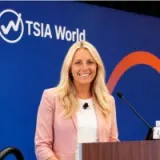
Kate Alger is a customer success executive and advisor who writes about scaling customer success, AI in customer operations, and the business practices that support renewals and customer value.
Kate Alger is most useful for customer success content on AI governance, staged autonomy, and renewal operations.
Best for
A B2B SaaS customer success platform needing fractional thought leadership on AI governance and autonomous CS maturity.
Not for
A consumer app or developer tooling brand wanting large reach, rate card, and audience demographics.
Key takeaways
Autonomous customer success is a three-step climb, not a switch.
AI guardrails are operational controls in how work gets done.
Renewals are lost in delivery, not at the price negotiation.
Check first: Confirm recent post impressions, engagement, follower demographics, and commercial terms.
Main ideas
Autonomous customer success is a three-step climb, not a switch · AI guardrails are operational controls in how work gets done · Renewals are lost in delivery, not at the price negotiation
Audience
2,691 LinkedIn followers · 2 of 9 Kate Alger's posts name a customer success leadership segment in the copy
Kate Alger writes about customer success, especially how teams can grow beyond manual, reactive work.
Their posts trace a practical progression toward AI-assisted and increasingly autonomous customer operations, with a clear emphasis on human oversight and reliable business data.
They also connect customer outcomes to the work behind them: onboarding, service delivery, and renewal processes.
Kate Alger makes abstract changes in customer success easier to assess by turning them into operational choices.
In their Crawl–Walk–Run framework, AI first helps a customer success manager, then recommends actions for approval, and eventually handles some workflows with human review.
They pair that progression with a warning: automation built on disconnected or poor-quality data can amplify problems.
Their governance writing makes the safeguards concrete, such as requiring review for high-stakes actions and limiting agents to authorized information.
Other posts focus less on AI and more on services delivery, event promotion, or product updates, so ask for examples focused specifically on autonomous customer success if that is central to your brief.
Readers interested in how AI maturity, accountability, and retention operations fit together have a clear reason to follow their work.
Alger's recurring ideas center on scaling customer success without simply hiring more people: stage AI adoption in phases, embed governance into processes, and treat delivery quality and connected data as prerequisites for renewals.
Read more
They also use benchmarked assessments and a capital-CS versus lowercase-cs distinction to make maturity practical rather than abstract. The posts mix original arguments with promotion of colleagues' videos, a release blog, and a news interview; guest views are named separately below.
Autonomous customer success is a three-step climb, not a switch
Alger frames the shift from linear CS scaling to autonomous customer success in three phases.
Read more
Crawl: AI assists a CSM with meeting notes and renewal drafts.
Walk: AI proposes an action, such as a save play for a churning account, and a person approves it.
Run: AI executes a process, such as renewal or onboarding for long-tail or SMB segments, while a person reviews results.
Each phase has a goal, from saving hours per CSM to scaling across the bottom 80% of a book.
Run depends on connected product usage, CRM, and support data; without that knowledge graph, automation just automates chaos.
In the post, Crawl aims to save 2–4 hours per CSM per week; Walk puts a draft save proposal in the CSM's inbox for one-click send; Run lets AI manage the entire renewal or onboarding flow independently for the bottom 80% of the book.
AI guardrails are operational controls in how work gets done
After a CNN Fareed Zakaria GPS interview with Mustafa Suleyman, Alger argues the risk is not science-fiction sensationalism but granting software autonomy without human accountability and operational guardrails.
Read more
They call for turning macro ethics into micro operational choices: require human review for high-stakes actions, bound what agents can do with company policies and role-based access, log every AI action for audit, and measure outcomes like retention and early risk mitigation rather than task automation. The quoted speaker is Mustafa Suleyman, CEO of Microsoft AI; the product-level argument is Alger's.
The post names contract modifications, high-churn interventions, and sensitive pricing proposals as actions that may require CSM review before an AI agent executes them. Role-based access and business guardrails bound customer data, and every AI action is logged.
Renewals are lost in delivery, not at the price negotiation
Alger argues most services businesses do not lose renewals because of price; they lose them because delivery missed the mark.
Read more
Rocky onboarding, blown timelines, and budget overruns put CSMs in a defensive position, turn renewal forecasting into guesswork, and damage the customer experience before it begins. The proposed fix is to connect the whole services lifecycle—from estimation and staffing through delivery, billing, and renewal—on one Salesforce-native platform.
The post lists seamless handoffs, connected data, and predictable delivery as the route to fewer renewal surprises and higher NRR, and points readers to a Why PSA Matters e-book.
Benchmarked maturity assessments as a working customer-success format
Alger promotes complimentary 30-minute CS Business and Maturity Assessments at Dreamforce with Steve Frost, aimed at CCOs, CROs, and VPs or leaders of customer success.
Read more
The session includes industry benchmarks, a live CS process automation demo, and an operational assessment that maps lifecycle milestones and friction points against industry standards and quantifies potential reclaimed CSM capacity and NRR uplift.
Every participant receives a tailored CS maturity path.
The format is short, diagnostic, and designed to produce a deliverable rather than serve as a general keynote.
The promotional posts say a four-question intake diagnostic takes about five minutes to prepare for the meeting, and that availability is limited because Alger and Steve Frost host each session personally. Steve Frost is a named co-host.
One version describes prep as a four-question intake diagnostic form; the other allows a form or a Zoom call.
Capital CS and lowercase cs are different problems
In a Dreamforce invitation post, Alger distinguishes capital CS—scaling the customer success department, optimizing CSAT, and managing renewals—from lowercase cs, the strategy and culture of making customers successful.
Read more
The argument is that transforming one without the other misses the real impact. The distinction is a positioning hook rather than a developed model, but it recurs in how Alger frames customer success work.
The post asks leaders heading to San Francisco to connect about driving scalable impact across both capital CS and lowercase cs.
The feed mixes original arguments with colleague and news amplification
Separate Alger's own framing from posts that carry someone else's work.
Read more
One post amplifies a #60SecondsOfCertainty video by Shane Ward, identified in the post as VP of Global Professional Services at Certinia, on planning under volatility with a services-as-a-business approach.
Another points to a blog by Daniel Brown, identified as Certinia's Chief Product and Strategy Officer, about the Winter 2024 release, Certinia AI, and services revenue forecasting.
A third builds Alger's own governance argument on top of a CNN interview.
Conference invitations and product posts show topics Alger is willing to carry; opinions belong to the named guests or colleague when attributed that way.
The Shane Ward video post and Daniel Brown release-blog post promote the named colleagues' material rather than offering original analysis by Alger.
The posts cover both product-release or PSA topics and AI, but provide no individual dates. Ask for dates before drawing conclusions about chronology or a shift in focus.
This is the clearest introduction to Kate Alger’s maturity framework and explains what they mean by autonomous customer success.
Read more
A newcomer can use the three phases to assess whether a proposed talk or article fits their approach.
Kate Alger divides AI adoption into three steps: AI assists a CSM, suggests actions for a person to approve, then handles some workflows with human review. The post warns that disconnected or poor-quality data can make automation unreliable.
For brands planning a campaign
For a customer success platform brief, build an outline around the three phases and make data readiness a prerequisite—not an all-at-once switch to autonomy.
This post explains how Kate Alger translates AI safety into customer-success operations.
Read more
Read it alongside the phased framework to see what should govern the move toward greater autonomy.
Kate Alger connects AI governance to operational choices: require CSM review for high-stakes actions, limit agents to authorized data and policies, and log their actions. The example makes human oversight part of the process, not just an abstract principle.
For brands planning a campaign
A thought-leadership piece could pair each autonomy phase with a concrete control, such as approval before a churn intervention or pricing proposal.
This example shows that Alger’s customer-success writing also covers the operational conditions behind retention.
Read more
It helps a newcomer judge whether a campaign about AI should extend beyond AI to delivery and renewal processes.
Kate Alger argues that customer success cannot make up for poor onboarding, missed timelines, or budget overruns. They link delivery, CRM, and financial data silos to renewal risk, then present connected lifecycle data as a way to reduce surprises.
For brands planning a campaign
Use this as a supporting example in a campaign about AI readiness: explain that automation depends on sound handoffs and connected operational data.
Benchmarked CS maturity assessments as a sales motion2
Services as a business, and planning under volatility2
Autonomous customer success, staged as Crawl, Walk, Run1
AI guardrails as an operational requirement, not a policy ideal1
Delivery failure, not price, drives lost renewals1
Capital "CS" versus lowercase "cs"1
Autonomous customer success, staged as Crawl, Walk, Run
Kate Alger frames the shift from linear CS scaling — hiring more CSMs to serve more customers — to "Autonomous Customer Success" in three phases: Crawl, where AI works for the CSM on meeting notes and renewal drafts; Walk, where AI suggests a play and a human approves it with one click; and Run, where AI executes the flow and the human reviews results.
Read more
Each phase has a target, from hours saved per CSM to full ownership of renewals and onboarding for the bottom 80% of a book. The framework ends with a data prerequisite: without a knowledge graph connecting product usage, CRM, and support tickets, "you're just automating chaos."
A three-phase maturity model, with a named goal for each phase and a stated prerequisite for advancing beyond the first.
For brands planning a campaign
This is the most directly reusable asset for a brief on autonomous CS maturity.
A talk or article can walk through the three phases and land on governance requirements using the same vocabulary.
The data prerequisite offers a concrete qualification question to open a sales conversation, rather than a generic capability pitch.
AI guardrails as an operational requirement, not a policy ideal
Responding to a Mustafa Suleyman interview on AI safety, Kate Alger argues that the real risk is granting software autonomy without human accountability.
Read more
They describe how guardrails work inside Certinia's Customer Success Cloud: human review for high-stakes actions such as contract modifications, churn interventions, and pricing proposals; company policies and role-based access that limit what agents can do; and logs of every AI action for audit. The closing argument: guardrails create the trust needed to scale, rather than putting the brakes on it.
Reframes macro-level AI ethics as micro-level system controls, grouped into three named categories: governance, context and auditability, and outcome measurement.
For brands planning a campaign
This is the closest existing sample of the work the reader's brief asks for: turning a public argument into product-level controls.
It shows how Kate Alger would handle a governance topic, but the piece reuses a specific interview.
A new engagement would need fresh evidence and examples, not a re-run of this argument.
Benchmarked CS maturity assessments as a sales motion
Two posts promote complimentary 30-minute CS Business and Maturity Assessments at Dreamforce, co-hosted with Steve Frost and aimed at CCOs, CROs, and VP or Leader of Customer Success.
Read more
The session covers industry benchmarks, a live CS workflow automation demo, and an operational assessment that maps lifecycle milestones against industry standards and quantifies potential reclaimed CSM capacity and NRR uplift. A four-question intake prepares attendees for the meeting, and each participant leaves with a tailored maturity path.
A short, benchmarked diagnostic with an ROI quantification deliverable and a brief pre-session intake form to qualify attendees.
For brands planning a campaign
Shows a session format Kate Alger has run end to end: short, benchmarked, built around a deliverable, and aimed at a named buyer role. A platform could adapt it into an assessment-led webinar or content series rather than a conventional keynote.
Kate Alger argues that services businesses lose renewals because delivery missed the mark — with rocky onboarding, blown timelines, and budget overruns — rather than because of price.
Read more
When delivery, CRM, and financials sit in separate systems, CSMs play defense and renewal forecasting becomes guesswork. The proposed fix is to connect the services lifecycle, from estimation and staffing through delivery, billing, and renewal, on one Salesforce-native platform.
For brands planning a campaign
Makes the practical "why now" link between professional services delivery and customer success metrics. It works as a supporting module beneath an AI or CS-maturity piece and speaks to the operations audience an operations campaign needs.
In a short Dreamforce post, Kate Alger distinguishes Capital "CS" — scaling the department, optimizing CSAT, managing renewals — from lowercase "cs", the strategy and culture of making customers successful.
Read more
The post argues that real impact comes from transforming both.
For brands planning a campaign
A concise positioning line Kate Alger already uses in their posts. It can frame a talk around strategy and culture, not just tooling, but on its own it is a hook rather than a developed argument.
Services as a business, and planning under volatility
Two posts advance the services-as-a-business position.
Read more
One promotes a #60SecondsOfCertainty video in which Shane Ward, VP of Global Professional Services at Certinia, describes giving services organizations a holistic view of the business so they can adapt to market volatility. The other points to a colleague's blog on Certinia's Winter 2024 release and its features for services revenue forecasting and AI.
Short-form video and release-announcement formats, both structured as product-led posts rather than original analysis.
For brands planning a campaign
Shows Kate Alger working in product marketing formats as well as making original arguments. These company-asset posts indicate the topics they are willing to carry, not their own research or opinion.
The posts follow a few recurring formats: bulleted use-case posts naming a buyer role and problem, conference invitations with booking links and limited-availability framing, a short video series, and release or third-party roundups.
Read more
Two subject clusters stand out: AI governance and autonomous CS, and services delivery, PSA, and product releases.
One post curates a CNN interview, another shares a colleague's video, and a third points to a colleague's release blog.
For brands planning a campaign
If a campaign needs original framing, specify that explicitly: their feed mixes original arguments with company-asset amplification. The two subject clusters also raise a question to test in conversation: does the AI focus reflect a deliberate shift or a run of recent product cycles?
Kate Alger's posts center on Certinia, promoting its Customer Success Cloud, Professional Services Cloud, Dreamforce assessments and Winter 2024 release.
Read more
They use #TeamCertinia and refer to Certinia colleagues, presenting the work as a disclosed partnership without specifying whether Kate Alger is an employee, client or partner; ask for the exact relationship.
Salesforce appears as the platform and event context, and TSIA as a professional affiliation Kate Alger states.
The posts mention no sponsorship, affiliate, investment or owned-business relationship.
Certinia
Disclosed partnership
Kate Alger posts repeatedly about Certinia's Customer Success Cloud and Professional Services Cloud, promotes complimentary CS maturity assessments at Dreamforce with colleague Steve Frost, and shares the Certinia Winter 2024 release.
Read more
The posts use #TeamCertinia and refer to Certinia colleagues. They present the work as a disclosed partnership but don't specify whether it is employment, client work or another partnership; ask for the exact relationship.
Certinia's products are described as Salesforce-native, and Kate Alger's Certinia posts use #Salesforce and reference Dreamforce, Salesforce's conference.
Read more
The posts establish Salesforce as platform and event context, not a sponsorship or client relationship.
Kate Alger writes about two linked problems: how customer success teams scale without simply hiring more managers, and what must be in place before AI can act on a customer’s behalf.
Read more
Their clearest entry point is a three-phase framing of autonomous customer success: Crawl, where AI drafts notes and renewal emails for a manager; Walk, where AI proposes an action and a person approves it; and Run, where AI executes a workflow such as renewal or onboarding for long-tail accounts while a person reviews results.
Pair that with the governance argument, which treats guardrails as working controls inside the product: human review for high-stakes actions such as contract changes or pricing proposals, role-based limits on what an agent can touch, and a log of every AI action.
Read those two together before the promotional posts.
From there, follow the customer retention argument: renewals are lost in rocky onboarding, blown timelines, and disconnected delivery, CRM, and financial data rather than at the price conversation.
Their services-as-a-business material covers planning through market volatility.
Several posts carry a colleague’s or a news subject’s argument rather than Alger’s own, so check who is speaking.
To explore further, search Kate Alger’s name alongside terms such as autonomous customer success, AI guardrails, customer success maturity, and services as a business.
Pons writes about customer success leadership at the strategy level: the high-stakes calls CCOs make on renewals, escalations, and customer risk, and whether an AI workflow actually eliminates a report, meeting, or manual process.
Read more
That’s the same ground Alger covers in their governance post and phased autonomous-CS framing: both treat AI as a question of judgment and operating discipline, not a tool demo, and address senior customer and revenue audiences at events.
Pons deliberately steps outside the customer success bubble, gathering arguments from CMOs, CROs, and RevOps leaders at GTM summits and hosting closed-room executive roundtables. Alger writes from inside a customer success software platform, tying each argument to product-level controls and a benchmarked assessment offer for CCOs, CROs, and CS leaders.
Gaspar publishes practical customer success and retention material — journey mapping, value after go-live, executive-sponsor risk — and argues that AI will become an invisible everyday assistant, as email did.
Read more
That matches Alger’s staged adoption model and view that retention depends on what happens long after onboarding, not on the renewal conversation alone.
Gaspar uses list-style playbooks backed by cited benchmarks, then closes with questions that invite CSMs to compare their own practice. Alger writes to executives and buyers, anchors posts in a named platform and maturity model, and ends with a deliverable such as a benchmarked assessment.
Patin teaches customer success craft in short numbered series: quick wins that build momentum during onboarding, and renewals framed as proof points rather than paperwork.
Read more
Alger’s staged model shares the same instinct: give readers a sequence with a goal attached to each step, and show how early wins set up later retention.
Patin’s posts read as first-person CSM playbooks, with concrete client anecdotes and open discussion prompts. Alger’s are executive-facing operating-model arguments, with AI governance controls and a 30-minute benchmarked maturity assessment in place of a personal client story.
The only measured audience figure in the posts here is a LinkedIn profile with 2,691 followers, observed 8 October 2026.
Read more
Nine dated posts, published between 4 January 2024 and 21 September 2026, address customer success leaders: two name CCOs, CROs, and VPs or leaders of Customer Success directly, and several invite Dreamforce attendees to connect or book a 30-minute CS maturity assessment.
For a B2B SaaS customer success platform hiring a fractional thought leader on AI governance and autonomous CS maturity, the posts support a placement where Kate Alger supplies the argument and framing while the platform's own channels carry distribution.
The written work targets people who own post-sale outcomes, matching the buyer's expected reader.
The follower base is small, so plan reach around the buyer's amplification, paid distribution, or Alger's own speaking and newsletter slots rather than organic post reach.
Before committing, ask for recent post-level impressions and engagement on comparable topics and formats, plus LinkedIn analytics showing follower demographics by job function, seniority, geography, and company size.
If the campaign requires proof of audience seniority or job titles, request a documented source such as those demographics or an audience survey.
Alger's posts also state 25 years as a customer success executive and TSIA practitioner speaker, which speaks to credibility with this audience, not audience size.
LinkedIn followers
2,691
LinkedIn profile · 2026-10-08
Kate Alger's posts name a customer success leadership segment in the copy
Kate Alger’s posts do not say whether they accept sponsorships, paid partnerships, or affiliate arrangements, so no partnership formats are listed.
Read more
They do show promotional work on behalf of Certinia: explaining Customer Success Cloud capabilities, sharing release blogs and e-books, and inviting customer success executives to book a complimentary 30-minute CS business and maturity assessment around Dreamforce.
That booking link is aimed at CCOs, CROs, and customer success leaders assessing their own operations, not brands looking to work with Kate, so it is not a partnership inquiry route.
No rate card, media kit, branded-content policy, or dedicated partnership page is published in the posts.
To explore sponsored content, speaking, or advisory work, contact Kate directly through the LinkedIn profile listed in the At a glance section and ask what is available.
Strong fit for the argument, framing, and reader. The platform would supply distribution and a clear commercial agreement; the posts show no published sponsorship format to buy off the shelf.
Read more
Brief
A B2B SaaS customer success platform wants a fractional thought leader to build content on AI governance and autonomous CS maturity, including a talk or article outline based on staged autonomy and guardrails.
Reasons
Conditions
Plan reach around the platform’s own channels, paid distribution, or speaking slots. The only published audience figure is a LinkedIn profile with 2,691 followers, observed 8 October 2026; no impressions, engagement rate, or follower demographics were provided.
Agree commercial terms, scope, usage rights, and whether sponsored content, speaking, or advisory work is available directly with Kate Alger. No rate card, media kit, or branded-content policy appears in the posts, so ask for those before proceeding.
When to choose a specialist
Poor fit as briefed. The mismatch is commercial format and measured reach, not subject interest.
Read more
Brief
A consumer app or developer tooling brand wants a large-reach sponsored content or video series with a published rate card, guaranteed impressions, and audience demographics by geography and job function.
Reasons
A worked campaign example
Audience
CCOs, CROs, and VPs or leaders of Customer Success at software and services companies; extend to services and delivery leaders if the platform wants the second module.
Format
A 25 to 30 minute conference talk or webinar, paired with a companion article and a one-page maturity checklist attendees can use after the session. The format mirrors a session Kate Alger has already run, where attendees received a tailored maturity path after a short intake.
Outline
Detail
Contrast linear scaling, where serving 100 more customers means hiring more CSMs, with the exponential claim behind autonomous customer success. This is the hook Kate Alger already uses, and it frames the rest of the talk.
Crawl: AI works for the CSM on meeting notes and renewal drafts, saving roughly two to four hours per CSM per week. Walk: AI drafts a save play for a churning account, and a CSM approves it with one click. Run: AI owns renewals and onboarding for the long tail or SMB book, and the human reviews results.
Walk through the three phases, with a goal for each
Detail
Pair every step toward autonomy with the control it needs: CSM review before contract modifications, churn interventions, and sensitive pricing proposals; agents bounded by company policies and role-based access; every AI-created action logged for audit. Argue that guardrails create the trust required to scale rather than slowing it.
State plainly that the Run phase fails without connected data. Product usage, CRM, and support tickets have to talk to each other, or the automation is just faster chaos. This gives the platform a diagnostic question to open sales conversations with instead of a generic capability pitch.
Renewals are lost to delivery misses before price: rocky onboarding, blown timelines and budget overruns often stem from delivery, CRM and financial data sitting in separate systems. Connected lifecycle data makes renewal forecasting less of a guess.
Model the ending on the assessment sessions: a short pre-session intake with a few questions, then a one-page maturity path for each attendee showing where they sit, what their next phase requires and which control is missing. The deliverable makes the campaign usable outside the room.
From Crawl to Run: what governs autonomous customer success
Tradeoff
A shorter, benchmark-led session with a checklist will travel further with this audience than an hour-long keynote, but it requires more preparation from the platform’s team to create the assessment deliverable and qualify attendees beforehand.
What the platform must add
Fresh examples and a live product walkthrough. The guardrails post responds to one specific interview and one vendor product, so the new piece needs its own evidence. The platform must also provide distribution, paid reach and the commercial agreement, since no published sponsorship format appears in the posts here.
Why it works for the brief
The concept uses Kate Alger’s existing structure instead of commissioning a new thesis, translates AI governance into decisions customer success leaders can act on and produces a portable artifact. It also gives the platform a reason to demo governance and data features in context rather than present them as a feature list.
Pons when the campaign needs a voice from outside the customer success bubble and a convening format rather than a keynote.
The two posts show a deliberate choice to sit out a CS meetup, attend cross-functional go-to-market events, then bring three lessons back for customer leaders: judgment cannot be outsourced to AI; AI adoption has to make a process, report, or approval actually disappear; and go-to-market speed depends on agreeing data-governance non-negotiables with IT.
The posts also describe hosting closed-room executive roundtables for senior women across customer success, support, account management, and revenue operations.
That fits a campaign seeking a senior peer-room event and commentary linking customer success to the wider revenue table.
The posts are event reflections and roundtable invitations, not a taught framework.
There is no staged autonomy model or product-level governance vocabulary to reuse, so a campaign on Crawl-Walk-Run maturity or agent guardrail controls would need to supply the structure and demonstrations.
The appeal to a mixed go-to-market audience is also a limitation: a room made up only of CSMs may find the cross-functional framing less directly usable.
Choose John Gaspar when the buyer wants tactical, statistic-backed customer success content the platform's audience can act on in the next quarter.
Read more
One post works through journey design after go-live: value expansion arcs, persona-specific journeys, CSQL tracking, lifecycle metrics such as adoption stickiness by month six, internal ownership mapping, and proactive risk detection.
Each is tied to third-party research on post-go-live churn, lost executive sponsors, and churn-risk multiples.
A second post argues AI will become an invisible workplace assistant, using IBM's shift of routine HR tasks and a Gainsight CS Index adoption figure to support the point.
That combination suits an article, benchmark webinar, or checklist built on defined milestones and cited numbers.
The posts lean on outside statistics and established customer success practice rather than a distinctive original thesis.
Neither states a position on AI governance, agent controls, or staged autonomy, so a platform seeking a differentiated argument about agentic customer success would need to supply that point of view and product-specific support.
The writing is dense and list-like, making it more suited to reference material than a talk designed to carry a room.
Choose Chris Patin when the campaign needs a repeatable series of practical CSM playbooks rather than one flagship argument.
Read more
The posts are numbered installments: an onboarding series on quick wins and a renewal series on renewal as a proof point.
Each opens with a short personal method, adds a client story, and closes with a question to the reader.
The onboarding post shows how quick wins are identified, prioritized, celebrated with dashboards and executive summaries, and used to move a client from 'new tool' to 'game-changer'.
The renewal post argues renewals should start months ahead of the contract date and be framed as milestones in the success journey.
That structure fits a multi-part content program with a consistent format and steady publishing cadence.
The scope is narrower and more episodic.
Both posts stay inside onboarding and renewal craft, with no AI maturity, governance, or autonomy framing.
A campaign on autonomous customer success would need to supply the AI argument and phased model.
The series format produces short standalone pieces, which travel differently from a single deeply researched talk or article and make less use of the platform's own product depth.
Kate Alger's nine LinkedIn posts cover customer success AI maturity, AI governance, services delivery and renewals, Dreamforce assessment sessions, a short video, and a product-release roundup.
The posts reference Dreamforce and a Winter 2024 release.
The profile snapshot dates from October 2026, and the posts do not show individual post dates.
The similar-creators section features three comparable customer success writers, based on their recent posts.
Open gaps: no transcripts of the video formats referenced, no engagement or impression data, no follower demographics, no independent confirmation of employment, client work, or the 25-year customer success background stated in the posts, and no material outside LinkedIn.
The posts do not document a sponsorship, rate card, or media kit, so commercial terms are unknown.