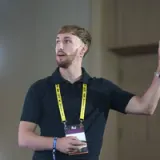
Adam Taylor works with direct-to-consumer brands on Meta advertising. Taylor's posts describe building a creative-testing system that uses customer research to develop ad angles, track what works, and guide the next round of ads.
Adam Taylor is most useful for building a Meta ad creative testing system for direct-to-consumer brands.
Best for
Direct-to-consumer subscription brands with sliding Meta ROAS and unclear past winners.
Not for
B2B SaaS sponsorship, creator-led LinkedIn content, or campaigns without Meta ad creative.
Key takeaways
Declining results usually mean the brand cannot explain its own winners.
Creative should work like a research lab, not a content factory.
Ad angles should be built from the customer's own words.
Check first: Ask for fees, contract length, independent verification, and underlying performance data.
Main ideas
Declining results usually mean the brand can't explain its own winners · Creative should work like a research lab, not a content factory · Ad angles should be built from the customer's own words
Adam Taylor writes about Meta advertising for direct-to-consumer brands, especially how to make creative testing produce usable learning rather than just more ads.
In their posts, the recurring question is not only which ad won, but why: what customer language, angle, hook, or belief made it work, and what should be tested next.
Their factory-to-advertising story explains that shift in approach.
Follow their work for practical examples of diagnosing creative problems and building a process to learn from each test.
Taylor makes creative strategy concrete by tracing a business problem back to missing information.
In one example, a founder blamed declining performance on the need for a new winning ad; their questions exposed that the team could not tell which iterations had failed or what had already been tested.
In another case, they describe a founder ad that had worked for a menopause supplement, then ask which customers it spoke to.
The answer—women aged 45–55 going through menopause—points toward a specific audience and customer-language problem, rather than another attempt to copy the old ad.
Across these examples, their distinctive contribution is a diagnostic way of working: record the angle, audience, hook, and test result so the next creative round builds on what the team has learned.
Their posts also show this is not a universal claim that more volume is always wrong: they argue for faster, versatile production when it serves a clear hypothesis, while warning against producing batches that leave the team unable to explain what worked.
They report their own results and performance figures; ask for the underlying data before treating them as benchmarks.
Adam Taylor writes about Meta advertising for direct-to-consumer brands, with one argument running through almost everything: the problem is rarely a shortage of ads.
Read more
Brands can quote a winning ad's ROAS but not explain why it won, so when it dies, the next batch starts from zero.
Taylor proposes replacing guesswork with a recorded process: mine the words customers already use, turn them into testable ad angles, tag every ad by angle, persona, hook, and awareness level, and treat each test as a question whose answer survives the ad itself.
They call this the Creative Data System and say they built it after starting out making ads by volume, then realising they only asked what to make next, never why something worked.
Declining results usually mean the brand can't explain its own winners
Taylor's recurring diagnosis: a brand with falling ROAS isn't short of creative; it's short of an explanation.
Read more
Teams can report a top ad's results but can't name its hook, angle, or the awareness level it met the customer at.
When the winner fatigues, they replace it at random, and every batch starts from zero.
Taylor argues for recording what works while the ad is still running, not conducting a post-mortem after it dies.
In one post, Taylor describes a brand spending $300K/month on Meta as ROAS falls and CPA rises.
The brand's diagnosis was that it needed better creators.
Taylor's was that it could state its best ad's ROAS and nothing else about it, making every replacement a guess.
A later, fuller version of the same call adds what the account lacked: one angle iterated to death, every video ad at the bottom of the funnel, no written record of what had been tested, and no user-generated video live. They frame the missing record, not the missing idea, as the real cause.
Creative should work like a research lab, not a content factory
Taylor separates output from learning.
Read more
A content factory asks how many ads it can produce and measures success in volume; a lab asks how many winning angles it can validate and treats each ad as one answer to a question.
The practical difference is tagging: every ad is labelled by angle, persona, hook type, and awareness level, so even a failed or fatigued ad informs the next batch.
Taylor's test for which mode a team is in is how it answers the question “What are we testing this week?”
Taylor describes building agency creative teams around four functions: a researcher who mines reviews, Reddit threads, support tickets, and refund requests to build a customer-language database; an angle strategist who turns that language into testable hypotheses; a format executor hired for speed and range rather than a polished portfolio; and an analyst tracking hook stop rates, engagement depth, creative lifespan, and angle saturation. Taylor reports that these teams produce 30–40% less volume than traditional agencies but land winning creatives at two to three times the rate.
Taylor traces the split to a change in their own question.
Early on, they ran ads by making more creative, testing more audiences, and raising budgets; results felt lucky when they worked.
The shift came from replacing “what should we make next?” with “why did that actually work?”
One question produces content; the other produces a system.
Ad angles should be built from the customer's own words
Taylor treats customer language as raw material for strategy, not something copywriters supply later.
Read more
Their research involves reading reviews, forum threads, support tickets, and refund requests for the exact phrases customers use about their problems, objections, and desired outcomes, then turning those phrases into hypotheses about which belief an ad has to shift. The starting question becomes what belief needs to change, not what the ad should look like.
A founder doing $12M/year in menopause supplements had built the brand on one founder video, then watched cost per acquisition climb from about $100 to $140–$200 as three agencies, freelancers, and an in-house hire tried to reproduce it.
Taylor asked who the original ad was actually talking to; the answer was women 45–55 going through menopause.
They describe the underlying problem as six personas that all described the same woman, plus no record of what had been tested.
Concepts built from customers' words, Taylor writes, produced an ad that spent $43K over its first weekend at $108 per purchase.
A single winner, or a single person, is a structural risk
Taylor argues that an account or creative system resting on one winning ad or one founder's head is equally fragile.
Read more
When the ad fades or the founder steps back, whoever takes over inherits the asset without the reasoning behind it and starts guessing. Taylor's remedy is to document decisions as they are made, so a strategist or agency can carry the work forward and the founder's role can shrink to approving finished ads rather than writing every script or supplying every next angle.
Taylor describes a $1M/month pet supplement brand whose founder wrote the angles, briefs, and advertorials, then trained a strategist and stepped back.
Ad performance fell over three months.
Taylor's explanation is the founder's own line: “I was the creative strategist.”
The system lived in the founder's head, so the strategist inherited the ads but not the thinking behind them.
Taylor argues that creative has become the targeting signal on Meta
Taylor writes that after Meta's Andromeda update, the system reads a brand's visuals, text overlays, and landing page to find buyers, making unstructured creative actively harmful: random videos teach the algorithm nothing and reset its learning phase week after week.
Read more
Structured creative built around a defined angle, audience, and awareness level compounds instead. This is Taylor's reading of the platform, not an established fact.
Taylor describes founders who blame the algorithm for falling ROAS and respond by launching 40 random videos to see what hits.
They call it guessing with more budget, not testing.
Their alternative is to mine reviews for raw customer language, map each hook to an awareness level, and run one winning angle across several formats to build on the result.
How a founder describes their own business shapes what they will attempt
One of Taylor's posts moves beyond creative production.
Read more
They say the gap between $1M and $10M brands shows up in how founders describe their business when they are not selling: those who are scaling talk about where they are going as if it has already happened, while stuck founders list what is not working yet. The consequences are behavioural: a founder who talks about the brand as fragile cuts spend early, kills ads before they have spent enough to teach anything, and hires people they do not really believe in.
Taylor points to Sean, of Ridge, as the clearest example on the platform of a founder who writes about his own brand with unusual confidence.
They argue that nobody writes that way and then plays small in their ad account.
The post quotes no line from Sean directly, so this is Taylor's characterisation of another person's writing, not Sean's own stated view.
Shows what Adam Taylor does when a brand’s winners stop working and why diagnosis comes before more ads.
Read more
It gives newcomers a concrete view of the work.
Adam Taylor records a call with a founder spending $1M/month on Meta.
The founder’s ROAS had fallen from 1.2 in June to 1.04 in July to 0.87 in August.
The founder believed the brand needed a new big winner, so the strategist iterated new images, headlines, and lengths.
Taylor asked how the founder tracked what died.
The answer: “We don’t really track stuff.
One ad might have died, but we have an iteration with a different photo, so it’s hard to tell if it’s the same ad or not.”
That detail opens the diagnosis: one angle iterated to death, every video ad sitting at the bottom of the funnel, no record of what had been tested, and no UGC video live.
The founder also said, “I was the creative strategist,” meaning the system lived in the founder’s head and left when the founder stepped back.
For brands planning a campaign
For a creative strategy engagement, the first deliverable should document why winning ads worked, what was tested, and which audiences or formats have never been tried. More creative volume is not the immediate fix.
Shows how Adam Taylor turns a vague “the category got more competitive” problem into a specific customer-language and persona problem.
Read more
It is a close example of how the approach is applied.
A founder doing $12M/year had seen CAC climb from around $100 to $140 on good weeks and $200 on bad weeks.
She had built the brand on one founder video that outsold everything else.
When it faded, she went through three agencies, freelancers, and an in-house hire trying to replace it.
Adam Taylor asked who that first ad was actually talking to.
Her answer: “Women 45–55 going through menopause.”
Taylor describes the real problem as one winner with no understanding of why it won, six personas that all described the same woman, agencies that took the brief without questioning it, and no record of what had been tested.
After Taylor’s team built concepts from customers’ words, one ad spent $43K over its first weekend at $108 per purchase, down from $140–$200.
For brands planning a campaign
If one ad built the brand, the engagement should preserve the audience, language, and belief that made it work. Ask any proposed creative partner for a customer-language database or equivalent evidence, not just a new version of the same ad.
Shows how Adam Taylor structures creative work inside an agency.
Read more
It helps assess whether a team can produce converting ads rather than only polished ones.
Adam Taylor argues that most agencies hire for portfolio quality and aesthetic skills, then wonder why the team cannot produce ads that convert.
They say beautiful creative and converting creative are different skill sets.
The team structure has four roles.
A Customer Language Translator lives in reviews, Reddit threads, support tickets, and refund requests to extract the exact words customers use for pain points, objections, and desired outcomes.
An Angle Strategist turns that language into testable hypotheses, maps angles to sophistication stages, and identifies saturated competitor angles.
A Format Executor hires for speed and format versatility—iPhone UGC, CapCut edits, AI-generated scenes, five format variations of the same angle in 48 hours—rather than aesthetic polish.
A Performance Analyst tracks hook stop rates, engagement depth, creative lifespan, and angle saturation.
Taylor reports 30–40% less volume than traditional agencies but a hit rate two to three times higher.
The principle is factory mode versus lab mode: high volume with low learning, or lower volume with compounding learning.
For brands planning a campaign
A creative strategy engagement can be scoped around these four functions. Ask who owns customer language, angle strategy, format speed, and measurement, and whether the process is built for learning or output volume.
The personal origin story behind the Creative Data System and the single question Adam Taylor says changed the work.
Read more
It gives newcomers the operating philosophy before they evaluate the case studies.
Adam Taylor writes that at 16 they worked in a factory, and by 24 their ads were spending $3M/month on Meta.
Early on, they ran Meta ads by making more creative, testing more audiences, and increasing budgets.
Results were random: wins felt lucky and losses felt personal.
The shift came from replacing “what should we make next?” with “why did that actually work?”
Taylor then reverse-engineered winning ads for angle, hook, and the customer belief they tapped, and built a process to find angles before spending rather than after.
The post cites client outcomes including $235K to $750K/month in 120 days, $90K to $2.1M/month in 7 months, and $500K to $1M/month in 60 days.
For brands planning a campaign
Use this as the origin and operating point of view. For a DTC client scaling Meta spend, ask for hypotheses and measurement behind each creative round, not simply a larger batch of ads.
Adam Taylor’s current explanation of a platform shift and what it means for creative strategy.
Read more
It connects the method to a specific change in how Meta finds buyers.
Adam Taylor argues that 90% of e-commerce founders misdiagnose why Meta ads fail.
They see ROAS tanking, winners fatiguing in weeks, blame the Andromeda algorithm, and launch 40 random videos hoping something hits.
Taylor says that is guessing with more budget, not testing.
Post-Andromeda, creative is targeting: Meta scrapes visuals, text overlays, and the landing page to find the exact buyers.
Random, unstructured videos teach the algorithm nothing and reset the learning phase each week.
The brands scaling past $1M/month, Taylor says, build Creative Data Systems: mine Reddit and Amazon reviews for raw customer language, map every hook to an awareness level, and test a winning angle across different formats to compound results.
For brands planning a campaign
For a client scaling Meta spend, align creative structure with the algorithm’s learning. Ask how each ad is built around an angle, awareness level, and customer language, and how the next test compounds rather than resets learning.
Make the creative system work without the founder5
Build angles from customer language4
Organize production around strategic learning3
Diagnose why ads work before making more
Taylor argues that declining performance is often a learning and diagnosis problem, not simply a shortage of ads or better creators.
Read more
They ask teams to identify the angle, hook, customer, and awareness level behind a winning ad, then record what happened when it fatigued. In one example, a brand kept changing images and headlines while repeating the same angle; in another, a founder could report an ad’s results but not explain them.
For brands planning a campaign
For a DTC brand scaling Meta spend, assess whether its team can explain past winners and losses before proposing more production. Start by auditing what was tested, what each test was meant to learn, and what the results suggest testing next.
Taylor describes mining reviews, Reddit discussions, support tickets, and refund requests for the words customers use about problems, objections, and desired outcomes.
Read more
The process turns that research into testable angles and asks what belief an ad must change, rather than starting with how it should look. They also describe mapping angles to personas and awareness levels.
Taylor’s agency-team example separates customer-language research, angle strategy, format execution, and performance analysis into distinct roles. Customer-language research identifies the words; the strategist turns them into hypotheses; production adapts those hypotheses to formats; analysis feeds results into the next round.
For brands planning a campaign
A brand can evaluate whether its research produces specific, testable customer beliefs and angles—not just a bank of quotes or a list of content ideas. Keep the source language and hypothesis attached to each concept so the team can judge what the test established.
Taylor contrasts a high-volume “content factory” with a lower-volume approach built to validate angles.
Read more
Their examples emphasize tagging ads by angle, persona, hook, and awareness level, and tracking performance so a fatigued ad can still inform later work. The goal is to compound what the team learns rather than repeatedly start from scratch.
For brands planning a campaign
Ask an agency to show how a proposed batch distinguishes between hypotheses—for example, whether the same angle works in different formats.
Agree in advance what will be recorded and how results will shape the next batch.
Before engagement, clarify metrics, decision rules, and reporting.
Several posts describe founders as bottlenecks when ad strategy lives in their heads or in one winning ad.
Read more
Taylor proposes documenting the reasoning behind creative decisions so a strategist or agency can carry the work forward. The desired outcome is for the founder to approve finished ads rather than write every script or supply every next angle.
For brands planning a campaign
This approach may suit a brand whose founder still leads creative and wants to delegate without losing the reasoning behind past decisions. When scoping the work, check what knowledge will be documented, who owns approvals, and how the internal team will use the system after handoff.
Taylor argues that creative teams should prioritize customer insight, angle selection, and performance feedback over aesthetic polish or output volume alone.
Read more
They describe format versatility—such as UGC, edited video, and image variations—as useful when it helps execute a strategic test. Founder stories and account examples make the diagnosis concrete, then connect the lesson to a Creative Data System service offer.
One post makes a specific claim about Meta’s Andromeda algorithm and how unstructured creative affects learning. Validate that technical claim and other platform-specific assumptions before using them as the basis for a plan.
For brands planning a campaign
When evaluating Taylor for a strategy engagement, separate the proposed operating method from performance claims in promotional case stories. Ask for the underlying test records, the role of each format, and evidence that the process fits the brand’s account and customers.
Adam Taylor’s posts promote a done-for-you creative service called the Creative Data System, aimed at direct-to-consumer brands spending about $30K or more per month on Meta.
Read more
They don’t name clients or clarify Taylor’s role or ownership in the business; ask for those details before evaluating the service.
Creative Data System
Disclosed partnership
Taylor markets a Creative Data System engagement in which their team mines customer reviews, Reddit threads and competitor ads for ad angles, tags every ad by persona and awareness level, and runs research, strategy, production, delivery and analysis end to end.
Read more
The offer targets DTC founders and operators spending $30K+/month on Meta, with claims that clients scaled spend without CPA rising. The posts say “we” and “our” but don’t clarify Taylor’s role or ownership; ask for that before evaluating the offer.
Adam Taylor's posts return to a diagnostic question: when Meta results fall, can the team explain why a winning ad worked?
Read more
From there, the work spans customer-language research, angle and hook testing, and team structure that separates research, strategy, production, and analysis.
Start with the diagnosis posts, follow the customer-language and testing thread, then see how the team-design post turns those ideas into an operating method.
The material is mostly LinkedIn posts aimed at DTC founders and performance marketing teams, practical and argument-led rather than a neutral survey.
Malik's posts treat conversion as a research and language problem.
Read more
He describes auditing DTC landing pages, rewriting headlines for one specific buyer, and pulling exact phrasing from Reddit threads, then testing hooks and creative directions against results. Taylor shares the insistence that customer language and a clear target come before copy and creative.
Malik's examples range across landing pages, email sequences, and ad copy for coaches, course creators, and DTC brands. Taylor focuses on Meta ad accounts and the creative operating system around them, including agency team structure and how winning angles are tagged and reused.
Shakoor's DTC Meta ads post makes a version of Taylor's central pipeline argument: relying on a single winning creative is risky, so the account needs different hooks, angles, customer problems, and formats in test before the current winner fades.
Read more
Both write for DTC and Meta ads readers and frame testing as protection against starting from zero.
Shakoor's posts offer less detail on diagnostic methods.
One is a career reflection; the other states the pipeline principle without Taylor's detail on customer-language research, angle tagging, or agency team design.
The comparison is useful for shared themes, not equivalent depth.
Alex O.'s posts describe UGC growth systems for apps, including mining customer language, generating hooks, briefing creators, rotating angles, and using a one-variable test rule.
Read more
This aligns with Taylor's interest in structured creative testing and treating customer phrasing as source material rather than something invented by the brand.
Alex O. focuses on mobile apps and an AI-assisted workflow for UGC, with examples such as Claude Cowork folders and app user research.
Taylor covers DTC Meta ad accounts, creative diagnosis, and agency team design.
They overlap on testing discipline but differ on channel, audience, and operating context.
Adam Taylor’s posts target founders and operators of direct-to-consumer brands who spend $30K or more a month on Meta ads, a focus repeated in the offer posts.
Read more
The worked examples come from subscription e-commerce: a pet supplement brand for dog owners with allergies and a menopause supplement brand selling to women 45 and over.
Taylor speaks to performance-focused DTC operators rather than general marketing readers.
Several posts also pitch the Creative Data System, so the audience includes people evaluating Taylor as a vendor, not only readers following the method.
The one measured audience figure available is the LinkedIn following: 10,745 followers as of 9 October 2026.
For a performance marketing agency considering Taylor for a DTC creative strategy engagement, the follower count and DTC-operator focus suggest relevance, but do not establish that the audience matches a specific client category or that readers hold budget authority.
Ask for recent engagement results on posts comparable to the proposed campaign, along with any audience survey or platform demographic data Taylor can share.
If the campaign depends on specific professional attributes such as job seniority, request survey results rather than inferring them from the posts.
The reviewed LinkedIn posts document Adam Taylor's commercial offer as a paid agency engagement, not sponsored content or brand ambassadorships.
Read more
The sales posts target direct-to-consumer brands buying Meta advertising creative.
The offer is a “Creative Data System”: research mined from customer reviews, Reddit threads, and competitor ads, converted into ad angles, then taken through production, delivery, and analysis.
Taylor describes running creative end-to-end for brands spending a combined $20M+/month on Meta, from a solo founder at $100K/month to nine-figure brands, positioning the work as a substitute for the brand briefing, reviewing, or writing its own ads.
Scale is the key buyer consideration: posts repeat a $30K+/month Meta spend threshold, and the case stories feature subscription e-commerce brands in categories such as pet supplements and menopause supplements.
The posts describe an agency service, not sponsorships, gifted products, affiliate arrangements, or paid placements for third-party brands.
One post details the internal team model behind delivery, useful for brands assessing how the agency staffs the work or considering whether to copy the approach.
End-to-end Creative Data System engagement
Buyer requirement
The brand must spend at least $30K/month on Meta and hand over creative end-to-end: research, strategy, production, delivery, and analysis.
Taylor frames the client's job as approving final ads rather than briefing, reviewing, or writing them, and says clients range from solo founders at $100K/month to nine-figure brands.
Expect the scope to include mining the brand's reviews, Reddit threads, and competitor ads for customer language; mapping angles by persona and awareness level; tagging every ad so even a dead ad teaches something; and tracking results so winners compound.
No fee, contract length, or deliverable count is published beyond “a handful” of brands taken on per quarter; ask for these before engaging.
Creative Planning Call
Buyer requirement
The call is presented as a diagnostic, not a pitch: Taylor diagnoses why a top ad worked (hook, angle, awareness level, customer language) and maps current angles and next tests.
A brand should arrive with account access or numbers, since the posts describe reviewing the top ad's ROAS and use patterns, plus spend history.
The posts mention this as the route to engagement.
Research-lab team structure
Buyer requirement
If a brand wants creative delivered on this model, Taylor's post describes four distinct roles rather than a generalist creative team: a customer-language researcher who mines reviews, Reddit threads, support tickets, and refund requests; an angle strategist who turns that language into testable beliefs; a format executor hired for speed and format range (iPhone UGC, CapCut edits, AI-generated scenes, five variations of one angle in 48 hours) rather than portfolio polish; and a performance analyst tracking hook stop rates, engagement depth, and creative lifespan.
Taylor says this structure produces 30-40% less volume than traditional agencies, with a claimed two-to-three-times higher rate of creatives that scale.
Brands buying on volume per month should expect a lower output count.
Brief A: a direct-to-consumer subscription brand spending about $300K/month on Meta, with ROAS sliding, winners fatiguing, a team producing creative volume but unable to explain why past winners worked, and a founder still reviewing or briefing ads.
Read more
This is a strong fit: Adam Taylor’s posts repeatedly address this profile: the $1M/month pet supplement founder whose ROAS fell from 1.2 to 1.04 to 0.87 while the strategist iterated one angle; the $12M/year menopause brand carried by one founder video; and offer posts that name $30K+/month in Meta spend as the threshold and describe research, strategy, production, delivery, and analysis run end to end.
The reasons are specific: the stated buyer threshold matches; the case categories described are subscription DTC; the method starts with the likely first need—why past winners worked, what was tested, and which audiences or formats were never tried; the commercial format is a paid creative engagement rather than sponsorship; and the four-role team model gives a concrete way to staff customer-language research, angle strategy, format speed, and measurement.
Two limits belong in the decision: client results are self-reported, and the posts give no fee, contract length, or independent verification.
Ask for those details before committing.
Taylor also states the model produces 30–40% less volume than traditional agencies, so it fits a learning-focused campaign better than a monthly-output campaign.
When to choose a specialist
Brief B: a B2B SaaS company wants sponsored LinkedIn posts or a creator-led content series to generate demo requests, with no Meta ad account or performance creative scope.
Read more
This is a poor fit based on the posts.
Adam Taylor describes DTC Meta ad creative as the paid engagement: diagnosing why ads work, mining customer language, building angles, running production, and tracking performance.
The posts show no sponsorship placements, gifted-product partnerships, affiliate arrangements, or brand ambassadorships, and no example is B2B SaaS.
The audience is founders and operators of DTC brands, and the sales posts are written to sell a Creative Data System to brands already spending on Meta.
A SaaS sponsor looking for audience access would be buying a different service than the one Taylor describes.
The same poor-fit logic applies to a campaign with no Meta dependency or a pure brand-awareness TikTok or YouTube campaign.
Ask whether Taylor offers sponsorships or this kind of non-Meta work before ruling it out.
A worked campaign example
Take Brief A.
Brand: dog-allergy supplement subscription, $300K+/month on Meta, CPA rising, one angle iterated to death, and no UGC video live.
Angle to test: “The vet called it allergies.
What actually stopped the scratching was not another pill.”
Build it from customer language mined from reviews, Reddit threads, support tickets, and refund requests.
Collect exact phrases for the problem, such as itching, paw licking, and ear infections; the objection, such as “tried everything,” vet bills, or pills upsetting the dog’s stomach; and the desired outcome, such as the dog sleeping through the night without a cone.
Turn those phrases into a belief-level hypothesis: owners may believe the problem is seasonal or untreatable, so the ad should test whether the belief that allergies are manageable at home with the right daily chew changes purchase.
Format test: run the same angle in three executions—iPhone-style UGC testimonial, owner voiceover over product-in-use footage, and a static proof card using review language—tagged by angle, persona, and awareness level.
Measurement: hook stop rate, engagement depth, purchases, CPA against the brand’s current $140–200 benchmark, and creative lifespan; document which execution carried the angle so the next batch compounds.
This is a worked angle, not a verified Adam Taylor campaign; it follows the method and examples in Taylor’s posts.
When the bottleneck is conversion copy, not account structure.
Read more
Amir Faizan Malik's posts document copy projects with measured outcomes: a landing page rewrite that moved conversion from 2.1% to 8.4% by replacing a generic promise with one specific problem; an email sequence for a tile installation course with a 55.6% average open rate and 8.23% click rate that booked 22 calls in four weeks; and a Meta creative test for a men's lifestyle brand reporting a 53% hook rate, 4.33% hold rate and 3.87x ROAS.
The method is consistent: research the audience first, mine its exact language from Reddit threads and reviews, write to one person, then test multiple hooks and keep the winner.
For a DTC brand scaling Meta spend, this is the better pick when the message itself is failing and the buyer wants a specialist to rewrite the page, email and ad copy around a sharper audience definition.
The posts describe copy deliverables, not an account-level creative system.
They do not cover a persistent angle map, tagging ads by persona and awareness level, a team taking audience research through production, or ongoing creative delivery.
A brand producing volume without knowing why anything worked may get stronger copy without the feedback loop to explain the next winner.
Ask for scope, capacity and pricing, which are not documented.
When the buyer wants a plain, practitioner-level argument against letting one winning creative carry the whole account.
Read more
Ujla Shakoor's reviewed advice post makes exactly that case for a DTC Meta account: one hook, angle and message means the whole account feels it when the creative tires.
Keep asking what is being tested next across different hooks, angles, customer problems and formats, and build a pipeline of winners instead of replacing one at a time.
A companion post describes five years of work, including three years across DTC brands, Meta ads, creatives, campaigns, scaling and data.
For a brand still relying on a single ad to hold up spend, this directly articulates the risk.
The posts comprise one career reflection and one advice post.
They document no client results, fees, engagement terms, team composition or delivery process, and show no end-to-end system being run for a brand.
For a buyer seeking documented creative strategy, production and analysis delivered by a team, this is a lighter basis than the other options here.
Ask for scope, capacity and commercial terms before deciding.
When the client is a mobile app, not an ecommerce brand, and the task is building a UGC content engine.
Read more
Alex O.'s posts cover content-market fit for app growth: define the real user by situation and behaviour rather than demographics, mine their language from Reddit, TikTok search and App Store reviews, find angles competitors ignore, then run the resulting content system.
One post describes running Claude Cowork as a full UGC content backend, with weekly automation for customer-language mining, hook generation, creator briefing, angle rotation and comment seeding, and cites Tea App, Turbo AI and WhatColors as examples.
This is a better match for an app-install or app-activation need than for DTC ecommerce.
For the stated DTC Meta ecommerce need, the posts point elsewhere.
The examples, language and channel advice are all app-oriented; none show ecommerce work, landing pages, email or Meta ecommerce creative.
Choosing Alex O. for this need means buying a different category of engagement.
The cited app results come from the posts themselves and should be independently verified.
The AI workflow also assumes a team comfortable running a tool-based content backend, a different operating commitment from hiring a creative strategy partner.
Adam Taylor's ten LinkedIn posts cover Meta advertising, creative testing, customer research, agency team design, and one post describing Taylor's route into advertising from factory work.
The posts have no publication dates, so nothing here is claimed about how Taylor's views developed over time.
Client results and team performance figures appear in Taylor's posts and are not independently verified.
The posts here mention no sponsorships, affiliate arrangements, or B2B work, and name no clients; that absence means those claims are not supported by the posts, not that Taylor never does that work.
Taylor had roughly 10,700 followers on LinkedIn in October 2026.