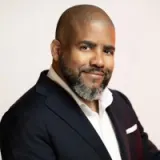
Roger Williams hosts the Loyalty Leaders Podcast, where he interviews loyalty and CRM professionals about customer retention, loyalty program design, and changes in travel and retail.
Most useful for interview-led podcast or content partnerships about loyalty program design, retention, and CRM tradeoffs.
Best for
A B2B loyalty software company wanting a sponsored episode on program design with a practitioner guest.
Not for
Short-form product demos, paid-social conversion clips, or performance ads without interview-led discussion.
Key takeaways
Points and complex rules are not what makes customers loyal.
Agentic commerce is already happening, so design loyalty for the member inside it.
AI should handle routine work, not creativity or emotional loyalty.
Check first: Ask about audience data, recent episode results, sponsor credits, and rates.
Main ideas
Points and complex rules are not what makes customers loyal · Agentic commerce is already happening, so design loyalty for the member inside it · AI should handle routine work, not creativity or emotional loyalty
Roger Williams is known for hosting the Loyalty Leaders Podcast, where he interviews loyalty and CRM professionals about customer retention, program design, and changes in travel and retail.
His posts introduce conversations ranging from B&Q’s effort to serve both DIY shoppers and trade customers to Vinted’s growth without a traditional points program.
They also show Williams making room for his own arguments, including that loyalty should reflect customer value rather than depend on complex rewards, and that AI should support rather than replace human creativity and service.
Williams connects loyalty ideas to concrete choices and tensions: cashback versus tiers, household pooling, consumer versus trade needs, and automation versus human service.
His episode previews give readers the guest’s role, the business problem, and the questions under discussion, making specialized topics easier to follow.
The posts also show a mix of interview promotion and direct commentary; not every post offers the same depth, and one short event preview points readers to the episode rather than summarizing it.
The supplied material establishes the Loyalty Leaders Podcast as his signature work, but does not document other books, shows, businesses, or earlier work that might explain name searches.
Roger Williams's ideas come mainly through the Loyalty Leaders Podcast conversation they host and the posts that go with it.
Read more
The through-line is that loyalty is a matter of relevance, member experience and human judgment, not points mechanics.
Roger Williams returns often to two arguments: complex tier systems and points can mask deeper problems, and agentic commerce is already booking real travel, so loyalty design has to account for the member's experience inside an AI interface.
A third line is caution about automation: AI is useful for routine work but flattens creative output and cannot carry emotional loyalty, which depends on anticipation and human touch.
Roger Williams also treats loyalty as a segmentation problem, not one program for everyone.
A tension runs through the material: the same voice is skeptical of AI-generated creative work and enthusiastic about AI-driven travel commerce, and one post carries both an argument and a summit promotion.
Points and complex rules are not what makes customers loyal
Roger Williams argues that loyalty depends on relevance and the affinity customers already feel, and that rewards mechanics can divert marketers from what actually drives value for the user.
Read more
Guests supply the evidence.
Talia DeVuono, Head of Loyalty & CRM at JSX, is described as building a program on a "Joyful, Simple Experience" with a flat 5% cashback model instead of complex tiers and family pooling for household bookings.
Timothy Lange of Vinted is described as discussing how reward points can mask fundamental brand issues, with Vinted growing past 100 million users in 26 countries without a traditional points program.
Pauline van Dongen, called "The Loyalty Matchmaker," is credited with helping brands navigate loyalty technology, strategy and program architecture to find the right fit.
The JSX episode post lists the mechanics and then states Roger Williams's own conclusion: stop trying to manufacture loyalty with complex rules and start amplifying the organic affinity customers already have for the brand.
Agentic commerce is already happening, so design loyalty for the member inside it
Rather than treating AI booking as speculation, Roger Williams names live examples and asks why the direct channel lags.
Read more
Mindtrip is said to have gone live with all-in-one agentic AI flight booking in May, and Ori Gal and the Via-ai team are said to be booking millions of dollars at five times normal conversion.
The argument that follows is that the real prize is the loyalty member's experience within the agentic interface, through zero-party data and understanding customer intent.
Guests extend the point: the JSX episode covers AI travel agents predicting intent before a search, and the London episode with Dr Torsten Wingenter covers AI agents negotiating directly with brand AI on a customer's behalf.
In a post questioning why airlines remain hesitant in the direct channel, Roger Williams cites Mindtrip's May launch and Via-ai's 5x conversion records as proof the shift is commercial, not theoretical.
AI should handle routine work, not creativity or emotional loyalty
Roger Williams's most direct opinion is that AI is not creative and that using it for storytelling, graphic design, photography and video produces homogenised output, citing a Google DeepMind and University of Maryland study that calls large language models "mean regression machines" recycling predictable structural choices.
Read more
Roger Williams says they use AI as a sparring partner for ideas, proofreading and note-taking, but not for the creativity that drives their business, and quotes Brendan Dell on high-value success depending on outlier decisions AI is built to avoid.
The same line appears in guest terms: Dr Torsten Wingenter's framework sorts tasks into those to automate, augment or escalate away from AI, and argues technology should enhance rather than replace human touch.
That London episode also covers "Vorfreude," the German idea of anticipation, as a way to keep emotional loyalty in a transactional world, and AR and VR for frontline staff.
The AI post notes the homogenised flyers, graphics and decks people are bombarded with, then ends with a line about writing their own posts. In the same post, agentic commerce in travel is promoted as a summit panel topic, so the scepticism about AI creativity sits alongside enthusiasm for AI in commerce.
One loyalty program rarely serves every customer the same way
Roger Williams frames loyalty as a segmentation challenge.
Read more
Will Pearl, Head of Loyalty & CRM at B&Q, is introduced with the problem of serving weekend DIYers and daily contractors across more than 300 stores, drawing on a data and analytics background in grocery retail while transforming a legacy loyalty ecosystem. The CORA Loyalty conversation with Maegan O'Neill is framed around partner-funded rewards, shifting customer expectations and the reality of Gen Z consumers, plus an agentic commerce insight affecting loyalty.
The B&Q post sets out the consumer-versus-trade divide in plain facts before describing how data and analytics are being used to rebuild the program, aimed squarely at retail, CRM and retention readers.
Answers what Williams does with a guest who has thrown out the standard tier system, and shows how much operational detail his interviews draw out.
Read more
Williams writes up a conversation with Talia DeVuono, Head of Loyalty & CRM at JSX, who moved from five years at American Airlines to build a program around a "Joyful, Simple Experience."
The post lists what the episode covers: a flat 5% cashback model instead of complex tiers, household booking behavior handled through family pooling, treating your best customers as your best acquisition channel, and AI travel agents that predict intent before a search.
Williams closes with his own conclusion rather than a neutral summary: stop manufacturing loyalty with complex rules and amplify the affinity customers already feel.
For brands planning a campaign
Useful as a template for a retention-software segment: it pairs a concrete program mechanic (cashback, pooling) with a debatable claim (complex rules damage loyalty), which gives a host and a sponsor something to argue about on air.
Shows how Williams frames a problem that most loyalty conversations skip: one program serving two very different customers.
Read more
Williams introduces Will Pearl, Head of Loyalty & CRM at B&Q, and sets the scene with plain facts: B&Q is the UK's largest home improvement and garden center retailer, with over 300 stores, serving both weekend DIYers and daily contractors.
He notes Pearl came from a data and analytics background in grocery retail and is now running a large transformation of B&Q's loyalty ecosystem.
Williams frames the episode as a look at using data to rebuild a legacy program, aimed at people in retail, CRM, or retention.
For brands planning a campaign
A good reference episode for pitching the consumer-versus-trade segmentation angle, where a data-migration story rather than a rewards story carries the discussion.
Answers the question of whether points programs are actually necessary, using a company that grew without one.
Read more
Williams interviews Timothy Lange, Member Engagement and CRM Lead at Vinted, and states his own framing up front: many brands believe loyalty depends on points and discounts, but rewards may distract marketers from what drives value and relevance for the user.
The supporting fact he gives is that Vinted reached over 100 million users in 26 countries without a traditional points-based rewards program.
The post tags the subject as behavioral architecture as well as CRM and retention.
For brands planning a campaign
Best entry point for a brand or partner that wants to argue against points-led design; it also shows Williams will carry a strong guest claim rather than staying neutral.
Answers how Williams handles the AI question in loyalty without reducing it to automation.
Read more
Williams describes recording live at Loyalty Summit 2026 in London with Dr Torsten Wingenter, identified in the post as a sociologist, technologist, and former Head of Innovation at Lufthansa.
The listed topics are specific: a framework for deciding whether a task should be automated, augmented, or escalated away from AI; AI agents negotiating directly with brand AI on a customer's behalf; the German idea of "Vorfreude" (anticipation) as a way to preserve emotional loyalty; and AR and VR for frontline staff.
Williams's summary line is that technology should enhance the human touch rather than replace it.
For brands planning a campaign
Useful if you want a guest who can debate where AI stops in a loyalty program, and a demonstration that Williams structures a live event interview around a framework rather than a product pitch.
The clearest example of Williams stating a personal opinion in his own voice rather than summarising a guest.
Read more
Williams argues that using AI for storytelling, graphic design, photography, and video is hurting businesses, pointing to a stream of homogenised flyers, graphics, and decks.
He cites a Google DeepMind and University of Maryland study describing large language models as "mean regression machines" that recycle predictable structural choices across thousands of writing prompts, and quotes a YouTuber, Brendan Dell, on high-value success depending on outlier decisions that AI is built to avoid.
He then states his own practice: he uses AI as a sparring partner for ideas, proofreading, and note-taking, but not for the creativity that drives his business.
The post ends by promoting a Loyalty Summit Americas panel on agentic commerce in travel with David Feldman and other travel executives.
For brands planning a campaign
Strong material for a written op-ed or a debate-style segment, though note the argument and the event promotion sit in the same post — a partner should expect to negotiate which role they are buying.
Answers a practical question for anyone new to the topic: is agentic commerce real yet, and who is already doing it.
Read more
Williams says he has been talking with travel executives and loyalty experts who are confused about what counts as agentic commerce and whether it is happening at all.
He names two live examples: Mindtrip launched an all-in-one agentic AI flight-booking capability in May of that year, and Ori Gal and the team at Via-ai have been breaking conversion records at five times normal while booking millions of dollars in agentic-enabled travel.
He then asks why airlines are still hesitant in the direct channel, and argues the real opportunity lies in the loyalty member's experience inside the agentic interface, with zero-party data and customer intent as the prize.
The post closes by pointing to a Loyalty Summit Americas session in Chicago in October.
For brands planning a campaign
Use this as evidence of subject-matter currency if you are booking Williams for a travel or agentic commerce brief; it also shows he will name vendors and numbers rather than speak in generalities.
Shows how the podcast is actually produced and how Williams handles a guest's request — useful if you are deciding whether he is easy to work with.
Read more
Williams explains that he had planned to interview Pauline van Dongen in Amsterdam at Loyalty Summit CXM, and that she asked him to add another guest.
He admits he was not thrilled because his schedule was tight, with him moving between the stage and a mobile studio, but says he was glad he accommodated the request to include Koji Hayashi.
He describes the result as a rare dual-guest episode, published on Apple Podcasts and Spotify the previous week, and praises van Dongen as "The Loyalty Matchmaker" for helping brands navigate loyalty technology, strategy, and program architecture to find the right fit.
For brands planning a campaign
Evidence of format flexibility and a practical note for partners: Williams records around events, keeps a mobile studio, and has taken a guest's suggestion to change the planned lineup.
A short, low-commitment sample of how Williams previews an episode and what he considers worth covering.
Read more
Williams previews a conversation with Maegan O'Neill, newly appointed VP of Client Services at CORA Loyalty, ahead of Loyalty Summit Chicago.
The topics he lists are partner-funded rewards, shifting customer expectations, the reality of Gen Z consumers, and an agentic commerce insight that affects loyalty.
He describes O'Neill as brilliant and, instead of summarising the conversation, sends readers to the link in the comments, closing with "just go watch."
For brands planning a campaign
Useful as a quick read on Williams's topical range and his habit of driving traffic to the episode rather than restating it, which matters if a partner wants the host's own channel to carry a specific message.
Loyalty programs built around simplicity, relevance, and organic affinity3
Loyalty psychology, emotional connection, and behavioral architecture3
Human judgment, creativity, and the limits of automation2
Retail loyalty transformation across consumer and trade customers2
Loyalty programs built around simplicity, relevance, and organic affinity
Across posts, Roger Williams interviews loyalty leaders who question points-heavy designs.
Read more
In a JSX episode, they describe a program built on a “Joyful, Simple Experience,” a 5% cashback model instead of complex tiers, family pooling for household bookings, and treating best customers as an acquisition channel.
In a Vinted episode, they discuss how reward points can mask fundamental brand issues, noting Vinted grew past 100 million users in 26 countries without a traditional points program.
Another post highlights Pauline van Dongen’s work helping brands navigate loyalty tech, strategy, and program architecture to find the right fit.
For brands planning a campaign
For a loyalty software company, Roger Williams can frame a collaboration around program-design tradeoffs: cashback versus tiers, points versus behavioral architecture, and relevance versus manufactured loyalty. The named practitioner examples give a podcast, webinar, or campaign brief concrete material to work from.
Roger Williams returns to agentic commerce as a live commercial shift.
Read more
They cite Mindtrip’s all-in-one agentic AI flight-booking capability going live in May and Via-ai booking millions of dollars in agentic-enabled travel at 5x conversion, while asking why airlines remain hesitant in direct channels.
In another post, they connect agentic commerce to the loyalty member’s experience, zero-party data, and customer intent.
A JSX episode covers AI travel agents predicting intent before search, and a London episode with Dr Torsten Wingenter examines AI agents negotiating with brand AI on consumers’ behalf.
Interview-based podcast episodes plus event promotion posts; Roger Williams asks operators and technologists to explain what is actually happening in agentic commerce.
For brands planning a campaign
This is a strong hook for loyalty software and travel-tech partners. Roger Williams can host a discussion on how agentic booking changes member experience, zero-party data strategy, and direct-channel readiness, using named examples rather than abstract speculation.
Human judgment, creativity, and the limits of automation
In a personal post, Roger Williams argues AI is not creative and that using it for storytelling, graphic design, photography, and video produces homogenized output.
Read more
They cite a Google DeepMind and University of Maryland study describing LLMs as “mean regression machines” that recycle predictable structural choices, and they quote Brendan Dell on high-value success depending on outlier decisions.
Roger Williams says they use AI as a sparring partner for ideas, proofreading, and note-taking, but not for the creativity that drives their business.
In a London episode, Dr Torsten Wingenter’s AI framework separates tasks that should be automated, augmented, or escalated away from AI, and argues technology should enhance rather than replace human touch.
This includes the most direct opinion piece in the corpus, which departs from the interview-summary format.
For brands planning a campaign
A B2B audience evaluating AI content and customer experience will find a clear, opinionated line: automate routine work, protect human judgment where loyalty is emotional. Roger Williams can add a counterweight to AI-first narratives in a panel, podcast, or guest article.
Retail loyalty transformation across consumer and trade customers
A B&Q episode with Will Pearl, Head of Loyalty & CRM, covers the challenge of one loyalty strategy serving both weekend DIYers and daily contractors across more than 300 stores.
Read more
The post highlights Will Pearl’s data and analytics background in grocery retail and a transformation of B&Q’s loyalty ecosystem, framed for retail, CRM, and retention audiences. Another post with CORA Loyalty’s Maegan O’Neill covers partner-funded rewards, shifting customer expectations, Gen Z consumers, and agentic commerce insight.
Interview and event-based episodes; posts summarize the operator’s context and the loyalty challenge.
For brands planning a campaign
For a loyalty software company targeting retail, Roger Williams offers access to operators working on legacy program transformation, partner-funded rewards, and segmented customer needs. He can help shape a case-study episode or retail-focused campaign around data-led loyalty.
Loyalty psychology, emotional connection, and behavioral architecture
Roger Williams’s topics include why loyalty is not only transactional.
Read more
A post on Rik Luttmer uses mammoth-hunting imagery to connect evolution and brand loyalty, tagged relationship marketing, business psychology, and customer experience.
A London episode discusses Dr Torsten Wingenter’s “Vorfreude,” the German concept of anticipation, as a way to preserve emotional loyalty in a transactional world, plus AR and VR for frontline human experiences.
A Vinted episode is framed around behavioral architecture and the idea that reward points can mask fundamental brand issues.
For brands planning a campaign
A loyalty software company can use this theme to move a campaign beyond feature comparisons toward emotional loyalty, anticipation, and behavioral design. Roger Williams can moderate a conversation that gives retention strategy a human and psychological frame.
The corpus is mostly Loyalty Leaders Podcast promotion.
Read more
Roger Williams interviews named loyalty and CRM leaders, records at Loyalty Summit events in London, Chicago, and Amsterdam, and occasionally runs dual-guest episodes.
In one post, Pauline van Dongen asked to include Koji Hayashi; Roger Williams describes the resulting rare dual-guest episode and Pauline’s approach to matching brands with loyalty tech, strategy, and program architecture.
The JSX and London episodes are described as brought by Gyoza Flights, showing sponsor integration.
Interview-based podcast episodes, often recorded at loyalty summits; posts promote the episode with guest context and key takeaways.
For brands planning a campaign
Roger Williams is not only a commentator but a convener with an interview format, event access, and sponsor slots.
A loyalty software company can evaluate podcast sponsorship, guest placement, or a summit-linked content partnership.
The format works best when the brand has a named operator or a specific program-design question to discuss.
Roger Williams's posts document one explicit commercial relationship: Gyoza Flights sponsors episodes of the Loyalty Leaders Podcast.
Read more
Everything else is a mention.
He promotes and attends the Loyalty Summit series, recording interviews and episodes there, and he cites the travel-commerce companies Mindtrip and Via-ai as examples in his agentic-commerce commentary.
The employers of his interview guests — JSX, B&Q, Vinted, and Deckers — appear only because of who he interviewed, not as his own commercial ties.
Gyoza Flights
Sponsor
Two Loyalty Leaders Podcast episodes carry a line crediting Gyoza Flights as the episode sponsor, making this the clearest commercial relationship in the reviewed material.
Read more
One episode is an interview with Talia DeVuono of JSX on cashback-style rewards and household pooling; the other is a live recording at the Loyalty Summit 2026 in London with Dr Torsten Wingenter.
Williams promotes the Loyalty Summit series and works from its events.
Read more
He shares registration links and invites readers to join him at Loyalty Summit Americas in Chicago, which he says starts Wednesday, 7 October; he interviewed Pauline van Dongen and Koji Hayashi at Loyalty Summit CXM in Amsterdam; and he recorded a podcast episode live at the Loyalty Summit 2026 in London. The posts do not state sponsorship or other commercial terms.
Cited as evidence in his agentic-commerce commentary: he notes that Mindtrip went live with an all-in-one agentic AI flight-booking capability in May of that year, then uses it to argue that airlines are hesitant about the direct channel.
Named alongside Mindtrip in the same post as an example of agentic travel commerce already working: he says Ori Gal and the team at Via-ai have been breaking conversion records at 5x and booking millions of dollars in agentic-enabled travel.
Roger Williams's public work is easiest to explore through the Loyalty Leaders Podcast.
Read more
The episode posts form a run of interviews with named loyalty and CRM leaders — JSX, Vinted, B&Q, CORA Loyalty and others — each paired with a short written takeaway, so a reader can follow one thread, such as simplicity versus points, or retail's consumer-versus-trade split, across several episodes.
Summit posts from London, Chicago and Amsterdam show where those conversations happen and who joins them.
For a different register, the post on AI and creativity is written in Williams's own voice rather than summarising a guest, which is useful for judging how they think rather than who they interview.
The tags below group the recurring subjects; the similar creators are offered as adjacent voices on loyalty, agentic commerce and first-party data.
Writes about whether loyalty programs actually change customer behaviour, questioning points, legacy platforms and unproven ROI in the restaurant and franchise sector — the same scepticism about rewards masking deeper problems that runs through Roger Williams's guest conversations.
Read more
Munz writes first-person diagnostic posts from an operator and consulting standpoint, using examples such as six disconnected store-level guest lists, rather than hosting interviews with named loyalty leaders.
Treats loyalty as a currency and tracks how AI and fintech are reshaping travel and hospitality, overlapping with Roger Williams's agentic commerce and AI-in-travel threads and the argument that behavioural data, not points, is the real battleground.
Read more
Picard addresses hospitality, travel and fintech decision-makers directly with strategy critiques of vendor-led AI, in essay form, with no podcast or summit-interview format.
Argues that owning customer data is the foundation of repeat purchase and loyalty, adjacent to Roger Williams's attention to member experience, zero-party data and customer intent inside new buying journeys.
Read more
Ellenbogen works the retail CPG angle, tying the argument to retail media, receipt-based data capture and a specific product, where Williams ranges across airline, retail and hospitality program design.
The evidence supports an audience of loyalty, CRM, and customer-retention professionals, but it does not measure that audience.
Read more
Roger Williams's posts document a steady interview series on the Loyalty Leaders Podcast with guests from JSX, B&Q, Vinted, Lufthansa's former innovation lead, and CORA Loyalty, covering loyalty program design, reward structures, data, and AI in travel and retail.
That guest roster and topic mix show the content is aimed at people who buy, run, or advise on loyalty and CRM programs — the same people a loyalty software vendor would want to reach.
What is missing is the measured side: the only platform number supplied is 4,490 LinkedIn followers observed on 9 October 2026, and no podcast download, listener, demographic, or audience-survey data was provided.
So the placement decision this evidence can support is directional, not commercial: Williams is a credible topic match for a customer-retention collaboration, and the buyer's next step is to request recent comparable episode results — downloads or views for similar loyalty and CRM topics, plus any listener survey covering job role, seniority, and company type — before committing budget.
A YouTube-style demographics export would only cover geography, age, and gender if one exists; it would not verify employer, occupation, or seniority, so those professional attributes need survey data or another documented source.
Roger Williams hosts the Loyalty Leaders Podcast, and every partnership signal in the reviewed material attaches to that show rather than to a published media kit.
Read more
Episodes carry sponsor credits, and Williams records interviews on-site at loyalty industry conferences, which is how vendor executives reach the audience. No rate card, audience specification, booking form, sponsorship policy, or partnership contact address appears in the reviewed material, so the formats below are described from observed examples and should be confirmed with Williams before a buyer commits budget.
Sponsored podcast episode
Buyer requirement
The sponsor is named inside the episode's own description.
Two reviewed episodes carry the line "Episode brought to you by Gyoza Flights," so a brand buying this placement should expect a credit alongside a guest interview on loyalty, CRM, or retention rather than a standalone advertisement.
Recent guests include the heads of loyalty and CRM at B&Q and JSX and the member engagement lead at Vinted, so the sponsor's message has to sit beside a practitioner discussing their own program rather than a general brand story.
Interview slot for a vendor or event spokesperson
Buyer requirement
Williams interviews loyalty and CRM executives from vendor and retail companies, sometimes two guests in one episode and sometimes on-site at conferences.
In the reviewed material this includes the vice president of client services at CORA Loyalty and a dual interview recorded at Loyalty Summit CXM.
A buyer pursuing this route needs a named spokesperson with a specific, checkable point of view on loyalty program design, plus the flexibility to record at a conference where Williams is already working.
Williams also promotes conference appearances with links to registration, so an event organiser can reach the audience through a scheduled interview rather than a paid placement.
Strong fit for an interview-led podcast or content partnership. The evidence supports a sponsorship, guest placement, or summit-linked content collaboration, not a performance-ad or product-demo buy.
Read more
Brief
A B2B loyalty software company wants to assess Roger Williams as a podcast guest or content partner to discuss customer-retention strategy, and propose a collaboration around loyalty program design.
Reasons
Roger Williams hosts the Loyalty Leaders Podcast, and the reviewed posts are mostly episode write-ups with named loyalty and CRM guests from JSX, B&Q, Vinted, Lufthansa, and CORA Loyalty. That gives a software vendor a ready format for discussing program design with practitioners rather than a generic brand message.
The themes line up with a retention software buyer: cashback versus tiers, points versus behavioral architecture, consumer versus trade customers, partner-funded rewards, and agentic commerce. The reviewed posts show Roger Williams will frame a tradeoff and draw operational detail out of a guest.
There is evidence of sponsored episodes. Two reviewed episodes carry the line "Episode brought to you by Gyoza Flights," so a vendor can ask about a named sponsor credit inside an episode rather than assuming a standalone advertisement.
Roger Williams records on-site at loyalty summits, has a mobile studio setup, and has handled dual-guest episodes. A vendor spokesperson can be placed alongside a practitioner if the vendor has a named operator or executive with a specific, checkable point of view.
The limitation is audience proof. The only supplied platform number is 4,490 LinkedIn followers observed on 9 October 2026. No podcast download, listener, demographic, or audience-survey data was provided. A buyer should request recent comparable episode results and sponsorship terms before committing budget.
Best use
A sponsored or co-produced episode on a specific loyalty-program-design tradeoff, with the vendor supplying a spokesperson who can discuss a real customer problem rather than a product feature list.
When to choose a specialist
Poor fit on the reviewed evidence.
Read more
Brief
A loyalty software company wants a short-form video creator to script, produce, and distribute product-demo clips with discount-code calls to action for a paid social campaign.
Reasons
The reviewed material does not show short-form video production, product tutorials, demo clips, or paid-social conversion content. It shows written LinkedIn posts promoting interview episodes and conference sessions.
No performance metrics were supplied that would support a paid-social conversion brief: no view counts, click-through rates, conversion rates, cost per acquisition, or audience-role breakdown. The only supplied platform number is 4,490 LinkedIn followers.
Roger Williams's own post argues that using AI for creative tasks produces homogenised output and states a preference for writing his own posts. A brief requiring tightly scripted promotional copy or high-volume template clips may conflict with that stated practice.
The commercial evidence points to interview-based sponsorship and guest placement, not direct-response product demos. A buyer wanting a tutorial or demo format would be asking Roger Williams to work outside the format the reviewed material actually documents.
Best use instead
If the vendor needs a product demo or direct-response short video, look for a creator with demonstrated tutorial or paid-social performance evidence. Roger Williams is better matched to a discussion-led format about loyalty program design.
A worked campaign example
Beats
Set the contrast with JSX: a flat 5% cashback model instead of complex tiers, family pooling for household bookings, and treating best customers as an acquisition channel. Ask the vendor guest to say which parts of that model they would advise a mid-market retailer to copy, adapt, or reject.
Bring in the B&Q consumer-versus-trade problem: one loyalty strategy serving weekend DIYers and daily contractors across more than 300 stores. Use it to test whether the vendor's retention approach can handle two very different customer groups without splitting the program.
Close on agentic commerce and AI. Roger Williams has discussed AI travel agents predicting intent before search, AI agents negotiating with brand AI, and the need to preserve human judgement where loyalty is emotional. Ask the vendor guest where automation improves retention and where it removes the human signal customers respond to.
End with a practical next step for listeners: one program-design question they can take back to their team, and one piece of data they should check before changing a rewards mechanic.
Brief
Loyalty software company sponsorship of a Loyalty Leaders Podcast episode on customer retention and program design.
Campaign angle
The Points Illusion: What Actually Retains Customers?
Format
A sponsored interview episode, with Roger Williams hosting a named executive from the sponsoring software company and, where possible, one practitioner guest. The sponsor is credited inside the episode description, matching the observed sponsor format. The episode is promoted through Roger Williams's LinkedIn posts, as the reviewed episodes are.
Next step
Ask Roger Williams for availability, sponsorship terms, and recent episode performance for comparable loyalty and CRM topics. Ask the vendor to name a spokesperson with a checkable point of view and to supply any customer example they are allowed to discuss. Confirm whether a practitioner guest can be added and who owns approval of the episode description.
Opening move
Open on the Vinted example: over 100 million users in 26 countries without a traditional points-based rewards program, and the argument that reward points can mask fundamental brand issues. Use that to ask the vendor guest a concrete design question: when does a points mechanic create value, and when does it delay work on relevance, data, and retention?
Why this works
It uses the themes already documented in Roger Williams's reviewed output, gives the vendor a specific argument to join rather than a product slot, and keeps the discussion on loyalty program design. The sponsor credit is visible in the episode, and the promotion runs through the same LinkedIn channel Roger Williams already uses for episode write-ups.
Choose Chris Munz when the campaign is aimed at restaurant, QSR, or multi-unit franchise operators and the buyer needs a hard critique of loyalty ROI.
Read more
The reviewed posts argue that operators have been sold more data and points without actionable strategy, that franchise systems can fragment customer records across locations, and that programs often reward behaviour that was already happening. That is a better match than Roger Williams when the vendor sells retention or loyalty software to restaurant operators and wants content about incrementality, operator adoption, and why enrolment and redemption numbers can hide weak results.
Chris Munz is narrower on format and audience.
The reviewed material is written operator-facing commentary, not a documented interview show, summit recording, or sponsored episode format.
There is no evidence in the supplied posts of podcast hosting, practitioner guest booking, or sponsor credits.
Roger Williams is the stronger choice when the vendor wants an interview-led episode with named loyalty and CRM guests from airlines, retail, and travel, and a conference-linked production setup.
The tradeoff is reach and format, not just topic: Chris Munz gives a sharper restaurant-operations argument, while Roger Williams offers a broader loyalty-executive interview platform.
Choose Ingrid Picard when the campaign is aimed at travel, hospitality, or fintech leaders and the central argument is that loyalty has become a data and financial asset.
Read more
The reviewed posts cover loyalty as a currency in travel, Flight Centre and Qantas moves, agentic AI in travel retailing, and a direct challenge to hospitality and travel businesses that outsource AI thinking to CRM, PMS, distribution, or agency vendors. That suits a software company selling AI, CRM, or data platforms into travel and hospitality loyalty, especially if the campaign should challenge buyer organisations to audit their own priorities before buying vendor AI.
Ingrid Picard is less evidenced as an interview host or podcast partner.
The reviewed posts are written strategic commentary, and the supplied material does not document episode hosting, a recurring interview format, sponsor credits, or audience metrics.
Roger Williams is the better choice when the vendor wants a produced interview episode with loyalty program practitioners and a discussion format that draws operational detail out of guests.
The tradeoff is strategic travel and fintech framing versus host-led practitioner conversation: Ingrid Picard gives a stronger travel-industry AI and loyalty-currency argument, while Roger Williams gives a clearer sponsored podcast path.
Choose Sarah Ellenbogen when the vendor sells first-party retail data capture, shopper marketing, rebates, or CRM ownership and the buyer is a CPG or retail brand.
Read more
The reviewed posts give concrete mechanics: receipt upload exchanges, retailer coupon barcodes, shopper data flowing into a brand-owned CRM rather than the retailer's, and a Target campaign for Native Pet reported as 2x sales lift and 25% higher loyalty. That is a better match than Roger Williams when the campaign needs to explain how a brand can own the shopper relationship inside retail promotions and why first-party data is the foundation of retention.
Sarah Ellenbogen's reviewed material is more product- and retail-execution-specific.
One post names Digiphy and describes its rebate and coupon flow, so the content reads less like neutral interview hosting and more like a vendor-led retail data pitch.
The supplied posts do not document podcast hosting, summit coverage, sponsor-credit episodes, or audience size.
Roger Williams is the better choice when the software company wants a neutral interview-led loyalty program design episode with practitioner guests across industries.
The tradeoff is direct retail first-party data and shopper-marketing detail versus a broader loyalty podcast format.
This page draws on nine public LinkedIn posts by Roger Williams, read in full.
The posts promote or summarise Loyalty Leaders Podcast episodes and loyalty summit appearances, and one states a personal position on AI and creativity.
They do not contain publication dates in the supplied material, and no episode transcripts, audio, video, listener or download figures were provided.
The follower count shown, 4,490 on LinkedIn, was observed on 9 October 2026.
Guest employers are named only because the posts identify who was interviewed.
Claims about sponsorship and brand mentions are reported only where a post states them.
Recent engagement
Across their last 9 LinkedIn posts, the median post got 26 reactions and 3 comments. Checked 2026-11-02.