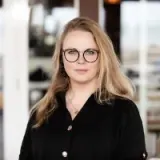
Nanneke Blaak - Visscher is a supply-chain and business transformation leader. In their LinkedIn posts, they describe experience leading international teams through strategic, commercial and cultural change, and say they are exploring senior executive roles. They also write about supply-chain resilience, leadership and evaluating new technology for practical business value.
Useful for supply-chain thought leadership that asks where technology creates practical value and how leaders should adapt.
Best for
A supply-chain software webinar on transformation, resilience and judging new technology by practical value.
Not for
Paid product endorsements, vendor comparisons or campaigns needing quantified implementation results and customer ROI claims.
Key takeaways
They question tangible value in command centers, digital twins, AI in S&OP and agentic supply chains.
They distinguish geopolitical disruption, operational shocks, employee uncertainty and strategic or cultural change in crisis leadership.
They argue technology alone does not change supply chains; people do.
Check first: Request recent audience data for target markets and seniority, and ask for documented evidence of professional roles.
Main ideas
Judge supply-chain technology by practical value, not buzzwords · Technology alone does not change supply chains; people do · Crisis is not one thing; leadership should adapt to the situation
Nanneke Blaak - Visscher writes about supply-chain leadership, transformation and emerging technology.
In 2026 posts, they weigh new tools against practical business value, consider how leaders should respond to different kinds of crisis and share lessons from industry events.
Follow their work for a people-focused view of supply-chain change that pairs interest in innovation with questions about what is ready to use and what still needs to prove itself.
A recurring strength is turning broad industry themes into questions leaders can use.
In a post about the SCM Trend Diner, Nanneke considers four developments—command centers, digital twins, AI in S&OP and agentic supply chains—and asks where tangible value lies, what is mature enough to implement and what remains unproven.
In a separate post about crisis leadership, they distinguish geopolitical disruption, operational shocks, employee uncertainty and strategic or cultural change, arguing that leaders should adapt rather than simply push harder.
Together, these examples show a practical, people-aware lens on transformation: assess the technology, understand the situation and consider what teams need.
Nanneke Blaak - Visscher’s public ideas centre on judging supply-chain technology by practical value and readiness, treating adoption as a people problem, and adapting leadership to different kinds of crisis.
Read more
Their posts draw on industry gatherings, synthesise speakers’ arguments and add a clear position.
A recurring theme is separating what can work today from what still needs proof, alongside building resilience through visibility, planning and friction removal.
Their public profile also includes an active search for senior international executive roles in transformation, commercial strategy and supply-chain innovation.
Judge supply-chain technology by practical value, not buzzwords
Nanneke’s clearest position on technology comes from the SCM Trend Diner 2026.
Read more
They describe a debate that put four developments on the table: SCM Command Center, Digital Supply Chain Twin, AI in S&OP, and Agentic Supply Chain.
The room did not treat AI as the future by default.
The useful questions were where tangible business value lies, what is mature enough to implement today, and what still needs to prove itself.
Nanneke’s conclusion: the winners will not be organizations that adopt every new buzzword first, but those that can distinguish interesting technology from technology that improves decisions, resilience and execution.
The post notes that the voting boards showed both enthusiasm and healthy skepticism, and records the event’s recognition of Bas Groothedde for a pitch on local AI and graph technology.
Crisis is not one thing; leadership should adapt to the situation
After the Women in Supply Chain event, Nanneke argues that leadership in a crisis is rarely about having all the answers.
Read more
They distinguish four types: geopolitical or geoeconomic disruptions, operational shocks, internal uncertainty that feels like a crisis to employees, and major strategic or cultural transformations.
From leading teams through such moments, they draw a lesson: the response is less about pushing harder and more about reading the situation, tuning in and adapting.
Sometimes an organisation needs direction, sometimes stability, and sometimes leaders who are present, listening and helping people navigate uncertainty.
They ask readers which type of crisis has most shaped their leadership, noting that crises test strategy and reveal leadership quality.
Resilience and friction removal as supply-chain priorities
Nanneke’s inNOWvate recap highlights two priorities from the event.
Read more
Martijn Lofvers describes a maturity journey from Visibility to Peak Planning to Resilience Ridge, with visibility as the foundation, planning as optimisation and resilience as a long-term strategic advantage.
Steven Van Belleghem calls on leaders to become a ‘friction hunter’, identifying and removing friction in processes, systems and collaboration.
Nanneke presents both as lessons for supply-chain leaders and highlights Olena Vdovychenko’s account of continuing to serve communities in Ukraine as a reminder of what resilience looks like.
The post names startup challenge winner Konekti and several speakers, then asks readers whether visibility, planning or resilience will be the biggest challenge over the next three to five years.
A public priority: senior executive roles and transformation leadership
Alongside industry commentary, Nanneke publicly states they are seeking senior leadership roles.
Read more
In a Warsaw reflection, they say they are exploring Director, VP or C-level opportunities in an international business environment.
They highlight commercial leadership, product and go-to-market strategy, supply-chain and logistics innovation, and large-scale strategic, commercial and cultural transformation.
The same open-to-work message appears in other posts, making it a consistent part of their public profile.
They describe visiting a friend who had just completed her first 100 days in a new role, standing atop Varso Tower and feeling renewed energy for the next chapter. They also list the executive roles and impact areas they are pursuing.
This is the clearest statement of how they assess new supply-chain technology.
Read more
A newcomer can see whether they push tools uncritically or ask what is implementable now—useful when deciding whether their commentary fits a buyer audience.
Nanneke Blaak - Visscher writes about an SCM Trend Diner where supply-chain leaders voted on whether four developments are real trends or hype: SCM Command Center, Digital Supply Chain Twin, AI in S&OP, and Agentic Supply Chain.
They note there was no automatic “AI = future” consensus, and that the key questions were where tangible business value lies, what is mature enough to implement today, and what still has to prove itself.
They name the people they debated with and note that Bas Groothedde won SCM Thought Leader of the Year for a pitch on local AI and graph technology.
For brands planning a campaign
A webinar could use this framing to help buyers distinguish implementable technology from vocabulary. The four topics make ready-made agenda sections, while the trend-versus-hype vote gives the audience an interactive format to repeat.
The post shows how they digest an industry event and what they consider worth passing on: resilience, human adoption and friction removal rather than product features.
Read more
Readers can judge whether that lens matches their priorities.
A recap of a supply-chain event, organised around what Nanneke Blaak - Visscher chose to take away: Martijn Lofvers’s maturity path from Visibility to Peak Planning to Resilience Ridge; the role of people in technology adoption, through connected workers, digital academies and GenAI-enabled manufacturing; Olena Vdovychenko’s account of continuing to serve communities in Ukraine; Steven Van Belleghem’s call to hunt friction in processes, systems and collaboration; and Konekti winning the startup challenge. The post names many people they reconnected with and asks readers which of visibility, planning or resilience will be the biggest challenge over the next three to five years.
For brands planning a campaign
The post offers a template for co-created or post-event webinar content: choose a theme, credit named speakers, and end with a question that invites replies. The people named are also a starting list for guest or counterpoint speakers.
For anyone assessing leadership content, this shows how they frame resilience: as situational judgement rather than generic grit.
Read more
The four-part breakdown is the most structured argument in these posts.
After a Women in Supply Chain event, Nanneke Blaak - Visscher argues that “crisis” is not one thing, listing four kinds: geopolitical or geoeconomic disruption, operational shocks, internal moments of uncertainty that feel like a crisis to employees, and major strategic or cultural transformations.
They say they have led teams through all of these and that the response is less about pushing harder than reading the situation and adapting—sometimes giving direction, sometimes stability, sometimes simply being present and listening.
They add that crisis tests strategy and exposes leadership, and ask readers which crisis most shaped their own leadership.
For brands planning a campaign
The four crisis types give a transformation-and-resilience webinar a clear segment structure, while the closing question offers an audience prompt for a live session.
The post spells out what they want next and which capabilities they foreground—useful when weighing whether their public profile is primarily buyer-facing thought leadership or a job search.
Read more
A personal post about a weekend in Warsaw, visiting a friend who had just completed her first 100 days in a new role, and standing at the top of Varso Tower. They also say they are exploring senior leadership roles at Director, VP or C-level in an international business, and list the areas where they want to create impact: commercial leadership, product and go-to-market strategy, supply chain and logistics innovation, and large-scale strategic, commercial and cultural transformation.
For brands planning a campaign
Their stated strengths—go-to-market, commercial transformation and supply-chain innovation—fit the proposed webinar theme. Before committing budget, ask them to confirm their current affiliation, availability and whether they will speak as an independent voice.
The post shows their routine: announcing industry events in advance, framing them in their own words, and inviting contact.
Read more
That pattern offers a useful signal of how open they may be to collaboration.
A pre-event post announcing attendance at inNOWvate 2026 in Amsterdam, built around the theme “Which Mountain to Climb?”. Nanneke Blaak - Visscher describes the theme as a reminder that success is about choosing the right challenge, with the visibility, resilience and planning to get there, and invites other attendees to connect and exchange ideas.
For brands planning a campaign
Event-adjacent collaborations—pre-event commentary, live posting or a joint session—fit how they already use LinkedIn. Their habit of tagging a wide professional network could also extend an event tie-in beyond their own followers.
At the SCM Trend Diner 2026, Nanneke described a debate that put four supply-chain developments on the table: SCM Command Center, Digital Supply Chain Twin, AI in S&OP, and Agentic Supply Chain.
Read more
The room did not automatically treat AI as the future.
Nanneke focused on where tangible business value lies, what is mature enough to implement today, and what still needs to prove itself.
The conclusion: winners will not be the organizations that adopt every buzzword first, but those that distinguish interesting technology from technology that improves decisions, resilience, and execution.
Event debate and voting-board format, followed by a written LinkedIn synthesis.
The post reports a discussion among attendees, not vendor-specific product evaluations or implementation evidence. Ask for those before using it to support product claims.
For brands planning a campaign
A supply-chain software company can use Nanneke as a panel moderator, webinar guest, or commentator, balancing AI enthusiasm with implementation skepticism.
Their content would help buyers assess practical value, maturity, and readiness rather than repeat product categories.
This suits a campaign urging supply-chain leaders to distinguish durable capability from short-lived hype.
Nanneke previewed and recapped inNOWvate 2026, a supply-chain event themed 'Which Mountain to Climb?' The preview linked leadership, innovation, and growth to visibility, resilience, and planning.
Read more
The recap highlighted Martijn Lofvers' maturity framework — Visibility, Peak Planning, Resilience Ridge — as a journey from foundation to optimization to strategic advantage.
It also captured the event's people-first message, resilience stories, and startup challenge.
The format is repeatable: attend an industry event, synthesize its main themes, credit speakers and organizers, and invite further conversation.
Pre-event promotion and post-event synthesis, with named speakers and themes.
The posts describe the event from Nanneke's attendance perspective; they are not independent conference reports or transcripts.
For brands planning a campaign
A brand can sponsor or co-create event-linked content, using Nanneke for conference recaps, panel moderation, or LinkedIn posts that translate event themes into buyer-relevant lessons.
This suits top-of-funnel thought leadership for supply-chain, logistics, manufacturing, and transformation audiences.
The event-specific framing gives a brand a concrete reason to engage beyond a generic leadership post.
Crisis leadership across different disruption types
At the Women in Supply Chain event, Nanneke argued that leadership in a crisis is rarely about having all the answers.
Read more
The post identifies four types: geopolitical or geoeconomic disruptions, operational shocks, internal uncertainty that feels like a crisis to employees, and major strategic or cultural transformations.
Nanneke says the response depends on the situation — sometimes direction, sometimes stability, sometimes presence and listening.
The central claim: crises test strategy and reveal leadership quality.
Categorization of crisis types, drawn from Nanneke's stated leadership experience, followed by a reader question.
The post says Nanneke has led teams through these moments but gives no employer names, dates, or independent verification. Ask for those details if they are material to the engagement.
For brands planning a campaign
A brand can use Nanneke for supply-chain resilience, change-management, or leadership content that helps audiences diagnose the crisis they face and the leadership response it requires.
This is especially relevant to campaigns targeting women in supply chain, transformation leaders, and managers navigating disruption.
The framework gives a webinar or article a practical structure instead of a generic 'resilience matters' message.
In the inNOWvate recap, Nanneke reported that several presentations made the same point: technology alone does not create change.
Read more
Examples included connected workers, digital academies, and GenAI-enabled manufacturing.
Success depended on empowering people to adopt and scale new ways of working.
Across these posts, the recurring theme is that supply-chain progress is not just a technology purchase; it is also a people, process, and adoption challenge.
Event recap grouping multiple speaker examples under a common adoption theme.
The post summarizes conference presentations rather than presenting original research or measured adoption outcomes.
For brands planning a campaign
A software or transformation brand can position Nanneke as a speaker or author on adoption, workforce enablement, and change management.
This angle suits campaigns explaining why implementation and people readiness matter as much as features.
It also supports content for HR, operations, and supply-chain leaders bringing teams along with new systems.
Career transition, reinvention, and executive positioning
A post from Warsaw reflects on resilience, reinvention, and forward momentum during a career transition.
Read more
Nanneke describes visiting a friend who had completed her first 100 days in a new role, standing atop Varso Tower, and feeling renewed energy for the next chapter. The post says Nanneke is exploring senior leadership opportunities at Director, VP, or C-level in an international business environment, focused on commercial leadership, product and go-to-market strategy, supply chain and logistics innovation, and large-scale strategic, commercial, and cultural transformation.
Personal narrative combining professional reflection with an explicit search for an executive role.
The post includes an open-to-work message and repeated campaign-style sign-offs; it documents Nanneke's stated availability, not a confirmed appointment.
For brands planning a campaign
Brands considering Nanneke for a thought leadership webinar should account for their public narrative of an executive job search.
The transition and reinvention framing can make a campaign feel authentic and current, but job-search posts are not evidence of a current employer or an established corporate platform.
The strongest fit is a campaign about leadership transitions, transformation, and supply-chain career reinvention, where Nanneke's lived experience is central.
The posts document event participation rather than commercial partnerships.
Read more
Nanneke names no employer, and none states a sponsorship, affiliate arrangement, client engagement, investment or owned business.
The brands mentioned organised supply chain events Nanneke attended and publicly acknowledged.
Nanneke describes themself as a CCO and Director of Transformation and says they are looking for a new executive role, but the organisation behind that title is not named.
Ask who the title represents and whether any commercial relationships exist.
Supply Chain Media
Mention
Nanneke attended the SCM Trend Diner 2026 and inNOWvate 2026, both run by Supply Chain Media, and thanked the company and host Martijn Lofvers in the recaps.
Read more
They described the event topics, pitches and conversations they took part in; no fee, sponsorship or commercial agreement is stated.
Nanneke credited UC Group_SC as the organiser of a Women in Supply Chain event they attended and summarised the discussion on female leadership and crisis.
Read more
No commercial terms or ongoing relationship are stated.
Nanneke Blaak - Visscher's event-based supply-chain commentary asks whether technology is useful today, not just novel.
Read more
Start with the SCM Trend Diner post for a trend-versus-hype lens, then read the inNOWvate recap for its framework on visibility, planning, resilience, and people-first adoption.
The Women in Supply Chain post shows how they distinguish crisis types and adapt their leadership; the Warsaw reflection adds career-transition and executive-search context.
For more on supply-chain technology and transformation, compare Burton White, Natalia Dubnyak, and Carl Kallen, who focus on AI knowledge capture, demand planning, and traceability compliance, respectively.
Both write about supply-chain AI and transformation from a practitioner perspective, arguing that technology should improve decisions rather than stand alone.
Read more
Burton White focuses on capturing experienced supply-chain judgment in AI systems and answering operational queries in TMS, WMS, and rate tools. Nanneke's posts synthesize industry themes and leadership or crisis lessons drawn from events.
Both examine how AI fits alongside existing supply-chain planning systems and reflect on leadership in operations.
Read more
Natalia Dubnyak focuses on demand and supply planning, drawing on CPG examples such as Kraft Heinz, PepsiCo, and Coca-Cola Europacific Partners, and reflects on personal operations leadership. Nanneke's material covers broader event themes and transformation leadership.
Both discuss supply-chain technology adoption and the gap between new tools and operational value, using industry events and webinars as teaching formats.
Read more
Carl Kallen's posts focus on traceability, RFID, the EU Digital Product Passport, and compliance architectures. Nanneke's commentary takes a broader view of supply-chain leadership and trends, with less regulatory and technology detail.
For a webinar on transformation and resilience, Nanneke Blaak - Visscher’s posts cover leading through operational, geopolitical and cultural crises, and building supply-chain resilience.
Read more
Before choosing a placement, request recent audience data for the webinar’s target markets and seniority; if professional roles are essential, ask for a survey or other documented evidence.
The posts do not describe any partnership, sponsorship, or commercial collaboration formats.
Read more
Nanneke Blaak - Visscher writes about attending and speaking at supply chain events — inNOWvate 2026 in Amsterdam, the SCM Trend Diner 2026, and a Women in Supply Chain event — and about Blaak's own executive job search, but none of the posts set out sponsor packages, media kits, rates, deliverables, or terms.
Blaak's posts describe who Blaak met, what Blaak took from the sessions, and the leadership roles Blaak is pursuing; they do not describe work Blaak does for paying brand partners.
As a result, no inquiry route is published: no partnership page, contact form, or booking address appears in these posts.
For a brand planning a thought leadership webinar on transformation and resilience, this means the practical route is a direct approach rather than an application through a stated commercial program.
Treat the absence of published formats as a gap to confirm directly with Blaak before assuming a paid arrangement.
It does not mean partnerships are declined; it means none are described in these posts.
Brief: a supply-chain software company wants a thought leadership webinar on transformation and resilience, aimed at supply-chain, operations and transformation leaders.
Read more
This fits what Nanneke Blaak - Visscher's posts show: a repeatable method for the job.
They take an industry conversation, keep the points that withstand scrutiny and give the audience a decision rule.
At the SCM Trend Diner, they put four supply-chain developments on the table — SCM Command Center, Digital Supply Chain Twin, AI in S&OP and agentic supply chain — and reported that attendees did not treat AI as automatically the future.
Their key questions were where tangible business value lies, what is mature enough to implement today and what still needs to prove itself.
That tone suits a webinar that helps buyers distinguish durable capability from vocabulary rather than simply restating product categories.
They address resilience more concretely than most leadership content.
After a Women in Supply Chain event, they argued that crisis takes four forms — geopolitical or geoeconomic disruption, operational shocks, internal uncertainty that feels like a crisis to employees, and major strategic or cultural transformation — and that the leadership response depends on the situation: sometimes direction, sometimes stability, sometimes presence and listening.
That framework gives a webinar a clear structure and diagnostic question, not just a generic message that resilience matters.
The inNOWvate 2026 recap adds a maturity path — visibility, peak planning, resilience ridge — and the idea of hunting for friction, giving a software audience ways to consider where tooling helps and where it does not.
Before booking, ask for current audience data for the target markets and seniority; audience composition is unmeasured, so do not assume a senior supply-chain following.
Confirm availability and how they want to be introduced, as their posts say they are exploring senior leadership roles in an international business.
Settle terms directly: the posts give no rates, booking route or partnership terms.
When to choose a specialist
A materially different need: a supply-chain software vendor wants a paid endorsement and product-comparison campaign.
Read more
Nanneke Blaak - Visscher ranks or endorses named products against competitors, with quantified implementation results and customer ROI claims, while the vendor sets a conversion target for the audience.
The posts point away from this.
They discuss technology at category level — SCM Command Center, digital twin, AI in S&OP, agentic supply chain — as topics debated by a room, not products evaluated.
The posts offer no vendor-specific comparisons, implementation evidence or measured outcomes.
They document event write-ups and career updates, not sponsored formats, rates, deliverables or disclosure practices.
Audience data is also unmeasured, so a conversion target cannot be assessed.
The fit for endorsements with performance claims is unproven; the posts do not show them doing this work.
A more workable role is framing and moderation — see the worked example — with the vendor supplying and owning its performance evidence.
A worked campaign example
Worked angle for a supply-chain software company seeking thought leadership on transformation and resilience — “Which mountain, which crisis”: a 45-minute live webinar plus 15 minutes of questions, hosted by the software company with Blaak - Visscher moderating or co-presenting.
Opening, about 10 minutes: run a live poll.
Take three or four items the audience has heard all year — SCM command centre, digital supply chain twin, AI in S&OP, agentic supply chain — and ask attendees to vote trend or hype before showing any slides.
This draws on the SCM Trend Diner format and gets the audience to commit before the argument starts.
Middle, about 20 minutes: use the four crisis types as the spine — geopolitical or geoeconomic disruption, operational shock, internal uncertainty that employees experience as a crisis, and strategic or cultural transformation.
For each, ask: does this situation need direction, stability, or a leader who is present and listening?
Invite the audience's own examples, then let the host company explain what its tooling changes and what it leaves untouched.
Close, about 10 minutes: use the maturity path from visibility to peak planning to resilience ridge to show what is foundational and what comes later, then introduce the friction-hunting prompt — find and remove friction in processes, systems and collaboration. End with the question the recap post asked its readers: over the next three to five years, is the biggest challenge visibility, planning or resilience?
Where the line sits: Blaak - Visscher supplies the framing, polls and audience question.
The software company supplies its own product evidence, data and customer examples, and owns any claim about its technology.
Keep vendor performance claims out of the presenter's mouth.
To make this real, ask about availability and how they want to be introduced, given their stated senior-role search; request current audience data before promising reach or seniority; and settle terms directly, since the posts give no sponsored format, rate or booking route. Treat a sponsored series afterwards as a separate conversation to open with them, not an assumption.
If the webinar should be built around one practitioner's framework rather than a room's debate.
Read more
White writes in the first person about four decades in logistics and sets out K³ — structured data, trusted analytics and the unstructured judgment that turns numbers into decisions — plus a three-part article series arguing that AI is the first tool able to capture what experienced supply chain people carry.
A software company whose product claim is capturing expert judgment, succession of know-how, or making a new planner's first year look like a senior planner's fifth gets a tighter subject match than with Blaak - Visscher's event-framing material.
The finished series also supplies three promotional assets and an established writing voice to reuse.
The work is tied to the RapidCanvas "Real AI Transformation" series, so the vendor-adjacent frame is already set and product claims need careful handling.
The subject is narrower — knowledge capture and AI layered over existing systems — with no crisis taxonomy, maturity path or evidence of moderating or hosting a room.
For a campaign focused on transformation-and-resilience framing at leadership-response level, this is a narrower substitute, not an equivalent one.
If the webinar should be about AI inside planning rather than organisational resilience.
Read more
Dubnyak's planning post starts with a plain question — where does AI fit when companies already run SAP IBP and comparable forecasting tools — and answers it with named CPG examples (Kraft Heinz, PepsiCo, Coca-Cola Europacific Partners) and five concrete planner benefits: detecting demand shifts earlier, predicting supply risks, optimising inventory, prioritising exceptions and evaluating scenarios faster. For a vendor selling into demand and supply planning, that is closer to buyers' daily work than a trend-versus-hype debate, and the closing audience question can be reused as the webinar poll.
The material is thinner on resilience and cultural transformation; the operations post is a reflective career update that cites The Goal rather than a tested framework.
The company examples come from research rather than implementation work, so the presenter can describe what those firms are doing but cannot add firsthand detail beyond what the vendor's buyers could already read.
There is no event-hosting or facilitation evidence, so the host company would need to carry more of the live-format work.
If the campaign narrows from transformation and resilience to compliance and traceability risk.
Read more
Kallen's material covers the EU Digital Product Passport, cross-border audit readiness, RFID and real-time visibility, and turning compliance into competitive advantage.
It is backed by a documented industry panel on the topic and a partner webinar on connected factories and asset utilisation.
A vendor whose product is traceability, serialisation or operational visibility gets a specific, regulation-anchored webinar subject and a presenter already used to sharing a stage with partners.
The subject is narrower and more technical, so a campaign focused on resilience and leadership would need to drop that half or rebuild it around regulatory risk.
The posts are tied to named vendors — Lyngsoe Systems and Beontag — and partner events, making it harder to keep the boundary between the host company's claims and the presenter's material clean.
If a campaign needs a general audience of transformation leaders rather than compliance and operations specialists, this is a different webinar, not a substitute for the same one.
This page describes five complete LinkedIn posts by Nanneke Blaak - Visscher from 2026, covering the SCM Trend Diner, inNOWvate, a Women in Supply Chain event and a career reflection, together with comparison posts from three other supply chain creators.
The five posts do not include post dates, so coverage is described by year and event rather than by exact date.
No long-form articles, interviews, transcripts or independent employment records are cited here, and the posts contain no documented sponsorship or partnership terms, rates, booking route or measured audience data.
The posts also do not establish a signature book, show or earlier body of work.
The page describes only what the posts show; where a question needs information not included in the posts, that gap is noted rather than filled.