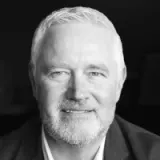
Andrew Stickland advises growing businesses on improving operations, customer success and repeat business. Stickland's work includes fractional executive support and business mentoring.
Andrew Stickland advises growing businesses on operations, customer success and repeat business, and takes part in business mentoring.
In LinkedIn posts, they explain how People, Process and Product affect a company’s ability to deliver reliably as it grows.
One post adds Purpose to make this a 4Ps framework.
Their work offers practical ways to connect operational choices with customer outcomes, including a worked example of how repeat-business rates affect revenue and questions businesses can use to examine their customer focus.
Stickland links operational improvement to customers and the numbers behind growth.
Rather than treating new sales as the only route to more revenue, they use a £5m business example to show the potential impact of repeat business, then ask whether a company understands customers’ needs and delivers real value.
Their recurring 3Ps framework makes the operational side concrete: assess staff training and support, identify inefficient processes, and check whether tools help people do the work.
They argue these areas need revisiting as a business changes.
The posts apply the same ideas to different situations, from founder overload and fractional executives to staff training amid UK Budget changes.
Andrew Stickland writes about the operational side of growing a business.
Read more
One argument runs through almost all the material: growth stalls when delivery does not keep pace with sales.
The fix is to keep a few basics under review — who does the work and how well supported they are, whether the processes work, and whether the tools help people run those processes.
Stickland calls these People, Process and Product, later adding Purpose to make four.
From that foundation come two further positions: founders overwhelmed by day-to-day operations can hire part-time executive help instead of a full executive team, and repeat business is often a cheaper growth lever than acquiring new customers.
They frame the customer’s point of view as the test for strategy and operations, and describe a process that starts with an exploratory call and continues with a Discovery exercise, ending in a written report on current status, goals and next steps.
Growth stalls when operations are left behind
Stickland argues that organisations neglect operations as they grow and focus on new sales.
Read more
The result is bottlenecks, weaker delivery and service quality, customer dissatisfaction and stalled growth.
Unhappy customers do not return or refer others, compounding the problem.
The remedy is a recurring review of People (training, support, mindset, job satisfaction), Process (workflows that are broken, inefficient or whose failures are not visible) and Product (whether the tools support the people running the processes).
They say this matters from day one, whether a business starts with one person or fifty, and must be revisited as technology and markets change.
Stickland describes leading a service delivery team at a previous organisation that grew revenue and staffing by more than 300% year on year.
Keeping pace, they say, meant revisiting the 3Ps at least every six months.
The post also sets out the engagement model: an initial exploratory call, followed by a Discovery exercise whose report covers the organisation’s current status, goals and clear indicators for next steps.
The client can act on it alone or continue with further support.
Fractional executives as the answer to founder overload
A recurring theme is the founder pulled away from growth work to run the business.
Read more
Hiring a full executive team for finance and operations is, Stickland argues, too expensive at that stage; a fractional (or portfolio) CFO or COO brings senior experience part time at a fraction of the cost, freeing the founder to focus on customers and growth. The post links three claims: operational excellence makes an organisation smooth, functional and efficient; business strategy must align with a long-term vision and tactical objectives that operations can deliver; and customer success comes when strategy, tactics and operations combine to deliver customer excellence, producing retention and referral.
Stickland links the founder’s situation — chained to the desk, dragged into payroll and people management, losing touch with the front line — to a fractional executive as the practical remedy. Customer excellence, not operational tidiness for its own sake, is the end goal.
Stickland argues that companies over-invest in chasing new customers when existing ones could return more often.
Read more
The post combines arithmetic with a rhetorical case: calculate what repeat business currently contributes, then show how improving it changes the new-business burden. The lever is what they call thinking 'outside in' — shifting the company’s focus from what it wants to achieve to what customers need it to do — alongside effective operational practice, on the grounds that happy customers return and refer others.
In a hypothetical £5m business, a 25% turnover increase is £1.25m.
If repeat business runs at 60%, the company must find £2m of new business just to stand still; lifting repeat business to 85% changes that arithmetic substantially.
The post closes with four self-check questions, including whether the team focuses on customer outcomes and whether anyone actually knows what customers need.
At a business mentoring event, Stickland extended the three-part framework to four: Purpose, People, Process and Product.
Read more
Purpose is a clear, customer-value-aligned vision, strategy and tactics embedded in every part of the organisation; People understand and align with that purpose and know how their role fits; Process supports people in delivering the work; Product is the tools people use to run those processes.
The distinctive claim is that these are not a checklist but a matrix in which each element affects the others.
Get them right and they deliver operational excellence and customer success; get them wrong and they block growth and can threaten survival.
Stickland co-founded the event 'Guiding Growth and Driving Success' with four other business mentors — Emma Cole, Simon Jones, Tim Bardgett and Simon Nicholson — at The Cornwall Hotel and Spa on 16 June.
They covered the 4Ps.
The co-mentors’ contributions are theirs; only the 4Ps session is described as Stickland’s.
The People, Process and Product framework from the operational-dissonance post becomes Purpose, People, Process and Product here. Purpose comes first, and the other elements must align with it, sharpening rather than replacing the earlier version.
Stickland argues that customer success and delivery quality require deliberate investment, applying that case to a specific cost pressure: UK Budget changes affecting small and medium-sized businesses, especially minimum wage increases.
Read more
They say staff trained in customer success and excellence help maintain strong operational delivery when margins are squeezed, and present focused training as a way to maximise team potential.
The post responds to the Budget the day after it landed, pointing to focused training as a practical response for SMEs facing higher wage costs. It applies the customer-success and operational-excellence themes to a policy change rather than arguing for growth.
Defines Andrew Stickland’s term “operational dissonance” and sets out the People, Process, Product framework used throughout the other material.
Read more
Stickland argues that businesses chasing new sales often let operations fall behind, creating bottlenecks, poor delivery quality, customer dissatisfaction and stalled growth.
They recommend regularly reviewing three areas: People (training, support, mindset and job satisfaction), Process (broken or inefficient workflows, often hard to spot from the inside) and Product (the tools used to run those processes).
As proof of the approach, they point to leading a service delivery team that grew revenue and staffing by more than 300% year on year, with the 3Ps revisited at least every six months to keep pace.
The post also outlines the engagement model: an exploratory call followed by a Discovery exercise that produces a report on current status, goals and next steps.
For brands planning a campaign
Use this as the diagnostic frame for a fractional COO pitch: name the operational bottleneck, map it to People, Process and Product, then propose a Discovery phase.
Explains the fractional COO/CFO offer in Stickland’s own words, including what prompts founders to buy it.
Read more
This post addresses founders pulled from growth work into day-to-day operations as their businesses expand, but who cannot yet justify a full executive team.
Stickland recommends fractional (also called portfolio) executives — a CFO or COO working part time at a fraction of the cost.
The case rests on three points: operational excellence keeps an organisation smooth, functional and efficient; business strategy must align with a long-term vision and tactical objectives that can be delivered operationally; and customer success follows when strategy, tactics and operations combine into customer excellence, driving retention, referrals and growth.
For brands planning a campaign
Supports a fractional COO proposal by naming the trigger (founder overload), the buyer (an SME too small for a full-time executive) and the claimed outcome (retention and referral growth).
The material’s clearest worked example, showing how Stickland quantifies the value of repeat business rather than arguing for it in the abstract.
Read more
Stickland works through a £5m business: a 25% turnover increase is £1.25m.
If repeat business runs at 60%, the company must find £2m of new business just to stand still; lifting repeat business to 85% changes the arithmetic substantially.
They identify the lever as a customer perspective — thinking “outside in” and asking what customers need the company to do, rather than what the company wants to achieve — combined with effective operational practice.
Four self-check questions close the post, including whether anyone actually knows what customers need.
For brands planning a campaign
A ready-made revenue argument: first quantify the repeat-business gap using the client’s own numbers, then position operational and customer-success work as the route to closing it.
Shows the in-person mentoring side of Stickland’s work and how they extend the 3Ps framework to 4Ps, putting Purpose first.
Read more
Stickland co-founded a business mentoring event, Guiding Growth and Driving Success, with four other mentors — Emma Cole, Simon Jones, Tim Bardgett and Simon Nicholson.
Held at The Cornwall Hotel and Spa on 16 June, the event featured Stickland on the 4Ps: Purpose (a clear, customer-value-aligned vision embedded across the organisation), People, Process and Product.
The post stresses that each P affects the others, and that getting them right delivers operational excellence and customer success, while getting them wrong blocks growth and can threaten survival.
For brands planning a campaign
Evidence of a live event and mentoring offer in Cornwall, useful for briefs involving regional in-person workshops, leadership sessions or mentoring alongside consulting.
The set’s most time-bound item, showing how Stickland connects a policy change to training advice an SME buyer might act on.
Read more
In response to a UK Budget that brought changes affecting UK SMEs, particularly minimum wage increases, Stickland argues that training staff in customer success and excellence is increasingly important to maintain operational delivery.
They also point to focused training as a way to maximise team potential.
The post applies the customer-success and operational-excellence themes to a current cost pressure, not just to growth.
For brands planning a campaign
A hook for cost-conscious SMEs: position operational and customer-success training as protection against rising wage costs and delivery-quality risks.
Stickland describes a gap between growing sales and keeping delivery operations ready.
Read more
They frame the problem through People, Process and Product: whether staff have the training and support they need, workflows work efficiently, and tools help people do the work. They say these areas need regular review as a business changes.
In one post, Stickland connects operational strain to customer dissatisfaction, weaker repeat business and stalled growth. They describe reviewing the three areas at least every six months at a previous organisation.
For brands planning a campaign
A company considering fractional COO support could assess whether a campaign should focus on diagnosing delivery bottlenecks across staffing, workflows and tools, rather than promoting growth through sales alone.
Stickland argues that businesses can grow by helping existing customers return, not only by pursuing new sales.
Read more
They use a hypothetical £5 million business to illustrate how improving repeat business could change the amount of new revenue needed. They link customer focus to operational delivery and ask businesses to consider whether they understand customer needs and deliver value.
The post uses a numerical scenario followed by self-assessment questions about customer perspective, team focus and value.
For brands planning a campaign
This approach may suit a brief about retention or customer-led growth.
A campaign could invite business leaders to examine customer outcomes and the delivery practices that affect repeat purchases.
The post uses the revenue figures as an illustrative example.
Stickland presents fractional executives, including CFOs and COOs, as part-time support for founders who are pulled into day-to-day operations.
Read more
They connect that support to operational excellence, strategy translated into practical objectives, and customer success.
For brands planning a campaign
For a fractional COO engagement, the post offers a direct positioning angle: help founders regain time for customers and growth while improving operational delivery. Ask for engagement terms, pricing and measured client outcomes.
In a post about a business-mentor event, Stickland expands the three-part framework to include Purpose: Purpose, People, Process and Product.
Read more
They describe these elements as interdependent, with purpose tied to customer value and direction, and the other elements supporting delivery.
The post defines each element and presents them as a connected system rather than separate checklist items.
For brands planning a campaign
A mentoring or leadership campaign could use this framework to structure a discussion about whether a company's direction, staff, workflows and tools reinforce one another.
Responding to UK Budget changes affecting small and medium-sized businesses, Stickland argues for training staff in customer success and operational excellence.
Read more
The post is a brief call for focused training, rather than a detailed training plan.
For brands planning a campaign
This is relevant to a training brief aimed at improving customer-facing delivery. Ask for the curriculum, delivery format and evidence of training results.
The posts name one business directly: Copper Bridge, which appears as the sign-off on a post about operational excellence and the 3Ps, beside a booking link and the hashtags #operationalexcellence and #threeps.
Read more
Ask whether Stickland owns, works for or advises the business.
A second thread describes a business event Stickland co-founded with four other mentors, held at The Cornwall Hotel and Spa.
Otherwise, the posts promote fractional-executive and mentoring services without naming the company delivering them.
Copper Bridge
Disclosed partnership
Copper Bridge is named at the end of a post arguing that growing companies let operations fall behind, creating bottlenecks, blocking repeat business and stopping referrals.
Read more
The post sets out the "3P's" of People, Process and Product, then invites readers to book a call or send a direct message. It does not state Stickland's role in the business, so ask whether they own, work for or advise Copper Bridge.
The venue for "Guiding Growth and Driving Success," a business event Stickland says they kicked off with four other business mentors — Emma Cole, Simon Jones, Tim Bardgett and Simon Nicholson.
Read more
Their contribution covers the expanded "4Ps" of Purpose, People, Process and Product. The post invites readers to the event with a ticket link; ask whether the hotel has any commercial relationship with Stickland beyond hosting.
Start with the posts where Stickland sets out the operational argument: growth outruns delivery, and the fix is to keep People, Process and Product under review.
Read more
From there, the writing follows two threads: the case for part-time executive help when a founder is pulled into day-to-day operations, and the arithmetic of repeat business as a cheaper growth lever than new sales.
A later post expands the framework to Purpose, People, Process and Product, while a Budget response applies the same customer-success lens to SME training costs.
Together, these posts show the recurring test: whether strategy, operations and the customer's point of view line up.
The tags below group the operational, customer-success and fractional-executive threads.
Similar creators offer different lenses: customer experience, financial decision-making, and finance for fashion and consumer brands.
Like Stickland, Weidinger writes about customer success and turns general ideas into practical lessons for business leaders.
Read more
Weidinger's convocation post draws customer-experience lessons about setting expectations, facing challenges together and keeping customers informed. That overlaps with Stickland's argument that customers stay when operations and communication support them.
Weidinger's material centres on customer experience and habit change for client adoption, drawing on Atomic Habits and the two-minute rule. Stickland's writing focuses on operational delivery — how people, processes and tools affect repeat business — and the case for fractional executive help.
Krecak is a fractional CFO who writes about decisions and performance in growing businesses, as Stickland does from an operations angle.
Read more
Both use short posts to argue that delay and unclear measures carry real costs, and address owners who need part-time executive support.
Krecak's lens is financial: the cost of indecision, KPIs and when to act on an underperforming employee. Stickland's is operational and customer-facing, centred on the People, Process and Product review and the link between delivery and repeat business.
Rugova is a fractional CFO and COO who, like Stickland, explains what part-time executive leadership offers a growing business: senior guidance without a full-time hire, plus a team that handles finance and operations.
Read more
Both frame the offer around clarity for founders.
Rugova's posts target fashion and consumer brands, name past brand work and describe finance and accounting services at the firm level. Stickland's content is more framework-driven and aimed at SMEs generally, with customer success and operational delivery as its organising ideas.
For a fractional COO campaign aimed at founders and small-business leaders, Andrew Stickland's posts address that audience.
Read more
Posts dated between 17 Nov 2025 and 19 May 2026 discuss operational excellence, fractional executives, repeat business and business mentoring, suggesting relevance to owner-operators and SME leaders.
Their LinkedIn profile lists 2,595 followers as of 8 Oct 2026.
Before placing spend, ask for a recent audience survey or platform demographics covering job function, seniority and company size, plus recent post or campaign results for operations and customer-success topics.
If those are unavailable, treat audience fit as unverified and consider a small test with clear reporting requirements.
Andrew Stickland's posts do not describe sponsorship, advertising or brand-partnership formats.
Read more
They outline commercial services: an initial exploratory call followed by a paid Discovery exercise that produces a report on an organisation's current status, goals and next steps, with further engagement possible at different levels afterward; fractional executive cover (CFO, COO) on a part-time basis at a fraction of full-time cost; and a training link aimed at teams' customer success and operational delivery.
The only joint activity shown is a business-mentoring event on 16 June at The Cornwall Hotel and Spa, where they appear alongside Emma Cole, Simon Jones, Tim Bardgett and Simon Nicholson.
Tickets are sold through a general event link.
This is a ticketed event with named co-hosts, not a described sponsorship package.
No official partnership policy, format specification, pricing, disclosed brand deal or partnership inquiry route appears in the posts.
Marketers should ask directly about available partnership formats, pricing and how to inquire.
A UK B2B services or SaaS company selling to SME founders wants a consulting-led content campaign on operational bottlenecks and repeat business, with Andrew Stickland as the named expert.
Read more
They are a strong fit, bringing a recurring framework the campaign can build around: People, Process and Product, extended to Purpose, People, Process and Product in the mentoring post.
They also offer a worked revenue argument buyers can use: in a hypothetical £5m business, repeat business running at 60% means finding £2m of new business just to stand still; lifting repeat business to 85% changes that arithmetic.
Their stated engagement model gives the campaign a clear call to action: an exploratory call followed by a paid Discovery exercise that reports an organisation's current status, goals and next steps.
There is an in-person option too: Stickland co-founded the Guiding Growth and Driving Success mentoring event at The Cornwall Hotel and Spa with four other mentors, a format suited to a regional workshop or roundtable.
The public service offer is fractional executive cover, including COO support part time at a fraction of full-time cost, which directly matches the campaign's audience.
Two constraints shape the plan.
First, five short-form LinkedIn posts are available, but none includes a client name, case study, testimonial or measured client result.
Frame outcome claims, including the self-reported 300% team growth claim, as Stickland's stated approach rather than proven results.
Second, the audience is small and uncharacterised: 2,595 LinkedIn followers as of 8 October 2026, with no job-function, seniority or company-size data.
Scope and price this as an expert-credibility play with a warm but narrow audience, not a reach buy.
When to choose a specialist
A retail or consumer brand seeking a sponsored content campaign measured on impressions and reach, or a software vendor seeking a paid product-placement series with a high-volume audience, is a poor fit.
Read more
The posts describe no sponsorship, advertising or brand-partnership format: no format list, rate, official policy, disclosed brand deal or partnership inquiry route.
Their commercial routes are their own services — a Discovery exercise, fractional executive cover and a training link — not a partner offer.
A sponsored-placement campaign would therefore need terms negotiated from scratch.
The audience compounds the problem: 2,595 LinkedIn followers, with no demographic or engagement data, cannot support a justified reach or awareness target.
Video- or long-form-led work is also unproven: the available posts are short written posts, so confirm whether Stickland produces video, podcasts or long-form writing before promising those formats.
For an enterprise-scale transformation campaign, ask for client references, sector case studies and independently checkable delivery results; the only scale claim in the posts is self-reported.
A worked campaign example
Campaign angle: “The Repeat-Business Audit” — a two-stage lead campaign for a B2B services or software client selling to UK SME founders, with Andrew Stickland as the named practitioner.
Stage one, the hook.
Open with the arithmetic from their post, adapted to the client's sector: if repeat business is running at 60%, a £5m business has to find £2m of new business just to stand still.
Keep the promise modest and specific: find out where repeat revenue is leaking, not “transform your operations”.
Stage two, the diagnostic.
Offer a short worksheet built on the People, Process and Product frame: for each area, what has fallen behind as the company grew?
Pair it with the four outside-in questions from the customer-perspective post: how would I feel as my own customer, does the team focus on customer outcomes, are we delivering real customer value, and do we know what customers actually need?
The worksheet is the deliverable; it works whether or not the reader books a call.
Stage three, the session and handoff.
Run a 45-minute live session in which Stickland walks through one anonymised example using the frame and answers questions, then hands participants off to the client's own discovery process.
Their stated model — an exploratory call followed by a paid Discovery exercise producing a report on current status, goals and next steps — gives the funnel a natural next step.
The same ladder applies if the client sells fractional executive support.
Assets to request before committing: a 600–900 word written framework piece, the worksheet as a downloadable PDF, one recorded segment or clip for the landing page, and a short bio and headshot. Where regional reach matters, add an in-person workshop, using the Guiding Growth and Driving Success event experience and four-mentor format as precedent.
Measure worksheet downloads, Discovery enquiries attributed to the campaign, and the repeat-versus-new business split among enquiries.
Before publishing, keep the illustrative £5m figures labelled as an example, attribute the 300% team growth claim to Stickland as their own account, and use no client logo or outcome unless new evidence supports it.
If the client also wants a paid sponsored placement, negotiate it from scratch; no partnership format is documented.
Choose Weidinger when the campaign's core problem is customer behaviour rather than operational capacity: getting client teams to adopt a new tool or process and keep using it.
Read more
An August 2026 post draws a full analogy between a university convocation and a good customer journey — setting expectations early, facing difficulties together and communicating clearly.
A March 2026 post applies James Clear's 2-Minute Rule to client adoption, scaling a new habit down to its entry point (log in and click around) so clients start before they worry about results.
For a brief about onboarding, adoption or retention behaviour change, that is closer to the problem than Stickland's People, Process and Product operational frame.
The published material covers customer-experience coaching and habit formation, not operational or financial restructuring.
Neither of the two posts mentions a fractional COO offer, a paid Discovery exercise or repeat-business arithmetic.
A brief focused on fixing delivery bottlenecks or lifting repeat revenue would need to build that scope from scratch.
The creators also target different problems: Weidinger changes customer behaviour; Andrew Stickland changes how the company delivers.
Choose Krecak when the decision itself is financial and the bottleneck is leadership hesitation rather than process design.
Read more
A September 2024 post puts a number on delay: a client who held off on a CRM decision for four years was losing roughly $200,000 a month, close to $10 million in total.
The post frames fractional CFO work as supplying the clarity and data to decide.
A May 2024 post sets a three-week rule before intervening on missed KPIs and ends in coaching, drawing on experience running four cell-phone repair stores.
If the engagement is about decision paralysis, the cost of waiting or management-level KPI accountability, a fractional CFO entry point may fit better than a fractional COO one.
The posts are finance-led, and the delivery examples come from retail cell-phone repair stores Stickland owned, not B2B services or software SMEs.
Neither post contains an operational audit framework or a repeat-business calculation like Stickland's £5m example.
A client seeking an operations diagnostic and repeat-revenue lift would be buying a different entry point and would still need the operational content built separately.
Choose Rugova when a fashion, consumer products or nonprofit business needs finance and operations handled together, including bookkeeping, payroll, reporting, budgeting, cash flow and forecasting.
Read more
A July 2026 post sets out the RR Finance & Operations offer and states sector depth in fashion, consumer products and nonprofits.
An April 2026 post names brands supported across the industry (Tiffany & Co., Gap Global, Mansur Gavriel, Stoney Clover Lane, Tanya Taylor) and pairs fractional CFO/COO work with cash flow, profitability, inventory planning and scalable infrastructure.
For a consumer or fashion brand, that industry specificity sits closer to the buying decision than a general B2B services operations frame.
The published material focuses on finance-and-accounting delivery for consumer-facing brands.
Neither post reports a measured client outcome or presents an operational-excellence framework or repeat-business argument.
A software or B2B services client would gain sector match but lose the operational diagnostic Stickland's material spells out.
The offer also bundles fractional CFO with fractional COO, rather than offering the COO role alone, which changes what the client is buying.
Andrew Stickland's LinkedIn posts cover operational dissonance and the 3Ps, the case for fractional executives, the repeat-business calculation, the Guiding Growth and Driving Success mentoring event and the 4Ps, and a UK Budget response on SME training.
Andrew Stickland's LinkedIn profile lists 2,595 followers, observed 8 October 2026.
The similar-creator section includes posts by Michael Weidinger, Rob Krecak and Romina Rugova.
Andrew Stickland's posts do not state publication dates.
No long-form articles, talks, video transcripts, dated archive, client case studies, audience demographics or partnership terms appear in the posts here.
Claims such as the reported 300% growth of a service delivery team are presented as Stickland's own account, and the Copper Bridge connection is recorded as a commercial arrangement of unstated form.
No signature book, show or earlier body of work appears in the posts here, so that part of the name-search picture remains open.