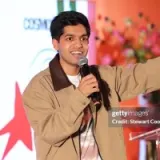
Ziad Ahmed is a marketing executive and founder of JUV Consulting, a youth-focused consulting firm acquired by United Talent Agency. Ahmed’s work includes Gen Z-led brand campaigns, cultural partnerships and community events such as ZCON.
Ziad Ahmed is known for building JUV Consulting, a youth-focused firm he founded as a high-school student and that was acquired by United Talent Agency, and for creating ZCON, a gathering that brings Gen Z speakers and attendees of different generations together.
His posts connect youth marketing to a broader question: how can brands help people build community, rather than simply sell to them?
Follow his work for examples of that idea in practice, alongside reflections on culture, belonging and the role of brands in people’s lives.
Ahmed makes community a practical part of the work, not just a campaign message.
In his account of Coachtopia, he describes working with Gen Z on a circular-economy brand; in his &Coach post, he says his team brought 15 creatives together with Coach’s global CMO to develop a campaign in under two days.
His account of a method partnership at Bad Bunny’s Puerto Rican residency shows a different application: building an activation around concertgoers’ bathroom rituals and creators connected to the island.
Beyond brand campaigns, he writes about ZCON and the loss of everyday social connection, arguing that brands and events can create spaces for people to gather.
This range—from product and campaign work to live community events and cultural commentary—is what makes his perspective distinctive.
His posts describe team and client work, so they do not establish which parts he personally executed.
Ziad Ahmed repeatedly argues that young people should help shape decisions, not merely appear in campaigns, and that brands can earn relevance by strengthening real communities.
Read more
His posts connect those ideas to co-created brand work, culturally specific partnerships and circular design.
Give young people a role in making the work
Ahmed presents Gen Z as a source of expertise and creative direction, not just a target audience.
Read more
In his account, involving young contributors early can change the work itself.
He says JUV worked with Gen Z contributors on Coachtopia and describes bringing 15 creatives together with Coach’s global CMO to develop an &Coach campaign idea in under two days.
Ahmed argues that convenience can crowd out the relationships and shared spaces people need.
Read more
He sees gatherings and shared rituals as ways to create connection, rather than treating people only as an audience to reach.
He describes ZCON as an answer to the desire for a “village,” with Gen Z speakers, an intergenerational audience and participatory activities such as hula-hooping. In a separate post, he calls the wider problem an “intimacy recession.”
Ahmed’s examples emphasize starting with how people actually behave in a specific setting, then building an activation around that context.
Read more
The cultural connection matters more than simply attaching a brand to a prominent event.
For method’s work around Bad Bunny’s Puerto Rican residency, he describes an installation in concert bathrooms built around mirror selfies, conversation and community-making, with creators connected to the island helping tell the story.
Ahmed points to changes in supply chain, design and community as more meaningful than a broad sustainability message.
Read more
His post presents Coachtopia as an example, while directing readers to a docuseries about its circularity efforts.
He describes Coachtopia as developed with Gen Z contributors and asks whether existing systems are really the best possible. He also urges readers to follow the project’s “Road to Circularity” series.
Answers how Ziad connects brand strategy to sustainability and community co-creation, which is central to the circular-economy brief.
Read more
Ziad describes JUV Consulting’s collaboration with Coach on Coachtopia, which he calls the first circular-economy luxury brand of its kind, built in partnership with Gen Zers worldwide.
He points readers to Aditi Mayer’s “Road to Circularity” docuseries and to Coach CMO Joon Silverstein’s leadership.
He frames the work as asking whether current systems are the best we can do and as repurposing “waste” into wonder.
The post does not detail Ziad’s individual role in the supply-chain or design decisions.
For brands planning a campaign
For a circular-economy or sustainability brief, this is evidence of a partner who can talk about supply chain and design in community terms rather than as a compliance story. Use it to shape a campaign that gives Gen Z participants a visible role in product and messaging.
Best single example of Ziad’s method for fast, co-created brand work with young creatives, and the clearest window into how he runs a campaign sprint.
Read more
Ziad narrates a launch event for &Coach at Cannes.
He says the relationship began with a Gen Z Crash Course for Vans in 2019 and continued through Coachtopia.
When Coach’s global CMO asked how to co-create a global campaign with Gen Z in four months, Ziad says his team curated 15 creatives, including Chappell Roan’s creative director Ramisha Sattar and Anthony Po, brought them to upstate New York to crack the idea live with the CMO in under two days.
The campaign cast Malala, Avantika, and Charli XCX.
At Cannes, they announced a global partnership brokered between Coach and Spotify.
He frames the work as celebrating the mundane, in-between moments of becoming and as making the world slightly better.
For brands planning a campaign
Shows a model a brand can hire: an intensive offsite with a small set of creators and the client’s decision-maker, followed by fast production and launch. It also shows brokering brand-to-brand partnerships—Coach and Spotify—as part of the campaign package.
Concrete example of a cultural insight turned into a physical activation and creator campaign, useful for judging execution detail.
Read more
Ziad describes working on behalf of method products to partner with Bad Bunny’s Puerto Rican residency.
The agency took over bathrooms inside the venue, creating “sensorial oasises” around the idea of “besties del baño,” based on the insight that messy, magical moments at concerts happen in the bathroom—mirror selfies, chisme, community-making.
They brought in creators with a connection to the island, including Jools Lebron, to tell that story.
The post ties the work to method’s all-Latin team, Bad Bunny’s team, and a co-branded Fujifilm QuickSnap camera.
For brands planning a campaign
A template for low-cost, high-relevance activation: find a specific, overlooked venue ritual, design a branded space around it, and pair with creators who have authentic ties to the audience. The co-branded camera shows how to extend the moment into shareable content.
Explains ZCON, the community event Ziad repeatedly points to as his village and as the culmination of a decade of youth-marketing work.
Read more
Ziad writes that ZCON 2025 drew 750+ attendees, with speakers including Olandria, Ella Emhoff, and Auli’i Cravalho, sponsors including Coach, Yahoo, Invisalign, and L’Oreal, and a partnership with Cosmopolitan to name the Gen Zers of the year.
He describes ZCON as the first major conference with only Gen Z speakers and an audience across backgrounds, and says he created it as a student.
He links recap coverage from Variety, Teen Vogue, and AdAge.
A separate post announces the next ZCON in Los Angeles and invites readers to request an invite.
For brands planning a campaign
A brand can sponsor or participate in ZCON to reach Gen Z creators, CMOs, and changemakers in a curated setting. The Cosmopolitan awards partnership shows how a media brand can attach its name to the community’s own recognition.
Shows the scale and trajectory Ziad’s firm reached and how he positioned youth expertise inside a major entertainment company.
Read more
Ziad announces that JUV Consulting has been acquired by United Talent Agency, forming the Next Gen Practice of UTA Marketing.
He says he started the company as a high-school junior and that the deal was structured to benefit the community and scale the work.
He describes JUV as doing more than consulting, including co-creating products, working on state elections, and creative campaigns, and says he will become Head of Next Gen, reporting to Julian Jacobs and David Anderson.
He mentions ZCON and community-first business as continuing priorities.
For brands planning a campaign
For an agency or brand, this signals that Ziad now operates within UTA’s ecosystem, which can bring entertainment talent and industry access to a campaign. It also shows a track record of building a youth-marketing firm into an acquisition.
A concise statement of Ziad’s current marketing argument, useful for seeing how he frames his point of view for a business audience.
Read more
Ziad discusses brand health with Kory Marchisotto, Joon Silverstein’s cultural anthropology, and argues that any brand not thinking of itself as a media company today is losing market share.
The post links to the full Fortune Daily conversation.
It is a short clip rather than a full transcript, so it shows the headline argument and the people he cites, not the entire conversation.
For brands planning a campaign
If the brief involves content or owned media, this is his guiding argument: brands need to behave like publishers to stay culturally relevant. It also names executives and frameworks he draws on, which can inform a pitch.
Ziad’s clearest explanation of the social shift he thinks brands should respond to, and the intellectual frame behind his community-first work.
Read more
Ziad writes that the scarcity of genuine intimacy gives it a premium and that society may be in an “intimacy recession.”
He cites a ZCON talk on an “imagination recession,” a WPP Stream talk called “the loss of the local,” and examples such as people not picking each other up from the airport, using apps rather than asking friends for help, and young people swiping more and kissing less.
He argues that brands and events creating real communal feeling—the Knicks, GovBall, the World Cup—are striking a chord, and urges investing in intimacy rather than innovating it out of existence.
For brands planning a campaign
A community-first campaign brief can use this framing: design for third spaces, shared rituals, and real-world gatherings rather than just reach and convenience. It positions Ziad as a strategist who will push a brand to justify its role in people’s social lives.
Shows how Ziad ties business milestones to community and inclusion, and how he describes work on Riz Ahmed’s show BAIT.
Read more
Ziad marks ten years since founding JUV Consulting and two years since the UTA acquisition, then describes the third annual UTA Iftar for over a hundred people, including poetry from Emtithal Mahmoud, nonprofit partners, former team members, and clients experiencing Ramadan for the first time.
He also says he and Shaina Zafar worked with Left Handed Films to promote Riz Ahmed’s show BAIT, supporting viral creator partnerships, premieres, and marketing.
He mentions sharing spaces with Riz Ahmed, Hasan Minhaj, and Mayor Zohran Mamdani.
For brands planning a campaign
For a brief involving cultural inclusion or Muslim audiences, this is evidence of long-standing community relationships and event experience. The BAIT work shows a creator-partnership approach applied to a TV launch.
Build Gen Z campaigns with young people, not just about them3
Treat community as part of the campaign, not just its audience3
Use cultural commentary to connect events with a wider social idea2
Make cultural partnerships specific to the place and people involved1
Connect sustainability claims to how a product or system works1
Build Gen Z campaigns with young people, not just about them
Ahmed describes Gen Z expertise as a way to bring young voices into decisions.
Read more
In the JUV Consulting acquisition post, Ahmed says the firm worked across product and supply-chain projects, elections, and brand campaigns. The Coachtopia post points to Gen Z contributors shaping a circular-economy brand; the &Coach post describes assembling 15 creatives to develop a campaign idea with Coach’s CMO in under two days.
Ahmed’s examples emphasize convening contributors around a real brief, then carrying the work through to products or public-facing creative.
For brands planning a campaign
For a brand seeking credible youth marketing, involve young contributors early in research and creative decisions, and show what their input changed. Co-creation is more substantiated here than a campaign that simply borrows Gen Z language or imagery.
Treat community as part of the campaign, not just its audience
Ahmed frames ZCON as an intergenerational gathering built around young speakers, shared participation, and connections among creators, executives, and other attendees.
Read more
The posts describe its hula-hooping recess and a partnership with Cosmopolitan on Gen Z awards. Ahmed also connects local gathering places and everyday acts of mutual help to a broader argument about social isolation.
The examples combine a convening, participatory programming, media partnerships, and reflection on what attendees do together.
For brands planning a campaign
A brand exploring youth culture could support a useful gathering or shared activity, rather than stopping at reach or impressions. The idea fits best when the brand can contribute to the community and give participants a meaningful role.
Make cultural partnerships specific to the place and people involved
In a post about method’s work around Bad Bunny’s Puerto Rico residency, Ahmed describes a bathroom installation built around concertgoers’ mirror selfies, conversations, and social moments.
Read more
The post says creators with a connection to the island helped tell the story. Ahmed presents the partnership as an extension of the residency’s cultural setting, not a generic sponsorship placement.
The post links a specific venue behavior to an on-site experience and creator storytelling.
For brands planning a campaign
For a campaign tied to a cultural event, start with the audience’s actual habits and the local context; select creators for a genuine connection to that context. This example may suit experiential or creator-led work, but it does not establish that the same execution would fit another community.
Connect sustainability claims to how a product or system works
Ahmed presents Coachtopia as an example of reconsidering supply chain, design, and community, and points to a docuseries about its road to circularity.
Read more
The post treats the project as a practical demonstration of circular-economy ideas, rather than relying only on a broad sustainability message.
Ahmed points readers to a documentary series and a named collaborator to make the work easier to examine.
For brands planning a campaign
For a brand with a substantive circularity project, show the decisions, people, and processes behind it. Use this approach only when the brand can point to concrete work; the post is an account of the project, not independent evidence of its environmental results.
Use cultural commentary to connect events with a wider social idea
Ahmed’s post about the Knicks, concerts, and public gatherings develops an argument that people want more intimacy and community in a life optimized for convenience.
Read more
A separate interview post lists brand health, cultural analysis, and brands acting as media companies as subjects discussed. Together, these examples show a reflective commentary format alongside discussion of marketing strategy.
Ahmed moves from recognizable cultural examples to a broader claim, then states a value-based conclusion.
For brands planning a campaign
This approach can help a brand develop a point of view around a cultural moment, but it calls for more than attaching a product to a trending event. The brand needs a specific, credible connection to the issue and should avoid presenting a personal interpretation as settled audience research.
Ziad Ahmed's commercial relationships run through JUV Consulting, the youth-marketing firm he founded and ran until United Talent Agency acquired it, and through UTA's Next Gen practice, where he works as Head of Next Gen.
Read more
The retained posts name client campaign work for Coach (including Coachtopia and the &Coach launch), method products pbc, Fujifilm, Vans and Left Handed Films, sponsorship of his ZCON conference by Yahoo, Invisalign, L'Oréal, RIVET and Sour Jacks, and partnerships with Spotify, Gold House and Cosmopolitan. Relationships are described from Ahmed's own account of the work; the posts do not set out contract lengths, fees or campaign dates.
United Talent Agency
Employment
Ahmed is Head of Next Gen at UTA Marketing, the practice created when UTA acquired JUV Consulting.
Read more
He describes UTA as his first employer and credits UTA leadership with backing ZCON.
Ahmed's team co-created Coachtopia, the brand's circular-economy line, and produced the &Coach global campaign and its launch event at Cannes, built with a curated group of Gen Z creatives.
Read more
Coach also sponsors ZCON, and Ahmed works directly with Coach's marketing leadership.
Ahmed's team built method's partnership with Bad Bunny's Puerto Rico residency, turning venue bathrooms into 'besties del baño' sensory spaces staffed with creators connected to the island.
Ziad Ahmed's posts are the fastest way into his thinking, and they cluster around three threads a reader can follow.
Read more
For the brand work, start with the Coachtopia and &Coach posts, which describe bringing Gen Z contributors and outside creatives into product and campaign decisions, and with the account of a method activation built around Bad Bunny's Puerto Rico residency.
For the community side, the ZCON posts explain a conference built on young speakers, an intergenerational audience and shared activities rather than a standard corporate break, and a companion post on the Knicks, concerts and public gatherings sets out the broader argument about people wanting more contact and less convenience.
For a quick read on his marketing positions, the Fortune Daily post links a video interview covering brand health, cultural analysis and brands behaving as media companies.
Posts about JUV Consulting's acquisition by United Talent Agency and about Ramadan and an annual Iftar sketch the business and personal context behind the rest.
Gen Z marketingCo-creation with young contributorsCommunity buildingCircular economyCultural partnershipsPhilanthropy and givingBrand strategyCreator economyExperiential marketingConferences and conveningsVideo and podcast interviewsCultural commentaryTalks and keynotesMarketing leaders and CMOsGen Z readers and creators
Sophie Kaufman
Kaufman also works inside a one-person social media and marketing practice, handling organic social, paid social and influencer marketing for a spread of client categories, and writes about that work in the same first-person LinkedIn format.
Read more
Kaufman's posts are about the freelance business itself: client work for insurance, nonprofit, retail, fashion, food and professional-services brands, and the trade-offs of leaving a corporate job for self-employment. Ahmed's material is youth-culture strategy and large-scale convening, carried out within a talent agency.
Miceli treats a community as the centre of the business, and the posts follow the same reflective pattern as Ahmed's: what a gathering means, how a team resolves a miscommunication, what conviction costs a bootstrapped founder.
Read more
Miceli's community, The BOLD Builder, is a mastermind for multifaceted women entrepreneurs, and the writing stays on founder self-development and team communication. Ahmed convenes Gen Z, executives, creators and changemakers, and the community feeds brand campaign work.
Beal draws a lesson about people from the experience of buying and running a ServiceMaster franchise, in the same short reflective LinkedIn format Ahmed uses to argue a point from his own projects.
Read more
Beal's frame is explicitly Christian, moving through a convent training week, Nehemiah's wall and faith-based peer forums. Ahmed's posts argue in the language of youth culture, media and brand marketing.
The only measured audience figure in the supplied material is platform-level: the LinkedIn account listed for Ziad Ahmed showed 22,230 followers when observed on 11 October 2026.
Read more
LinkedIn does not publish audience demographics, so that number tells a buyer how many accounts follow the profile — not where those followers are, how old they are, or what they do for a living.
If your brief needs verified Gen Z consumer reach, this evidence does not supply it; if your brief needs a marketing practitioner audience, the follower count is a starting size check, and the composition question is still open.
Ahmed's posts describe the rooms Ahmed convenes rather than measuring who follows the account.
Selected examples: the ZCON 2025 recap reports 750+ attendees and names sponsors including Coach, Yahoo, Invisalign, L'Oréal, RIVET and Sour Jacks, plus a Cosmopolitan partnership on the Gen Zers of the year.
A separate post describes an Iftar bringing together over a hundred people, including former team members, non-Muslim clients and non-profit partners, and another covers a Cannes lunch tied to the &Coach campaign.
Those are event and campaign headcounts reported by the creator, not audience composition, and they should not be read as the size or makeup of a sponsorable following.
What the content mix suggests about who engages is inference, not measurement.
The posts track UTA Next Gen leadership, brand work with Coach, method and Spotify, and trade-press appearances such as a Fortune Daily interview about brands operating as media companies.
That subject matter is consistent with a professional marketing readership, and equally consistent with young creatives and students drawn to the conferences and campaigns.
Nothing in the material resolves which group dominates.
For a Gen Z agency brief, the next step is to request the data LinkedIn does not publish: any follower demographic export or screenshot the account can provide, a geographic breakdown, and — because platform analytics cannot answer it — whether Ahmed has audience survey results, event registration data, or other documented first-party evidence covering job title, industry or seniority.
Ask for recent sponsored-post results for comparable topics and formats as well; campaign-specific delivery is the number that matters for a placement, and it is not inferable from an accumulated follower count.
No video performance summary or YouTube audience export was included in the material, so no format-level delivery range can be stated here.
LinkedIn followers
22,230
LinkedIn account listed for Ziad Ahmed · 2026-10-11
Ziad Ahmed's partnership work runs through JUV Consulting, the youth-marketing firm he founded and which was acquired by United Talent Agency to form UTA Marketing's Next Gen Practice.
Read more
Brands engage that team rather than booking Ahmed as an individual creator.
Documented work includes co-created campaigns and product tie-ins with Coach (the Coachtopia circular-luxury line and the &Coach campaign), a method products sponsorship of Bad Bunny's Puerto Rico residency with a co-branded Fujifilm QuickSnap camera, the Coach–Spotify partnership the team brokered and announced at Cannes, and sponsorships of ZCON, the Gen Z conference Ahmed runs.
The reviewed material contains no published sponsor policy, rate card, package specification, or partnership inquiry route, so a buyer should expect to open a conversation through UTA's Next Gen team rather than through a public booking form.
Co-created brand campaigns
Buyer requirement
Expect an agency-style engagement, not a single sponsored post.
The &Coach campaign described in the reviewed posts began with the client asking for a global Gen Z campaign at record speed, then moved through a two-day creative offsite and into casting and production.
The stated window from brief to launch was about four months, so buyers should brief early and plan for a co-creation phase before any assets appear.
Product and retail partnerships
Buyer requirement
Client sponsorships have been paired with co-branded physical goods and in-venue activations: a Fujifilm QuickSnap camera carrying both the client and Bad Bunny branding, and branded bathrooms inside the Puerto Rico concert venue. Buyers choosing this format should budget for product production, venue or event access, and creator participation, not only for content.
Event sponsorship and community programming
Buyer requirement
ZCON, Ahmed's invitation-only Gen Z conference, sells sponsorships to brands including Coach, Yahoo, Invisalign, L'Oréal, RIVET and Sour Jacks, and runs a Gen Zers of the year awards program with Cosmopolitan.
Sponsors buy presence in a curated room of several hundred attendees rather than mass reach, so the format suits buyers who want a specific audience and are comfortable with controlled attendance.
Package tiers are not published in the reviewed material and would need to be requested directly.
Cross-brand partnership brokering
Buyer requirement
The team has brokered deals between its own clients, such as the Coach and Spotify partnership announced during Cannes. Buyers who want a partner brand rather than a campaign should treat the team as a broker and expect commercial terms to be negotiated between the two brands, with the team handling the introduction and activation.
Creator and talent convening
Buyer requirement
The team has assembled creator cohorts on very short notice — the &Coach offsite brought together fifteen creatives with roughly a week's warning. Buyers should be prepared to approve talent lists, fees, travel and logistics quickly, and should expect talent cost to sit alongside the team's own fee.
Entertainment and culture launches
Buyer requirement
The team supported the launch of Riz Ahmed's series BAIT with creator partnerships, premieres and marketing. Buyers with a fixed release date should bring the team in early enough to align creator partnerships with the premiere calendar rather than after it.
A consumer brand or its agency wants an authentic Gen Z campaign that includes a working co-creation phase and at least one real-world moment — for example, launching a refillable or circular product line and asking young creators to help shape the positioning before assets are produced.
Reasons
The circular-economy record is specific rather than decorative. In the Coachtopia post, Ahmed describes a brand that reworked supply chain, design and community with Gen Z contributors, and points readers to Aditi Mayer's 'Road to Circularity' docuseries as the place to examine that work. That is the shape of engagement a sustainability brief needs: named people, a documented process, and a route for a reader to check it.
The four-month sprint is the clearest proof of a repeatable method. For &Coach, Ahmed says the team curated 15 creatives — including Chappell Roan's creative director Ramisha Sattar and Anthony Po — and brought them to upstate New York to develop the idea live with Coach's global CMO in under two days, before casting and production. That is a co-creation format a brand can buy, not a vague promise to 'tap into Gen Z culture'.
Community programming already exists at scale. ZCON 2025 drew 750+ attendees with speakers including Olandria, Ella Emhoff and Auli'i Cravalho, sponsors including Coach, Yahoo, Invisalign and L'Oréal, and a Cosmopolitan partnership on the Gen Zers of the year. A brand that wants presence in a curated room rather than mass reach has a proven vehicle.
Cultural specificity is a stated habit. The method work with Bad Bunny's Puerto Rico residency was built around a behaviour inside the venue — concertgoers' bathroom mirror selfies and conversations — and used creators with a connection to the island. That is the kind of place-and-people detail that separates an authentic activation from a logo placement.
Watch out
Engage the team, not a solo creator. This work runs through JUV Consulting, now UTA Marketing's Next Gen Practice, so a buyer should expect an agency-style engagement with its own fee alongside talent and production costs.
ZCON matters as a curated attendance event rather than a reach product; sponsor package tiers are not published and would need to be requested directly.
The account of every campaign above is Ahmed's own. It is enough to judge format and method; it does not independently verify environmental results or delivery metrics.
When to choose a specialist
Weak fit on the material reviewed.
Read more
Brief
A brand wants a single sponsored post from Ziad Ahmed's personal account at a fixed per-post rate, with a guaranteed impression or reach figure, a click-through benchmark, and a sales or signup target.
Reasons
No placement product is documented. The partnership record describes co-created campaigns, product and retail tie-ins, event sponsorship, cross-brand brokering, creator convening and entertainment launches — all team-delivered engagements. Nothing in the reviewed posts shows a standalone sponsored post sold from Ahmed's own account.
Pricing and delivery numbers are absent. There is no published rate card, package specification or sponsor policy, and no sponsored-post performance data. A procurement process that needs a rate and a reach guarantee before briefing has nothing to work from here.
Audience evidence cannot carry the promise. The only measured figure is a LinkedIn follower count of 22,230, observed 11 October 2026. LinkedIn does not publish audience demographics, so that number says how many accounts follow the profile, not where those followers live, how old they are, or what they do — and there is no campaign-level delivery range to substitute for it.
Cross-brand terms are negotiated between brands. Where the team brokered the Coach–Spotify partnership, commercial terms sat with the two brands rather than a single posted rate.
A brief that needs independent validation of environmental or social results is also a poor match. The sustainability material is the creator's account of a project, and the same caution applies to the community numbers reported in the posts: attendee and event headcounts are not audience composition.
A worked campaign example
Angle
Open through the UTA Next Gen team, not a booking form, and state the constraint that matters: a fixed launch date four months out. The &Coach case shows the team has run a global co-creation sprint on that timeline, so the date is a workable brief rather than a disqualifier.
Ask for a two-day co-creation sprint as the first paid milestone: a small cohort of Gen Z creators chosen for a real relationship to the product category, working live with the brand's decision-maker, with the brief that contributors help set the positioning before any assets are produced. That mirrors the described Coach working method and gives the brand a decision it can point to.
Anchor the creative in one specific behaviour rather than a general sustainability message. The method activation worked because it started from what people already do in the venue; for a refillable line, the equivalent is the real friction point in a refill routine, found in research rather than assumed.
Build the flagship moment as a shared activity, not a product display. The ZCON model — participatory programming, a defined community, a partner media brand attached to recognition — is the closest proven template, and the intimacy-recession argument in Ahmed's writing is the strategic framing to hold the brand to: the activation should leave people with a reason to be together, not just a reason to buy.
Extend into creator-led content with talent who have a genuine tie to the category, and pair it with a co-branded physical item if budget allows, following the method/Fujifilm pattern. Budget for product production and event access, not content alone.
Measure first-party: registration and attendance data from the activation, plus whatever creator output the brand can instrument. Do not promise a reach figure — no campaign-level delivery data exists in the reviewed material.
Brief
A mid-size consumer brand is launching a refillable home-care line. It wants the launch to read as a genuine Gen Z community moment rather than a green claim, has roughly four months before it needs to be live, and expects one flagship in-person activation plus creator-led content.
Verify first
Audience composition for the brand's target segment. Request any follower demographic export, geographic breakdown, or first-party event registration data the team will share.
Current sponsor and engagement tiers, fees, and what a comparable sprint or activation costs. None of this is published.
Whether the brand's sustainability claims can survive close reading, since the material here describes the work rather than independently verifying its environmental outcomes.
Sophie Kaufman is the stronger choice when the job is smaller, hands-on social and influencer execution rather than a Gen Z cultural campaign.
Read more
Kaufman's own posts describe a freelance social media and marketing consultancy running organic social, paid social and influencer marketing for clients across insurance, nonprofits, retail and fashion, food and CPG, professional services and agency in-house work, with referrals driving much of the business.
For a refillable home-care brand that already has a product story and needs a senior operator to build post-by-post content, manage paid support and coordinate creators, Kaufman offers direct execution without the agency layer Ziad Ahmed's work runs through.
Kaufman also documents a first large out-of-home campaign for Kaufman Injury Law, expected to generate more than 1 million impressions weekly.
That is useful proof when the brief values a founder-led service business or a regulated category.
The tradeoff is scope and youth-culture proof.
Kaufman's material shows no Gen Z community convening, no circular-economy or refillable-product work, and no co-creation sprint with a global brand CMO.
The largest documented campaign is a law-firm billboard buy, not a multi-market Gen Z activation.
A brand needing a large community event, a creator sprint or a sustainability narrative would have to supply that infrastructure elsewhere.
Choosing Kaufman means trading Ziad Ahmed's documented Gen Z convening and brand co-creation for a more direct, likely smaller, social execution engagement.
Amanda Miceli is a better fit when the campaign is about building a founder or membership community, especially for women entrepreneurs, rather than reaching Gen Z consumers at scale.
Read more
Miceli's posts describe BOLD Builder, a mastermind space for multifaceted women entrepreneurs to build personal and company brands, and a bootstrapped startup built from the ground up.
The Startup Wisconsin post gives a public community-building moment and a conviction-led founder story.
If the refillable home-care brand wanted a co-branded founder community, a cohort programme or a regional startup-facing launch, Miceli's documented mastermind and team-culture work would be closer to the ask than Ziad Ahmed's youth-marketing agency model.
The post about a cohort transition also shows Miceli working through team miscommunication and client communication, which matters when a brand wants a community operator who will handle member onboarding and retention.
The tradeoff is audience and category.
Miceli's documented community is women entrepreneurs, not Gen Z consumers, and the posts show no creator network, no circular-economy launch and no mass consumer activation.
A Gen Z refillable launch would still need a separate youth-culture strategy and talent pipeline.
Choosing Miceli means trading Ziad Ahmed's documented Gen Z convening and brand co-creation for a founder-community operator whose proof sits in mastermind building and startup culture, not consumer reach.
Andy Beal is the better choice when the brief is values-led, faith-based leadership or employee engagement inside a service business, not a Gen Z consumer campaign.
Read more
Beal's posts describe buying a ServiceMaster franchise at 27, a training academy run by nuns, and a corporate plaque whose first objective was 'To Honor God in All We Do.' Beal's operating principle — people support what they help create — and the Convene member story point to leadership content, internal culture work and faith-based business audiences.
If the refillable home-care brand wanted an internal launch around servant leadership, ethical operations or franchise and team engagement, Beal's documented experience is relevant.
It is also a plausible comparator for a values-led founder story in a service category.
The tradeoff is direct relevance to Gen Z consumer marketing.
Beal's material shows no youth-culture research, no creator convening, no circular-economy or refillable-product work, and no documented Gen Z audience.
The audience implied by the posts is business, faith and leadership readers, not Gen Z shoppers.
Choosing Beal means trading Ziad Ahmed's documented Gen Z campaign machinery for a values-and-leadership voice that would need a separate consumer activation and creator layer.
This page is built from ten posts published on Ziad Ahmed's own LinkedIn account, read in full, plus posts from other creators used only to compare him with similar people.
The material covers the founding and acquisition of JUV Consulting, his role at United Talent Agency, brand campaign work for clients including Coach and method, the ZCON conference, and his writing on community, culture and philanthropy.
Most of the supplied posts carry no publication date, so the page treats themes as recurring rather than dated; two posts are dated January and March 2024, and internal references (ZCON 2025, the JUV acquisition, Cannes, Ramadan) date other events in the text.
The account listing showed 22,230 LinkedIn followers on 11 October 2026.
Gaps worth knowing about: LinkedIn publishes no audience demographics, so nothing here describes who follows him; there is no rate card, sponsor package detail or campaign delivery data; campaign results and attendance figures come from his own accounts of the work; and the evidence reviewed does not include external name-search material such as books, shows or prior organisations beyond the posts.
Each campaign fit judgment on this page rests on the same reviewed posts, the account listing, and the other sections of this page.
Recent engagement
Across their last 8 LinkedIn posts, the median post got 274 reactions and 32 comments. Checked 2026-11-02.