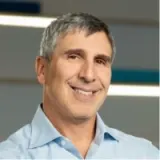
Steve Vintz shares leadership updates and analysis on cybersecurity, focusing on how AI changes security risks and why organizations need to find and reduce exposure beyond simply patching known vulnerabilities.
Steve Vintz is most useful for enterprise AI security and exposure management thought leadership.
Best for
Cybersecurity vendors needing CISO briefings on AI agents, governance, and exposure management.
Not for
Consumer security campaigns needing personal tips, broad reach, and audience demographics.
Key takeaways
Patching is not the finish line; exposure is the real problem.
AI has changed threat economics, and the vulnerability wave is arriving.
Autonomous agents are unvetted insiders with sensitive access.
Check first: Confirm audience job titles, seniority, and recent post results before contacting them.
Main ideas
Patching is not the finish line; exposure is the real problem · AI has changed threat economics, and the vulnerability wave is arriving · Frontier AI belongs inside the security platform, not only in the threat model
Steve Vintz uses LinkedIn to explain how AI is changing cybersecurity and why organizations need to manage exposure beyond known vulnerabilities.
Across his posts, he argues that finding a flaw and applying a patch may not be enough: teams also need to locate unmanaged systems, misconfigurations, credentials, and other links attackers could use.
He connects that security argument to frontier AI in Tenable One, autonomous-agent governance, and practical security workflows.
His posts also include company results and community updates, so the material is a mix of security analysis and executive communication.
Vintz makes the case for exposure management through concrete situations rather than vulnerability headlines alone.
In his PHP2Shell post, he shifts attention from the flaw to unmanaged instances, misconfigurations, and credentials that could expose critical systems; he also explains why legacy software may not have a patch.
In a separate post about HTTP2Shell, he points out that applications can carry bundled copies of a library, so updating the system version may not fix every instance.
Those examples show how he links a technical incident to the harder operational question: where is the risk, and what action reduces it?
He also applies the same lens to AI, describing how reasoning models could help defenders understand chains of exposure and asking who vets agents with access to sensitive data.
Readers looking for an executive view of AI, cybersecurity, and exposure management can follow how he connects emerging risks to response priorities.
His posts additionally cover Tenable business results, a security build event, and company community activity.
Steve Vintz's posts keep returning to one central claim: AI has made finding vulnerabilities cheap and fast, so the hard problem is seeing and closing exposure paths before attackers use them.
Read more
Around that claim sit several priorities: treat patching as partial, use frontier AI inside the security platform, treat autonomous agents as unvetted insiders, bring practitioners into building agentic security tools, and use business results as evidence that buyers are acting on exposure management. The posts are short, but the same argument recurs across vulnerability analysis, product news, event promotion, and quarterly updates.
Patching is not the finish line; exposure is the real problem
Vintz argues the old find-CVE-patch cycle is obsolete.
Read more
AI speeds up vulnerability discovery and exploit development, so finding bugs is no longer the bottleneck; prioritizing and closing total exposure paths is.
Patching assumes an organization knows where to apply a fix, and many systems run legacy or end-of-life branches that vendors will never patch.
The deeper risk, in this account, sits in unmanaged instances, misconfigurations, and credentials that open a path to critical systems.
In the PHP2Shell post, Vintz writes that the vulnerability is the headline but the exposure extends much deeper. A follow-up on HTTP2Shell, a flaw in Google's Brotli compression library, sharpens the point: updating the system Brotli library does not fix the problem because many applications carry their own bundled copies.
The first post predicts a wave of previously undiscovered vulnerabilities, a 'vulnami.' The HTTP2Shell post treats that pattern as ongoing proof that patch location, not just patching, is the recurring problem.
AI has changed threat economics, and the vulnerability wave is arriving
Vintz argues frontier AI has permanently altered the economics of threat development.
Read more
They cite 300,000 CVEs accumulated over 26 years, 58,000 recorded in one year, and 12,000 in August alone, with weaponization timelines compressing from months to hours. The quarterly results post repeats the same logic: AI is reshaping the attack surface faster than most organizations can respond, and every model, agent, and MCP server a company deploys creates new exposures.
PHP2Shell is presented as the latest example. Vintz says organizations need to find affected instances, including ones they do not know about, and understand how those connect to misconfigurations, credentials, and critical systems.
An earlier prediction of a 'vulnami' becomes a current observation in the later vulnerability posts, and the same threat story is then used to explain business momentum in the quarterly update.
Frontier AI belongs inside the security platform, not only in the threat model
Vintz announces that Anthropic's Claude Mythos 5 is coming into the Tenable One Exposure Management Platform.
Read more
The argument is that security teams are not struggling to find data; they are struggling to understand how complex, isolated exposures connect into real attack vectors. The post pairs the model's reasoning with the Tenable Exposure Data Fabric and previews a capability called Tenable One Adversary View for analyzing chains of compromise at machine speed and identifying which actions break the chain first.
The post describes earlier work with frontier AI on Tenable's own code and infrastructure, called Project Glasswing, and says Tenable One Adversary View will debut in the coming weeks.
Autonomous agents are unvetted insiders with sensitive access
Vintz frames the governance gap through a hypothetical new employee: someone with access to sensitive data who makes autonomous decisions without approval and was never vetted or interviewed.
Read more
They use that image to discuss the rise of autonomous AI agents and the security and governance gap many organizations are not ready for.
A Ticker News interview post asks that question directly and links to the clip and the full YouTube interview.
The post is only a teaser. How far Vintz develops the governance argument on camera cannot be judged from the reviewed posts, because the interview transcript is not part of the supplied material.
Close the resource gap with agentic AI, community, and creativity
Vintz's premise for SWARM Global is that security teams face an expanding attack surface and finite resources, and that agentic AI, community collaboration, and creativity can close the gap.
Read more
The event asks teams of one to three to build open-source agents, skills, and MCP servers for workflows such as alert triage and remediation orchestration. Anthropic is named as a supporter.
SWARM Global is scheduled for November 2 to 6, with $10,000 in Claude credits for top teams and EXPOSURE 2027 passes at stake. Registration closes November 1.
Business momentum is evidence for the exposure thesis
Vintz uses quarterly results not just as a financial update but as proof that customers are acting on exposure management.
Read more
The leading indicators cited are Tenable One reaching a record 59% of new business, up from 50%; deal sizes rising year over year for a second straight quarter; and customer expansion increasing. Vintz ties those numbers to AI reshaping the attack surface faster than most organizations can respond, and repeats that more exposures mean more risk.
PHP2Shell is described as the latest example of why customers need to find affected instances and understand how they connect to misconfigurations, credentials, and critical systems.
Leadership credibility and community presence support the platform message
Vintz uses company milestones and field events to reinforce engineering credibility and regional relationships.
Read more
The board appointment of Charlie Bell credits his engineering leadership at AWS and Microsoft and ties the appointment to an AI-forward platform strategy. A Brazil tour post thanks customers and partners, mixes in product messages about frontier AI labs and autonomous risk reduction, and adds a personal note about a football win.
Charlie Bell joins the board of directors; Tenable on Tour events in Brazil draw customers and partners.
Answers the basic question of what Steve Vintz thinks has changed in security: AI is speeding vulnerability discovery and exploit development, so the bottleneck is no longer finding bugs but prioritizing and closing exposure.
Read more
A newcomer should start here because it sets up the ideas that recur in the other posts.
Vintz argues the old find-CVE-patch cycle is obsolete.
They cite 300,000 CVEs accumulated over 26 years versus 58,000 this year and 12,000 in August, and describe AI compressing weaponization timelines from months to hours.
Using PHP2Shell, they say the headline vulnerability matters less than the unmanaged instances, misconfigurations, and credentials that create a path to critical systems.
Two conclusions follow: patching cannot cover legacy or end-of-life software that will never get a vendor fix, and discovery is table stakes while action is the edge.
For brands planning a campaign
This is the anchor piece for a co-authored CISO briefing on AI security and exposure management: it gives a clear thesis, a named event, and a call to build an open, flexible exposure management strategy.
Answers how Steve Vintz connects the threat story to business adoption.
Read more
Useful for a newcomer who wants evidence that enterprise buyers are acting on exposure management, not just hearing about it.
In a quarterly results post, Vintz points to leading indicators: Tenable One reached a record 59% of new business, up from 50%; deal sizes rose year over year for a second straight quarter; and customer expansion increased.
They tie that momentum to AI reshaping the attack surface, with every model, agent, and MCP server creating new exposures.
PHP2Shell is presented as the latest example of why customers need to find affected instances and understand their links to misconfigurations, credentials, and critical systems.
For brands planning a campaign
Useful for an executive-audience briefing that connects AI security risk to measurable commercial adoption; the specific metrics give a concrete proof point if the campaign needs one.
Answers what integrating frontier AI into a security platform actually looks like.
Read more
A newcomer should open this to see the product direction Vintz is publicly backing: using AI reasoning to prioritize and reduce risk.
Vintz announces that Anthropic’s frontier cyber reasoning model, Claude Mythos 5, is coming into the Tenable One Exposure Management Platform.
They say security teams are not struggling to find data but to understand how complex, isolated exposures connect into real attack vectors.
The post describes pairing Mythos 5’s reasoning with the Tenable Exposure Data Fabric and says Tenable One Adversary View will help defenders analyze complex chains to compromise at machine speed and identify which actions break the chain first.
For brands planning a campaign
This is a strong basis for a co-authored briefing on autonomous AI agents, AI governance, and frontier AI in security platforms, especially if the campaign can discuss how AI-assisted prioritization changes analyst workflows.
Answers the practical question of why patching alone is not enough.
Read more
A newcomer should read this for a compact, concrete example of the exposure-management argument in action.
Vintz follows the PHP2Shell discussion with HTTP2Shell, a critical flaw in Google’s Brotli compression library.
They note CVE-2026-111497 triggered emergency patches across Node.js, .NET, and Python, then highlight that updating the system Brotli library does not fix the problem because many applications carry their own bundled copies.
Patching matters, but it assumes the organization knows where to apply the patch, and most do not.
The advantage goes to teams that can see every path into their environment and close dangerous ones before attackers find them.
For brands planning a campaign
Good for a timely vulnerability-response angle: it shows how to turn a breaking security event into a broader argument for proactive exposure management rather than a one-off patch alert.
Answers how Vintz and Tenable are trying to bring practitioners into agentic AI security work.
Read more
A newcomer should open this to understand the community and developer-engagement side of the AI security message.
Vintz describes SWARM Global, a virtual agentic AI build event supported by Anthropic, scheduled for November 2–6.
Teams of one to three will build open-source agents, skills, and MCP servers for workflows such as alert triage and remediation orchestration.
The post lists $10,000 in Claude credits for top teams and EXPOSURE 2027 passes as incentives, and says registration closes November 1.
The premise is that security teams face an expanding attack surface and finite resources, and that agentic AI, community collaboration, and creativity can close the gap.
For brands planning a campaign
Useful for a campaign that wants a hands-on community component, not just executive thought leadership. It supports a developer- or practitioner-facing activation around AI agents and security automation.
Answers the governance question that follows from agent adoption: who vets an autonomous system that has access to sensitive data?
Read more
A newcomer should start here for a short, accessible framing of AI governance risk.
In a Ticker News interview post, Vintz asks what happens when a newest 'employee' has access to sensitive data, makes autonomous decisions without approval, and was never vetted or interviewed. They use that image to discuss the rise of autonomous AI agents and the security and governance gap many organizations are not ready for.
For brands planning a campaign
A ready-made hook for a briefing on AI governance and autonomous agents, especially for CISOs who need to explain why agent oversight belongs in security planning.
The clearest through-line in the posts is that finding vulnerabilities is no longer the hard part; closing exposure paths is.
Read more
Writing about the PHP2Shell vulnerability, Vintz says patching is only part of the solution and is not available to everyone, because millions of systems run legacy or end-of-life branches vendors will never patch.
The deeper risk, in his account, sits in unmanaged instances, misconfigurations and credentials that open paths to critical systems.
A follow-up post on HTTP2Shell, a flaw in Google's Brotli compression library, sharpens the same argument: updating the library does not fix it because many applications carry their own bundled copies, so patching assumes you already know where to apply the patch.
Repeats a before/after structure (patch-first era versus exposure era), anchors it in a named recent vulnerability, then draws numbered leadership takeaways.
For brands planning a campaign
This is the strongest CISO-facing frame in the corpus and the most directly reusable. A co-authored briefing can build on the two takeaways he states explicitly: patching is partial and sometimes impossible, and discovery is table stakes while acting on exposure is the edge.
Vintz argues frontier AI has changed the economics of threat development.
Read more
He cites 300,000 CVEs accumulated over 26 years, 58,000 recorded in a single year, and 12,000 in August alone, with weaponization timelines compressing from months to hours.
He revisits a prediction he made months earlier of a 'vulnami', a wave of previously undiscovered vulnerabilities, and says that wave is now arriving.
A quarterly results post repeats the same logic and points to PHP2Shell as the latest example.
For brands planning a campaign
A statistic-led hook a brand can adapt for research-driven content on AI-era vulnerability volume. The specific figures need checking against current data before publication, since they are tied to a point in time.
A product announcement describes bringing Anthropic's Claude Mythos 5 reasoning model into the Tenable One exposure platform, pairing it with the company's Exposure Data Fabric and previewing a capability called Tenable One Adversary View for analyzing chains of compromise at machine speed.
Read more
Vintz notes earlier work with frontier AI on the company's own code and infrastructure, described as Project Glasswing.
Announcement format: names the partner, describes the integration, previews an upcoming capability, links to a blog post.
For brands planning a campaign
He already fronts co-announcements with AI labs, so a joint briefing with an AI vendor fits an existing narrative rather than requiring a new story. Treat these as vendor product announcements, not neutral evaluations of the models involved.
A post about a Ticker News appearance frames the governance gap through a hypothetical new hire: your newest 'employee' has access to sensitive data, makes autonomous decisions without approval, and was never vetted or interviewed.
Read more
He links to the clip and the full YouTube interview.
The interview transcript is not part of the reviewed material, so how far he develops the argument on camera cannot be judged from this corpus.
For brands planning a campaign
The agent-vetting and governance angle is the most policy-facing topic in the corpus and suits executive briefings or panel formats. The post itself is only a teaser, so substantive claims should come from the interview or a fresh conversation rather than from the post text.
Vintz promotes SWARM Global, a virtual agentic AI build event running November 2 to 6 with support from Anthropic.
Read more
Teams of one to three build open-source agents, skills and MCP servers for workflows such as alert triage and remediation orchestration, with $10,000 in Claude credits and EXPOSURE 2027 passes as prizes. His stated premise is that security teams face expanding attack surfaces and finite resources, and that agentic AI, community collaboration and creativity close the gap.
For brands planning a campaign
Shows appetite for hands-on practitioner formats, not only keynote or thought-leadership slots. A build event, hackathon or community activation is a realistic shape for a collaboration.
A quarterly results post reports that Tenable One reached a record 59% of new business, up from 50%, that deal sizes rose year over year for a second straight quarter, and that customer expansion increased.
Read more
Vintz ties the numbers to AI reshaping the attack surface faster than most organizations can respond, and repeats that more exposures mean more risk.
For brands planning a campaign
He uses earnings communications to carry category messaging, not just financials. Brands should expect him to blend business momentum with a security thesis, which makes results season a natural moment for aligned commentary.
One thanks the Brazil team, customers and partners after a run of Tenable on Tour events, mixing professional content about frontier AI labs and autonomous risk reduction with personal notes about a football win in Rio. The other announces Charlie Bell joining the board of directors, crediting his engineering leadership at AWS and Microsoft and tying the appointment to an AI-forward platform strategy.
For brands planning a campaign
Shows willingness to carry a personal, in-person voice alongside corporate messaging, which helps for event-led or field-marketing collaborations. The board post indicates he speaks for the company on leadership and technical credibility, a useful signal for senior-audience campaigns.
Steve Vintz posts as an insider at Tenable, reporting quarterly results, product launches and board news in the first person, and announcing Tenable's work with Anthropic's frontier AI models.
Read more
Those are the only commercial relationships the retained posts document; other companies appear as vulnerability or technology references rather than as partners.
Tenable
Employment
Vintz writes about Tenable in the first person: thanking "our customers, our partners and the entire Tenable team" while reporting quarterly results, describing "our latest innovations" at Tenable on Tour events in Brazil, and welcoming Charlie Bell to "our Board of Directors."
Read more
The same posts present Tenable One, the Tenable One Exposure Management Platform and Project Glasswing as company work. The posts do not state a job title, but they show Vintz speaking as part of the company rather than about it.
Vintz announced that Tenable is bringing Anthropic's frontier cyber reasoning model, Claude Mythos 5, into the Tenable One Exposure Management Platform, alongside a Tenable innovation called Adversary View.
Read more
A separate post promotes SWARM Global, Tenable's virtual agentic AI build event, as run with support from Anthropic, with Claude credits as prizes. The commercial relationship is between Tenable and Anthropic, announced by Vintz; the posts describe no personal contract between Anthropic and Vintz.
Steve Vintz writes about why exposure management has replaced patch-first security as the central problem for enterprise security teams.
Read more
His posts are short and argument-led: a named vulnerability or an AI announcement sets up a claim about what defenders should do differently.
If you want the clearest statement of his position, start with his writing on the PHP2Shell vulnerability and the follow-up on HTTP2Shell, where he argues that patching assumes you already know where a fix belongs, and that unmanaged instances, misconfigurations and credentials are where the real risk sits.
From there, the posts split into three strands worth following: how frontier AI fits inside a security platform, how autonomous AI agents create a governance gap because they hold access without being vetted, and community efforts to build security tooling.
His quarterly results and board-announcement posts are a different register, closer to executive commentary than technical explanation.
Haas writes about the same problem Vintz keeps returning to: security teams have more findings than they can act on, and knowing a vulnerability exists is only part of the picture.
Read more
Like Vintz, she argues that reachability, connections between assets, and business impact matter more than the raw list of issues, and she treats attack path analysis and continuous validation as the practical answer.
Haas writes explanatory, capability-by-capability educational articles for a vendor blog, walking through what to look for when evaluating a platform, while Vintz writes executive framing and product news. Her material is closer to a buyer's checklist; his is closer to a market argument built on vulnerability events, and she works in the preemptive and hybrid exposure management space rather than the platform-integration story Vintz tells.
Johnson makes the same underlying claim Vintz makes about AI removing the buffer that let organizations treat security as a perimeter problem.
Read more
Both argue that attackers are no longer scarce, attacks are no longer slow, and the real issue is control over data, identity and execution paths rather than adding more defensive layers.
Johnson's focus is data and AI governance at runtime, with fragmentation between pipelines, dashboards and models as the root cause, and the remedy framed as real-time control across data and systems.
Vintz stays anchored to vulnerability exposure and the assets an attacker can reach through it.
Johnson writes more in the voice of a data-platform practitioner drawing on client initiatives; Vintz writes as a security vendor executive responding to specific disclosures.
Tevet shares Vintz's core premise that better frontier models are arriving fast and are not the hard part, and that the value lies in operationalizing AI at scale for security teams.
Read more
Both write about what has to be true for AI to work on real production workloads rather than demos, and both explain the limits of a model on its own.
Tevet's subject is security operations: alert triage, speed of decisions, evidence gathering, detection engineering feedback loops, and what an AI SOC adds beyond the model.
Vintz's subject is exposure: which paths into the environment exist and which to close first.
Tevet also builds his posts around customer examples and a specific vendor's capability, while Vintz typically pairs an event or announcement with a market-level claim.
One measured audience figure was supplied: Steve Vintz's LinkedIn account shows 8,002 followers as of 8 October 2026.
Read more
Nothing else here measures an audience.
There is no post-level reach, impressions, reaction, or comment data, and no geography, age, gender, job-title, or seniority breakdown, so the practical read is a small, concentrated following rather than broad distribution.
What the posts do show is who the writing is aimed at.
Two selected examples: the 8 September 2026 post announcing Anthropic's cyber reasoning model inside the Tenable One platform, and the 18 September 2026 post promoting a Ticker News interview on autonomous AI agents and the governance gap most organizations have not prepared for.
Both address security leaders and platform buyers already working on exposure management and AI governance, not general technology readers.
A co-authored CISO briefing sits inside that existing subject matter, but the supplied evidence does not establish that the people following the account hold those titles or work at that seniority.
For this brief, ask Steve Vintz for recent results on comparable pieces: impressions, reactions, and comments on posts about autonomous AI agents, AI governance, or exposure management, ideally separated by format, such as a short text post versus a video or interview clip.
Also ask whether any audience survey or documented reporting covers job function or seniority.
Until that arrives, plan a campaign that wins on relevance to a narrow security-leadership audience rather than on volume.
LinkedIn followers
8,002
LinkedIn account snapshot for Steve Vintz · 2026-10-08
The reviewed material contains no documented creator sponsorship offer from Steve Vintz: no rate card, media kit, sponsored-format examples, audience specifications, or partnership inquiry route.
Read more
What his posts describe is company-level relationship activity rather than individual sponsorship packages.
The most concrete is Tenable's work with Anthropic — bringing Claude Mythos 5 into the Tenable One Exposure Management Platform, building on the earlier Project Glasswing work — and SWARM Global, a Tenable virtual agentic AI build event supported by Anthropic, dated November 2–6, with teams of one to three building open-source agents, skills, and MCP servers, $10,000 in Claude credits for top teams, EXPOSURE 2027 passes at stake, and registration closing November 1.
Other relationship activity is corporate: Charlie Bell joining Tenable's board of directors, and Tenable on Tour customer and partner events in Brazil.
Because no individual sponsorship format is documented, a brand planning a paid placement with Vintz personally has no verified basis in this material; the collaborations shown are company-level, so a buyer would need to establish a direct contact route and confirm terms, deliverables, and pricing outside the reviewed sources.
The distinction matters for planning: absence of a documented offer here is not evidence that Vintz never accepts sponsorships — only that none appears in the sources reviewed.
Good fit: enterprise AI-security thought leadership and a co-authored CISO briefing.
Read more
The brief is a cybersecurity vendor wanting to assess Steve Vintz for a thought leadership campaign on AI security and exposure management, and to propose a co-authored briefing for enterprise CISOs covering autonomous AI agents, AI governance, and integrating frontier AI into security platforms.
Steve Vintz fits this brief because the strongest through-line in the reviewed posts is exactly that argument.
In the PHP2Shell post, they state that finding vulnerabilities is no longer the bottleneck; prioritizing and closing exposure is.
They use specific evidence: 300,000 CVEs over 26 years, 58,000 in one year, 12,000 in August, and weaponization timelines compressing from months to hours.
A follow-up post on HTTP2Shell sharpens the patch-location problem: updating a system library does not fix applications that carry bundled copies, so patching assumes knowing where to apply the patch.
The Anthropic Claude Mythos 5 announcement shows Steve Vintz already fronts frontier-AI-in-security-platform messaging and can speak to AI reasoning being paired with exposure data.
The Ticker News post on autonomous AI agents gives a ready-made governance hook: an unvetted autonomous system with access to sensitive data.
The SWARM Global post shows appetite for practitioner and community formats, including open-source agents, skills, and MCP servers for workflows such as alert triage and remediation orchestration.
The main constraint is audience.
The only measured figure is 8,002 LinkedIn followers as of 8 October 2026, with no engagement, reach, or demographic data supplied.
That means the campaign should be planned for relevance to a narrow security-leadership audience, not for volume.
There is also no documented individual sponsorship offer in the reviewed material, so contact route, deliverables, pricing, and approval terms must be established separately.
Fit decision: strong fit for a co-authored executive briefing, panel, or research-backed thought leadership piece; conditional on confirming audience engagement and commercial terms.
When to choose a specialist
Poor fit: a consumer cybersecurity awareness campaign that needs short-form personal-security tips, broad-reach creator distribution, and documented audience demographics.
Read more
The reviewed posts are enterprise-facing.
They discuss exposure management platforms, CVEs, patch coverage, AI agents, MCP servers, board appointments, and CISO leadership.
There is no evidence of consumer security content, personal device advice, family or online-safety topics, or a general-consumer following.
The audience evidence is a single LinkedIn follower count of 8,002, with no age, geography, gender, job-title, or consumer-interest breakdown, so a brand cannot demonstrate broad consumer reach from what was reviewed.
There is also no rate card, media kit, sponsorship policy, or documented sponsored format in the reviewed material.
The visible partnerships are company-level, such as Tenable's work with Anthropic and a Tenable board appointment.
That does not mean Steve Vintz never accepts sponsorships; it means the reviewed sources give no basis to plan or price a consumer creator placement.
Fit decision: poor fit for a consumer awareness or broad-reach product campaign unless the brand supplies evidence of consumer audience performance and a direct commercial route.
A worked campaign example
Worked campaign angle for the enterprise brief: 'The exposure action gap: governing autonomous AI agents and frontier models.'
Format: a co-authored 30-minute CISO briefing plus a short written executive summary.
Lead with the core argument from the PHP2Shell and HTTP2Shell posts: AI has made vulnerability discovery and exploit development faster, so the hard problem is no longer finding bugs but seeing and closing complete exposure paths, including unmanaged instances, misconfigurations, credentials, and bundled software copies.
Then move to governance: the Ticker News framing of an autonomous 'employee' with sensitive-data access that was never vetted.
Add the platform angle from the Anthropic announcement: frontier reasoning paired with exposure data to prioritize chains of compromise at machine speed.
Close with practitioner action: what a CISO should ask about agent inventory, oversight, patch-location visibility, and prioritization.
Proof points to reuse: 300,000 CVEs over 26 years, 58,000 in a year, 12,000 in August; patching is partial and sometimes impossible; discovery is table stakes and action is the edge.
SWARM Global shows practitioner appetite for building agents, skills, and MCP servers.
Sample CISO questions: Which AI agents can touch sensitive data?
Who approved them?
Where are bundled or unpatched runtimes hiding?
Which exposure paths, not just which CVEs, should be closed first?
Campaign next step: confirm engagement data on comparable posts, obtain the linked interview and blog posts, establish a direct commercial contact and terms, and have the co-author bring a fresh CISO example rather than repeating the same vulnerability statistics. This is a proposed campaign angle, not a confirmed sponsorship, and it does not claim that any product feature works as described.
Choose Renee Haas when the briefing needs to teach security teams how to evaluate exposure management platforms, not how AI is changing the threat landscape.
Read more
The two reviewed posts are organized around that buyer task: what to check for reachability, how a vulnerability connects to other assets and business systems, whether a fix actually reduced risk, and how to validate compliance continuously across hybrid networks.
One post is a vendor-published article that turns those checks into a seven-item evaluation framework, and the other is a conference-booth invitation built on the same visibility, prioritization, and attack-path language.
Haas is the stronger pick when the deliverable is a structured set of questions a CISO can take to vendors, or when the campaign is anchored to an event moment where security leaders are comparing platforms on the show floor.
The reviewed material does not cover frontier AI, autonomous agents, or AI governance, which are the specific hooks of this brief.
It also stays inside vendor article and event formats rather than analysis of the creator's own operating experience.
Choosing Haas means trading the AI-security forward narrative for deeper exposure-management procurement detail, and the campaign would have to supply the AI angle itself.
Choose Tyler James Johnson when the brief should frame the problem as a control-and-architecture question rather than a patch-and-prioritize one.
Read more
The reviewed posts argue that most organizations have a control problem, not a data problem: pipelines, dashboards, and governance frameworks exist, but AI still stalls in operation because controls are policy-driven, static, and applied after the fact.
The second post applies that reasoning to frontier attack models that remove the cybersecurity expertise bottleneck, and describes the real attack surface as the interaction between data, identity, business logic, and execution paths.
That suits a mixed audience of data, AI, and security leaders, or a campaign that wants a candidate who can argue what an enterprise must redesign at runtime, not only which exposures to close first.
Both reviewed posts are short, thesis-driven arguments with few operational specifics: no named platform work, no vulnerability mechanics, and no described customer engagements. A briefing built on them would lean heavily on framing, so a brand wanting concrete exposure-management detail would find more to work with in Vintz's discussion of unmanaged PHP instances, bundled runtime copies, and patch-location blind spots.
Choose Itai Tevet when the briefing moves past why AI changes security and into how an AI-augmented security operation actually runs.
Read more
One reviewed post works through what a strong model does not provide on its own: running on every alert every day, decisions in seconds while the alert still matters, deterministic and reviewable investigations, evidence such as memory and network forensics, organizational context, and a loop back into detection engineering.
The other carries a regulated-industry proof point, describing a financial services security leader who brought AI into security operations, saw low-severity alerts analyzed immediately, and tests continuously with purple teaming.
That is the better fit when the campaign needs a candidate who can answer what happens after the model is deployed and can speak credibly to skeptical buyers in regulated environments.
The argument is scoped to AI security operations and is explicitly in service of a vendor pitch, the same vendor-linked structure as Vintz's own material, so it does not remove the commercial conflict a brand must weigh. It also says little about exposure management across the whole enterprise, CVE velocity, patch coverage gaps, or executive and board-level messaging, which are the areas where Vintz's reviewed posts go further.
This page is built from eight LinkedIn posts written by Steve Vintz, each read in full.
They cover responses to the PHP2Shell and HTTP2Shell vulnerabilities, an Anthropic model coming into the Tenable One exposure management platform, a broadcast interview post on autonomous AI agents, the SWARM Global build event, quarterly business results, a board appointment, and a Brazil event series.
The posts themselves carry no publication dates; internal references point to a third-quarter results period, an event scheduled for 2-6 November, and a vulnerability cycle described as "this week" and "last week."
A LinkedIn account snapshot observed on 8 October 2026 showed about 8,000 followers.
Names, dates, and figures in this page come from the posts and that snapshot; nothing was inferred from a photo or a name.
Three other creators are compared on this page, each represented by two posts: Renee Haas (24 June 2026 and 29 July 2026), Tyler James Johnson (6 April 2026 and 10 April 2026), and Itai Tevet (29 September 2026 and 1 October 2026).
Where evidence is absent, the page says so rather than filling the gap.
The material does not include publication dates for Vintz's posts, engagement or reach figures, audience demographics, a rate card or stated sponsorship terms, the full Ticker News interview, or the blog posts his posts link to, and it does not show whether books, shows, or earlier career work are part of his public profile.
Those gaps are recorded as open research questions, not resolved.
The page also distinguishes what the posts document about commercial relationships - Tenable and Anthropic - from companies named only as vulnerability or technology references.
Recent engagement
Across their last 9 LinkedIn posts, the median post got 92 reactions and 2 comments. Checked 2026-11-02.