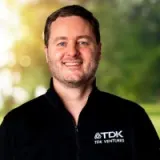
Nicolas Sauvage is a deep-tech investor at TDK Ventures. His writing focuses on how startups can turn industrial partnerships, technical validation, and early market access into businesses that can scale without losing independence.
Nicolas Sauvage is most useful for practical frameworks on industrial partnerships, pilots, and deep-tech scaling decisions.
Best for
A deeptech venture firm or corporate venture arm seeking a working session for portfolio founders.
Not for
A brief needing sponsored product placement, consumer reach, guaranteed impressions, market predictions, or fund performance.
Key takeaways
The Usable-Scale Test checks relevance, reachability, ownership, evidence, and independence for industrial partners.
A corporate partnership should open the market, not capture the startup.
A successful pilot can leave the startup's financing problem unresolved.
Check first: Confirm audience match and subscriber requirements for gated report or 24-point diagnostic.
Main ideas
Industrial scale is useful only when a founder can plan around it · A corporate partnership should open the market, not capture the startup · A successful pilot can leave the startup's financing problem unresolved
Nicolas Sauvage is a deep-tech investor at TDK Ventures whose writing examines how startups can turn technical promise and industrial relationships into businesses that scale.
He connects big questions about growth to practical choices: whether a pilot will lead to a customer commitment, what a company needs to own, and whether a corporate partnership opens new markets or creates dependence.
He also writes about investment judgment, India’s deep-tech ecosystem, and how AI can support better human decisions.
Read his work for grounded frameworks built around real founder and investor situations.
Sauvage turns complex deep-tech growth questions into practical tests.
In his Usable-Scale Test, he asks whether an industrial partner’s capabilities are relevant, reachable, backed by someone who can act, and useful to the startup’s independence.
He illustrates the idea with TDK Ventures’ work helping Groq source and qualify components.
In his Market-Opening Path, he traces a partnership from access and validation toward repeatability, reach, and resilience—and argues that control is not progress.
His writing on pilots and deployment adds a financing question often missed in technical success stories: what commitment follows a positive result, and who pays while the buyer waits?
Nicolas Sauvage's ideas center on making large-company resources and industrial scale genuinely usable for deep-tech founders.
Read more
Their posts repeatedly turn conversations with founders, investors, and corporate partners into named tests and question sets: how a corporate interface helps a startup, whether a partnership expands or narrows options, who pays for the wait after a pilot, what an investor should believe before meeting a founder, and how teams should review decisions. Other recurring priorities include India as a deep-tech market, the ownership choices behind scaling, and AI agents as tools for protecting human judgment rather than simply increasing output.
Industrial scale is useful only when a founder can plan around it
Nicolas Sauvage argues that founders experience a corporation through its interfaces, not through its asset list.
Read more
A corporation may have strong engineers, manufacturing expertise, customer relationships, and patient capital, but the founder still needs to know which capability can help now, who can commit it, and what happens next.
Sauvage introduces the Usable-Scale Test: Relevance, Reachability, Ownership, Evidence, and Independence.
Access becomes useful when a team can plan around it.
They also distinguish necessary technical time from corporate friction: a qualification program may take months for sound engineering reasons and still be the fastest credible route to a customer, while delay caused by unclear ownership or internal routing is different.
At TDK Ventures' 100X 2026 Portfolio Summit, representatives from 33 portfolio companies joined 89 TDK colleagues.
Sauvage points to Groq, where TDK Ventures helped source and qualify more than 50 TDK components per board, and TDK power-systems experts worked with Groq's engineers on a power-management roadmap.
Those are concrete contributions a founder can assess.
A corporate partnership should open the market, not capture the startup
Sauvage frames a corporate partnership as either a startup's strongest bridge to the market or a wall around the company.
Read more
The same corporate logo, custom project, or strategic right can create valuable proof or create dependence.
Their five-stage Market-Opening Path is Access, Validation, Repeatability, Reach, and Resilience.
Control is not a stage in the path.
Sauvage gives five questions for founders considering a deeper partnership: whether custom work produces reusable capability or serves one corporation; whether special rights are matched by measurable commitments, narrow scope, and clear expiration; whether the startup can use the relationship as proof with other customers and investors; whether terms could discourage competitors, future financing, or independent decisions; and whether a large customer will make the next customer easier or harder to win.
Sauvage cites a principle from GM Ventures: aim to become the startup's first and best customer, but never its only customer.
The post refers to the article Open the Market.
Do Not Capture the Startup. and to the third Corporate Venturing Insider Practitioner Report, which includes a 24-point diagnostic.
A successful pilot can leave the startup's financing problem unresolved
Sauvage argues that a successful pilot can reduce a customer's uncertainty while leaving the startup's financing problem unresolved.
Read more
The buyer has learned something valuable, but the founder may still lack the commitment needed to hire for deployment or finance capacity.
The question Sauvage sharpens is who pays for the wait between technical validation and industrial scale.
Before a pilot intended to lead to deployment, Sauvage would discuss four questions: who can authorize the next deployment and from which budget; what evidence and commercial assumptions support that decision; when the decision will be made; and what concrete commitment follows a positive result.
For investors, counting successful pilots says too little; the useful question is what each success made another party willing to commit.
A lunch conversation with Pravesh Khanna and the Tata Capital Cleantech Finance team in Mumbai helped frame the question.
Sauvage draws on Indian climate-transition examples including electric-bus procurement and green-ammonia agreements, where demand, payment arrangements, and contract duration can make deployment financeable.
For smaller buyers, affordability also depends on when cash must leave the business; lifetime savings alone do not pay this month's installment.
An investor's thesis should be provisional and updated after every founder meeting
Sauvage writes that before meeting the first founder in a new space, an investor should have a working thesis.
Read more
The purpose of the conversation is not to protect the thesis but to see where it breaks.
They argue an investor should arrive with a preliminary thesis, not a blank page and not a conclusion.
Before the meeting, an investor should be able to answer three questions: What do I currently believe?
What do I still not understand?
What evidence would change my mind?
After the meeting, the thesis should be updated before the next entrepreneur is evaluated.
A magnetic founder may deserve faster and deeper work, but magnetism should increase the urgency of diligence, not replace it.
At Stanford University, Emma Cui of LongHash Ventures brought together Kauffman Fellows and members of the Stanford MSx community with Spencer Foust of Sozo Ventures, Ian Beadle of Westbound Equity Partners, and Sauvage.
Emma Cui described how an initial thesis and continuous market mapping create a foundation, while also noting that a company can look compelling on paper and still disappoint.
Ian Beadle said an investor sometimes meets ten or twenty companies before finding the business model that makes sense, while at pre-seed an exceptional founder can create conviction even when the investor is new to the market.
Spencer Foust said a founder must communicate a vision compelling enough to attract employees, customers, and investors.
Sauvage argues that knowing an outcome can distort how people judge the decision that produced it.
Read more
A good outcome can teach a team the wrong lesson: a founder wins a customer through unsustainable customization, an investor earns a return despite weak diligence, or a corporate project succeeds because colleagues absorb an extraordinary workload.
The result may deserve celebration, but the method still deserves examination.
Sauvage offers a five-question decision note: What did we know?
What did we not know?
What did we believe to be true?
What happened?
What will we change?
Successful decisions should be included in that review because they shape what a team will repeat.
In 2003, Sauvage lost twenty pounds in a London Business School classroom wager with Professor Zeger Degraeve involving a drawing pin hidden beneath a cup.
Before the result was revealed, the class spent roughly two hours examining whether the decision to play made sense and agreed that it did.
Then the cup was lifted, Sauvage had lost, and the class changed its verdict even though the information available when the decision was made had not changed.
Sauvage later shared the story with students at BML Munjal University.
India can be both an initial deep-tech market and a global launchpad
Sauvage's posts repeatedly examine India as a deep-tech market.
Read more
At a founders' dinner in Hyderabad, they asked whether building a company in India is an advantage or a disadvantage.
Most founders said advantage, but their reasons differed: customers willing to adopt new technologies, specialized engineering talent, infrastructure built over decades, emerging local suppliers, and the ingenuity of accomplishing more with limited resources.
Sauvage describes two promising paths: companies whose first advantage comes from solving a problem in India, and companies built in India for global demand from the outset.
A constraint that one startup learns to accept can become a business opportunity, and one startup's solution can make the next startup easier to build.
At the Hyderabad dinner, a founder building quantum computers described how difficult it can be to source highly specialized equipment.
Across the table, another founder developing advanced optical systems suggested that a manufacturer in their network might have relevant capabilities.
They began comparing technical requirements; no partnership was promised and technical fit was still uncertain at the end of the dinner.
In a separate post, Sauvage says India is already TDK Ventures' second-largest country by number of investments.
They cite Exponent Energy as a company whose first advantage came from solving a problem in India, and Ethereal Exploration Guild and C2i Semiconductors as companies built in India for global demand.
Sauvage also highlights the TDK Ventures Innovation Hub in Bengaluru and Hitachi Ventures joining it.
At a founders' dinner in Mumbai, Sauvage reports a discussion about what a deep-tech company must own to scale.
Read more
The examples point to different ownership choices: an acquisition can buy years of learning, taking on less can create room to grow, and a partner's commercial commitment can test the business model.
Across the discussion, the group kept returning to how much each deployment teaches teams and whether that learning reduces custom engineering and daily founder intervention.
As an investor, Sauvage finds these questions helpful for understanding the capabilities, dependencies, and obligations being built around a technology.
Sonam Motwani's account of Karkhana highlighted supplier relationships, workforce experience, and quality systems; a machine can be purchased much faster than a team learns to handle variation reliably.
Amrit Om Nayak described how whole-project responsibilities had tied up Indra's capital, and working with larger water companies offered another route to deployment while INDRA continued developing and manufacturing its technology.
For Ajaz Khan of Novyte Materials, securing a royalty arrangement was an early test of whether a manufacturer would reward the technology's contribution, though repeatability and economics still needed to be demonstrated.
AI agents should protect human judgment, not just produce more output
Sauvage suggests that the best metaphor for agentic leadership may be the executive assistant rather than the analyst, coder, or consultant.
Read more
A great executive assistant protects judgment, filters requests, creates thinking time, routes decisions, prepares context, reduces noise, and prevents the leader from becoming the bottleneck.
Sauvage argues that AI agents should not only accelerate work, because more output can also create more overload.
The better agents help people prepare the right context, identify what requires judgment, recommend what to decline, defer, delegate, or stop, and help humans make fewer but better decisions.
For entrepreneurs, an AI-native company should be designed around the quality of human contribution, not only speed.
For investors, a founder who understands this can explain where agents increase leverage, where humans build value, and how the operating system protects the people whose judgment matters most.
The post contrasts the executive assistant with the analyst, coder, and consultant, then applies the idea to company design and investment questions. Sauvage says technology should expand the frontier of what humans can contribute, which requires empathy, design, and intentional leadership rather than automation alone.
100X aims at large-scale impact through constraints and long-built relationships
Sauvage describes the ambition behind TDK Ventures' 100X as helping founders deliver two orders of magnitude of improvement for society and the planet.
Read more
In a post about Louis Lehot's reflections on 100X 2026, Sauvage highlights two ideas: AI's progress depends on the energy infrastructure supporting it, including power availability, grid capacity, and deployment realities; and breakthroughs reach scale through relationships built over time.
Sauvage says the path to much larger impact often runs through a constraint that another organization understands deeply.
Their practical question is which partner could help a founder overcome the next barrier to deploying their technology.
Sauvage points to Louis Lehot's account of Chuck Mattera's session as an example of the patience and discipline behind decades of company building. He also says 100X is meant to make it possible for founders, investors, industry leaders, and partners to learn from one another and find ways to build together.
Start here if the question is how a large corporate partner becomes genuinely useful to a founder rather than merely impressive on paper.
Read more
This post states the test and grounds it in a concrete portfolio example.
Sauvage presents the Usable-Scale Test: Relevance, Reachability, Ownership, Evidence, and Independence.
The point is that access becomes useful only when a founding team can plan around it.
The Groq example is specific: TDK Ventures helped source and qualify more than 50 TDK components per board, and TDK power-systems experts worked with Groq engineers on a power-management roadmap.
Sauvage also distinguishes necessary technical time from corporate friction: a qualification program can take months for sound engineering reasons and still be the fastest credible route to a customer, while delay from unclear ownership or internal routing is different.
The setting is TDK Ventures' 100X 2026 Portfolio Summit, with representatives from 33 portfolio companies and 89 TDK colleagues.
For brands planning a campaign
Use this as the anchor piece for a speaker session or workshop on industrial scaling.
It offers a ready-made framework, a named portfolio example, and a practical distinction between required technical work and avoidable corporate drag.
A campaign brief can ask for a session that maps a founder's next corporate partner against the five tests.
This is the clearest starting point on corporate-startup governance: when a partnership expands a startup's options and when it narrows them.
Read more
Sauvage frames a corporate partnership as either a bridge to the market or a wall around the company.
The same logo, custom project, or strategic right can create proof or create dependence.
The proposed five-stage Market-Opening Path is Access, Validation, Repeatability, Reach, and Resilience.
Control is not a stage in the path.
Sauvage gives five diagnostic questions: whether custom work produces reusable capability or serves one corporation; whether special rights are matched by measurable commitments, narrow scope, and clear expiration; whether the startup can use the relationship as proof with other customers and investors; whether terms could discourage competitors, future financing, or independent decisions; and whether a large customer will make the next customer easier or harder to win.
The post cites one principle from GM Ventures: aim to become the startup's first and best customer, but never its only customer.
It also describes a public article and the third Corporate Venturing Insider Practitioner Report, with the complete report including a 24-point diagnostic.
For brands planning a campaign
This original supports partner-facing content on partnership terms, governance, and avoiding single-customer capture. It gives a campaign a structured way to discuss commercial integration with founders, corporate venture teams, and corporate development groups.
This answers a specific and often overlooked question: what happens between a successful technical pilot and a commercial deployment commitment.
Read more
Sauvage argues that a successful pilot can reduce a customer's uncertainty while leaving the startup's financing problem unresolved.
A lunch conversation with Pravesh Khanna and the Tata Capital Cleantech Finance team in Mumbai sharpened the question of who pays for the wait between technical validation and industrial scale.
The post draws on Indian climate examples: electric-bus procurement and green-ammonia agreements show how demand, payment arrangements, and contract duration can make deployment financeable.
For smaller buyers, affordability also depends on when cash must leave the business; lifetime savings alone do not pay this month's installment.
Before a pilot intended to lead to deployment, Sauvage would discuss four questions: who can authorize the next deployment and from which budget; what evidence and commercial assumptions support that decision; when the decision will be made; and what concrete commitment follows a positive result.
For investors, counting successful pilots says too little.
The useful question is what each success made another party willing to commit.
For brands planning a campaign
Use this for climate-tech and deeptech commercialization content, especially panels or briefings on the pilot-to-deployment gap. It gives a campaign a concrete financing angle rather than a generic innovation message.
This is the best introduction to Sauvage's decision-quality argument and teaching style, using a personal classroom story rather than an abstract investing lesson.
Read more
Sauvage recounts losing £20 in a London Business School classroom in 2003.
Professor Zeger Degraeve offered a wager involving a drawing pin hidden beneath a cup.
Before revealing the result, the class spent roughly two hours examining whether the decision to play made sense, and eventually agreed that it did.
Then the cup was lifted, Sauvage had lost, and the class changed its verdict.
The information available when the decision was made had not changed; knowing the outcome changed how the class judged it.
Sauvage later shared the story with students at BML Munjal University.
The practical tool is a five-question decision note: What did we know?
What did we not know?
What did we believe to be true?
What happened?
What will we change?
Sauvage also argues that successful decisions should be reviewed, because they shape what a team repeats.
For brands planning a campaign
This original supports keynotes or workshops on decision hygiene, post-mortems, and investment judgment. It is less directly about industrial scaling than the other pieces, but it establishes a rigorous, teachable approach that can anchor founder or investor education.
This is the most operator-focused piece: it shows how deeptech founders decide what to own, what to buy, and what to stop doing as they grow.
Read more
At a founders' dinner in Mumbai, one entrepreneur described acquiring a manufacturer, while another explained why the company had stepped back from delivering entire industrial projects.
Sauvage draws out the question of what a deeptech company must own to scale.
Sonam Motwani's account of Karkhana highlighted supplier relationships, workforce experience, and quality systems; a machine can be purchased much faster than a team learns to handle variation reliably.
Amrit Om Nayak described how whole-project responsibilities had tied up Indra's capital, and working with larger water companies offered another route to deployment while INDRA continued developing and manufacturing its technology.
For Ajaz Khan of Novyte Materials, securing a royalty arrangement was an early test of whether a manufacturer would reward the technology's contribution, though repeatability and economics still needed to be demonstrated.
Across the discussion, the group kept returning to whether the next customer helps build a stronger company and reduces custom engineering and daily founder intervention.
For brands planning a campaign
Use this for founder workshops and operator panels on vertical integration, delivery models, and manufacturing partnerships. It gives a campaign specific company examples and a board-discussion frame for ownership decisions.
This explains how Sauvage builds investment conviction before and after meeting founders, which matters for anyone assessing the firm as a partner or speaker on venture process.
Read more
Sauvage argues that before meeting the first founder in a new space, an investor should have a working thesis.
The purpose of the conversation is not to protect it but to see where it breaks.
At Stanford University, Emma Cui of LongHash Ventures brought Kauffman Fellows and members of the Stanford MSx community together with Spencer Foust of Sozo Ventures, Ian Beadle of Westbound Equity Partners, and Sauvage.
The discussion asked how an investor can build conviction after only one or two founder meetings.
Emma Cui described how an initial thesis and continuous market mapping create a foundation, while also noting that a company can look compelling on paper and still disappoint.
Sauvage's point was to arrive with a preliminary thesis, not a blank page and not a conclusion.
Ian Beadle offered two cases: sometimes an investor meets ten or twenty companies before finding the business model that makes sense, while at pre-seed an exceptional founder can create conviction even when the investor is new to the market.
Spencer Foust said a founder must communicate a vision compelling enough to attract employees, customers, and investors.
Sauvage's three questions before a meeting are: What do I currently believe?
What do I still not understand?
What evidence would change my mind?
After the meeting, the thesis should be updated before the next entrepreneur is evaluated.
Magnetism should increase the urgency of diligence, not replace it.
For brands planning a campaign
This original supports investor-education content and panel discussions on conviction versus diligence. For a firm assessing Sauvage as a partner or speaker, it shows a repeatable approach to sourcing, thesis development, and founder evaluation.
Investment thesis discipline and decision quality2
Making industrial scale usable for founders1
Corporate partnerships that open markets without capturing the startup1
The financing gap between a successful pilot and deployment1
What a deeptech company must own to scale1
Agentic leadership and protecting human judgment1
100X, energy infrastructure, and relationship-led scaling1
Making industrial scale usable for founders
Nicolas Sauvage describes how founders experience a corporation through its interfaces rather than its asset list.
Read more
In a post about TDK Ventures’ 100X 2026 Portfolio Summit, Sauvage introduces the Usable-Scale Test: Relevance, Reachability, Ownership, Evidence, and Independence.
The post gives Groq as a concrete example, where TDK Ventures helped source and qualify more than 50 TDK components per board and TDK power-systems experts worked with Groq’s engineers on a power-management roadmap.
Sauvage argues that access becomes useful when a founder can plan around it, and that speed still needs judgment because a qualification program may be the fastest credible route to a customer.
The post turns a portfolio summit into a named diagnostic and uses a specific portfolio example to show what usable scale looks like.
For brands planning a campaign
A deeptech venture firm or corporate innovation team could use Nicolas Sauvage for a founder-facing session on turning corporate capabilities into usable resources, with the Usable-Scale Test and the Groq example as practical material.
Corporate partnerships that open markets without capturing the startup
Nicolas Sauvage outlines a five-stage Market-Opening Path for corporate-startup partnerships: Access, Validation, Repeatability, Reach, and Resilience.
Read more
The post warns that a corporate partnership can become a startup’s strongest bridge to the market or a wall around the company.
Sauvage says control is not a stage in the path and gives five questions for founders considering a deeper partnership, including whether custom work produces reusable capability, whether special rights are matched by measurable commitments and expiration, and whether the corporation’s involvement makes the next customer easier or harder to win.
The post cites practitioner conversations across automotive, aerospace, agriculture, industrial technology, and financial services, and quotes a GM Ventures principle: aim to become the startup’s first and best customer, but never its only customer.
Sauvage converts cross-sector practitioner conversations into a staged path and a short set of diligence questions.
For brands planning a campaign
A brand or agency working with corporate venture units could use this framework for a workshop on structuring partnerships that expand a startup’s options rather than narrow them.
Nicolas Sauvage’s posts repeatedly examine India as a deep-tech market.
Read more
In a Hyderabad founders’ dinner post, Sauvage asks whether building in India is an advantage or disadvantage and reports different reasons from founders: customers willing to adopt new technologies, specialized engineering talent, infrastructure, emerging suppliers, and resourcefulness.
One exchange links a quantum-computing founder’s sourcing difficulty to another founder’s optical-systems network.
In a separate post, Sauvage says India is already TDK Ventures’ second-largest country by number of investments and describes two promising paths: companies whose first advantage comes from solving a problem in India, such as Exponent Energy, and companies built in India for global demand from the outset, such as Ethereal Exploration Guild and C2i Semiconductors.
Sauvage also highlights the TDK Ventures Innovation Hub in Bengaluru and Hitachi Ventures joining it.
A Mumbai founders’ dinner post adds questions about what a deeptech company must own to scale.
Sauvage uses founder dinners and portfolio examples to surface recurring India-specific advantages and constraints rather than presenting a single thesis.
The Hyderabad post describes an exchange where technical fit was still uncertain and no partnership was promised; Sauvage uses it to show how one startup’s disadvantage can become another’s capability opportunity.
For brands planning a campaign
A brand targeting India’s deep-tech ecosystem could use Nicolas Sauvage as a speaker or moderator on India-based scaling, with founder-dinner examples and the two paths as concrete discussion anchors.
The financing gap between a successful pilot and deployment
Nicolas Sauvage argues that a successful pilot can reduce a customer’s uncertainty while leaving the startup’s financing problem unresolved.
Read more
Drawing on a lunch conversation with Pravesh Khanna and the Tata Capital Cleantech Finance team in Mumbai, Sauvage asks who pays for the wait between technical validation and industrial scale.
The post uses Indian climate-transition examples, including electric-bus procurement and green-ammonia agreements, to show how demand, payment arrangements, and contract duration can make deployment financeable.
Sauvage offers four questions before a pilot intended to lead to deployment: who can authorize the next deployment and from which budget; what evidence and commercial assumptions support that decision; when the decision will be made; and what concrete commitment follows a positive result.
The post combines a specific practitioner conversation with Indian market examples and then reduces the issue to four decision questions.
For brands planning a campaign
A climate or industrial investor audience could use this topic for a panel or brief on pilot-to-deployment financing, with the four questions as a portable diligence checklist.
At a Mumbai founders’ dinner, Nicolas Sauvage reports a discussion about what a deeptech company must own to scale.
Read more
Examples include an acquisition that bought supplier relationships, workforce experience, and quality systems; a company that stepped back from delivering entire industrial projects so it could continue developing and manufacturing its technology while working with larger water companies; and a royalty arrangement that tested whether a manufacturer would reward a technology’s contribution.
Sauvage says the discussion kept returning to how much each deployment teaches teams and whether that learning reduces custom engineering and daily founder intervention.
The post directs readers to five questions for a founder’s next board discussion in an article titled “What a Deeptech Company Must Own to Scale.”
Sauvage structures the post around named founder examples and extracts board-level questions from the dinner conversation.
For brands planning a campaign
A founder-focused brand could use this material for a board-discussion workshop or editorial series on operational ownership, dependencies, and repeatability in deeptech.
Nicolas Sauvage writes that an investor should have a working thesis before meeting the first founder in a new space and that the purpose of the conversation is not to protect the thesis but to see where it breaks.
Read more
In a post about a Stanford University discussion with Kauffman Fellows and the Stanford MSx community, Sauvage reports perspectives from Emma Cui, Spencer Foust, and Ian Beadle on how conviction forms.
Sauvage’s conclusion is that a first meeting can create a powerful signal but should not close the learning loop, and that magnetism should increase the urgency of diligence rather than replace it.
A separate post uses a 2003 London Business School classroom wager to show how knowing an outcome can distort judgment, then offers a five-question decision note covering what was known, not known, believed, happened, and what will change.
Sauvage pairs a panel discussion with a personal classroom story, then turns both into short question sets for investors and teams.
For brands planning a campaign
An investment firm or accelerator could use Nicolas Sauvage for an investment-committee or diligence-training session on updating a thesis and reviewing successful decisions without outcome bias.
Nicolas Sauvage suggests that the best metaphor for agentic leadership may be the executive assistant rather than the analyst, coder, or consultant.
Read more
A great executive assistant protects judgment, filters requests, creates thinking time, routes decisions, prepares context, and prevents the leader from becoming the bottleneck.
Sauvage argues that AI agents should not only accelerate work because more output can also create more overload.
The better agents, in this view, help people prepare the right context, identify what requires judgment, recommend what to decline, defer, delegate, or stop, and help humans make fewer but better decisions.
Sauvage applies this to entrepreneurs designing an AI-native company around the quality of human contribution and to investors evaluating whether a founder can explain where agents increase leverage and where humans build value.
For brands planning a campaign
A brand covering AI and leadership could use this topic for a session or essay on AI-native company design, with the executive-assistant metaphor as a clear entry point.
100X, energy infrastructure, and relationship-led scaling
Nicolas Sauvage describes the ambition behind TDK Ventures’ 100X as helping founders deliver two orders of magnitude of improvement for society and the planet.
Read more
In a post about Louis Lehot’s reflections on 100X 2026, Sauvage highlights two ideas: AI’s progress depends on the energy infrastructure supporting it, including power availability, grid capacity, and deployment realities, and breakthroughs reach scale through relationships built over time. Sauvage points to Chuck Mattera’s session as an example of the patience and discipline behind decades of company building and says the path to much larger impact often runs through a constraint that another organization understands deeply.
For brands planning a campaign
An energy, AI, or industrial technology brand could use this topic for event content or a partnership conversation about constraints, infrastructure, and long-term company building.
Nicolas names Exponent Energy as a TDK Ventures portfolio example, describing how work with three-wheeler manufacturers provided an initial market for broader charging and energy-infrastructure ambitions.
Read more
The post attributes the portfolio relationship to TDK Ventures, not to Nicolas personally.
Nicolas Sauvage writes in a consistent pattern that makes the work easy to explore: a conversation or event becomes a named framework, then a short set of questions a reader can apply.
Read more
Start with the posts built around founder dinners and portfolio summits, where the frameworks are most concrete, then follow the recurring question sets on partnerships, pilot financing, and investment diligence.
The ideas overlap but the entry points differ: corporate and industrial scaling, India as a deep-tech market, and AI agents as a way to protect judgment rather than add output.
Readers who want more on these subjects can also watch three creators working adjacent territory below.
Corporate-startup partnershipsIndustrial scaling for startupsCorporate venture capitalDeep tech investingIndia's deep tech marketPilot-to-deployment financingInvestment thesis disciplineReviewing decisions, not just outcomesAgentic AI and leadershipEnergy infrastructure for AINamed frameworks and question setsFounder dinner field notesFoundersInvestorsCorporate leaders
Jerry Quandt
Quandt works the same seam as Sauvage: an operating result is not yet a capability.
Read more
He argues that a backlog, a capital investment, a technology project, or an acquisition only counts once it becomes repeatable performance, and he asks readers where results still depend on extraordinary effort rather than a repeatable system. Like Sauvage, he compresses that argument into short, portable questions and treats repeatability as the thing that lets a company take its next step.
Quandt's frame is the middle-market manufacturer and its capital events — becoming an acquirer, attracting capital, becoming a platform, or selling from strength. He writes in general terms about manufacturing leadership, while Sauvage's material is grounded in named portfolio companies, corporate investors, and the structure of startup-corporate deals.
Schoettner shares Sauvage's habit of turning practitioner experience into staged tests.
Read more
He separates a market signal, an opportunity hypothesis, a qualified opportunity, and a committed pursuit, then lists the evidence needed before each can advance — the same move Sauvage makes with the Usable-Scale Test and the Market-Opening Path. Both also distinguish what an organisation owns from what it can actually deliver in practice.
Schoettner's subject is aerospace and defense business development and military readiness, with a logistics example about fuel, infrastructure, and procurement.
Sauvage's subject is deep tech venture investing and how startups convert corporate resources into scale.
Schoettner also publishes under a named platform and brand, while Sauvage writes mostly through one fund's field notes and reports.
Di Piazza covers adjacent ground in deep tech: why breakthrough technology fails to be adopted in industrial markets, how contrarian theses pay off, and how hard-tech founders assemble engineers who cannot simply be hired in volume.
Read more
Those themes overlap with Sauvage's interest in industrial adoption, investable conviction, and the people who make a frontier company work.
Di Piazza's format is the interview: he hosts investors and reports their arguments, with episode and transcript links.
Sauvage publishes first-person frameworks drawn from his own investing and field conversations.
Di Piazza's coverage ranges across European industrial tech and space, while Sauvage's is concentrated on corporate partnership structure and India-based scaling.
Nicolas Sauvage’s supplied audience evidence is one LinkedIn following: 37,081 followers as of October 8, 2026.
Read more
That points to a professional niche audience rather than a mass consumer one, but the number alone does not show who is in it.
The posts reviewed are written for founders, investors, and corporate leaders working on deeptech commercialization, corporate venture partnerships, industrial scaling, and hard-tech market entry.
They are likely to appeal to people already close to those decisions.
For a deeptech VC assessing Nicolas as a potential partner or speaker, the practical question is whether those followers match the portfolio founders and corporate partners the firm wants to reach.
The supplied evidence does not measure geography, job role, seniority, company type, or occupation.
Ask for a recent LinkedIn analytics export or a short audience survey covering followers by country, seniority, company size, and role, plus examples of engagement from founders or corporate innovation teams in the relevant sectors.
The reviewed material shows how Nicolas Sauvage is engaged publicly and inside corporate programs, not a published sponsorship rate card.
Read more
Documented formats include speaking at corporate and portfolio events, convening founders' dinners and roundtables, university sessions, participation in TDK Ventures' 100X partner program and its Bengaluru Innovation Hub, and a gated practitioner report tied to his newsletter. No public partnership or sponsorship inquiry page, fee schedule, or media kit appears anywhere in this material, so any commercial terms remain unverified.
Speaking at corporate and portfolio events
Buyer requirement
Sauvage is brought in to translate portfolio experience for a founder audience.
Hitachi Ventures invited him to its India offsite to share lessons from TDK Ventures' Indian investments, and he spoke at the TDK Ventures 100X 2026 Portfolio Summit, which brought representatives of 33 portfolio companies together with 89 TDK colleagues.
An organizer should supply the founder audience and a specific operating question, and expect the session to lean on named portfolio examples rather than general venture commentary.
Examples used in the posts include Groq's component qualification work with TDK experts and Exponent Energy's start with three-wheeler manufacturers.
Founders' dinners and small roundtables
Buyer requirement
Several posts describe dinners hosted with local communities, including a Hyderabad evening with the T-Hub community and a Mumbai dinner, both organized with named local connectors.
The format works because one question is put to the table and founders compare constraints directly; at the Hyderabad dinner, one founder's difficulty sourcing specialized equipment surfaced a possible supplier through another founder at the table.
A partner needs to assemble a credible group of founders and a discussion question rather than book a stage slot.
The posts describe the conversations and takeaways but not organizer costs or sponsorship terms.
University and community sessions
Buyer requirement
Sauvage has presented at BML Munjal University and joined a Stanford MSx and Kauffman Fellows panel alongside other investors.
These sessions pair a personal story or framework with practical questions the audience can apply, such as the five-question decision note he shared after the classroom wager story.
A buyer planning this format should expect a teaching session with a takeaway exercise, not a keynote about his firm.
100X partner program and the Bengaluru Innovation Hub
Buyer requirement
The 100X partner program is a corporate co-participation arrangement; Foley & Lardner joined and published its own account of what it learned.
Separately, the TDK Ventures Innovation Hub in Bengaluru is described as hosting deep-tech corporate venture arms, VCs, and incubators, and Hitachi Ventures joined it.
Both are structural relationships with a program or a physical hub rather than personal sponsorship slots.
The reviewed posts do not state fees, eligibility rules, application steps, or what partners commit to beyond participating and sharing learning.
Gated practitioner report linked to his newsletter
Buyer requirement
Some articles are openly available, including the piece on opening markets without capturing startups and the piece on who pays for the wait between validation and industrial scale.
The full practitioner report, which includes a partnership framework and a 24-point diagnostic, is unlocked by introducing six new subscribers to his From Frontier to Iconic newsletter.
A team planning to circulate the full report internally should expect to meet that subscriber threshold or ask whether another route exists, since the posts do not describe an alternative.
A deeptech venture firm or corporate venture arm that wants a working session for portfolio founders on how to get real value from industrial partners.
Read more
Sauvage fits this because the material shows a repeatable framework rather than general commentary.
The Usable-Scale Test gives five things a founder can check — Relevance, Reachability, Ownership, Evidence, and Independence — and it is grounded in a concrete example: TDK Ventures helped source and qualify more than 50 TDK components per board for Groq, and TDK power-systems experts worked with Groq engineers on a power-management roadmap.
Sauvage also separates necessary technical time from corporate drag, noting that a qualification program can take months for sound engineering reasons and still be the fastest credible route to a customer, while delay from unclear ownership or internal routing is a different problem.
The same conversation can draw on the Market-Opening Path — Access, Validation, Repeatability, Reach, Resilience — with the point that control is not a stage in the path, plus five diagnostic questions on reusable capability, special rights matched by commitments and expiration, using the relationship as proof elsewhere, terms that could limit competitors or future financing, and whether a large customer makes the next customer easier or harder to win.
The Mumbai founders' dinner material adds operator-level examples of ownership decisions: Karkhana's acquisition buying supplier relationships, workforce experience, and quality systems; Indra stepping back from whole industrial projects to keep developing and manufacturing its technology; and Novyte Materials testing whether a manufacturer would reward a technology's contribution through a royalty arrangement.
For a firm also assessing investment process, the Stanford discussion supplies three questions to answer before meeting a founder — what do I currently believe, what do I still not understand, what evidence would change my mind — and the argument that magnetism should increase the urgency of diligence rather than replace it.
The documented delivery formats support this: speaking at the Hitachi Ventures India offsite, the TDK Ventures 100X 2026 Portfolio Summit with 33 portfolio companies and 89 TDK colleagues, and university and community sessions that pair a framework with a takeaway exercise.
One practical limit: no public fee, media kit, or inquiry page appears in the reviewed material, and the full practitioner report with a 24-point diagnostic is unlocked by introducing six new subscribers to his newsletter, so a team planning to circulate the full diagnostic internally should confirm another route first.
When to choose a specialist
A brief that needs a sponsored product placement, a consumer campaign with measurable reach, or guaranteed impressions against an audited audience profile.
Read more
The only supplied audience number is one LinkedIn following of 37,081 as of 8 October 2026, and the material has no geography, job role, seniority, or company-type breakdown, so a buyer cannot match followers to a target account list.
A brief that expects market predictions, named funding rounds, or a keynote about his firm's investment track record and deal terms also sits badly: the reviewed posts are reflective frameworks anchored in portfolio examples and practitioner conversations, not forecasts or fund performance.
A brief that depends on the gated practitioner report or the 24-point diagnostic as a deliverable is a poor fit unless the subscriber requirement is settled first, because the reviewed posts describe no alternative route to the full report.
A brief requiring a formal sponsorship contract with published terms should treat this as unverified: the material shows program participation such as the 100X partner program and the Bengaluru Innovation Hub, which are structural relationships with a program or a physical hub rather than personal sponsorship slots, and no fee schedule or eligibility rules are stated.
A worked campaign example
Brief: an industrial manufacturer's corporate innovation team wants a 45-minute session and a working exercise for about 30 partner and portfolio founders on whether a corporate partnership expands or narrows a startup's options.
Worked angle: open with the Market-Opening Path — Access, Validation, Repeatability, Reach, Resilience — and state plainly that control is not a stage in the path.
Ask each founder to map their largest corporate relationship onto those five stages and mark where a special right, custom project, or exclusivity term has entered the picture.
Run the five diagnostic questions against that map: is the custom work producing reusable capability or serving one corporation; are special rights matched by measurable commitments, narrow scope, and a clear expiration; can the startup use the relationship as proof with other customers and investors; could the terms discourage reasonable competitors, future financing, or independent decisions; and if this corporation becomes the largest customer, will its involvement make the next customer easier or harder to win.
Close with the GM Ventures principle cited in the post: aim to become the startup's first and best customer, but never its only customer.
For any founder whose deal depends on a pilot converting, continue with the four deployment questions: who can authorize the next deployment and from which budget; what evidence and commercial assumptions support that decision; when the decision will be made; and what concrete commitment follows a positive result.
Follow-up material: the public article on opening markets without capturing startups, and the five-question decision note for reviewing how the partnership decision was actually made.
If the organizer wants the full 24-point diagnostic, confirm access before promising it, since the reviewed post ties the complete report to introducing six new subscribers to From Frontier to Iconic.
Choose Jerry Quandt when the session is about making performance repeatable inside a manufacturing company rather than about how a startup should work with a corporate partner.
Read more
His material addresses the operating side of the industrial comeback: a backlog matters when it becomes reliable shipments, a new machine matters when it is integrated into scheduling, maintenance, quality, material flow, and operator development, and a talented hire matters when that person has the authority, tools, and rhythm to improve the business. That is the right frame for portfolio founders whose product is a manufacturing or operations business, or for a corporate innovation team whose problem is that results still depend on a few exceptional people.
His two supplied posts stay inside the operating company.
They do not cover how a startup should structure a corporate partnership, use a corporate customer as proof with other customers, or judge whether a relationship narrows its options, and they offer no India deep-tech examples or investment-process material.
If the brief is about the startup-corporate interface or about how an investor builds conviction before a founder meeting, Sauvage's frameworks speak to that task more directly; Quandt is the stronger pick only when the audience's actual problem is repeatable manufacturing capability.
Choose Wolf Schoettner when the brief sits in aerospace, defense, or NATO procurement and logistics, or when the audience needs discipline over a large opportunity pipeline.
Read more
His material separates four things that are often mixed together — a market signal, an opportunity hypothesis, a qualified opportunity, and a committed pursuit — and sets out five evidence dimensions covering customer, market, solution, position, and execution, with the rule that missing evidence must be visible, assigned, and tied to a specific next action. His NATO fuel example makes a related point for defense audiences: procurement creates assets, infrastructure creates access, and logistics creates operational effect, so long-term infrastructure investment does not by itself close a near-term readiness gap.
The value is domain-specific.
This is opportunity qualification and defense readiness, not venture investment philosophy or founder-partner relationship design, and the reviewed posts contain no startup-corporate framework of the kind Sauvage uses to help founders decide whether a partnership opens or closes their options.
An audience of general deep-tech founders would get more transferable material from Sauvage; a defense or A&D audience would get more from Schoettner.
Choose Luigi Di Piazza when the format is a recorded conversation or panel that brings other investors' views into the room.
Read more
His supplied posts frame podcast episodes with deep-tech investors: one episode with Talia Rafaeli of KOMPAS VC covers the contrarian case for deep tech, the gap left by traditional VCs in manufacturing and the built environment, and the argument that breakthrough technology usually fails in industrial markets for reasons other than the technology, because large enterprises are focused on near-term quarterly results. Another with Mike Annunziata of Also Capital covers founder talent in hard tech and the idea that the key way to win in venture capital is support that tilts the odds.
His posts are mainly framing and commentary around guests, so the frameworks and wording belong to the interviewees rather than to a body of first-person operating guidance.
If the organizer wants a speaker who can deliver an original, reusable framework and leave founders with an exercise, Sauvage's material carries more of that directly.
Di Piazza is the better fit when the value sought is access to a roster of investor perspectives in a conversational format.
This profile is based on a full review of ten LinkedIn posts from Nicolas Sauvage's account, covering corporate-startup partnerships, industrial scaling, pilot financing, investment judgment, India's deep-tech market, AI and energy, and the TDK Ventures 100X program.
The posts are the main evidence for the frameworks and examples on the page; the articles, reports, and external links named inside those posts were not supplied, so they are not treated as reviewed sources.
Related-creator comparisons draw on short posts from Jerry Quandt, Wolf Schoettner, and Luigi Di Piazza.
The available posts are not consistently dated, so the page does not present the work as a dated timeline.
Gaps left actionable for a future revision include the linked articles and reports, fee or media-kit details, inquiry-page information, and audience-composition data such as geography, role, or seniority.
Recent engagement
Across their last 8 LinkedIn posts, the median post got 640 reactions and 45 comments. Checked 2026-11-02.