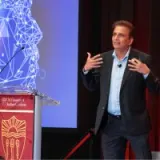
Nick Vyas is a supply-chain educator and commentator who explains how trade policy, geopolitics, technology, and infrastructure shape global supply chains. Their work includes leading supply-chain education and events at USC, hosting Supply Chain Demystified, and discussing industry issues with practitioners.
Most useful for keynotes or moderated discussions on resilient supply chains, USMCA and supplier diversification.
Best for
A global manufacturing company seeking a keynote on resilient supply chains, USMCA and supplier diversification.
Not for
Consumer electronics brands seeking a short product endorsement or comparative security claim for a device.
Key takeaways
Diversify the supply base instead of forecasting tariffs.
Trade agreements written for the last economy need rewriting.
The AI conversation is missing the people who have to adopt it.
Check first: Confirm comparable keynote samples, audience results, event format and terms.
Main ideas
Diversify the supply base instead of forecasting tariffs · Trade agreements written for the last economy need rewriting · The AI conversation is missing the people who have to adopt it
Nick Vyas is a supply-chain educator, commentator and host of Supply Chain Demystified.
The work connects trade policy, geopolitics, technology and infrastructure to decisions shaping global supply chains.
They explain these issues through policy analysis, practitioner conversations, teaching and event panels.
The posts also feature a consumer-facing format: a planned coffee docuseries.
Following this work offers a way to track how global changes affect sourcing, operations, security and the people who depend on supply chains.
Vyas makes broad supply-chain issues easier to follow, moving from current events to specific consequences and choices.
In the USMCA post, the argument moves from the agreement's results to disputes over market access, China-linked investment and rules that need to account for newer technologies.
A summit recap shifts from predicting tariffs to building options across suppliers, production sites and routes.
The work also brings in perspectives beyond commentary: a conversation about AI adoption with ASCM's CEO, a discussion of ICT security risks, and teaching that pairs a visit to Cat Lai Port with a panel of Vietnam-based practitioners.
That range serves readers seeking both an explanation of global forces and a view of how organizations encounter them.
Nick Vyas argues that global supply chains are irreversibly global and increasingly shaped by geopolitics, making diversification and optionality the practical response—not tariff prediction.
Read more
They make four recurring arguments: trade agreements written for an internal-combustion, pre-AI economy need technology-adaptive rules; the loudest AI debate comes from technology and policy voices, while the practitioners who must adopt it are largely missing; cybersecurity is now a supply chain function that must be embedded at individual, institutional, and national tiers; and talent and workforce readiness are the binding constraint on all of it. The same arguments run through the writing, podcast, conference work, and press commentary, where Vyas repeatedly translates them for audiences outside the profession.
Diversify the supply base instead of forecasting tariffs
Vyas recommends that companies stop trying to predict individual tariffs and instead build long-term diversification and optionality through multiple suppliers, production locations, and logistics routes, so no single country becomes a point of failure.
Read more
Tariffs and policy shifts are unpredictable, but exposure is manageable; concentration risk is the real vulnerability. They also reiterate a long-held position: every supply chain is more global than ever, and irreversibly so.
At the 14th Annual Global Supply Chain Excellence Summit panel Vyas convened in Long Beach in August 2026, panelists said China remains a critical manufacturing hub as companies adopt “China +1” or “China + multiple” sourcing to reduce concentration risk.
They described India as positioning itself as a trusted partner through manufacturing, technology, infrastructure, skills, and market access, while Mexico pointed to USMCA, North American integration, and proximity as advantages, even as tariffs and policy uncertainty weigh on investment.
The recap closes with advice to prioritize diversification over tariff prediction.
The recommendation is not to retreat from global sourcing. Vyas argues that supply chains are irreversibly global, so companies should spread risk across a global network rather than bring production home to one place.
Trade agreements written for the last economy need rewriting
Vyas treats the July 2026 USMCA review as a negotiation with global stakes, not a regional story.
Read more
The agreement was negotiated for an internal-combustion-engine world and a pre-AI digital economy; its rules of origin and digital trade provisions have been outpaced by EVs, autonomous systems, and AI-driven supply chains.
In this argument, a USMCA 2.0 would need technology-adaptive language governing what North American industry actually makes today.
Vyas focuses the talks on three areas: market access, curbing China-linked investment into Mexico that reaches US supply chains, and technology-adaptive rules.
USMCA covers about $1.6 trillion in annual goods trade among the three signatories.
Vyas credits USMCA 1.0 with US exports to Canada and Mexico rising over 50% and Mexican manufacturing wages nearly doubling.
They also cite US Trade Representative Jamieson Greer's congressional testimony that Mexico absorbed part of the US trade deficit with China.
Vyas identifies gaps in access to Canada's dairy market and Mexico's energy sector, as well as China-linked investment scaling up through policy gaps the original agreement was not designed to close.
The AI conversation is missing the people who have to adopt it
Vyas argues that most AI commentary comes from the technology industry and policymakers, while practitioners and educators on the adoption side have an equal or greater stake and are largely absent.
Read more
They warn that the gap is widening between AI's expanding capabilities and the preparedness of professionals and organizations that can no longer afford to ignore the technology. The response, Vyas argues, must go beyond pointing out the gap.
In a podcast episode with Abe Eshkenazi, described as CEO of ASCM, the world's largest nonprofit association for supply chain education and leadership, Vyas announced a strategic partnership between ASCM and Kendrick GSCI on AI research: what supply chain companies and professionals actually use AI for, barriers to adoption, and the capabilities they will need to adapt. Vyas also chaired CHAINge 2026, ASCM's annual conference, and moderated a panel called “The Human Advantage” on how AI and advanced technology are changing operations and workforce readiness.
Cybersecurity is a supply chain function, not an IT afterthought
Vyas argues that cybersecurity is no longer a back-office IT issue but a core pillar of supply chain resilience.
Read more
ICT is the world's most critical supply chain after healthcare because it underpins healthcare systems themselves. Security, they say, must be embedded at every tier: individual, institutional, and national.
Vyas examined the EU's Information and Communication Technology Supply Chain Security Toolbox, released two weeks before the post.
It gives member states a structured but non-binding approach to identifying and mitigating ICT supply chain risks.
The scenarios Vyas highlights include a cyberattack on a security provider, an attack on a cloud computing provider, and counterfeit parts inserted into a trusted supplier's product.
They wrote from Vienna after speaking at the European Logistics Association Conference & Awards 2026.
In a related episode, Ernie E., CEO of Planet Security, covered confidentiality, integrity, and availability; personal digital hygiene and multi-factor authentication; enterprise controls; and nation-state threats.
The discussion drew on nearly three decades in information assurance and methodologies Ernie E. is described as having invented, the AI Kill-Box and AI Kill-Chain.
Vyas explains that the EU guidance is non-binding, even as they describe ICT as the world's most critical supply chain after healthcare. The framework they praise is voluntary despite the severity of the risk they describe.
Talent and education are the constraint on everything else
A priority throughout Vyas's work is developing the people who will run supply chains through direct exposure to operations, not classroom theory alone.
Read more
In the AI material, workforce readiness is central to the argument. The method is consistent: take students to a working site, then put them in front of operators who run that market.
Vyas took the USC Master of Science in Global Supply Chain Management cohort 14 to Cat Lai Port in Ho Chi Minh City, described as Vietnam's largest international container port, then moderated a “Doing Business in Vietnam” panel with Thái Vân Linh, CEO of Skills Bridge; Magnus Lundgren, Head of Technical & Production at Nestlé Vietnam; and Dung Tran, VP and Managing Director at Spartronics. They also welcomed the new cohort and previewed a summit fireside chat on industry, infrastructure, and the future of manufacturing with Randy Kendrick, founder and CEO of Xebec Realty, whose expertise is in developing and managing industrial and logistics real estate.
Making supply chains legible to people outside the industry
Vyas reaches beyond professional audiences, arguing that consumers feel supply chain decisions directly and that everyday products offer a way into the subject.
Read more
Their commentary on war-related costs makes the same case in reverse: geopolitical events reach the fuel pump and grocery store, while businesses too small to absorb the shock carry the heaviest burden.
A Supply Chain Demystified docuseries traces coffee from bean to brew, citing a market expected to exceed $380 billion by 2033, growth driven by premium and specialty coffees and demand for traceable beans, and naming Klatch Coffee.
In commentary shared with the LA Times on the US-Iran war's effect on California's economy, Vyas argues that fuel prices may ease because they track global markets, while grocery prices are far more stubborn and unlikely to return to prewar baselines.
Small trucking fleets, mom-and-pop stores, and family farms absorb the worst of it.
To see how Nick Vyas handles trade policy, start here.
Read more
This is the longest worked example in the set, showing the structured argument that shorter posts reuse.
Written as US–Mexico talks opened on renewing USMCA, ahead of a 1 July 2026 decision deadline.
It recaps what USMCA replaced in 2020, puts the agreement at $1.6 trillion in annual goods trade across the three signatories, and lists results from Washington's perspective: US exports to Canada and Mexico up over 50%, Mexican manufacturing wages nearly doubling, and Mexico absorbing part of the US trade deficit with China, citing US Trade Representative Jamieson Greer's congressional testimony.
It then focuses on three areas likely to decide the talks: market access (Canada's dairy market, Mexico's energy sector), curbing China-linked investment into Mexico, and making the agreement technology-adaptive.
Rules of origin and digital trade provisions were written for an internal-combustion and pre-AI economy and have been outpaced by EVs, autonomous systems, and AI-driven supply chains.
For brands planning a campaign
For a keynote on resilient supply chains and diversification, the three-area structure offers a ready-made spine: results to date, contested access, and technology-adaptive rules. A brand can ask for the same arc applied to its own sourcing footprint.
The post explains the podcast's purpose and who Vyas features.
Read more
Newcomers get the recurring argument in the author's own framing: the AI conversation is missing the people who have to adopt it.
Argues that most AI commentary comes from the technology industry and policymakers, while practitioners and educators on the adoption side have an equal or greater stake and are largely absent from the conversation.
The episode guest is Abe Eshkenazi, described as CEO of ASCM, a nonprofit association for supply chain education and leadership.
The post announces a strategic partnership between ASCM and Kendrick GSCI on AI research: what supply chain companies and professionals actually use AI for, barriers to adoption, and the capabilities needed to adapt.
It also notes that Vyas is serving as Chair of CHAINge, ASCM's annual conference, held 29–30 September 2026 in Long Beach, California.
For brands planning a campaign
For a sponsor exploring AI-in-supply-chain work, this offers two concrete hooks—a research partnership and a chaired conference—rather than a general podcast mention. A keynote brief can request the adoption-side angle instead of a capability survey.
Shows how a dense policy document becomes a readable explanation, and how Vyas ties written analysis to a speech delivered the same week.
Read more
The firsthand conference perspective is useful when assessing the commentary.
Explains an EU toolbox released two weeks earlier that gives member states a structured but non-binding approach to identifying and mitigating ICT supply chain risks.
It names the paper's risk scenarios—a cyberattack on a security provider, an attack on a cloud computing provider, and counterfeit parts entering a trusted supplier's product—and calls ICT the world's most critical supply chain after healthcare, noting that it underpins healthcare systems themselves.
Written from Vienna, where Vyas had delivered a speech at the European Logistics Association Conference & Awards 2026, the post points to a podcast conversation with Ernie E., CEO of Planet Security, as a source for the argument that cybersecurity must be embedded at individual, institutional, and national tiers.
For brands planning a campaign
For security, risk, or ICT-adjacent brands, this pairs a policy explainer with live event presence. A campaign can build a talk-and-episode package around a risk scenario the audience actually faces.
The policy posts show one mode; this shows the range.
Read more
It is the clearest evidence of visual, consumer-facing work aimed at people who are not supply chain professionals.
Announces an upcoming Supply Chain Demystified docuseries on coffee's journey, opening with the gap between drinking coffee daily and knowing how it reaches the cup.
It cites a market expected to exceed $380 billion by 2033, with growth driven by premium and specialty coffees and demand for traceable beans.
The series is framed for casual drinkers, home baristas, and industry professionals alike, covering the process, people, and challenges behind each bean.
Klatch Coffee is named in the post.
For brands planning a campaign
Consumer and food-and-beverage brands have a route here beyond a keynote: a documentary-style series on a single product's supply chain, with traceability as its built-in theme.
Shows who Vyas convenes and how a live panel becomes a written takeaway.
Read more
For readers weighing a conference or panel booking, this is a sample of the output.
Recaps a panel at the 14th Annual Global Supply Chain Excellence Summit, 13–14 August 2026 in Long Beach, themed "Beyond Boundaries."
The panelists were Vincent Iacopella, Chief Strategy Officer at Alba Wheels Up International; Ambassador Carlos González Gutiérrez, Consul General of Mexico in Los Angeles; and Ambassador Dr Srinivasa K J, Consul General of India in Los Angeles.
The reported takeaways: China remains a critical manufacturing hub while companies move to "China +1" or "China + multiple" to reduce concentration risk; India is positioning as a trusted partner by strengthening manufacturing, technology, infrastructure, skills, and market access; Mexico cites USMCA, North American integration, and proximity as advantages, while tariffs and policy uncertainty weigh on investment and regional competitiveness.
The closing advice is to stop trying to predict individual tariffs and instead build long-term diversification and optionality across suppliers, production locations, and logistics routes.
For brands planning a campaign
A manufacturing brand considering a diversification keynote can reference this framing directly or ask for a version anchored on one region's trade-offs rather than a general resilience talk.
This is the mainstream-press version of the argument, showing how the commentary travels beyond industry audiences and where it places the practical stakes.
Read more
Argues that the US–Iran war is pushing up American supply chain costs, from the fuel pump to grocery stores.
Fuel prices may ease because they track global markets, but grocery prices are described as far more stubborn—rising faster under pressure and retreating slowly, if at all—so prewar baselines are not expected to return.
The post says this was shared with the LA Times for an article on the war's effect on California's economy.
It singles out businesses too small to absorb the shock: small trucking fleets, mom-and-pop stores, and family farms.
It restates a long-held position that every supply chain today is more global than ever, and irreversibly so.
For brands planning a campaign
Useful for brands that need commentary with consumer visibility. The small-operator angle gives a campaign a concrete audience segment instead of a generic cost-inflation message.
Shows the teaching method in action: students at a working port, followed by a practitioner panel, connecting education with industry access.
Read more
Describes a day with the USC Master of Science in Global Supply Chain Management cohort 14 in Ho Chi Minh City.
The day began at Cat Lai Port, described as Vietnam's largest international container port and a link between the region's economic zones and global trade.
In the afternoon, Vyas moderated a "Doing Business in Vietnam" panel with Thái Vân Linh, CEO of Skills Bridge; Magnus Lundgren, Head of Technical & Production at Nestlé Vietnam; and Dung Tran, VP and Managing Director at Spartronics.
The post pairs the real-world complexity students study with direct exposure to market conditions and talent-driven operations.
For brands planning a campaign
For brands manufacturing or sourcing in Southeast Asia, this offers a field-based program angle: a session built around an actual site visit and local operator panel rather than a classroom talk.
Convening the industry: summits, panels, and an interview podcast7
Geopolitical shocks and diversification over tariff forecasting3
Talent, education, and workforce readiness3
USMCA renewal and the rules of North American trade2
The gap between AI capability and organizational readiness2
Cybersecurity as a supply chain function, not an IT afterthought2
Everyday and consumer supply chains2
USMCA renewal and the rules of North American trade
Vyas treats the July 2026 USMCA review as a negotiation with global stakes, not a regional story.
Read more
They lay out what USMCA 1.0 delivered — US exports to Canada and Mexico up over 50%, Mexican manufacturing wages nearly doubled — and distill the coming talks into three areas: market access (Canada's dairy market, Mexico's energy sector), curbing China-linked investment into Mexico that reaches US supply chains, and making the agreement technology-adaptive for EVs, autonomous systems, and AI-driven supply chains. A summit panel they convened added that China remains a critical manufacturing hub while companies shift to "China +1" or "China + multiple" sourcing, and that Mexico leans on USMCA and proximity while tariffs and policy uncertainty hold back investment.
Anchors predictions in agreement history and named officials' testimony, then names the specific provisions likely to decide the talks.
For brands planning a campaign
A brand preparing Vyas for a keynote on USMCA and diversification gets a structured three-part frame — market access, China-linked investment, technology-adaptive rules — instead of a headline tariff take. Suited to audiences that need the negotiating stakes explained before the talking points.
Geopolitical shocks and diversification over tariff forecasting
Vyas connects conflict to costs.
Read more
They argue that the US-Iran war pushes up fuel and grocery prices, that grocery prices are far more stubborn than fuel and unlikely to return to prewar baselines, and that small trucking fleets, mom-and-pop stores, and family farms absorb the worst of it.
Their recommendation to companies is to stop trying to predict individual tariffs and instead build long-term diversification and optionality — multiple suppliers, production locations, and logistics routes so no single country is a single point of failure.
They repeat a thesis they say they have argued for years: every supply chain is more global than ever, and irreversibly so.
Works from a current news event back to a standing argument about structural globalization.
The fuel and grocery price claims come from a news article Vyas cites; the underlying data is the outlet's reporting, not Vyas's own research. Ask for the cited article and its supporting data.
For brands planning a campaign
Useful for a resilience or risk-management brief where the client wants a case for structural diversification rather than a forecast. The repeatable thesis gives a keynote a spine that does not depend on the week's news.
The gap between AI capability and organizational readiness
Vyas argues the loudest AI voices come from tech and policy, while the adoption side — practitioners and educators — is largely missing from the conversation despite having equal or greater stake.
Read more
With ASCM CEO Abe Eshkenazi, they discuss the distance between AI's expanding capabilities and how prepared professionals and organizations actually are, and announce an ASCM–Kendrick GSCI partnership on AI research covering what companies really use AI for, adoption barriers, and the capabilities workers will need. Separately, they describe moderating a "Human Advantage" panel on how AI and advanced technology are changing operations and workforce readiness.
For brands planning a campaign
For a brand selling AI, automation, or training into supply chains, this is an adoption-frame angle rather than a capability-frame one: what companies are actually doing, what blocks them, and what skills they will need. The announced research partnership is a concrete hook for a co-authored or sponsored conversation.
Cybersecurity as a supply chain function, not an IT afterthought
Vyas argues cybersecurity is now a core pillar of supply chain resilience.
Read more
They walk through the EU's ICT Supply Chain Security Toolbox and its risk scenarios — a cyberattack on a security provider, an attack on a cloud provider, counterfeit parts inserted into a trusted supplier's product — and call ICT the world's most critical supply chain after healthcare. In an episode with Planet Security CEO Ernie E., they cover confidentiality, integrity, and availability, personal digital hygiene and multi-factor authentication, enterprise controls, and nation-state threats, arguing that security has to be embedded at individual, institutional, and national tiers.
Pairs each episode with a document or news hook and interviews a named specialist rather than speaking generally.
For brands planning a campaign
A fit for cybersecurity vendors, insurers, and risk functions that need the supply chain framing rather than a pure infosec pitch. The tiered individual–institutional–national structure is easy to build a session around.
A recurring thread is building the people who run supply chains.
Read more
Vyas documents taking a USC global supply chain master's cohort to Cat Lai Port in Ho Chi Minh City and moderating a "Doing Business in Vietnam" panel with leaders from Nestlé Vietnam, Skills Bridge, and Spartronics.
They welcome a new cohort and preview an annual summit with a fireside chat on industry, infrastructure, and manufacturing.
In their AI commentary, workforce readiness is central to the argument, not a side note.
Two of these posts read as program milestones and thanks rather than analysis; they show activities and affiliations, not positions on industry questions.
For brands planning a campaign
Relevant for employer-brand, education, and training campaigns, and for vendors whose pitch depends on closing a skills gap. The Vietnam example shows Vyas can tie classroom content to live operations and local market entry.
Convening the industry: summits, panels, and an interview podcast
Vyas's formats recur and reinforce each other.
Read more
They chair CHAINge 2026 by ASCM and moderate two panels there — "The New Rules of Global Trade" and "The Human Advantage."
They help run the 14th Annual Global Supply Chain Excellence Summit in Long Beach, including a fireside chat on industry, infrastructure, and manufacturing.
Their podcast, Supply Chain Demystified, is built on interviews with named practitioners, and they have extended it into a documentary series.
Recurring formats — annual summit, conference chair role, interview podcast, and docuseries — each with named participants.
For brands planning a campaign
Gives a brand several placements to choose from: conference chair or moderator, summit session, podcast guest slot, or documentary sponsorship. The interview format suits a partner who wants a long-form conversation rather than a stage slot.
They promote a Supply Chain Demystified docuseries tracing coffee from bean to brew, citing a market expected to exceed $380 billion by 2033 and demand for premium, traceable beans, and naming Klatch Coffee. Their war-cost commentary follows the same chain from the fuel pump to the grocery store, making the case that consumers feel supply chain decisions directly.
The coffee post is promotional and names a company; ask about payment terms and the scope of the relationship.
For brands planning a campaign
A route to general, consumer, or food-and-beverage audiences that a purely technical supply chain brief would not reach. The bean-to-brew framing is a ready-made hook for a consumer brand.
Vyas's posts name a small set of organizations tied to their supply-chain work: USC's master's program in global supply chain management and its Kendrick institute, ASCM, a podcast guest's company, and a newspaper that quoted them.
Read more
No post discloses a sponsorship, affiliate arrangement, or paid promotion.
University of Southern California (USC) Master of Science in Global Supply Chain Management
Employment
Vyas writes as an insider of USC's Master of Science in Global Supply Chain Management program, welcoming Cohort 14 and describing its activities as "our program."
Read more
They include the 14th Annual Global Supply Chain Excellence Summit in Long Beach and a cohort residency in Ho Chi Minh City, where Vyas moderated a "Doing Business in Vietnam" panel after a visit to Cat Lai Port.
Vyas chairs CHAINge 2026, ASCM's flagship supply chain conference in Long Beach, and moderates its "The New Rules of Global Trade" and "The Human Advantage" panels.
Read more
In a separate post, they announced a strategic partnership between ASCM and Kendrick GSCI to research how supply chain companies actually use AI.
Ernie E., CEO of Planet Security Inc., appears as a guest on Vyas's podcast Supply Chain Demystified to discuss ICT supply chain security, multi-factor authentication, and nation-state threats.
Vyas was quoted as a source in a Los Angeles Times article on the US-Iran war's effect on California's economy, arguing that grocery prices are unlikely to return to pre-war levels and that small trucking fleets, family farms, and mom-and-pop stores absorb the worst of fuel and food cost increases.
LinkedIn posts explain trade and risk events as they happen — the July 2026 USMCA review, tariff and conflict costs reaching fuel pumps and grocery shelves, and the EU’s ICT supply chain security guidance — usually with a clear recommendation.
Supply Chain Demystified features in-depth interviews with practitioners, including ASCM’s Abe Eshkenazi on AI adoption and Planet Security’s Ernie E. on cybersecurity, and has expanded into a documentary series on the coffee supply chain.
The third layer is conference work: chairing CHAINge 2026 and helping run the annual Global Supply Chain Excellence Summit, where panels on global trade, China +1 sourcing, and the human side of automation carry the same arguments.
Readers seeking the macro policy view can start with the USMCA and diversification material; those interested in people and skills can start with the education and workforce posts.
Similar creators below approach tariff and sourcing questions at different levels: supplier-level advisory, enterprise IT procurement, and cross-border e-commerce compliance.
Vega makes the same argument as Vyas about sourcing concentration: moving final assembly out of China does not move the supply chain, so procurement has to look beyond tier-one suppliers to the sources of critical components, tooling, and raw materials.
Read more
Vega also makes the case for Mexico and North American integration — proximity, lead times, inventory, engineering collaboration, and USMCA access — rather than labor cost alone. That aligns with their call to stop forecasting tariffs and build optionality across suppliers, locations, and routes.
Vega writes from the operator’s seat of a sourcing practice, mapping dependencies tier by tier, building total-cost business cases for Mexico, and ending posts with a commercial offer. Vyas works at the policy, education, and convening level, rarely getting into supplier- or component-level procurement mechanics.
Arezina treats tariffs as a procurement planning problem, not a headline.
Read more
They track the US–Canada tariff exchange and Canada’s dollar-for-dollar retaliation, noting that the cost falls on businesses trying to plan twelve months out. Vyas similarly argues that companies should design around policy uncertainty, not any single tariff.
Arezina focuses on enterprise IT: FinOps, SAM/ITAM, licensing model changes, and renewal cycles, treating tariffs as another source of volatility in vendor negotiations. Vyas frames the same events in terms of global trade structure, industry readiness, and workforce capability.
Amalfitano translates trade-policy changes into actions businesses must take before a deadline — Canada’s counter-tariff list, the absence of a USMCA exemption, and goods already in transit — and urges readers to classify by tariff code rather than product category.
Read more
Vyas likewise argues that policy must be understood at the level where it changes a decision.
Amalfitano works at the transaction level for cross-border e-commerce brands: HS code discipline, DDP landed cost, duty and tax calculation at checkout, and EU customs data requirements. Vyas stays at the agreement and industry level, discussing what a rewritten USMCA would need rather than what a single SKU should declare.
Nick Vyas’s posts and podcast work cover global supply chains, trade policy, resilience, technology adoption, and infrastructure, making the subject matter relevant to a keynote on resilient supply chains and USMCA.
Read more
Before booking, request recent audience results for comparable keynote or event placements and, for a keynote aimed at manufacturing audiences, documented survey data or another source showing attendees’ industries, roles, and seniority.
The material reviewed does not describe a sponsorship offer, advertising package, rate, or partnership inquiry process for Nick Vyas personally.
Read more
Vyas hosts the Supply Chain Demystified podcast, moderates and speaks on conference panels, and helps run events including the USC Global Supply Chain Excellence Summit and CHAINge, ASCM's annual conference, which they chair in 2026.
The summit post credits a board, event partners, sponsors, and volunteers, and notes a strategic partnership between ASCM and Kendrick GSCI on AI research; a separate post about an upcoming coffee docuseries names Klatch Coffee.
These are organisational relationships and programming credits, not published terms a brand can buy against.
For a keynote or sponsored episode, ask about availability, format, deliverables, rates, and disclosure before committing.
Strong subject-matter fit for a keynote or moderated discussion. Vyas’s posts give a keynote on USMCA and regional trade a clear structure: explain what USMCA has delivered, identify the issues at stake in its review, then connect regional trade rules to sourcing choices and technology change. A summit-panel recap adds a practical diversification frame: consider multiple suppliers, production locations, and logistics routes rather than trying to predict individual tariffs. Before booking, ask for comparable keynote samples and audience results, and confirm the proposed event format and terms directly.
Read more
Brief
A global manufacturing company wants a keynote on resilient supply chains, with a focus on USMCA and supplier diversification.
Campaign angle
How to build North American supply-chain options as USMCA rules, trade policy, and technology change.
When to choose a specialist
Poor fit for a consumer-device review or product endorsement making a comparative security claim. Vyas’s posts show discussion of cybersecurity as a supply-chain resilience issue, including ICT risks, enterprise controls, and security across individual, institutional, and national levels. They do not show consumer-device reviews, product testing, or support for a comparative claim that one device is the most secure. A better use of this work would be an educational discussion about supplier and cloud risks, not a product endorsement making an unsubstantiated security claim.
Read more
Brief
A consumer electronics brand wants a short, product-led endorsement claiming its device is the most secure option for consumers.
A worked campaign example
Brief
A global manufacturer is planning a leadership event for teams reviewing North American sourcing and wants a keynote on resilience, USMCA, and diversification.
Campaign angle
From USMCA rules to sourcing options: how manufacturers can plan for changing trade conditions without betting on a single tariff forecast.
Decision
Proceed to an event-planning conversation, subject to confirming the event’s audience and format. The topic closely matches Vyas’s USMCA analysis and summit discussion of China+1 strategies, Mexico’s regional advantages, and diversification. Ask for results from comparable keynotes.
Next steps
Send Vyas an event request with the manufacturers’ regions, supply-chain decisions, audience roles, event length, and desired level of policy detail. Ask for a relevant keynote or panel example, results from comparable placements, and written confirmation of format, deliverables, fees, and any disclosure requirements.
Outline
Open with the scale and purpose of USMCA and the outcomes identified from its first version.
Use a three-part frame for the review: market access, China-linked investment, and rules that account for EVs, autonomous systems, and AI-driven supply chains.
Bring in the summit-panel takeaway that China remains important even as companies consider China+1 or China+multiple approaches, alongside the opportunities and uncertainties described for Mexico and India.
Close with a practical discussion prompt: map critical suppliers, production locations, and logistics routes, then identify where alternatives would reduce concentration risk.
Choose Vega over Vyas when the room is full of sourcing and procurement practitioners who need the operating detail behind diversification rather than the policy frame around it.
Read more
Vega's posts work through what China+1 actually changes: moving final assembly to Mexico, India, Vietnam, or Eastern Europe does not move the components, tooling, machinery, or raw materials, so the concentration risk can survive the relocation.
They push the audience past Tier 1 supplier mapping toward where critical parts are made, who controls the raw material, and which sources are single points of failure.
The Mexico post makes the same argument from the cost side: peso movements expose sourcing decisions built only on labor arbitrage, while decisions built on lead time, inventory, engineering collaboration, USMCA access, and responsiveness hold up.
For a manufacturer whose audience has to rewrite supplier maps after the keynote, that is closer to the work than a trade-policy overview.
Vega's posts focus on sourcing execution and supplier economics, not USMCA review mechanics, tariff timelines, or the negotiation stakes at the centre of a session focused on those topics.
A programme that needs North American trade policy explained up front and sourcing practice afterward would need to pair Vega with another speaker or accept a narrower session.
Ask for evidence of keynote or large-event delivery before booking.
Consider Arezina when the manufacturer's resilience problem lies in enterprise IT rather than physical goods.
Read more
Arezina's posts connect tariffs to hardware refreshes, networking gear, components, licensing model changes, and enterprise agreement renewals, and ask whether procurement, software asset management, and vendor management teams are already building tariff contingencies into contract negotiations.
The Canada tariff post adds the alliance angle: retaliation lists land on industrial equipment and electronics, and the cost is passed to businesses planning twelve months out.
For a manufacturer whose exposure runs through IT vendors and multi-year contracts, that is a more specific and useful session than a general trade talk.
The focus is enterprise IT procurement, FinOps, and vendor management, not manufacturing supply chains or North American trade policy.
The posts do not analyse USMCA.
For a mixed audience of operations and commercial leaders, the scope may be too narrow.
Ask for keynote examples and audience data before booking.
Bring in Amalfitano when the audience's next decision is a compliance one with a deadline attached.
Read more
The posts show what a team should do in a defined window: run top-selling SKUs against the Canadian tariff list by tariff classification rather than product category, re-run landed cost on affected items under DDP, decide whether to absorb, split, or pass through the surtax, check what checkout is quoting, and move inventory already sitting in Canada before the deadline.
The EU post extends the same discipline to classification itself, asking where an HS code actually lives, whether two people would assign the same code to the same product, and who would answer a customs query.
For a manufacturer or brand facing a specific tariff or customs change, that operational specificity is the value.
Vega's posts focus on cross-border ecommerce and customs compliance for direct-to-consumer brands, down to cosmetics and apparel SKUs.
The focus is not manufacturing strategy, supplier diversification, or USMCA, making Vega a poor substitute for a resilience keynote for a plant and sourcing audience.
Vega fits better as a working-session speaker alongside a strategy speaker than as the headline.
This page draws on ten posts published on Nick Vyas's LinkedIn account, dated by the 2026 events they describe: the USMCA renewal talks with a 1 July 2026 decision deadline, the 14th Annual Global Supply Chain Excellence Summit on 13–14 August 2026, the European Logistics Association Conference & Awards 2026, and CHAINge on 29–30 September 2026.
Nick Vyas's posts do not say anything about episodes of the Supply Chain Demystified podcast or its coffee docuseries beyond what the announcing posts describe, and guest views are reported as those posts summarise them.
Comparisons with other creators use two posts each from Oscar Vega, George Arezina and Joe Amalfitano.
Nick Vyas's posts here do not say anything about career history before this window, audience composition data or past speaking results, and no partnership or sponsorship terms are published.