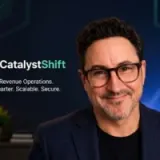
Lucas Dowd writes about improving the business operations of managed service providers (MSPs), including revenue, client retention, margins, and how AI can help owners make better use of their business data.
Lucas Dowd writes about the business side of managed service providers (MSPs): revenue, client retention, margins, and operations.
In his clearest post on AI, he argues that automating tickets or generating content can add activity without helping owners understand what is happening in their business.
He favors tools that make existing data from service platforms, customer systems, and sales pipelines easier to interpret.
Dowd also points to client churn as a serious concern and to the possibility of making operations work accessible to smaller MSPs.
Follow his work for an operator-focused view of how MSPs can run their businesses more clearly—not simply add more technology.
Dowd’s strongest contribution in the reviewed posts is a practical distinction between doing more and seeing more clearly.
He applies it to AI: instead of judging a tool by the tasks it automates, he asks whether it helps an MSP spot risks to clients, renewals, or sales.
That gives readers a business question to use when evaluating AI products.
Other posts show the problems he wants to address—client churn and the cost of improving operations for smaller MSPs—but provide only brief claims and links, not the supporting analysis.
The material also shows Dowd discussing his work with a collaborator and appearing in a conversation with an MSP host.
The available posts do not establish a signature book, show, or earlier body of work, so those parts of his public profile remain to be researched.
Lucas Dowd's recurring argument is that managed service providers (MSPs) solved their technical problems and left the commercial ones — revenue, retention, and margin — running on instinct, and that AI vendors are now repeating that pattern.
Read more
Dowd draws a line between tools that generate more activity and tools that interpret data an MSP already holds in its PSA, CRM, and pipeline, and treats client churn as the industry's structural economic problem. More recent posts argue that operations work has become affordable for small MSPs, and Dowd also writes in a personal, community-facing register about building a company and talking with others in the channel.
The business layer inside MSPs was left running on instinct
Dowd argues that the MSP channel spent a decade building world-class technical infrastructure while the business layer — revenue, retention, and margin — ran on gut instinct and peer-group advice.
Read more
In Dowd's account, AI vendors are repeating that pattern: they sell tools that automate tickets, summarize alerts, and generate content, which improves the technical stack again and leaves the commercial problems unsolved.
The post lists the typical AI offer — automated tickets, summarized alerts, generated content — and calls most of it 'a marketing layer dressed up as infrastructure,' contrasting it with an operating layer that reads what is already in a provider's PSA, CRM, and pipeline.
Dowd presents this as a repeat of a decade-long pattern rather than a new problem: the channel already solved the technical questions and left the commercial ones alone, and AI is reproducing the same split.
Dowd's buying heuristic for MSP owners evaluating AI products is to distinguish a marketing layer, which generates more activity, from an operating layer, which surfaces what existing data means before a client is lost, a renewal is missed, or a deal that was never going to close keeps being worked.
Read more
The stated risk is that most of what is being sold into the managed AI space for MSPs is branding rather than infrastructure.
The post's closing lines are 'MSPs don't need to do more. They need to see more clearly' and 'Choose the layer, not the label.'
Dowd frames churn as the recurring business problem — replacing clients rather than keeping them — and treats the cost of replacement as structural to the industry.
Read more
Dowd writes that 'a third of the MSP industry is replacing half its client base every year just to stay flat,' tagged with churn and MSP. The post itself stops at the claim and links out; the supporting data was not part of the reviewed material.
Operations work has become reachable for small MSPs
Dowd argues that building operations from underneath — dedicated operations staff, outside consultants, months of workflow design — used to be a luxury only larger MSPs could justify, and that a $2M or $5M shop rarely found it worth the cost.
Read more
According to Dowd, several things changed at once in the past couple of years, making that work more accessible.
The post names the $2M-to-$5M shop as the audience whose economics changed; the specific enabling changes sit behind an external link that was not part of the reviewed material.
Alongside the operational arguments, Dowd posts in a personal register about building a company and about working with other people in the MSP channel.
Read more
These posts carry no product claim and no operational argument; they show the voice and public posture behind the rest of the writing.
Dowd names Kevin Townsend as a collaborator on helping MSP owners streamline business operations and 'show up better' for their customers, and names Marvin Bee as the host of a podcast conversation about that work.
Neither person's own material was reviewed, so they are named rather than quoted.
One post describes pride in what is being built and invigorating conversations with MSP leaders, other MSP-focused vendors, industry figures, and friends and family, under hashtags about a founder journey and building in public.
This is the clearest statement of Dowd's core argument about AI in the managed service provider (MSP) channel: that the money problem is a business-data problem, not a technical one.
Read more
Start here to understand what Dowd is actually selling as an idea before reading the shorter posts.
Dowd argues that the MSP channel spent a decade building strong technical infrastructure while leaving the business layer — revenue, retention, margin — to gut instinct and peer advice.
In Dowd's account, AI vendors are repeating that pattern: they ship tools that automate tickets, summarize alerts, and generate content, which improves the technical stack but leaves the business problems untouched.
The post draws a line between a "marketing layer" that generates more activity and an "operating layer" that reads what is already in a company's PSA, CRM, and pipeline and surfaces what it means before a client is lost, a renewal is missed, or a deal that was never going to close is chased.
The closing line — MSPs don't need to do more, they need to see more clearly — is the thesis in one sentence.
For brands planning a campaign
For an MSP software vendor, the strongest collaboration hook is the layer distinction rather than generic AI-productivity messaging. A piece built around "does this tool create activity or surface meaning?" gives Dowd a concrete frame to argue from and gives the vendor a way to position its product as business-layer infrastructure.
It answers the question of what business problem Dowd treats as urgent — client churn.
Read more
The post is short, so it works as a pointer to a topic rather than a full argument, and a newcomer should read it alongside the longer AI post to see retention as the recurring concern.
Dowd states that a third of the MSP industry replaces half its client base every year just to stay flat, and tags the post with churn and MSP.
The substantive point stops at that claim; the rest of the post is an external shortened link.
The post shows that Dowd frames churn as a structural feature of the industry rather than a marketing shortfall, but the text on LinkedIn does not show the underlying data or the remedy.
For brands planning a campaign
Retention is the topic where an MSP vendor has the most natural reason to appear alongside Dowd. A collaboration could ask Dowd to expand the churn claim into an argument the original post does not carry — but the vendor should expect to supply the supporting data, because the post itself does not.
It shows how Dowd works with others: alongside a named collaborator, in conversation with an established MSP host.
Read more
Read it to understand the collaborative format Dowd operates in, not for a standalone idea.
Dowd describes working with Kevin Townsend to help MSP owners streamline business operations and "show up better" for their customers, and mentions a conversation with MSP host Marvin Bee about the work and what they are seeing in the field.
The post is a pointer to a recorded conversation rather than an argument in itself, and it names both the collaborator and the host.
It shows Dowd appearing in shared formats and channel media rather than publishing only solo commentary.
For brands planning a campaign
Dowd's willingness to appear in podcasts and joint work makes a recorded or co-authored format plausible for a vendor. A brand considering a content collaboration can propose a two-person conversation or a hosted episode rather than a standalone written piece.
It answers a question about who Dowd is writing for: not only large MSPs, but the $2M and $5M shops that previously could not justify operations investment.
Read more
Read it to see the size and type of business Dowd has in mind.
Dowd argues that building operations from the ground up used to be reserved for MSPs large enough to afford dedicated operations staff, outside consultants, and months of workflow design, and that a $2M or $5M shop rarely found it worth the cost.
According to the post, several things changed at once in the last couple of years, making that work more accessible.
The details of those changes sit behind an external shortened link; the LinkedIn text establishes the shift in affordability but not its mechanics.
For brands planning a campaign
This is the post to cite when a vendor wants to reach mid-size MSPs rather than the enterprise end of the channel. A collaboration built around "what changed for the $2M–$5M shop" lets the vendor address a specific, self-selecting audience — with the caveat that the enabling changes are not spelled out in the post itself.
It answers a personal question about Dowd rather than a business one: that Dowd presents as a founder in the middle of building something for the MSP market.
Read more
Read it to understand the voice and the public posture behind the other posts.
Dowd writes about pride in what is being built and about invigorating conversations with MSP leaders, other MSP-focused vendors, industry figures, and friends and family, using hashtags about a founder journey, building in public, and entrepreneurship. The post carries no product details, no claim about what the business does, and no argument about MSP operations; its value is as a statement of role and tone.
For brands planning a campaign
Useful mainly for a founder-story or behind-the-scenes angle. A vendor should not treat this post as evidence of Dowd's subject-matter positions, because it makes none; it supports the fact that Dowd publicly identifies as a founder in the MSP space.
The business layer inside MSPs, not the technical stack
Dowd's central argument is that the managed service provider channel spent a decade building strong technical infrastructure while running revenue, retention, and margin on gut instinct and peer advice.
Read more
In Dowd's account, vendors are now repeating that pattern with AI: tools that automate tickets, summarize alerts, and generate content solve the same technical problems again while leaving the commercial ones untouched.
The proposed fix is data synthesis — software that reads what is already in a provider's PSA, CRM, and pipeline and surfaces what it means before a client is lost, a renewal is missed, or a deal that was never going to close keeps being worked.
The framing is deliberately about seeing existing data more clearly rather than doing more activity.
For brands planning a campaign
A collaboration around this position works best if it starts from a business problem the audience already recognizes — churn, renewals, or margin leaking in an existing toolset — rather than from a feature tour. The natural content format is a diagnosis-then-fix argument, and it suits a vendor that can support the claim with data its customers already hold.
"Choose the layer, not the label" — separating operating tools from marketing layers
Dowd distinguishes a marketing layer, which generates more activity, from an operating layer, which interprets data the business already has.
Read more
The stated risk is that most of what is being sold into the managed AI space for MSPs is branding rather than infrastructure. The closing line — choose the layer, not the label — is a buying heuristic aimed at owners evaluating AI products.
The argument runs on a repeated contrast (technical versus business, activity versus insight, flashlights versus turning the lights on) and ends with an imperative the reader can apply to a purchase decision.
For brands planning a campaign
This is the sharper half of Dowd's AI position and the more opinionated one.
A partner would need to accept being measured against the operating-versus-marketing distinction, so the strongest fit is a product that can demonstrate interpretation of customer data rather than a campaign built on generated content or automated outreach.
It also gives a clear angle for a debate-style or comparison piece.
Dowd states that a large share of the MSP industry replaces roughly half its client base every year just to stay flat, and ties the point to churn.
Read more
The post is short: a claim, an external link, and the hashtags #churn and #msp. The underlying subject is the cost of replacing clients rather than keeping them, which connects directly to the retention and margin themes in the longer posts.
Headline claim plus a link out to fuller material. The full argument lives behind the link, so only the claim itself is evidenced here.
For brands planning a campaign
Retention economics is the topic with the clearest buyer stake for MSP software, and it is a good hook for content aimed at owners rather than technicians. Because the supporting detail sits behind an external link that is not available in the reviewed material, a partner should treat the statistic as Dowd's framing rather than a citable figure, and rebuild the numbers from their own data or a verified industry source before publishing.
Revenue operations becoming reachable for smaller MSPs
Dowd argues that building revenue operations from underneath — workflow design, dedicated operations staff, outside consultants — was previously a luxury only larger MSPs could afford, but that this changed in the past couple of years.
Read more
The specific audience named is the $2M-to-$5M shop, for which this kind of work rarely used to pay for itself.
Commentary opening with a link to an external article; the post itself sets up the shift rather than detailing the mechanics.
For brands planning a campaign
This is the most segment-specific angle in the reviewed material and points at smaller providers as the intended audience for operational tooling. It is a strong basis for case-study or cost-of-inaction content aimed at owners of small MSPs, with the caveat that the reasons for the change are not spelled out in the post and would need to be supplied.
Alongside the operational arguments, Dowd posts about conversations with MSP leaders, other MSP-focused vendors, and industry figures, and about working with named collaborators to help MSP owners streamline business operations and show up better for customers.
Read more
One post points listeners to a podcast conversation with an MSP-focused host. The register is personal — pride in what is being built, gratitude, and public sharing of the process.
Community and process posts rather than argument. They carry no evidence of commercial arrangements, and the linked podcast and articles are not available in the reviewed material.
These posts show range that the operational writing does not: a founder-journey register and a conversational, community-facing format. They should not be read as evidence of sponsorship or partnership.
For brands planning a campaign
A content collaboration can lean on Dowd's willingness to appear in conversation-led formats such as podcasts and joint discussions with other people in the channel, which broadens the format options beyond written commentary. A partner should not infer an existing commercial relationship from any collaborator named in these posts.
The retained posts do not document any explicit brand, sponsor, client, investment, or employment relationship.
Read more
Lucas Dowd discusses MSP business operations and AI strategy in general and mentions other people, but names no business partners or commercial affiliations.
Lucas Dowd writes about the business side of running a managed service provider (MSP): the revenue, retention, and margin problems that sit outside the technical stack.
Read more
The clearest starting point is the post that draws a line between tools that generate more activity and tools that read what a provider already holds in its PSA, CRM, and pipeline, closing with the test "choose the layer, not the label."
From there, the post on client churn sets out the economic problem Dowd returns to, and the post on revenue operations explains why smaller shops, in the $2M to $5M range, can now afford work that used to be reserved for larger providers.
Dowd also posts in a personal register about building a company and about conversations with other people in the channel, including a podcast appearance; those posts show the voice and community relationships behind the arguments rather than adding a new one.
Read the longer commentary first, then the shorter framing posts, which mostly link out to fuller articles or a recording.
The material is recent and channel-specific, so readers looking for teaching guides, transcripts, or a dated account of how the positions developed will not find them here.
MSP business operationsAI strategyClient churn and retentionRevenue operationsMSP channelLinkedIn postsMSP ownersChannel vendors and partners
Both write for MSP owners about the business side of the channel rather than technical delivery, and both treat AI as a change in how providers package and sell services.
Read more
Pica's melting-ice-cube post makes the same move Dowd makes: automation cuts delivery costs, customer budgets shift, and technology alone will not decide who wins. Both also write from inside the peer community, Pica through years of running peer groups and Dowd through public conversation with other channel figures.
Pica looks at the whole industry's growth model and at repeatable, consumable service packaging, and the recent posts mark a career transition after 17 years leading peer groups.
Dowd's argument is narrower and more like a buying test: whether an AI product interprets data a provider already holds or is a marketing layer in disguise.
Pica frames the opportunity; Dowd gives a criterion for judging the tools sold into it.
Both argue that growth and retention fail before the tooling does, and both push leadership teams back to data they already have.
Read more
Scheifler describes pulling CRM, delivery, sales, marketing, and executive input into a single customer score; Dowd describes an operating layer that reads the PSA, CRM, and pipeline and surfaces what it means before a client is lost or a renewal is missed. Both also warn that adding AI without that foundation simply exposes cracks that were already there.
Scheifler works across B2B sales, marketing, and customer success generally, and the posts are short second-person instructions with a direct offer to talk, built around a scoring exercise run with a leadership team. Dowd stays inside the MSP channel and reasons through contrast and metaphor, ending on a choice rather than a worksheet or an invitation.
Both caution that using AI to make more content misses the larger opportunity, and both argue for building the foundation before buying tools.
Read more
Foley's account of clients pivoted out of content-first plays into direct, event-led selling and the book's Architect, Assemble, Activate sequence share Dowd's premise that most teams adopt AI in the wrong order, and both write short opinionated posts that state a position and then support it with numbers or a framework.
Foley addresses B2B revenue leaders broadly and turns the argument into a named three-phase framework and a book, with event-led selling as the fix and deal values as the proof.
Dowd's audience is MSP owners, and the fix is reading operational data the business already holds rather than changing how deals are pursued.
Foley writes with book and framework as signature work; Dowd's visible output is the channel commentary itself.
Dowd's following reads as an MSP-channel audience, but that judgment comes from what the posts address, not from measured reader data.
Read more
The five dated posts in this record speak to MSP owners and operators in business terms — margins, churn, renewals, pipeline, and whether AI tools fix the business layer or just the technical stack — and one post promotes a recorded conversation with collaborator Kevin Townsend and MSP commentator Marvin Bee.
The account is presented as a founder building in public for that community.
For an MSP software vendor, that suggests Dowd is a reasonable placement when the goal is reaching owner-level readers on MSP operations and AI strategy, and a weaker fit for reaching hands-on service-desk technicians or end customers, since nothing in the reviewed material addresses those groups.
No audience composition data was supplied.
The only measured figure available is the LinkedIn follower count, which says how many accounts follow Dowd, not who they are.
Before committing budget, ask Dowd for recent results on comparable topics and depth — MSP business operations and AI strategy posts, in the formats you would sponsor — so the reach and engagement you are buying match what the following actually responds to.
For audience make-up, request the LinkedIn follower demographics export covering geography, age and gender.
That export does not verify employer, occupation or job seniority; if your brief depends on reaching a specific professional role, ask instead whether Dowd has audience survey results or another documented source for those attributes.
The reviewed material contains no sponsorship pitch, media kit, rate card, or partnership terms, so there is no verified set of partnership formats to describe here.
Read more
Lucas Dowd's posts are written as operating commentary for MSP owners — revenue, retention, margin, and how AI tools read data already sitting in a PSA, CRM, or pipeline — and the one collaboration they document is a conversation with another practitioner, Kevin Townsend, on Marvin Bee's podcast, not a paid placement.
A brand planning a content collaboration should treat this section as a documented gap rather than a menu: it is unknown from the reviewed posts whether Lucas Dowd accepts sponsorships, and no offer should be assumed.
The practical starting point is a direct conversation about scope, since no published inquiry route for partnerships was found.
A managed service provider software vendor selling business-layer intelligence — a tool that reads data already in a provider's PSA, CRM, and pipeline and surfaces at-risk renewals, missed renewals, and deals that will not close — aimed at owners of MSPs in roughly the $2M–$5M revenue band, and wanting a thought-leadership content collaboration rather than a product demo.
Read more
Dowd fits this brief closely.
Their central argument is that a decade of MSP tooling solved the technical stack while revenue, retention, and margin ran on instinct, and that AI vendors are repeating the pattern with tools that automate tickets and generate content.
That is the same problem the brief's product claims to solve, so a collaboration starts from a position Dowd already argues rather than from a message the vendor has to graft on.
The buying heuristic in the AI post — choose the layer, not the label — gives the vendor a usable frame for its own category and a reason for owners to care.
The churn post treats retention as the industry's core economics problem, and the revenue-operations post names the exact buyer segment the brief targets, the $2M-to-$5M shop.
Dowd also demonstrates collaborative formats: joint work with Kevin Townsend and a recorded conversation with MSP host Marvin Bee, which supports a podcast or co-authored piece alongside written commentary.
Treat this as a scoped pilot rather than a full-series commitment.
The reviewed material shows the arguments, not the results, and no sponsorship terms, rate card, or inquiry route are documented.
When to choose a specialist
A helpdesk automation vendor selling ticket routing and alert summarisation to service-desk technicians and team leads, running a sponsored product-review series built on hard before-and-after performance claims.
Read more
Dowd is a poor fit for that brief, and the reasons are specific.
Every reviewed post addresses MSP owners on business questions — margin, churn, renewals, pipeline — and none addresses technicians or end customers, so the audience match fails on the people the brief names.
Dowd's own argument places ticket automation and alert summarisation inside the technical stack that already works, and describes most of the managed-AI space as a marketing layer that generates more activity.
Sponsoring Dowd to endorse ticket automation would put the sponsor on the side of the argument Dowd argues against, and Dowd would have to drop the position that makes them credible in the channel.
The review format fails as well: verifying before-and-after performance needs measured outcomes, and no transcripts, long-form writing, or engagement data were part of the reviewed evidence.
There are no documented sponsorship formats, prices, or partnership contact, so a brief that assumes a media kit and standard placement is building on nothing.
A campaign aimed at a general B2B or consumer audience would fail for the same reason: the following reads as MSP-channel specific.
A worked campaign example
Brief: the good-fit vendor wants one campaign around whether AI in the MSP toolset creates activity or produces understanding.
Deliverables: one written piece published on Dowd's channel, one 25-to-35-minute recorded conversation between Dowd and a named vendor guest, and a vendor landing page that uses the same framing.
Angle: your AI is generating activity, but is it showing you anything?
The piece opens on Dowd's layer distinction, moves to the retention economics Dowd treats as urgent, and closes on the buyer question of what an operating layer should surface before a renewal is missed.
Worked flow: the vendor supplies anonymised renewal-loss and churn data from its own customer base, because the article behind Dowd's churn claim was not part of the reviewed evidence and the figure that a third of the industry replaces half its clients every year needs a verified source before it can be repeated; the vendor supplies two customers willing to describe a renewal they nearly lost; Dowd supplies the argument, the audience, and the layer framing; the recorded conversation tests the vendor's product against Dowd's layer-versus-label test on air.
Vendor obligation: no product claims without data the vendor can show.
Measurement: set the baseline in the contract, because no engagement rates or platform performance exports for Dowd's recent posts were available and past performance cannot be assumed.
Next step: ask Dowd directly for results on MSP operations and AI strategy content in the formats being sponsored, and for partnership terms.
Choose Maria if the campaign is about helping MSP leaders identify better-fit customers and align sales, marketing, and customer success around that choice.
Read more
In her posts, she describes bringing those leaders together to score existing customers and prospects, then using the scores to spot weak-fit pipeline and renewal risks. That gives a vendor a concrete customer-fit angle for a thought-leadership collaboration.
Her examples address go-to-market and customer qualification more broadly, rather than making MSP business operations and AI the central subject. Lucas Dowd is the closer match when the campaign must stay specifically focused on MSP operations and the business-layer role of AI.
Choose Doug Foley if the brief shifts toward AI-enabled B2B revenue acceleration: identifying accounts, coordinating outreach, or using events and direct conversations to move deals faster.
Read more
One post argues that AI should increase revenue velocity rather than simply content volume; another lays out a three-phase framework for building an AI sales system.
The reviewed examples focus on B2B revenue teams generally, not MSP owners or the operational data in an MSP's PSA, CRM, and pipeline. That makes Doug a better fit for a broader AI-sales campaign, but a less direct choice than Lucas Dowd for MSP business operations and retention.
Consider Gary if the campaign is about how MSPs can build repeatable, AI-powered services as customer budgets and delivery economics change.
Read more
His post frames technology alone as insufficient and emphasizes services customers can consume repeatedly, which could suit a service-portfolio or growth-strategy discussion.
The available examples offer less detail about revenue operations, retention signals, or how AI should use existing business data.
One post is a career-transition announcement, so the evidence here is too limited to establish a strong fit for the proposed thought-leadership collaboration.
Ask for more relevant work before shortlisting Gary over Lucas Dowd.
This page draws on the full text of five LinkedIn posts by Lucas Dowd.
Three of the posts point out to a longer article or a podcast episode; those linked pages and the recording were not reviewed, so claims carried only in the posts — including a figure about how much of the MSP industry replaces its client base each year, and the details of what changed for smaller providers — appear as Dowd's own claims rather than verified numbers.
No publication dates came with the posts, so the order in which the arguments developed cannot be dated.
No long-form writing, transcripts, engagement figures, sponsorship terms, or partnership contact were part of the evidence.
The comparisons with other creators rest on two posts each by Gary Pica, Maria Scheifler, and Doug Foley, dated between February and October 2026, and are limited to that material.
The follower figure comes from account metadata observed on 9 October 2026.
The reviewed material does not identify a signature book, show, or earlier body of work, and that identity research remains open rather than settled.
Recent engagement
Across their last 8 LinkedIn posts, the median post got 5 reactions and 0 comments. Checked 2026-11-02.