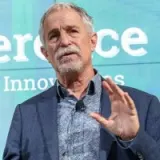
Joel Makower writes and speaks about sustainability, including the environmental impacts of AI and data centers. He also moderates discussions and events on sustainable infrastructure and sustainability in the music industry.
Useful for moderating B2B discussions and framing sustainability questions on AI, data centers, and infrastructure.
Best for
Climate tech or data center infrastructure brands needing a credible webinar or advisory collaborator.
Not for
Consumer sustainable apparel or merch brands seeking paid endorsement and direct-response product sales.
Key takeaways
AI backlash is a social-license problem, not just an engineering problem.
$64 billion in US data center projects blocked or delayed since mid-2024.
188 local opposition groups across 40 states and 12 states with moratorium bills.
Check first: Confirm audience composition for comparable AI and data center sessions before committing.
Main ideas
Tech is both a decarbonization enabler and a growing source of emissions · The AI backlash is a social-license problem, not just an engineering problem · What a sustainable data center would require: shared goals and missing voices
Joel Makower writes and moderates discussions about sustainability, with recent work focused on the environmental and community consequences of AI and data centers.
Their posts connect large systems questions—rising compute demand, emissions, energy and water use, and public opposition—to practical questions about transparency, procurement, clean power, and community involvement.
They also cover sustainability in the music business, from responsible merchandise to waste and the use of AI in music operations.
Ask for examples of earlier signature books, shows, or businesses if those are relevant to your decision.
Makower’s distinctive strength is turning broad sustainability claims into questions people can act on and debate.
In their data-center coverage, concerns such as water use, noise, and land impacts are paired with concrete proposals, including disclosure standards, buyer procurement requirements, community benefit agreements, and clean power.
They also make room for tensions: technology may help other sectors cut impacts while AI-driven infrastructure adds to the tech sector’s own footprint; a forum can find common goals while still lacking frontline communities and local authorities.
In music-industry sessions, they narrow the discussion to operating decisions—merchandise costs and timelines, supplier choices, reuse, and waste—and bring practitioners and suppliers into the conversation.
Follow their work for this mix of systems-level framing and specific questions about implementation, tradeoffs, and accountability.
Makower's recurring argument is that the tech sector is caught between two roles: it builds tools that can decarbonize other industries, and it runs a fast-growing physical footprint of its own.
Read more
In these posts, AI and data centers are where those roles collide.
They treat the community backlash as a warning that technical fixes alone will not settle the issue.
The missing pieces are disclosure, procurement pressure, community benefit agreements, and transparency.
They also argue that measurement is improving faster than actual emissions reductions, and relay a guest's case that applied AI in industrial systems, not chatbots, is where large sustainability gains are likely.
Much of their visible output is hosting and moderating sessions that work through practical questions with named practitioners.
Tech is both a decarbonization enabler and a growing source of emissions
Makower writes that tech is unusual because it enables every other systems transition, including climate, energy, nature, and supply chains, while also having a rapidly growing footprint.
Read more
AI is the collision point.
They point out that big tech companies' emissions are rising even after public net-zero commitments because skyrocketing compute demand is outpacing efficiency and clean-energy gains.
The backlash is unexpected, they argue, because people were not afraid of PCs, smartphones, or the early internet the way they are of data centers and AI.
In the U.S., they see this becoming a bipartisan political issue heading into the 2026 midterms because data centers intrude on both red and blue communities.
In a podcast announcement with Dr.
Sally Uren of Forum for the Future and Dr.
Wayne Visser, Makower says we can now measure emissions and planetary impact far better than we can reduce them, so measurement and accountability infrastructure is racing ahead of real-world change.
They frame the fix as hyperscalers engaging communities and increasing transparency, with regulation and social pressure making practices like "bring your own clean power" and waterless cooling the norm rather than the exception.
The AI backlash is a social-license problem, not just an engineering problem
Makower argues that data centers have become the physical manifestation of what people distrust about AI: energy hogs, water guzzlers, noise machines, and job displacers.
Read more
The numbers they cite show the scale of local opposition, and they say energy gets the headlines while water, land use, noise, and e-waste are less-discussed sleeping giants.
The encouraging part, in their view, is that solutions exist across the impact areas.
What is missing is disclosure standards, procurement requirements, and the will to do things differently.
They add that most enterprise AI buyers have far more leverage over hyperscalers than they are exercising.
Makower opens with a Gallup finding that more Americans say they would rather live near a nuclear power plant than a data center. They cite figures for the pushback: since mid-2024, community opposition has blocked or delayed $64 billion in U.S. data center projects; at least 188 local opposition groups are active across 40 states; and twelve states filed moratorium bills in a single year.
What a sustainable data center would require: shared goals and missing voices
Makower co-hosted a closed-door forum for 65 people across hyperscalers, utilities, developers, financiers, certification bodies, investors, and community-engagement specialists.
Read more
The group agreed on high-bar goals: community agency and buy-in early and often, with community benefit agreements; clean energy and water-positive operations; common standards and transparency; and self-funded initiatives.
The group said changes were needed to modernize the grid, include sustainability in procurement conversations, prove and articulate the benefits of AI, and rebuild trust.
Makower notes that front-line communities, regulators, and local authorities were missing from the room, and says to ask whether they will be included next time.
At Trellis Impact 26, Makower and Hana Kajimura convened the AI x Sustainable Infrastructure Forum. They frame the task as bending a trillion-dollar infrastructure investment wave in the right direction quickly, while the window is still open.
Makower notes that the event was planned months earlier and proved prescient as community pushback accelerated in the U.S. and beyond in the intervening months.
Measurement is racing ahead of reduction, and applied AI is where the leverage is
Makower argues that we can now measure emissions and planetary impact far better than we can reduce them, and that accountability infrastructure is ahead of real-world change.
Read more
They also relay a guest's argument that the most valuable sustainability contributions will not come from consultants or conservation nonprofits using chatbots, which mainly helps organizational efficiency, but from applied AI embedded in industrial systems. That is where the large gains are likely to come from, according to the guest.
In the podcast recap, Makower quotes Anna Lerner Nesbitt, CEO of Climate Collective, saying the biggest improvements will come from applied AI optimizing logistics, improving smart grids, finding new protein sources, and accelerating carbon removal investments. They present this as a more articulate version of their argument about the value of AI to sustainability.
Practical operational questions, answered in public sessions
Much of Makower's visible output in this material is as host, moderator, and co-convener rather than as a bylined author.
Read more
The sessions center on practical questions and named practitioners, not vendor pitches. They moderate and host sessions for the Music Sustainability Alliance and related programmes, covering responsible merch, waste across the music business, and how the music industry should use AI for recordings, concerts, and festivals rather than for creating music itself.
For a webinar on responsible merch, Makower framed the questions as what responsibly produced merch means in practice, what the real timelines, costs, and tradeoffs are, and what merch teams should consider when selecting suppliers.
The session introduced the Responsible Merch Guide co-authored by REVERB, The CSO Shop, and Green Music Australia, and paired guide authors Luke Logemann, Micki Weiner, and Madeline Weir with suppliers Ecofashion Corp., TS Designs, Everybody.World, and Recover Brands.
A Climate Week NYC fishbowl session Makower hosted focused on waste in vinyl pressing, packaging and merch, catering, concessions, staging, freight, and disposable cups, with experts from Greener by Default, REVERB, Green Disco, and r.World.
Answers a first question for anyone weighing an AI-and-infrastructure campaign: how large and how local is the opposition?
Read more
Makower opens with a Gallup finding — more Americans say they would rather live near a nuclear power plant than a data center — and uses it to explain why data centers have become the physical target of AI distrust: energy hogs, water guzzlers, noise machines, job displacers.
The post puts numbers on the pushback: since mid-2024, community opposition has blocked or delayed $64 billion in U.S. data center projects; at least 188 local opposition groups are active across 40 states; twelve states filed moratorium bills in a single year.
They note that energy gets the headlines while water, land use, noise, and e-waste are less-discussed "sleeping giants."
The conclusion is not that the problems are unsolvable, but that disclosure standards, procurement requirements, and the will to use the leverage most enterprise AI buyers already have over hyperscalers are needed.
For brands planning a campaign
Good framing for a campaign positioning a vendor around disclosure or procurement rather than pure technology: it gives a webinar a ready thesis (buyer leverage) and concrete statistics to discuss.
Shows how Makower convenes the sector and what participants agreed on — a shared agenda for AI infrastructure.
Read more
At Trellis Impact 26, Makower and Hana Kajimura co-hosted an invitation-only AI x Sustainable Infrastructure Forum of 65 people drawn from hyperscalers, utilities, developers, financiers, certification bodies, investors, and community-engagement specialists.
Makower is explicit about who was missing — front-line communities, regulators, and local authorities — and adds "Next time."
The group settled on non-negotiable goals: community agency and buy-in, early and often, with community benefit agreements; clean energy and water positive operations; common standards and transparency; self-funded initiatives.
Participants said change was needed to modernize the grid, include sustainability in procurement conversations, prove and articulate the benefits of AI, and rebuild trust.
An article summarizing further findings was published, and Makower frames the task as bending a trillion-dollar infrastructure investment wave quickly while the window is open.
For brands planning a campaign
A campaign built around a roundtable, advisory board, or closed-door convening can point to this as a model Makower already runs, and to the absence of communities and regulators as an angle a sponsor could credibly own.
Explains the tension at the center of Makower's recent work: the sector that could decarbonize other industries is pushing its own emissions up.
Read more
Announcing a premiere episode of Dancing with Systems alongside Dr.
Sally Uren of Forum for the Future and Dr.
Wayne Visser, Makower argues that tech is unusual among sectors because it is simultaneously an enabler of every other systems transition — climate, energy, nature, supply chains — and a sector with a fast-growing footprint of its own, with AI as "ground zero."
Three observations carry the post: emissions and planetary impact can now be measured far better than they can actually be reduced, so measurement and accountability infrastructure is racing ahead of real-world change; big tech companies' emissions are rising even after public net-zero commitments because compute demand is outpacing efficiency and clean-energy gains; and the backlash is real and largely unexpected, since people were not afraid of PCs, smartphones, or the early internet the way they are afraid of data centers and AI now.
They call this a genuinely bipartisan U.S. political issue heading into the 2026 midterms because data centers intrude on both red and blue communities, and frame the fix as hyperscalers engaging communities with more transparency, while regulation and social pressure make practices like "bring your own clean power" and waterless cooling the norm rather than the exception.
The post quotes Anna Lerner Nesbitt of Climate Collective arguing that the biggest sustainability gains will come from applied AI embedded in industrial systems — logistics, smart grids, new protein sources, carbon removal — not from consultants or conservation nonprofits using chatbots.
For brands planning a campaign
Useful if a campaign's audience is skeptical that AI can be green: the post separates efficiency-tool claims from industrial applications and gives a sponsor a defensible position on where AI helps and where it does not.
Shows Makower's range beyond data centers and the format they work in: moderating practitioner panels where operators, not vendors, do the talking.
Read more
Makower announces two Music Sustainability Alliance sessions.
In the first, they moderate a webinar on how the music industry should embrace AI, scoped deliberately to recordings, concerts, and festivals rather than AI-generated music, with Marawan Ibrahim of Nimblist, Alison Colwell of Okta, and Rachael Riggs of Visit Seattle, covering how AI can improve efficiencies and foster innovation and how to use it responsibly.
In the second, a "fishbowl"-style session at the Music Biz Climate Hub during Climate Week NYC, they host a discussion of waste across the music business — vinyl pressing, packaging and merch, catering, concessions, staging, freight, and disposable cups — starting with named experts from Greener by Default, REVERB, Green Disco, and r.World, then inviting others into the conversation.
For brands planning a campaign
Demonstrates a proven moderated-session format with a defined scope and named panelists. A sponsor planning a webinar can copy the structure, while the AI-in-music framing shows how Makower narrows a broad topic to keep a panel useful.
A clear example of Makower taking a visible sustainability problem and pressing it down to operational detail.
Read more
Starting from the proliferation of t-shirts, hoodies, and other concert merchandise, Makower frames the practical questions rather than the principle: what responsibly produced merch means in practice, what the real timelines, costs, and tradeoffs are, what merch teams should weigh when selecting suppliers, and which examples or lessons stand out.
The webinar they moderate introduces a Responsible Merch Guide co-authored by REVERB, The CSO Shop, and Green Music Australia, and pairs three guide authors — Luke Logemann of Green Music Australia, Micki Weiner of The CSO Shop, and Madeline Weir of REVERB — with four suppliers: Ecofashion Corp., TS Designs, Everybody.World, and Recover Brands.
The stated subject is how merch is being reimagined through reuse, remanufacturing, and supply-chain innovation, and what it takes to align commercial ambition with genuine responsibility.
For brands planning a campaign
A template for supplier-facing content: pair the people who wrote the guidance with the suppliers who have to execute it, and lead with cost and timeline questions rather than commitments — a structure a B2B vendor could reuse for its own buyer-education session.
AI and data centers as the collision point for tech sustainability2
Social license, community benefit and transparency as the operating standard2
Music industry sustainability: merch, waste and AI2
The measurement-accountability gap and where AI actually helps1
AI and data centers as the collision point for tech sustainability
Makower's through-line is that the tech sector holds two identities at once: an enabler of every other systems transition and a rapidly growing footprint of its own.
Read more
In the podcast recap, they write that big tech companies' emissions are rising rather than falling after public net-zero commitments because skyrocketing AI compute demand is outpacing efficiency and clean energy gains.
In the data center post, they cite a Gallup finding that more Americans say they would rather live near a nuclear power plant than a data center, alongside figures for community opposition: $64 billion in U.S. data center projects blocked or delayed since mid-2024, at least 188 local opposition groups active across 40 states, and twelve states with moratorium bills.
They argue the backlash is unusual because people were not afraid of PCs, smartphones or the early internet the way they are of data centers and AI, and that it is shaping up as a bipartisan political issue.
Leads with a single arresting statistic, then widens to the structural pattern and names the missing fixes—disclosure standards, procurement requirements and willingness to change—rather than the technology.
For brands planning a campaign
For a climate tech or data center infrastructure company, Makower reframes the sale from engineering performance to disclosure, procurement and community trust. A webinar or advisory collaboration built on this framing speaks to buyers' reputational risk, not just their efficiency targets.
Social license, community benefit and transparency as the operating standard
Recapping an invitation-only AI x Sustainable Infrastructure Forum they co-hosted with Hana Kajimura for 65 people across hyperscalers, utilities, developers, financiers, certification bodies, investors and community-engagement specialists, Makower reports the room's non-negotiable goals: community agency and buy-in early and often, with community benefit agreements; clean energy and water-positive operations; common standards and transparency; and self-funded initiatives.
Read more
The changes needed were modernizing the grid, putting sustainability into procurement conversations, proving and articulating the benefits of AI, and rebuilding trust. They also name who was absent from the room—front-line communities, regulators and local authorities—and say they will be included next time.
Convenes a closed-door cross-section of the value chain, asks the group to set high-bar goals and identify the changes required, then publishes the consensus and the roster of who was missing.
Makower says not everyone was represented at the forum, making the published consensus a partial view. Ask who was missing.
For brands planning a campaign
A brand can genuinely contribute to the standards, disclosure and community-engagement work Makower keeps returning to, and demonstrate that work in a credible room. This suits infrastructure, energy and enterprise AI buyers with procurement leverage over hyperscalers.
The measurement-accountability gap and where AI actually helps
A recurring argument in the podcast recap: we can now measure emissions and planetary impact far better than we can reduce them, and measurement and accountability infrastructure is racing ahead of real-world change.
Read more
Makower also relays a point from Climate Collective CEO Anna Lerner Nesbitt: the most valuable sustainability contributions will not come from consultants or conservation nonprofits using chatbots, which mainly help organizational efficiency, but from applied AI embedded in industrial systems—optimizing logistics, improving smart grids, finding new protein sources and accelerating carbon removal investment.
Sets measurement capability against actual reduction to show where the gap sits, then uses a named practitioner's quote to point to the leverage.
For brands planning a campaign
Applied AI vendors in logistics, grid optimization, protein or carbon removal have a direct hook: Makower quotes these as high-value uses of AI, and the accountability gap gives such a brand a problem statement for a session.
Music industry sustainability: merch, waste and AI
Makower moderates and hosts sessions for the Music Sustainability Alliance and related programmes.
Read more
A webinar on responsible merch, tied to the Responsible Merch Guide co-authored by REVERB, The CSO Shop and Green Music Australia, explored what responsibly produced merch means in practice: real timelines, costs and tradeoffs, how merch teams should choose suppliers, and standout examples.
Suppliers Ecofashion Corp., TS Designs, Everybody.World and Recover Brands joined.
A Climate Week NYC fishbowl session they host focuses on waste across vinyl pressing, packaging and merch, catering, concessions, staging, freight and disposable cups, with experts including Greener by Default, REVERB, Green Disco and r.World.
A third session they moderate covers how the music industry should use AI for recordings, concerts and festivals, not for creating music itself.
Question-driven session design: states the practical questions the audience faces—cost, timing and supplier selection—and puts named practitioners and suppliers on the panel to answer them in public.
For brands planning a campaign
Brands in live events, reuse systems, apparel and merch supply chains, or music-industry technology can reach a defined practitioner audience through a session Makower moderates, with sponsorship attached to a working guide or moderated panel rather than a paid endorsement.
Across this material, Makower's role is largely host, moderator and co-convener rather than bylined author.
Read more
The forum was invitation-only and closed-door, with a guest list spanning financiers, certification bodies and community-engagement specialists.
The music sessions are webinars and a fishbowl format in which a starting panel of experts invites others to add perspectives, share experiences and ask questions.
The podcast episode was a premiere episode recorded with two co-hosts.
In each case, the agenda is framed as a set of questions to work through in the room.
The posts mainly promote or recap events Makower is running or joining, making the agenda-setting format clear. Ask for examples of long-form writing or one-to-one interviews if those formats matter to the campaign.
For brands planning a campaign
If a brand wants agenda influence rather than a straight endorsement, the fit is co-hosting or sponsoring a session, helping set the questions and participant mix, and being present in the room. This is a curation-and-convening proposition more than a publishing one.
The posts present Joel Makower as a publisher and event host.
Read more
They write about AI and sustainable infrastructure on Trellis and co-hosted an invitation-only AI x Sustainable Infrastructure Forum at Trellis Impact 26.
They moderate webinars and host sessions for the Music Sustainability Alliance, including one on responsible concert merchandise and one on AI in the music industry.
The guides and panels they host involve outside organizations such as REVERB, The CSO Shop and Green Music Australia as collaborators.
Ask whether the publishing and hosting arrangements are paid and whether any sponsorship, affiliate, investment or ownership relationships exist.
Trellis Group
Disclosed partnership
Makower publishes articles on AI and sustainable infrastructure on Trellis and co-hosted a closed-door AI x Sustainable Infrastructure Forum at Trellis Impact 26 in San Francisco.
Read more
In one post, they write that “we just published an article” summarizing the forum’s findings and link to it on Trellis; a later post directs readers to a Trellis article and describes convening a follow-up group at the same event. Ask whether the relationship is staff employment, a contributor arrangement or an event partnership.
Makower moderates and hosts sessions for the Music Sustainability Alliance.
Read more
They moderated a June 16 webinar on responsible concert merchandise, sponsored by the alliance and introducing its Responsible Merch Guide, and a September 10 webinar on how the music industry should approach AI.
They also hosted a Music Biz Climate Hub fishbowl session at Climate Week NYC covering waste in the music industry.
REVERB is named as a co-author of the Responsible Merch Guide discussed in the webinar Makower moderates and as a participant in the fishbowl session they host on waste in the music industry.
Read more
The posts present REVERB as a collaborator and panelist, not as a sponsor of Makower’s own work.
Green Music Australia is named as a co-author of the Responsible Merch Guide featured in the webinar Makower moderates, with Luke Logemann as its participant.
Read more
The organization appears as a guide collaborator and panelist, not as a sponsor of Makower’s own work.
Makower's LinkedIn output is worth following if you want to track where the AI build-out meets climate and community politics.
Read more
Start with the two data center posts: one opens from a Gallup finding that more Americans say they would rather live near a nuclear power plant than a data center, then lays out the scale of local opposition; the other recaps an invitation-only forum where hyperscalers, utilities, developers, financiers and community specialists agreed on goals such as community benefit agreements, clean energy and water-positive operations, common standards and transparency.
The podcast recap is the clearest statement of their argument: the tech sector enables other industries' transitions while its own emissions rise, and applied AI inside logistics, grids, protein and carbon removal matters more than chatbots.
The two music posts show another side of their work, with moderated sessions on responsible merch, waste across the business, and how the music industry should use AI.
Across it all, the method is the same: pose practical questions, put named practitioners on the panel, and publish what the room agreed and who was missing.
Several posts link to recordings and articles; follow those links for the full discussion.
AI and sustainabilityData centersSustainable infrastructureClimate techCommunity engagement and social licenseEmissions measurement and accountabilityMusic industry sustainabilityCorporate sustainability strategyConvening and facilitationWebinars and moderated panelsSustainability professionalsMusic industry professionals
Valentina Rappa, E.I.T.
Rappa works the same standard-setting question Makower raises when arguing that disclosure rules and procurement, not technology, are what's missing around data centers.
Read more
Rappa explains how today's Greenhouse Gas Protocol assigns a product's manufacturing emissions entirely to its first owner, so companies that reuse or refurbish get no reporting credit, and points to the Ellen MacArthur Foundation's push to amortise those emissions across a product's life. Both write about the accounting and policy mechanics that decide whether sustainable practice is rewarded, rather than advocacy in the abstract.
Rappa's material sits in the circular economy and durable goods, read through EU policy: the Circular Economy Act, Digital Product Passports under ESPR, and CSRD disclosure, with reuse measured as embodied carbon in the built environment.
Makower focuses on the tech and AI footprint, plus music-industry operations.
Follow Rappa for circularity and reporting rules; Makower for data centers, AI and convening.
Brown writes from inside sustainability events, as Makower does, and reaches a similar conclusion about measurement.
Read more
Announcing RouteZero's presence at the UN Global Compact Network UK summit, Brown lists decarbonising supply chains, financing the transition and AI for sustainability as the day's agenda; at the EAUC conference, Brown argues that sustainability is no longer about measuring emissions but about turning the data into decisions across estates, finance, procurement, staff, students and leadership. That echoes Makower's point that the gap is disclosure and procurement rather than technology.
Brown's subject is net-zero travel and campus operations in universities and colleges, seen through RouteZero's travel-data product and Scope 3 reporting.
Makower focuses on the tech and AI side of the same problem and works as a host and convenor rather than a vendor.
Follow Brown for travel emissions and higher-education operations; Makower for AI infrastructure and industry convening.
Kiner matches Makower's method rather than their subject.
Read more
Both post short, question-driven pieces that promote a practical resource or session, lead with the answer, and name details readers can use: Kiner asks every candidate what they love doing most and would delegate, and lists the benchmarking, survey and pay-range steps that belong in a compensation review before Q1. Makower builds sessions around the questions merch teams or data center buyers actually face.
Kiner's subject is hiring, compensation and people operations for startups, nonprofits and small businesses, with no climate or technology angle.
The overlap with Makower is in format and in an audience of people running organisations, not in topic.
Follow Makower for sustainability and AI; Kiner does not cover those interests.
For a B2B climate tech company considering a webinar or advisory collaboration with Makower on AI and sustainable infrastructure, their posts support a focused pilot rather than a large commitment until audience composition is documented.
Read more
Their LinkedIn posts consistently address buyer concerns: data center energy, water and community opposition; AI as an industrial optimization tool; procurement and disclosure standards; and sustainability in music and events.
Examples include a closed-door AI x Sustainable Infrastructure Forum at Trellis Impact 26 and Music Sustainability Alliance sessions on AI and responsible merch.
The only stated audience measure is a LinkedIn follower count, which doesn’t show job function, seniority, employer type, industry or geography.
Before committing, ask for audience composition for comparable sessions—for example, registration or attendance by job function, seniority, industry and region for the AI and data center infrastructure forum and related climate tech webinars—plus recent post-level engagement on AI and data center topics.
Across five posts published between May and September 2026, Makower works with organisations in four ways: moderating a panel webinar, hosting a live "fishbowl" session, co-hosting an invitation-only forum, and appearing as a podcast guest.
Read more
All are event-based, centred on convening, moderating, or joining other speakers rather than publishing sponsored content.
The posts provide no sponsorship policy, rate card, audience specification, or official inquiry route.
Buyers assessing a paid engagement should ask for those details.
Moderated panel webinars
Buyer requirement
Makower leads the discussion; the organisation supplies the topic and named speakers.
The two documented examples, presented by the Music Sustainability Alliance, covered AI in the music industry and responsible concert merchandise.
Both used a public registration link.
Buyers should plan to bring a panel and registration route, and coordinate with the body hosting the series.
Live "fishbowl" sessions
Buyer requirement
Makower hosts, opening with a small expert group before inviting the wider room into the discussion.
The documented session ran as part of Climate Week NYC, with named starting panellists and a public registration page.
Buyers need a confirmed event slot, an initial set of speakers, and an event platform or partner.
Invitation-only forums
Buyer requirement
Makower co-hosted a closed-door forum with Hana Kajimura at Trellis Impact 26 for roughly 65 guests drawn from hyperscalers, utilities, developers, financiers, certification bodies, investors, and community-engagement specialists.
The format required a curated guest list, a co-host, and a way to publish findings; the forum produced a public article.
Front-line communities, regulators, and local authorities were not represented.
Buyers should ask how those groups could be included.
Podcast guest appearances
Buyer requirement
Makower joined an existing show as a guest rather than producing the episode.
The documented example was the premiere episode of Dancing with Systems, alongside two other guests, covering technology's role in systems change.
The buyer or organiser supplies the show and topic; this format relies on an established podcast rather than Makower's own channel.
A B2B climate tech or data centre infrastructure company wants a credible sustainability voice to anchor a webinar or short advisory collaboration on AI and sustainable infrastructure, aimed at enterprise AI buyers, utilities, developers and investors.
Makower is a strong fit because their posts address the exact problem this buyer needs to discuss.
They co-hosted an invitation-only AI x Sustainable Infrastructure Forum of 65 people drawn from hyperscalers, utilities, developers, financiers, certification bodies, investors and community-engagement specialists.
The group agreed on goals including community agency and buy-in early and often, community benefit agreements, clean energy and water-positive operations, common standards and transparency, and self-funded initiatives.
Makower also names the changes needed: modernise the grid, include sustainability in procurement conversations, prove and articulate the benefits of AI, and rebuild trust.
That gives a sponsor a ready agenda rather than a generic sustainability talk.
They bring tested moderator formats: the closed-door forum, Music Sustainability Alliance webinars, and a live fishbowl session.
Their writing also supplies usable framing, including the Gallup finding that more Americans say they would rather live near a nuclear plant than a data centre, the $64 billion in US data centre projects blocked or delayed since mid-2024, 188 local opposition groups across 40 states, and 12 states with moratorium bills.
The key gap for a buyer is audience composition: beyond a LinkedIn follower count, it is not documented.
Ask for registration or attendance data for comparable sessions by job function, seniority, industry and region, and confirm commercial terms before booking.
Best commission: Makower as moderator or co-convener on a procurement, disclosure and community-trust session, not as a paid product spokesperson.
When to choose a specialist
Poor fit.
Read more
A consumer sustainable apparel or merch brand wants a paid creator endorsement and direct-response campaign to sell a new product line to consumers.
Makower's posts do not support that use.
Their merch work is a practitioner webinar tied to the Responsible Merch Guide co-authored by REVERB, The CSO Shop and Green Music Australia.
The session pairs guide authors with suppliers such as Ecofashion Corp., TS Designs, Everybody.World and Recover Brands, and asks what responsibly produced merch means in practice, what the real timelines, costs and trade-offs are, how merch teams should choose suppliers, and what examples stand out.
That shows Makower can moderate a supplier and industry conversation.
It does not show that they reach consumer shoppers, review products for personal use, or drive direct sales through endorsements.
The documented formats are event-based and centre on convening, moderating or joining other speakers rather than publishing sponsored posts.
A buyer whose goal is consumer product endorsement should look elsewhere.
If the same brand reframed the ask as a buyer-education roundtable or supplier-facing session for merch and live-event teams, the fit could become partial: the music-industry sessions show Makower hosting exactly that kind of operational discussion.
A worked campaign example
Worked campaign angle: social licence is the new infrastructure requirement.
For a B2B climate tech or data centre infrastructure company's campaign aimed at enterprise AI buyers, utilities, developers and investors, build a 60 to 75 minute moderated webinar or closed-door roundtable with Makower as host and agenda-setter, not as a keynote speaker or product pitch.
Working title: From $64 billion blocked to procurement leverage: what a sustainable data centre requires.
Open with these facts: more Americans say they would rather live near a nuclear plant than a data centre; $64 billion in US data centre projects blocked or delayed since mid-2024; 188 local opposition groups across 40 states; 12 states with moratorium bills.
Use Makower's framing that energy gets the headlines while water, land use, noise and e-waste are quieter but material.
Segment 1: disclosure standards, covering what hyperscalers and enterprise buyers should publish.
Segment 2: procurement, covering how enterprise AI buyers can put sustainability, water and community terms into contracts.
Segment 3: community benefit agreements, covering what early and ongoing buy-in looks like and why front-line communities, regulators and local authorities should be in the room this time.
Segment 4: applied AI, separating uses that help, such as logistics, smart grids, protein and carbon removal, from uses that add footprint.
Speaker mix: one enterprise AI buyer, one hyperscaler or data centre developer, one utility, one community-engagement specialist, and one certification or standards body.
Makower moderates and writes the framing questions.
Deliverable: a one-page procurement and disclosure checklist the audience can take away, with the sponsor supplying the template and follow-up briefing, not the editorial verdict.
Measurement: registration and attendance by job function, seniority, industry and region; a post-session survey; checklist downloads; and follow-up requests.
Before booking, confirm commercial terms, sponsor policy and inquiry route with Makower and any host organisation.
Do not claim audience composition, sales impact or endorsement until confirmed.
Choose Rappa when the session is about measurement and disclosure rather than energy.
Read more
Rappa's posts explain the mechanics of circularity: the GHG Protocol does not fully account for reuse, refurbishment or remanufacturing, and manufacturing emissions are usually assigned entirely to a product's first owner, even when it is reused and resold several times.
Rappa points to the Ellen MacArthur Foundation's proposal to amortise initial manufacturing emissions over an asset's expected life, so companies that keep products in circulation can report the benefit.
Rappa also maps the European rules that will force the issue: the Circular Economy Act, the Ecodesign for Sustainable Products Regulation and its Digital Product Passports, and the Corporate Sustainability Reporting Directive, which covers around 11,000 large companies and requires circular-economy performance to be disclosed.
Rappa is the closer match if the sponsor's buyers are sustainability, procurement or finance teams in the built environment seeking to justify a reuse programme, or if the webinar targets EU-facing compliance.
Rappa's posts do not address AI, data-centre energy or water use, community opposition, or the leverage enterprise buyers hold over hyperscalers—the topics the sponsor's audience is being invited to discuss.
Neither post shows Rappa hosting a forum, moderating a panel or running a closed-door session, so the sponsor would need to design the format from scratch.
Both posts date from late January and early February 2025.
Ask for audience figures, commercial terms and confirmation that Rappa takes on paid engagements.
Choose Brown when the audience is universities, colleges or public-sector estates, or when the campaign focuses on business travel.
Read more
Written in RouteZero's voice, Brown's posts describe the challenge in post-16 education: travel is usually the largest part of a university's footprint and is fragmented across bookings, expenses, departments and policies.
The work is to turn that scattered data into decisions that hold across estates, finance, procurement, staff, students and leadership.
Brown names the questions buyers need to answer, including where travel emissions and cost opportunities actually sit and which reductions people will adopt without slowing academic work.
Brown also appears at events where those buyers gather, including the UN Global Compact Network UK annual summit and the EAUC conference.
For a sponsor selling travel, campus or reporting tools, Brown speaks to buyers who already have a budget and a mandate for that spend.
Brown's posts do not cover AI, compute, data-centre siting or community consent, so Brown cannot carry the technical core of a campaign on those topics.
Both posts are event notices about where the RouteZero team will be and what its data offers.
A sponsor would inherit a promotional register, not the independent analysis a thought-leadership session needs.
The posts date from October 2025 and June 2026, and show where Brown turns up, not what Brown has argued publicly.
Choose Kiner when the question shifts from infrastructure to the people who have to build and run it.
Read more
Kiner's posts draw on recruiting roles at Kaiser Permanente, Microsoft and Amazon, and on the interview question Kiner now asks every time: what do you love doing most, and what would you delegate?
Reverb's compensation work also covers gathering market data, benchmarking salary surveys and building transparent pay ranges in the planning window before a hiring year.
Kiner is the better moderator for that part of the conversation if the sponsor's webinar targets HR, operations or talent leaders, or if the panel needs to address who will staff a data-centre, grid or climate-tech build-out and how they will be paid.
Kiner's posts do not touch sustainability, energy, water, AI or community trust, so Kiner cannot replace Makower on a campaign about those topics.
The realistic use is as a second voice adding a workforce layer to a session Makower anchors.
The posts are promotional: one promotes The Reverb Way book and another offers Reverb's compensation services.
There is no independent analysis of hiring practice to quote.
Joel Makower's five complete LinkedIn posts here include a podcast announcement on AI and the energy transition, a recap of a closed-door AI and sustainable infrastructure forum, a post on data-center opposition figures, and two announcements for music-industry sustainability sessions on AI, merchandise, and waste.
The posts reference events in June and September and the 2026 midterms; they do not show publication dates.
The linked podcast, webinar recordings, and Trellis articles are not included here, so their full contents cannot be assessed.
The posts do not identify signature books, shows, or businesses, leaving a gap for readers searching Joel Makower's name.