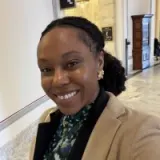
Ashley Daisley facilitates strategic workshops and off-sites that help teams use consumer insights to make clearer brand and product decisions. Their posts describe the CAMPFIRE framework and exercises such as sensing rounds, which surface differing views and help teams build a shared direction.
2.3K followersBrand strategyBased on 10 posts · latest Oct 2026
Ashley Daisley facilitates strategic workshops and off-sites focused on consumer insight, brand direction, and product decisions.
The posts describe work at P&G and Amazon and introduce CAMPFIRE, a framework for helping teams test assumptions and align around what they are building.
Examples range from a workshop where local market knowledge changed a product choice to a store visit that helped a team rethink how a brand could tell its story.
Follow this work for practical accounts of how teams can learn from customers, field experience, and knowledge already in the room.
Daisley makes strategy tangible by showing how an exercise changes a team’s thinking or decisions.
In a P&G workshop about dish detergent in Latin America, cross-functional teams independently chose green for a lemon-scented product after an R&D manager explained why yellow would look wrong in the market.
In another example, a retail safari helped Tide leaders move beyond asking what direct-to-consumer brands did differently and consider how Tide products could build a more direct relationship with consumers.
In the Echo Check post, competing internal descriptions of Amazon Fresh—from futuristic grocer to discount grocer—show why a team should check whether its members share a vision before telling a consistent brand story.
Across these examples, Daisley connects research and facilitation to observable choices, showing how useful insight can come from field experience or from people whose knowledge a team might otherwise overlook.
Ashley Daisley argues that brand and product decisions go wrong when teams fail to make assumptions visible.
Read more
The posts show a consistent priority: bring people across functions together, put them in front of real customer experiences, and create a setting where local or frontline knowledge can change the answer before strategy is locked. CAMPFIRE is the organizing framework; the posts illustrate its modules through P&G and Amazon Fresh stories.
Ask whether the organization tells one story
Daisley argues that a brand problem can start inside the company, with disagreement about what the business is building.
Read more
When people give different answers to the same question, customers may struggle to understand or relate to the brand.
Echo Check is a simple diagnostic: ask people across the organization the same question, then compare their answers.
It is CAMPFIRE’s final module because earlier choices can drift without a shared vision.
At Amazon Fresh, Daisley heard three answers to what the business was building: a frictionless grocer of the future, the best discount grocer, or an extension of Amazon heritage and workplace warmth.
They describe pushing a smart cart in a Fresh store and not being able to tell what kind of grocery store it was.
The post notes that Amazon eventually closed its Fresh and Go brick-and-mortar stores.
The CAMPFIRE posts span P&G examples from 2015 and 2018 and a later Amazon Fresh reflection. The shared-vision argument stays consistent, with Echo Check as the closing module.
Make room for knowledge that sits outside the model
Daisley’s Inner Flame module asks whether everyone in the room can share what they personally know about the problem.
Read more
A decision can be mathematically sound and still miss local context. Facilitation should do more than collect opinions after the analysis; it should let a specialist’s knowledge change the framing before teams decide.
In a 2015 P&G Professional workshop for Salvo dish detergent in Latin America, teams used a Discrete Choice Model simulation of the Mexican market.
Every team chose green for lemon scent after Arturo Pimentel, a Venezuelan R&D manager, flagged that a yellow lemon dish liquid would look wrong in Latin America.
Daisley credits sales leader Heather Jarrett with creating a room where Pimentel could add manufacturing cost to correct a product decision and be taken seriously.
Daisley argues that in-person observation can reset a team’s question when internal competitive analysis keeps circling.
Read more
The goal is not to copy other brands, but to understand what a direct relationship with customers feels like and translate that feeling into a problem the team can act on.
In 2018, Daisley led a P&G retail safari for 35 brand leaders in San Francisco.
Teams visited Allbirds, Everlane, and Away to answer one question: what does it feel like to be in a relationship with a brand when no retailer is in the middle?
At Allbirds, raw merino wool, origin tags, and the finished shoe were in the same room.
During the debrief, the question shifted from what DTC was doing that P&G was not to how Tide One Wash Miracle could become a friend to a soccer dad dealing with stubborn odor, or Dreft to a new mom.
Daisley says the safari shaped how the team thought about Tide One Wash Miracle and credits Tasha Randle, then Design Brand Manager for Tide, with helping shape where they took OWM.
CAMPFIRE names eight decisions—Consumer Need, Adoption Curve, Market Fit, Positioning, Flame Test, Inner Flame, Reality Check, and Echo Check—and the posts show exercises and stories that make the next move visible to everyone in the room. The framework is a sequence; later alignment work matters because earlier choices can drift without it.
Across the posts, the modules take the form of specific activities: a choice-model workshop, a retail safari, and a sensing round. In the Amazon Fresh post, Daisley writes that Echo Check comes last for a reason: a team can work through every other module and still drift if no shared vision echoes across the room.
See how Daisley turns team alignment into a concrete product decision—and why a workshop can change an answer that default data missed.
Read more
Daisley describes leading insights on a 2015 P&G Professional launch for Salvo dish detergent in Latin America.
The workshop used a Discrete Choice Model simulation of the Mexican market, with cross-functional teams making independent choices about size, price, claim, scent, and color.
Every team chose green for lemon scent.
Before the workshop, Arturo Pimentel, a Venezuelan R&D manager, flagged that in Latin America a yellow lemon dish liquid would look like the color was wrong.
The post says the sales leader, Heather Jarrett, helped build a room where that market knowledge could add manufacturing cost and still be taken seriously.
The lesson is specific: teams can reach a better answer when the room makes space for knowledge outside the model.
For brands planning a campaign
For a brand-alignment workshop, this shows Daisley designing exercises where cross-functional participants make decisions themselves and local or frontline knowledge can override a default. A consultancy hiring a facilitator can ask for this kind of structured decision exercise rather than a presentation-led session.
See why Daisley treats a shared internal vision as the foundation for brand decisions, and how a simple sensing round can reveal whether that vision exists.
Read more
Daisley recalls pushing a smart cart through an Amazon Fresh store and not being able to tell what kind of grocery store it was.
Four years earlier, while on the Amazon Fresh Shopper Insights team, they visited Fresh stores, Amazon Go stores, and a fulfillment center, and kept hearing different answers to the question “What are we building?”
One answer framed Fresh as the grocer of the future with frictionless checkout.
Another framed it as the best discount grocer, the Aldi of the digital age.
A third framed it through Amazon heritage and free fruit at HQ.
Daisley calls this Echo Check: ask ten people inside the organization what they are building and see whether the answers echo.
The post says Echo Check is the last module in the CAMPFIRE framework, and that a sensing round starts team engagements because without a shared vision an organization forgets how to tell its story.
For brands planning a campaign
A workshop brief about shared brand vision can use this as a diagnostic step: ask a facilitator to run a sensing round before positioning work, surfacing misalignment before the campaign angle is built on assumed consensus.
See how Daisley uses a real-world field exercise to move a brand team from abstract competitive analysis to a felt problem—and how that shift shaped a direct-to-consumer product.
Read more
In 2018, Daisley took 35 P&G brand leaders shopping in San Francisco.
About 10 came back with Allbirds.
As Design Insights Lead for Tide, they built a retail safari guidebook that sent brand teams through DTC stores including Allbirds, Everlane, and Away, with one question: what does it feel like to be in a relationship with a brand when there is no retailer in the middle?
At Allbirds, the group saw clear boxes holding raw merino wool, tags explaining where the fiber came from and how the sheep were raised, and the finished shoe in the same room.
In the debrief, the question shifted from what DTC was doing that P&G was not to how Tide One Wash Miracle could become a friend to a soccer dad dealing with stubborn odor, or how Dreft could become a friend to a new mom bringing a baby home.
Daisley says the safari directly shaped how the team thought about Tide One Wash Miracle, a product P&G launched direct to consumer.
For brands planning a campaign
For a brand-alignment or innovation workshop, this shows a facilitator using immersion and guided observation to reset the problem before teams build positioning. It’s a useful model when a brief calls for teams to move from internal debate to a consumer-facing story they can act on.
The post describes a full-day workshop in which teams made independent decisions, informed by a choice-model simulation and a specialist’s market knowledge.
For brands planning a campaign
Relevant to regional launches or product decisions where teams need to test assumptions about colour, claims, scent or format against local knowledge.
Use real-world observation to sharpen the question
Daisley argues that teams can learn from being in the market what internal analysis alone may miss.
Read more
For a P&G retail safari, brand teams visited Allbirds, Everlane and Away with a focused question: what does a brand relationship feel like when no retailer sits between the brand and customer?
At Allbirds, the display connected raw wool, its origins and the finished shoe.
In the debrief, the team moved beyond copying direct-to-consumer tactics to ask how Tide products could build a more direct relationship with customers.
The safari paired a specific question with in-person observation, then used the debrief to turn the team’s observations into questions about its own brands.
For brands planning a campaign
Useful when a team is stuck in abstract competitor analysis or needs to see how product, retail environment and brand story work together.
Check whether a brand’s story is shared inside the organization
In a post about Amazon Fresh, Daisley recalls hearing three different internal answers to what the business was building: a frictionless grocery experience, a discount grocer or a warmer extension of Amazon’s workplace culture.
Read more
Their “Echo Check” asks people across an organization the same question, then compares their answers.
If employees cannot explain the brand consistently, customers may struggle to understand what makes it distinct.
A sensing round gathers answers from multiple people before the team settles on a shared direction; Echo Check is the final module in the CAMPFIRE framework.
For brands planning a campaign
A fit for positioning or strategy work when teams need to know whether functions share an understanding of the intended brand idea.
Daisley presents CAMPFIRE as an eight-module sequence: Consumer Need, Adoption Curve, Market Fit, Positioning, Flame Test, Inner Flame, Reality Check and Echo Check.
Read more
Stories about local market knowledge, retail observation and internal alignment show how the framework works in practice.
In the Amazon Fresh example, the closing Echo Check matters because a shared vision can drift if earlier strategic choices do not add up to a clear direction.
The posts link individual modules to specific situations and decisions: a workshop, a retail safari and a sensing round.
For brands planning a campaign
Consider the framework when a brief needs structured facilitation across several linked brand questions; individual exercises can also address a focused decision.
The reviewed LinkedIn posts document two past employment relationships for Ashley Daisley: Procter & Gamble, including work on Tide and a Latin American dish detergent launch, and Amazon, on the Amazon Fresh Shopper Insights team.
Read more
The posts also promote workshop and off-site facilitation through an ashley@daisleyinsight.com address. Other brands named in the posts, such as Allbirds, Crocs, Everlane, Away, and Aldi, appear as examples or comparisons rather than commercial relationships.
Procter & Gamble
Employment
Daisley writes that they were Design Insights Lead for Tide at Procter & Gamble, led cross-brand validation for Gain, Downy, Bounce and other fabric-care brands, and in 2018 designed and led a retail-safari offsite for P&G brand leaders.
Read more
A separate post describes leading insights on Project Star Trek, a P&G Professional initiative to launch Salvo Professional dish detergent across Latin America, working with sales, finance, supply chain, and marketing teams.
Daisley writes that four years before the post they were on the Amazon Fresh Shopper Insights team.
Read more
The post describes visits to Amazon Fresh and Amazon Go stores and an online fulfillment distribution center, using Just Walk Out technology and the Dash Cart.
Ashley Daisley’s posts read as field notes on brand and product decisions.
Read more
Start with the retail safari, where 35 Procter & Gamble brand leaders walk through Allbirds, Everlane, and Away and return with a different question about how their own brands relate to customers.
Then read the Salvo dish detergent workshop, where a Venezuelan R&D manager’s point about lemon scent colour changed a decision the choice model alone had not surfaced.
The Amazon Fresh reflection ties the set together: Daisley recalls hearing three different internal answers to what that business was building, showing why the closing alignment step matters even after every earlier analysis is finished.
Across the three posts, recurring subjects include consumer insights, brand positioning, and facilitation techniques that make a team’s assumptions visible.
The recurring form is a short first-person story with a named collaborator, a specific decision, and an attached framework module.
Readers looking for the framework will find CAMPFIRE (Consumer Need, Adoption Curve, Market Fit, Positioning, Flame Test, Inner Flame, Reality Check, Echo Check) spelled out in the Amazon Fresh post and illustrated elsewhere.
Consumer insightsBrand strategyBrand alignmentMarket researchStrategic facilitationWorkshops and offsitesCase-study postsBrand and insights teamsFounders
Both write specific first-person accounts of consumer brands rather than general commentary, using named companies as the unit of analysis.
Read more
Fleischer’s post about Allbirds, Everlane, and Shein covers the same brands Daisley takes a team through on a retail safari. Both ask why a direct-to-consumer story stops working.
Fleischer writes from the operator’s seat, describing what it felt like to back Allbirds on Kickstarter and chase an Everlane meeting.
They ask readers to resist the shrug that follows a brand’s decline.
Daisley writes from the facilitator’s seat: the example shows how a room full of brand leaders can be moved to a different question.
Readers get an exercise, not a founder’s retrospective.
Both work at the intersection of consumer behaviour and commercial decisions for large retailers and CPG brands.
Read more
Brett’s grocery and digital-growth posts share Daisley’s assumption that the most interesting finding is often inside the numbers or the store, then translate it into what a brand should do next.
Brett builds his argument from public filings, NielsenIQ category data, and comparable-sales figures, and typically recommends how to allocate resources.
Daisley draws on workshops and store visits, recommending changes to how a team frames a problem.
Brett’s posts also include an explicit commercial pitch for an eCommerce accelerator; Daisley’s close with an invitation to a facilitated workshop.
Both explain how consumers’ real behaviour should reshape an FMCG brand’s positioning.
Read more
Tina’s post about the AI shelf and the Vaseline hacks post both start with a small, concrete consumer moment and argue that the brand has been slow to notice what shoppers already do.
Tina draws on search behaviour, social listening, and AI-mediated product discovery, focusing on how products are found or described at scale.
Daisley draws on rooms and store visits to ask whether a team has agreed on what it is building.
Tina looks outward at consumer language; Daisley looks inward at internal alignment.
For a consultancy’s brand-alignment workshop, Daisley’s audience looks niche and practitioner-led rather than broad.
Read more
Their LinkedIn profile lists 2,256 followers as of 11 Oct 2026, suggesting a small professional following.
Three full posts target people working in consumer insights, brand strategy, innovation and cross-functional workshops, but don’t show who follows or engages.
Before booking, ask for recent LinkedIn audience demographics and any survey or client information on employers, occupations or seniority.
Ashley Daisley's posts present the commercial offer as facilitated strategy work rather than sponsored content: each closes with an invitation to inquire about facilitated workshops and off-sites.
Read more
Daisley designs and leads the sessions, including the exercises, decision boards, and retail safari guidebooks participants work through; payment specifics appear only in general terms.
The posts do not mention a sponsor policy, media kit, rate card, disclosed sponsored activation, or dedicated partnership inquiry page.
Buyers considering sponsorship should ask for those details.
For facilitation, the posts describe workshop and multi-module engagement formats and list ashley@daisleyinsight.com as the contact.
Facilitated strategic workshop or off-site
Buyer requirement
The buyer supplies a multifunctional team and the internal knowledge to surface.
In an account of a Latin America detergent launch, Daisley describes a full-day session where sales, finance, supply chain, and marketing teams each worked through a channel board, making decisions on size, price, claim, scent, and color.
The outcome depended on an R&D manager being able to raise a market-specific objection.
A 2018 P&G off-site used a retail safari guidebook Daisley built to send brand teams into direct-to-consumer stores with one question to answer.
Daisley designs the facilitation and exercises; the buyer gets the right people in the room and gives them space to speak.
Eight-module CAMPFIRE program
Buyer requirement
Daisley's posts describe an eight-week sequence of eight modules (Consumer Need, Adoption Curve, Market Fit, Positioning, Flame Test, Inner Flame, Reality Check, Echo Check).
Team engagements begin with a sensing round: members are asked what the organization is building, and their answers are compared.
The buyer needs a shared-vision problem worth eight weeks, access to multiple teams or levels, and a willingness to act on divergent answers rather than simply collect them.
The Amazon Fresh example shows the intended output: catching that different groups described the same business in incompatible ways.
Good fit. Ashley Daisley's posts show a commercial offer built around facilitated strategy work, and the documented method maps directly to the brief.
Read more
Brief
A consumer insights consultancy needs a facilitator for a two-day brand-alignment workshop with a regional food brand.
The client's marketing, sales, R&D, supply chain and finance leads disagree on whether the brand is premium, value or heritage-led.
The consultancy wants a facilitator who can surface the disagreement and leave the team with a shared direction.
Reasons
Daisley describes designing and leading workshops, not just presenting. In the Salvo Professional workshop, cross-functional teams used a Discrete Choice Model simulation to make independent decisions about size, price, claim, scent and colour. A Venezuelan R&D manager's local knowledge changed the default answer, and the workshop made room for that correction. This kind of structured decision exercise suits a brand-alignment brief.
The CAMPFIRE framework gives the consultancy a named sequence: Consumer Need, Adoption Curve, Market Fit, Positioning, Flame Test, Inner Flame, Reality Check and Echo Check. The Echo Check example asks people across an organisation what they are building and compares their answers. For a team that cannot agree on the brand's direction, this is a practical diagnostic step, not a generic workshop theme.
Daisley starts team engagements with a sensing round. The Amazon Fresh example shows the intended output: spotting that different groups described the same business in incompatible ways. The consultancy can request a sensing round before positioning work, so the campaign angle rests on discovered alignment rather than assumed consensus.
The 2018 P&G retail safari shows Daisley using real-world observation to reset a team's question. Brand teams visited Allbirds, Everlane and Away and asked what a brand relationship feels like without a retailer in the middle. The debrief shifted from copying direct-to-consumer tactics to asking how Tide or Dreft could build a more direct relationship with customers. This is useful evidence for a workshop that needs participants to move from internal debate to an actionable, consumer-facing story.
The partnership section describes two formats: a facilitated workshop or an eight-module CAMPFIRE programme. Contact is available through ashley@daisleyinsight.com. Both formats suit a facilitator brief.
Watchouts
The three full LinkedIn posts about P&G and Amazon Fresh do not include an independent consultancy client case study. Ask for recent references, a sample workshop outline and details of how the method has been adapted outside a large corporate setting.
The audience section reports a small, practitioner-led LinkedIn following and no measured audience composition. This matters if the consultancy also wants reach or broad promotional distribution.
No rate card or contracting details appear in the posts. Confirm pricing directly.
When to choose a specialist
Poor fit based on the posts. Ashley Daisley's content does not support selecting them for a short-form sponsored-content campaign with reach and direct-response targets.
Read more
Brief
A mass-market snack brand wants a paid creator-content campaign: six short vertical videos over three months promoting a new flavour to grocery shoppers, with reach, engagement and a trackable purchase link as success measures.
Reasons
The posts show a commercial offer built around facilitated strategy work. Each closes with an invitation to contact Daisley about facilitated workshops and off-sites. None of the three full posts or the linked page includes a sponsor policy, media kit, rate card, disclosed sponsored activation or dedicated partnership inquiry page.
The posts do not show short vertical video, consumer-product promotion or direct-response content. The three full posts are long strategic stories about internal alignment and past P&G and Amazon Fresh work.
The audience section reports 2,256 LinkedIn followers observed 11 October 2026, with no measured audience demographics, engagement or performance data. The audience may be interested in consumer insights and facilitation, but its fit with broad grocery shoppers is unproven.
Before commissioning a sponsored-content campaign, ask for current sponsorship terms, past sponsored examples, audience composition and performance benchmarks. The posts do not provide these or document a sponsorship format, so confirm directly whether Daisley accepts sponsorships.
Missing evidence
Current media kit or sponsorship terms.
Recent sponsored-content examples with performance data.
LinkedIn audience demographics, employer, occupation and seniority.
Engagement and video performance benchmarks.
A worked campaign example
Angle
Propose a three-phase facilitation engagement rather than a keynote or presentation-led workshop.
Brief
The consultancy's client is a regional food brand. Marketing, sales, R&D and finance disagree on whether the brand is premium, value or heritage-led. The consultancy wants a facilitator to run a brand-alignment workshop and propose how the work would surface a shared vision.
Deliverables
A shared vision statement the client's leaders can use.
Decision criteria for premium, value or heritage positioning.
A prioritised list of claims and cues to test with consumers.
A short test plan for the next campaign or product decision.
Phase1
Sensing round. Before the main workshop, ask 10 to 15 stakeholders across marketing, sales, R&D, supply chain and finance: What are we building? Compare their answers and map where the brand story diverges. This mirrors the Echo Check example and Daisley's stated practice of starting team engagements with a sensing round.
Phase2
Working session. Use an Inner Flame-style exercise with cross-functional boards. Give each team the same positioning decision and evidence pack, then have them independently choose premium, value or heritage cues, pack claims, price tier and channel story. Set aside time for a local-market or frontline objection, as the Salvo workshop did with the Venezuelan R&D manager's point that lemon dish liquid should be green in Latin America. The buyer supplies the multifunctional team and the internal knowledge to surface.
Phase3
Reality Check and Echo Check. Take a small group to observe the category in real retail or direct-to-consumer settings, with one question: How would a customer experience the brand without an intermediary? Then repeat the sensing question with the same stakeholder group to see whether the revised story echoes. This turns the workshop output into a testable internal alignment check rather than a one-off meeting.
Title
Worked campaign angle: a sensing round that produces a shared brand vision
Why this fits
The need is to address internal misalignment. Daisley's posts show a method built to surface it through facilitated exercises, a sensing round and the CAMPFIRE modules. They show Daisley designing the exercises, decision boards and retail safari guidebooks, not just speaking to a room. The buyer needs to provide access to a multifunctional team; without it, the method loses its foundation.
Jess Fleischer is the stronger choice when the client’s real problem is whether to keep investing in a direct-to-consumer brand model after it has peaked, or when the workshop needs a founder who can speak from the operator side of a retail startup.
Read more
In these posts, they write as a founder who backed Allbirds on Kickstarter and later got a meeting with the Everlane founder, describing the DTC playbook’s ceiling, funding pressure and brand drift at Allbirds and Everlane. For a regional food brand whose leaders are stuck on premium, value or heritage identity, that experience could reset the conversation from “which story do we tell?” to “what model can we sustain?”
The tradeoff is that Jess Fleischer’s posts don’t show them designing or facilitating a cross-functional alignment workshop.
The two reflective LinkedIn posts cover DTC brands and trade policy, not a repeatable facilitation method, a sensing round, decision boards or a CAMPFIRE-style sequence.
A consultancy choosing Jess Fleischer would gain founder-operator perspective on DTC strategy and brand reinvention, but would need another facilitator to run the structured alignment work or ask about their direct workshop experience.
Don Brett is the stronger choice when the brand-alignment problem is really an ecommerce investment and channel-priority dispute.
Read more
The posts offer a concrete decision frame: separate retailer growth from digital growth, follow the growth when allocating people, media and capabilities, and treat each retailer individually.
Brett uses Q1 2026 data on 52 public U.S. retailers and examples such as Walmart at +2.6% comparable sales versus +24% digital, and Amazon grocery frequency and spend figures.
For a regional food brand whose sales and finance leaders disagree about where the next dollar should go, that analysis could make the workshop more commercially grounded than a general brand story exercise.
The tradeoff is that Don Brett’s posts are analytical commentary tied to Pattern, NielsenIQ, podcasts and newsletters, not documentation of workshop facilitation.
They don’t show a method for surfacing disagreement among marketing, sales, R&D, supply chain and finance, or for leaving a team with a shared brand direction.
A consultancy choosing Don Brett would get sharper ecommerce growth arguments, but would still need a facilitator to run the alignment session and turn the analysis into a shared positioning decision.
Tina T. is the stronger choice when the client wants the alignment workshop to start from what customers already say and do, especially in FMCG.
Read more
These posts show a clear consumer-insight approach: treat 3.5 million organic Vaseline posts as unpaid consumer R&D, test and validate the useful hacks, and turn them into a platform; and explain how AI shopping creates an earlier moment when shoppers describe a real need before they see a physical or digital shelf. For a regional food brand that needs to ground premium, value or heritage claims in existing shopper language, that approach would steer the work toward evidence of current behaviour rather than internal definitions.
The tradeoff is that Tina T.’s posts don’t show them facilitating a multifunctional brand-alignment workshop or using a named sequence such as CAMPFIRE.
The two marketing and insight posts include a personal AI-shelf example.
They cover social listening and AI-era category discovery, but not structured decision exercises or internal alignment diagnostics.
A consultancy choosing Tina T. would get a stronger consumer-behaviour starting point, but should ask about workshop delivery and may still need a separate facilitator for the room.
Ashley Daisley's page draws on three full LinkedIn posts that describe a 2015 Procter & Gamble Professional workshop on a Latin American dish detergent launch, a 2018 P&G retail safari for brand leaders in San Francisco, and an Amazon Fresh reflection on internal disagreement about what that business was building.
The posts do not say when they were published; the events inside them are dated 2015 and 2018, with the Amazon Fresh role described as four years before writing.
Similar-creator comparisons also refer to posts by three adjacent creators.
Daisley's posts here do not cover the full career, other channels, post frequency, audience composition, sponsorship terms, rates, or client references, and the examples should be read as a small sample rather than a representative history.
The title and description draw on sections on what Daisley is known for, recurring ideas, brand and business relationships, topics and similar creators, and campaign fit.
The CAMPFIRE module names come from Daisley's own posts; no signature book, show, or other body of work is mentioned in the posts here.