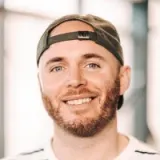
Stu Jolley is a founder of Stories & Ink, a tattoo aftercare and skincare brand. The founder writes about building the business, including its move into US retail, product development, and the choices involved in scaling a small consumer brand.
Stu Jolley is most useful for founder-led content on scaling a small consumer brand into US retail.
Best for
A consumer brands agency or beauty brand wanting founder-led content on US retail scaling.
Not for
A brand seeking paid short-form video sponsorships with verified US audience demographics and a rate card.
Key takeaways
Target launch involved 800 stores and cash demands for inventory, marketing and logistics.
Artist collaboration with Liam Alvy paired limited-edition prints with postcards in direct-to-consumer orders.
2026 plan names US entry, Amazon, wholesale, direct-to-consumer, new biotech products and brand refresh.
Check first: Confirm commercial terms, audience reach, and LinkedIn analytics before contacting them.
Main ideas
Big-box retail is a full commitment, not a test · Artist partnerships are a demand channel, not decoration · The next bottleneck is operations, not product vision
Stu Jolley is a founder of Stories & Ink, a tattoo aftercare and skincare brand.
Their posts offer practical accounts of building the business: launching in Target stores in the US, developing artist collaborations, and weighing growth choices across retail, e-commerce, products and brand investment.
Follow their work for a founder’s view of the costs and trade-offs behind scaling a small consumer brand, rather than a frictionless success story.
Jolley turns operating decisions into specific lessons.
In their account of Stories & Ink’s Target launch, they connect the 800-store rollout to the cash demands of inventory, marketing and logistics, the risk of losing retail attention to a competitor, and the value of learning which products sell before expanding further.
Other posts show the choices still in play: whether to enter new markets or deepen existing ones, develop products or protect cash, and balance measurable performance with building a brand people care about.
Their artist collaboration with Liam Alvy adds a cultural dimension, pairing limited-edition prints with postcards in direct-to-consumer orders.
The result is a useful mix of concrete operating detail and candid reflection, including a more sarcastic register when they write about larger brands borrowing from indie businesses.
Stu Jolley’s recurring themes are the unglamorous decisions behind scaling a small consumer brand: treating big-box retail as a full commitment, building demand through artist partnerships and social commerce before pursuing national retail, and hiring operational leaders once product-market fit is real.
Read more
Another theme is founder prioritisation—choosing what matters now—and the insistence that indie brands, not large copycats, do the original work.
Big-box retail is a full commitment, not a test
Stu Jolley argues that beauty founders weighing US retail should see it as a capital-intensive commitment, not an experiment.
Read more
That means serious investment in inventory, marketing, trade spend, logistics and promotions; locking in merchandising early; and building a complete 360-degree plan.
Unexpected competition can change the outcome.
Retail also reveals which products sell and how customers behave in stores.
The recommended sequence: start small, test in fewer stores, learn fast and scale intentionally.
Stu Jolley describes launching Stories & Ink in 800 Target stores across the US, the first tattoo care brand on Target’s shelves.
The post says The Rock launched a tattoo care brand at the same time, competing for in-store space, media spend and attention.
Jolley draws five lessons and says Walmart or Ulta is not the next move yet.
After the Target launch, Stu Jolley says the next move is patience: double down on artist partnerships and TikTok Shop to build US awareness and demand before another national retail push.
Artist partnerships are a demand channel, not decoration
Stu Jolley sees artist collaborations as a way to build awareness and authenticity, especially before broader retail expansion.
Read more
Creator-led work and social commerce can build US demand and profile while the brand avoids the cost and risk of national retail. The collaborations also reflect values such as living authentically and being yourself.
Stu Jolley announces a collaboration with global tattoo artist Liam Alvy, selling limited-edition prints and including a postcard with every direct-to-consumer order. The post links the collaboration to Cornwall, where the brand began, and presents Alvy’s move back there as a way of living authentically.
The Target lessons point to artist partnerships and social commerce as channels to build before Walmart or Ulta.
The next bottleneck is operations, not product vision
Stu Jolley describes Stories & Ink as founder-led on product vision, formulation and R&D, and says the company now needs senior operational leadership.
Read more
The goal is an integrated end-to-end operating system connecting demand, supply, fulfilment and customer support, supported by accurate forecasting and disciplined execution. Amazon UK and the US are the near-term priorities.
A public hiring post advertises a Head of Operations based in Cornwall or the wider South West.
The role would own supply chain, inventory, forecasting, fulfilment and customer support across all channels, with a strategic focus on Amazon UK and USA over the next 6 to 12 months.
The post casts the role as the founder’s operational counterpart, turning vision into volume.
As the business scales across the UK and US, its focus is shifting from founder-led product and R&D to a dedicated senior operations team.
The founder's real job is choosing what matters now
Stu Jolley argues that growing a brand is hard not because founders lack options, but because they face so many possible actions and must decide what matters now, rather than in three years.
Read more
The post lays out recurring trade-offs: opening a new market or deepening the home market; launching products or backing the current winner and protecting cash; prioritising direct-to-consumer or taking retail and wholesale; Instagram or TikTok, and how a small team can meet TikTok’s content demands; and brand investment or measurable performance. Jolley says brand building sits between art and science: a brand deck without numbers is just a deck, but obsessing over only measurable things can stop a team building something people care about.
Stu Jolley quotes Head of Growth Nickolai Stausland’s stand-up sign-off, “That's all today,” as a reminder to prioritise the now over the future. The guest line prompts the post; the argument about founder decisions is Jolley’s.
Stu Jolley uses annual posts to mark results and set targets.
Read more
They detail achievements and priorities rather than general ambition, while crediting the wider team, contractors, investors, production partners and the tattoo community. The goals centre on doing a few things well and showing up consistently.
A new-year post reports reaching number 2 on Amazon UK, becoming headline sponsor at the Big London Tattoo Show, expanding the team and focusing on doing a few things really well. For 2026, Stu Jolley aims to look after 5 million or more tattoos by accelerating Amazon, wholesale and DTC; enter the US market; launch biotech-driven products new to the tattoo industry; and roll out a full brand 2.0 refresh.
The 2026 plan focuses on a handful of channels and product innovations, not broad expansion.
Indie brands do the original work; large brands copy it
Stu Jolley argues that startups rely on scrappiness, imagination and risk because they lack large cash reserves, while larger companies can rework small brands’ ideas.
Read more
The post casts indie founders as the real innovators, working without a net, and says being copied at least shows the original is worth copying.
Stu Jolley says Harry's ordered from the Stories & Ink Shopify site and entered the tattoo category a year later, and that Tesco used the same Pantone blue on a tattoo daily moisturiser. The post presents these as Jolley’s claims and opinions.
The sarcastic, confrontational tone here contrasts with the more partnership-facing voice elsewhere—a tension worth considering when assessing collaborative content.
This post answers the first question a brand or agency asks about Stu Jolley: has this founder taken a beauty brand onto US retail shelves, and what did it cost?
Read more
It is the closest available account of the work a prospective partner is evaluating.
Stu Jolley describes launching Stories & Ink, a tattoo aftercare and skincare brand, in 800 Target stores in the US.
They say it was the first tattoo care line on Target shelves.
The post sets out five lessons: big-box retail needs serious capital because inventory, marketing, trade spend, logistics and promotions consume cash quickly; in-store merchandising and a full 360-degree plan need to be locked in early; a bigger competitor can seize the timing, as happened when another tattoo care brand launched at the same time and absorbed the in-store space and media attention; retail produced clear data on which products sold and how customers behaved in store; and starting with fewer stores is a cheaper way to learn.
They say the next moves are deliberately not Walmart or Ulta yet, but artist partnerships and TikTok Shop to build US awareness and demand first.
For brands planning a campaign
For a founder-led content partnership aimed at scaling beauty brands into US retail, this post offers proof of experience and a ready-made content spine: capital planning, in-store execution, competitive timing, SKU learning and channel sequencing before national retail. It also gives an agency a credible basis to challenge a client’s retail timeline.
A short post showing how the brand works with creators: limited-edition prints, a postcard in every direct order and a story about an artist moving back to Cornwall.
Read more
It shows that artist partnerships are an operating habit, not just a marketing claim.
Stu Jolley announces a collaboration with tattoo artist Liam Alvy, selling the artist’s limited-edition prints and adding a postcard to every direct-to-consumer order. The post links the partnership to Cornwall, where the brand began, and presents the artist’s decision to move back there as living authentically—a value they say the brand shares.
For brands planning a campaign
Artist collaboration is an established routine, not a one-off stunt, with a built-in product mechanic: limited prints plus an insert in every DTC parcel. An agency pitching a creator partnership can build on something the brand already does and should arrive with a measurement plan, not a case for why to try one.
This is the clearest statement of where the business stands and what it is pursuing next, written by the founder rather than a marketing function.
Read more
It tells newcomers which results the brand is proud of and which markets and product lines it is prioritising.
Stu Jolley reports reaching number two on Amazon UK, headline sponsorship of the Big London Tattoo Show and team expansion, while acknowledging that 2025 was difficult.
The stated 2026 goal is to look after more than five million tattoos by accelerating Amazon, wholesale and direct-to-consumer sales, entering the US market, developing biotech-driven products and completing a full brand refresh.
They credit the team, contractors, investors, production partners and the tattoo community.
For brands planning a campaign
The plan is specific enough to quote in a brief: Amazon, wholesale and DTC acceleration, a US push, new product technology and a brand refresh. A partnership proposal can support one of those priorities rather than sell general awareness.
A hiring post offers a direct view of how a small brand is structured and where it is investing.
Read more
It shows what the company looks like behind the products and names the channels it believes will drive growth.
Stu Jolley advertises a Head of Operations role, based in Cornwall or the wider South West, to run supply chain, inventory, forecasting, fulfilment and customer support across the UK and US.
The post describes Stories & Ink as a premium tattoo aftercare and skincare brand built at the intersection of skin science, self-expression and culture, with product-market fit across Amazon, Shopify direct sales and wholesale.
It names Amazon UK and the US as priorities for the next six to twelve months.
The role is the operational counterpart to the founder, turning vision into volume.
For brands planning a campaign
This shows the founder-led product and brand function being deliberately paired with senior operational leadership. A content partnership can work alongside an emerging operations layer, while the Amazon-first, six-to-twelve-month frame gives an agency a concrete window and performance language.
This post shows what Stu Jolley thinks about beyond publishing results: the trade-offs between new and existing markets, new products and cash protection, and brand building and performance marketing.
Read more
It is the clearest example of the voice and working philosophy behind the other posts.
After a stand-up sign-off by Head of Growth Nickolai Stausland, Stu Jolley lists the questions that occupy a founder: whether to open a new market or deepen the home one; launch new products or back the current bestseller to protect cash; push direct sales or accept retail and wholesale; meet TikTok’s content demands with a small team; and measure brand investment or rely on intuition. They argue that brand building sits between art and science: a brand deck without numbers and measurement without something people care about are both incomplete.
For brands planning a campaign
This is raw material for founder-led content: a set of tensions familiar to consumer brand audiences. An agency can build formats around one decision per episode, stating the trade-off rather than resolving it.
It shows how Stu Jolley communicates publicly, including sarcasm aimed at much larger companies—a factor when deciding whether a partnership will sound cooperative or combative.
Stu Jolley writes sarcastically about large brands borrowing ideas from small ones.
They claim a well-known men’s grooming company bought from Stories & Ink’s Shopify store and later entered tattoo care, while a major UK supermarket landed on the same colour used on a Stories & Ink moisturiser.
The post congratulates founders whose ideas have been reworked by competitors with larger budgets and closes with a call to keep building.
For brands planning a campaign
The voice is direct and willing to accuse large companies of copying. That suits content about indie brand building, but a brand partner should expect plain talk and agree in advance how far competitor commentary can go.
Taking a small beauty brand into US big-box retail
In a post about launching Stories & Ink in 800 Target stores, Stu Jolley lays out lessons for beauty founders weighing channel strategy.
Read more
Big-box retail, they write, is a full commitment requiring serious capital for inventory, marketing, trade spend, logistics and promotions.
In-store merchandising and a complete 360-degree plan need to be locked in early, while unexpected competition can change the outcome.
Jolley cites The Rock launching a tattoo care brand at the same time, taking in-store real estate, media spend and attention.
Retail also provided insight into which SKUs perform and how customers behave in-store.
Their advice: start small, test in fewer stores and scale intentionally.
First-person lessons, numbered and grounded in a specific launch.
The post calls the launch high-risk: Stories & Ink tested the range while working to deliver rate of sale.
For brands planning a campaign
A founder-led partnership could use the real costs and sequence of a US retail launch to give consumer brands an honest account of what scaling into Target involves. It’s a better fit for a brief about founder expertise than a straightforward brand-awareness placement.
Channel choices after retail: patience, artist partnerships and social commerce
Rather than move straight into Walmart or Ulta, Jolley says Stories & Ink will be patient and double down on other channels before national retail.
Read more
The plan is to build US awareness and demand through artist partnerships and social commerce on TikTok Shop.
In a separate post, they describe a collaboration with global artist Liam Alvy, selling limited-edition prints from Cornwall and including a postcard in every DTC order.
The collaboration centres on authenticity, moving back to Cornwall and being yourself.
An artist collaboration used to build demand before broader retail expansion.
For brands planning a campaign
This approach suits a partnership about creator-led community building, limited-edition DTC drops and TikTok Shop as a demand-generation channel—not just big-box retail. A brand could ask Jolley to explain why artist partnerships come before another retail push.
In a hiring post for a Head of Operations based in Cornwall or the Southwest, Stories & Ink says it needs an integrated, end-to-end operating system connecting demand, supply, fulfilment and customer support.
Read more
The business has product-market fit and early traction across Amazon, DTC on Shopify and wholesale retail, with Amazon described as the strongest near-term growth lever in both the UK and USA. The role would own supply chain, inventory, forecasting, fulfilment and customer support, with a clear strategic bias toward Amazon UK and USA over the next 6 to 12 months.
A public hiring brief that doubles as a candid diagnosis of the next scaling constraint.
The post seeks introductions and notes, lightly, that sauna and sea swims are mandatory.
For brands planning a campaign
Useful for content about the unglamorous work behind scaling a beauty brand. A founder-led partnership could cover forecasting, fulfilment, customer experience and channel prioritisation in practical terms.
Founder decision-making: choosing what matters now
Opening with closing words from Head of Growth Nickolai Stausland—'That's all today'—the post argues that growing a brand is tough because there are 20 possible actions and a founder must decide which matter now.
Read more
It lays out the tradeoffs: a new market or the home market; more product development or backing the current winner and protecting cash; DTC or retail and wholesale; Instagram or TikTok, and how a small team feeds TikTok's content machine daily; brand or performance, and whether intuition still has a seat at the table. Jolley says brand building sits uncomfortably between art and science: a brand deck without numbers is just a deck, but obsessing over only measurable things can stop a team from building something people care about.
An anecdote followed by open questions and unresolved tradeoffs.
For brands planning a campaign
A strong basis for founder-led content about prioritisation and judgment, rather than product promotion. It gives a brand a way to discuss the decisions behind scaling, not just the results.
A new-year post reports 2025 achievements: reaching number 2 on Amazon UK, becoming headline sponsor at the Big London Tattoo Show, expanding the team and focusing on doing a few things really well.
Read more
For 2026, it sets goals around consistency, obsession and showing up every day; looking after 5 million or more tattoos; accelerating Amazon, wholesale and DTC; entering the US market; launching biotech-driven products new to the tattoo industry; and rolling out a full brand 2.0 refresh. Jolley thanks the team, contractors, investors, production partners and the tattoo community.
Public goal-setting with named achievements and forward-looking targets.
For brands planning a campaign
A clear view of near-term commercial priorities: Amazon acceleration, US expansion, product innovation and a brand refresh. A partnership can align with one of those priorities rather than defaulting to a generic brand story.
A post contrasts startup scrappiness with a larger-company pattern it describes as “spot cool indie brand, copy, paste, profit.”
Read more
Stu Jolley says Harry's ordered from the Shopify site and entered the tattoo category a year later, while Tesco used the same Pantone blue on a tattoo daily moisturiser. The post casts indie founders as real innovators working without a net and says being copied shows you are worth copying.
Sarcasm and an open-letter style address to founders and makers.
Ask Jolley to substantiate the claims about Harry's and Tesco; the post presents them as their opinion.
For brands planning a campaign
An opinionated angle for a partnership about originality, product differentiation and how small beauty brands defend their ideas. The post names specific companies and takes a clear position, giving the topic a sharper edge.
Stu Jolley founded and leads Stories & Ink, a premium tattoo aftercare and skincare business.
Read more
Their posts document a US retail launch with Target, a limited-edition artist collaboration with Liam Alvy, and the brand's headline sponsorship of the Big London Tattoo Show.
Amazon, Shopify, and wholesale retail appear as sales channels rather than separate brand relationships.
The posts disclose no paid brand partnerships or affiliate arrangements and carry no publication dates.
Ask for confirmation of any paid or affiliate relationships and for dates on these examples.
Stories & Ink
Owned business
Jolley founded Stories & Ink, a tattoo aftercare and skincare brand built in Cornwall.
Read more
In a hiring post, they describe the business as founder-led on product vision, formulation, and research and development, and say they are hiring a Head of Operations to work alongside them.
Other posts describe decisions they made as owner: committing to 800 Target stores in the US, reaching number two on Amazon UK, and weighing new markets against the home market.
The brand sells through Amazon, its own Shopify store, and wholesale retail.
Stories & Ink launched across 800 Target stores in the US, the brand's first big-box retail listing and, according to Jolley, the first tattoo care brand to reach Target shelves.
Read more
They describe the launch as a full financial commitment and say the brand will wait before adding Walmart or Ulta.
A limited-edition print collaboration with global artist Liam Alvy, sold through Stories & Ink's direct-to-consumer store, with a postcard included in every DTC order.
Read more
Jolley frames the collaboration around Alvy's move back to Cornwall and the brand's own values.
Stu Jolley writes as the founder of Stories & Ink, a tattoo aftercare and skincare brand, about the decisions behind scaling a small consumer brand.
Read more
Start with the post on launching into 800 Target stores in the US: it sets out the costs of big-box retail, why the range was tested and pushed for rate of sale at the same time, and what the brand did next.
Two posts make the current priorities concrete: a 2025 review with 2026 goals built around Amazon, wholesale and direct-to-consumer growth, US entry, new biotech-led products and a brand refresh; and a collaboration with tattoo artist Liam Alvy, sold through limited-edition prints and direct orders.
A public hiring brief for a Head of Operations explains where they see the constraint now, while a piece on choosing what matters this week versus in three years shows the founder-judgment side of the writing.
For a sharper, more opinionated read, see the post about large brands reworking indie products; it names specific companies and takes a clear position.
Beauty brand scalingUS retail expansionAmazon marketplace strategyFounder-led brand buildingArtist and creator partnershipsOperations and supply chain scalingTattoo aftercare and skincareFirst-person founder lessonsAnnual reviews and goalsBeauty and CPG founders
Turton also works on how consumer brands sell through Amazon and other marketplaces, drawing on experience with pricing pressure, brand control and the limits of automated tools.
Read more
Turton advises many brands as an agency-side Amazon specialist, reacting to platform changes and AI tools. Jolley speaks from inside one brand as its founder, covering retail expansion, product and operations rather than marketplace tactics.
Marciniak also treats commerce infrastructure as a constraint on growth, pointing to platform choice, checkout, page structure and data flowing back to ad platforms—not the ad account itself.
Read more
Marciniak runs the agency handling migration, conversion and multi-store POS work, and reports client results. Jolley is the founder commissioning that work and weighing retail, wholesale and direct-to-consumer channels.
Son also studies how beauty brands scale internationally, tracking hero products, online-first-to-offline retail paths and long-term creator relationships rather than one-off campaigns.
Read more
Son surveys and ranks brands across K-beauty and prestige fragrance as a market commentator; Jolley reports firsthand on building one tattoo aftercare brand.
The posts show a subject-matter fit for a campaign aimed at founders scaling beauty brands, but not a measured audience of US retail or brand-side decision-makers.
Read more
The only audience figure mentioned is 7,506 LinkedIn followers on the profile linked to Stu Jolley’s posts, observed in October 2026.
The posts give no details on followers’ geography, age, gender, employer, job function or seniority.
The content is written for people making decisions at consumer brands.
The Target launch lessons, the closing stand-up note on choosing between new markets, NPD and channel bets, and the year-end update on Amazon, wholesale and DTC all address those choices.
The 800-store Target launch and stated 2026 US plans belong to Stories & Ink; they say nothing about the readers.
One post recruits an operations lead based in Cornwall or the wider Southwest, suggesting a narrow geographic readership if that post is representative.
For a campaign targeting people who make US retail and channel decisions, ask for LinkedIn post analytics, including impressions and follower geography, and any platform follower demographics.
If available, request audience survey results covering job function and seniority.
LinkedIn followers
7,506
Follower count on the LinkedIn profile that the reviewed posts link to · 2026-10-09
Dated posts reviewed
6
Posts on that profile published between 13 June 2025 and 6 October 2026, reviewed for what audience the content is written for · 2026-10-09
Stu Jolley’s public posts describe Stories & Ink, the tattoo aftercare and skincare brand they founded and run, rather than a published partnership or sponsorship program.
Read more
The posts don’t specify sponsorship formats, rates, deliverables, content approvals or exclusivity terms, or provide a route for brands to inquire about partnerships or sponsored content.
The one collaboration disclosed in detail is a limited-edition print release with tattoo artist Liam Alvy, sold through Stories & Ink’s direct-to-consumer store with a postcard included in every order.
It shows the brand works with artists on product-linked drops, but isn’t a general offer brands can book.
Buyers should ask Jolley directly about campaign terms.
Their substantive posts offer founder commentary on building the brand, including its move into US big-box retail, Amazon growth, wholesale and the trade-offs of scaling with a small team.
Brief: a consumer brands agency wants to assess Stu Jolley for a founder-led content partnership on scaling beauty brands into US retail.
Read more
Decision: strong fit on subject matter; confirm commercial terms and audience reach before committing.
The fit rests on first-hand experience that is rare in this category.
Jolley’s account of taking Stories & Ink into 800 Target stores is a specific, self-critical look at what a US big-box launch costs and requires: serious capital for inventory, marketing, trade spend, logistics and promotions; in-store merchandising; and a complete 360-degree plan locked in early.
They also describe the risk of a better-resourced competitor taking shelf space and media attention at the same moment.
Their post details what retail taught them about which products sold and how shoppers behaved in store, and recommends testing in fewer stores before scaling.
An agency client gets the perspective of the person who made the calls, not an agency summarising them.
The next moves are already named.
The 2026 plan sets out US entry, acceleration across Amazon, wholesale and direct-to-consumer, new biotech-driven products and a brand refresh.
The operations hiring post states Amazon UK and the US are the priority for the next six to twelve months.
A partnership can attach to one of those lines instead of selling generic awareness.
The brand also works with creators as an operating habit, not a one-off: the Liam Alvy limited-edition print release, sold through the brand’s own store with a postcard in every order, shows artist partnerships being used to build demand before another retail push.
Before committing, agree commercial terms directly: the posts publish no partnership format, rate card, deliverable list or inquiry route.
Audience information is also thin: the only available number is 7,506 followers on the LinkedIn profile linked from the posts, with no geography, seniority or job-function data.
Ask for audience breakdowns to verify reach into US retail decision-makers.
The posts are written LinkedIn content; ask whether video or consumer-facing product content is available before building either into the brief.
When to choose a specialist
Brief: a US consumer goods brand wants to book paid short-form video sponsorships from a creator with verified US audience demographics and a published rate card, with the goal of driving shopper conversion over the next quarter.
Read more
Decision: poor fit based on the posts available.
The posts publish no sponsorship offer, formats, rates, deliverables, content approvals, exclusivity terms or brand inquiry route.
Audience composition is unmeasured: the linked profile’s follower count is the only audience figure available, with no geography, age or role data.
There is no basis for claiming the following skews US or consists of shoppers rather than founders.
The content is founder commentary and brand news written for people running consumer brands, not product content aimed at consumers; the hiring post seeks a Cornwall-based operations lead, pointing to a UK brand-side readership.
The posts are written, with no examples of short-form video, sponsored placements or conversion performance.
A US consumer goods brand should not proceed on this evidence; it needs published rates, verified US consumer reach and measured conversion.
Ask prospective creators for their rate card, audience breakdowns and conversion results.
A worked campaign example
Worked angle for a campaign aimed at scaling a beauty brand into US retail: a four-part founder-led series.
Episode 1, the arithmetic of a big-box launch.
Jolley walks through the real cost lines behind an 800-store Target rollout and what they would budget differently, using their stated lessons on capital, inventory, trade spend and promotions as the spine.
Episode 2, the in-store plan that decides the outcome.
The 360-degree merchandising mix from the post becomes a checklist, including the scenario they experienced when a larger competitor launched a tattoo care brand at the same time and took the shelf space, media spend and attention.
Episode 3, choosing what matters now.
Built on the founder decision list, this working session tackles familiar trade-offs: new market or home market, new products or protecting cash behind the current bestseller, direct-to-consumer or retail and wholesale, and how a small team meets a platform’s content demands.
Episode 4, sequencing before the next push.
Using the Liam Alvy print collaboration as the example, this episode covers why artist partnerships and social commerce come before another national retail attempt.
Placement: four written pieces or conversations published over eight weeks, distributed through the agency’s channels and Jolley’s own LinkedIn account, with one long-form companion piece consolidating the retail-readiness material.
What the agency gets: a named founder’s actionable account of a US retail launch, plus grounds to push back on an unrealistic client timeline. What Jolley gets: positioning as an operator other founders can learn from, connected to the US and Amazon priorities already stated publicly.
Before pitching, confirm commercial terms, which are not published; agree on measurement, since there is no audience data to forecast against, and use a lead or download metric rather than an impression target; and set limits on competitor commentary, as the public voice names large companies and makes direct points. Ask whether video is available; the posts show only written content, so the pitch should not assume a video track record.
Choose Chris Turton when the need is specifically Amazon.
Read more
The two posts offer practitioner commentary on Amazon as a selling channel: how Amazon's price matching against external retailers squeezes margin and strains wholesale and retail relationships; why sellers and vendors use AI for quick listing fixes instead of cleaning up labour-heavy processes; and a critical read of two Amazon Accelerate announcements — the seller assistant built on Anthropic and the new multi-marketplace tool — arguing that both extend Amazon's control over brand pricing and data. For a consumer brand whose US retail plan runs alongside Amazon UK and US as the stated near-term growth lever, this is the channel detail a founder-led narrative leaves out.
Turton's posts analyse channels rather than document an operator's brand launch.
They offer no equivalent of the 800-store Target rollout or a product- or brand-building story; the perspective is an agency serving many brands, not a founder bearing the cost of a decision.
For the launch experience, Stu Jolley's material is closer; for the Amazon mechanics that make a launch work, Turton is.
Choose Andre Marciniak to understand the commerce system underneath a brand rather than its market entry.
Read more
The posts cover a Shopify Plus rebuild with Shopify POS rolled out across 13 physical locations in one project, where in-store purchases sync into Klaviyo and offline sales are attributed back to Meta ads.
A separate account describes a WordPress-to-Shopify Plus migration that produced stable Monday performance with no change to creative or budget, credited to native checkout, load speed, product page structure, cleaner data flowing back to ad platforms and less friction at each step.
For a consumer brand scaling from direct-to-consumer into retail, this is the layer that determines whether store and online sales can be measured at all.
The perspective is agency-side and platform-specific.
Neither post addresses consumer demand, brand positioning or category fit in beauty, or covers negotiating shelf space or running a national retail launch.
An agency client gets the infrastructure argument, not the retail go-to-market argument in Stu Jolley's Target account.
Choose David Son for beauty market intelligence rather than one founder's launch story.
Read more
The posts include a 2026 ranking of the fastest-rising K-Beauty brands, built from demand signals, retail rankings, social virality, Amazon, TikTok and Olive Young data, with shared patterns drawn out across the list: hero-product entry through Amazon and TikTok Shop, micro-influencers over celebrity marketing, validating demand online before moving into retail, long-term creator relationships, and the return of offline discovery.
The second post analyses Interparfums as the licensing platform behind Coach, Jimmy Choo, Montblanc and others.
An agency pitching US retail expansion can use this to show a client where beauty demand is moving and how a licensing model competes with owning a single brand.
The view is analytical and about other companies, not about operating a brand.
It offers no first-hand record of a US retail launch, cost or merchandising detail, or founder trade-offs.
Ask for a source with direct launch experience if that is what the client needs; this is context, not an account of execution.
This profile draws on six LinkedIn posts by Stu Jolley: retail lessons from launching into Target stores, a 2025 review with 2026 goals, a collaboration with artist Liam Alvy, a public hiring post for a Head of Operations, a founder decision list, and a post about larger brands borrowing from indie products.
Stu Jolley's posts do not include publication dates, so the timeline comes from the posts' own references to 2025 results and 2026 plans; the linked profile showed 7,506 followers on 9 October 2026.
No books, shows or other signature work are mentioned in these posts, and whether any exist remains unclear.
This profile does not cover comments, video transcripts or external profiles, and the brand relationships and campaign-fit judgments on this page are based on the same six posts.