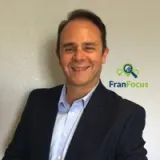
Patrick Conley works in franchise development and marketing, helping franchise brands attract and nurture prospective franchisees. Recent posts by Conley focus on how AI is changing franchise research and why brands still need personal, human follow-up.
Useful for franchise development and marketing thought leadership on AI-led prospect research and personal candidate follow-up.
Best for
Franchise development or marketing agencies running thought-leadership webinars on AI lead generation and candidate nurturing.
Not for
Consumer restaurant campaigns on Instagram or TikTok seeking paid creator work, verified reach and measured conversion.
Key takeaways
AI answers basic franchise questions about cost, availability and support before candidates visit brand sites.
Email-first nurturing loses candidates brands never knew they had.
Conley shared a seven-minute interview with multi-unit Shuckin’ Shack franchisee Jason Thorpe at renewal.
Check first: Confirm recent audience results, booking route, and audience data relevant to franchise development buyers.
Main ideas
AI now owns the top of the franchise funnel—and should stop before validation · Email-first nurturing is losing people you never knew you had · Franchise websites need to go deeper once AI answers the easy questions
Patrick Conley works in franchise development and marketing.
Their posts explore how prospective franchisees discover and assess brands as AI changes the path from initial questions to a website.
Their central point: AI may answer basic questions about cost, availability and support, but human contact still matters when candidates are validating a decision and building rapport.
They point to practical responses, from deeper, well-organized website content to personal follow-up by text, LinkedIn and video.
Conley connects shifts in franchise discovery to changes brands can make.
They argue that franchise websites should go beyond the basic questions AI summaries can answer, and that candidate follow-up should not rely on email alone.
They also show the value of making franchise ownership tangible: Conley shared a short interview with a Shuckin’ Shack franchisee discussing renewal, operating two locations and plans for a third.
Their work offers a practical perspective on franchise marketing, pairing new discovery tools with human engagement.
Conley’s recent posts make one argument in several ways: AI assistants now answer the first questions prospective franchisees ask, shifting a franchise brand’s work to what comes next.
Read more
They prioritize the human handoff—texting, LinkedIn and a personal thank-you video instead of email-only nurturing—and website content that goes beyond the generic questions AI already handles.
They also produce short, firsthand franchisee interviews and take part in the franchise industry’s podcast and event circuit.
The posts are short-form LinkedIn updates, with each claim stated alongside a brief rationale.
AI now owns the top of the franchise funnel—and should stop before validation
Conley argues that prospective franchisees ask Claude, ChatGPT or Gemini about franchise costs, local availability and franchisee support, then take the synthesized answer without clicking through to the brand’s site.
Read more
AI owns the top of the funnel, they say, but should not get near validation: the point when prospects judge whether a specific brand and its people are right for them.
AI handles generic early questions well, but deciding to trust a franchise still depends on direct human contact.
Conley says Doug DeLor of Spherion Staffing and Recruiting, a guest on the same podcast episode, agreed with this distinction in their conversation.
Conley opens a recap with 25 years in franchising and a familiar question: How do we get people to actually visit our website? Many won’t, they argue, because prospects already have the synthesized answer.
The thread spans two posts: an announcement of a Franchise Spotlight episode titled "Why AI May Be Your Secret Weapon in Franchise Development," hosted by Katherine LeBlanc, followed by a recap that applies the topic to the funnel-and-validation claim above.
Email-first nurturing is losing people you never knew you had
Conley’s biggest soapbox: a franchisor that still relies primarily on email to nurture prospective franchisees is, they say, losing people it never knew it had.
Read more
They point instead to texting, LinkedIn and a short thank-you video featuring a real human face and voice, where rapport starts now. The argument is operational, not technical: it’s about how franchise development teams follow up on inquiries that arrive less often and later in the process, not about new software.
Conley offers the point as advice for franchise development strategy in Q1, alongside the funnel argument from the same podcast conversation.
Franchise websites need to go deeper once AI answers the easy questions
AI search summaries now answer prospects’ basic top-of-funnel questions, so Conley argues that franchise websites need deeper, more strategic and better-organized content.
Read more
The shift that reduces site traffic also changes what the site is for. They frame the work as preparation for franchise development in 2027 and link it to a completed project for Shuckin' Shack Oyster Bar, crediting the build to the team at Stay in Your Lane.
The post points to the finished Shuckin' Shack Oyster Bar franchise website as an example and asks readers whether they’re ready for franchise development in 2027.
An earlier post puts the diagnosis plainly: a franchise website no longer generates the traffic or leads it did just a few years ago. A later post presents the rebuilt site as the response.
Franchisee milestones and firsthand voices as validation proof
Conley prioritizes short interviews with franchisees and says renewal milestones, typically reached every ten years, are worth celebrating publicly.
Read more
These firsthand accounts support the validation half of the AI argument: they offer what AI cannot.
Conley ties one story to the size of the seafood market and the brand’s expansion targets.
The featured franchisee, Jason Thorpe, is described as a multi-unit Shuckin' Shack Oyster Bar operator in Summerville, South Carolina, running two locations and discussing a third.
For a buyer assessing this claim, ask to see the interview.
A roughly seven-minute video interview with Jason Thorpe, announced in a LinkedIn post that frames the occasion as a renewal milestone. The video itself is not shown here, so this description rests on Conley's own description of it.
Showing up where franchise development professionals gather
Conley reaches franchise development professionals through industry events, podcasts and LinkedIn.
Read more
They name FranFocus as a sponsor of FRANCAMP and of the emerging franchisors attending, thank Nick Powills for building the learning and networking platform, and say they’ll be in Miami after a year of encouragement from Jonathan Weathington. A separate post promotes the Franchise Spotlight appearance across podcast channels.
In the FRANCAMP post, Conley says that after a year of encouragement from Jonathan Weathington, they booked flights, named FranFocus as sponsor and identified emerging franchisors as the audience the event serves.
Answers the first question newcomers have about Conley: after 25 years in franchising, how do they see AI changing franchise recruitment?
Read more
The post states the thesis in one line and explains the reasoning behind it.
Conley opens with 25 years in franchising and a recurring question: how do we get people to actually visit our website?
The answer, they say, is that many prospects ask Claude, ChatGPT or Gemini what a franchise costs, whether it is available in their area and what franchisee support looks like.
They take the synthesized answer and never click through.
In a conversation with Doug DeLor of Spherion Staffing and Recruiting on Katherine LeBlanc’s franchise marketing show, Conley draws a line: AI owns the top of the funnel, but “it should not get anywhere near your validation.”
Their strongest opinion is about email: a franchisor that relies mainly on email to nurture candidates is, in their words, losing people they never knew they had.
They point to texting, LinkedIn and a real human face and voice in a thank-you video as ways to start building rapport now.
For brands planning a campaign
A thought-leadership webinar could build directly on this split: AI for first-touch research, human contact for validation and nurture.
The claim about email versus text and video is specific enough to debate on air, giving a franchisor audience something to react to.
Conley’s 25 years in franchising provide the credential.
Shows Conley’s practical answer to the AI-search problem raised in the previous post, using a named franchise brand and completed project as the example.
Read more
Conley points to a franchise website project completed for Shuckin' Shack Oyster Bar the month before and explains the reasoning behind it.
Because AI search summaries now address curious prospects’ basic top-of-funnel questions, they argue, the site has to go deeper with its content “in a more strategic and organized way.”
They credit the work to the team at Stay in Your Lane and close by asking whether readers are ready for franchise development in 2027.
For brands planning a campaign
A webinar could use this as a concrete before-and-after: the questions a franchise website used to answer and the deeper content it now needs to carry. Ask Conley for the site and performance numbers behind the claim.
A short, named example of the firsthand franchisee content Conley produces—the clearest evidence of how they work, not just what they argue.
Read more
Conley writes about a roughly seven-minute video interview with Jason Thorpe, a multi-unit Shuckin' Shack Oyster Bar franchisee in Summerville, South Carolina.
Thorpe operates two locations and talks about opening a third.
Conley frames the occasion as a franchisee renewal milestone—typically every ten years—and calls it worth celebrating.
They also link the interview to the size of the US seafood industry and the brand’s target markets for 2025 expansion.
For brands planning a campaign
A useful example of Conley carrying a short franchisee interview format, which could transfer well to a webinar segment on candidate validation rather than theory.
The shortest entry point into the AI thread, naming the show, host and episode title behind the more detailed posts.
Read more
Conley notes that many franchisors are anxious about AI as they prepare for 2027 and announces a podcast interview with Katherine LeBlanc for her series Franchise Spotlight.
The episode, titled “Why AI May Be Your Secret Weapon in Franchise Development,” is set for release on a Monday, October 5th.
Conley promises more AI observations the following month and invites anyone with a franchise website that no longer generates the traffic or leads it did a few years ago to get in touch.
For brands planning a campaign
Names an existing platform and host — Franchise Spotlight with Katherine LeBlanc — that a webinar could be positioned alongside or as a follow-up to. Note that the post does not state a year, so the October 5th release should not be dated beyond what the post says.
Places Conley within the franchise industry’s event circuit and commercial relationships, useful context when judging whether an event or webinar format fits.
Read more
Conley writes that, after a year of encouragement from Jonathan Weathington, this is the year they will attend FRANCAMP, with flights booked. They name FranFocus as a sponsor of the event and emerging franchisors attending, thank Nick Powills for building the learning and networking platform, and sign off: “see you all in Miami.”
For brands planning a campaign
Confirms an event-adjacent audience and relationship network that a webinar could tap, and identifies FranFocus as the name Conley associates with in a commercial context. The post shows a claim of sponsorship made by Conley; it is presented here as Conley's own statement, not as verified fact.
AI is changing the top of the franchise development funnel2
Rebuilding franchise websites for an AI-mediated search landscape2
Candidate nurturing has moved past email1
Franchisee milestones as proof for validation-stage messaging1
AI is changing the top of the franchise development funnel
Conley's central argument in recent posts is that prospective franchisees now ask Claude, ChatGPT or Gemini basic questions about cost, territory availability and franchisee support, get a synthesized answer, and never visit the brand's site.
Read more
Their framing is blunt: AI owns the top of the funnel, but it should not get anywhere near validation. They see this as the reason franchise sites that used to generate traffic and leads now underperform, and treat it as a planning problem for the coming franchise development cycles, not a passing trend.
Podcast interview on Franchise Spotlight with Katherine LeBlanc, alongside Doug DeLor of Spherion, announced and recapped in Conley's own LinkedIn posts.
For brands planning a campaign
This is the exact subject of the proposed webinar.
Conley can carry a focused segment on what changes at the top of the funnel, using language they already repeat publicly to reduce preparation risk.
Pair them with the nurturing topic below so the session covers the whole candidate journey, not just awareness.
Conley describes their “biggest soapbox”: franchisors that still rely primarily on email to nurture candidates are losing people they never knew they had.
Read more
They point instead to texting, LinkedIn and a short personal thank-you video as the places rapport now starts. The argument is practical rather than technical, aimed at franchise development teams rethinking how they follow up with inquiries that arrive less often and later in the process.
For brands planning a campaign
This gives the webinar a second, concrete half: what to do with prospects once AI has answered their first questions. It is an operational change a franchise development or marketing agency audience can act on immediately, and it pairs naturally with the lead-generation segment.
Rebuilding franchise websites for an AI-mediated search landscape
Conley presents franchise website work as a response to AI summaries handling basic questions: brands need to go deeper with content in a more strategic and organized way.
Read more
They cite a completed project for Shuckin' Shack Oyster Bar as the example, framing it as preparation for franchise development in 2027. The posts describe the reasoning behind the work, not the build itself.
Client project write-up, with the completed site cited as the illustration.
For brands planning a campaign
A ready-made case example for a webinar or follow-up content piece. It shows Conley works on the site and content layer, not only the advice layer, so a session can move from diagnosis to a concrete before-and-after.
Franchisee milestones as proof for validation-stage messaging
One post celebrates a franchisee renewal milestone and a video interview with Jason Thorpe, a multi-unit Shuckin' Shack Oyster Bar franchisee in Summerville, South Carolina, who operates two locations and is discussing a third.
Read more
Conley ties the story to the broader seafood market and franchise expansion targets for the year. It is a franchisee-facing success story rather than an argument about marketing tactics.
For brands planning a campaign
Useful as the human proof point in the validation portion of the webinar. It also shows Conley will produce franchisee interviews and short video, which an agency can reuse as supporting content around the session.
Conley posts about attending and sponsoring FRANCAMP, thanking Nick Powills for building the platform and naming emerging franchisors as the audience.
Read more
They also promote their Franchise Spotlight episode across podcast channels. Events and podcast appearances recur in their posts as channels for reaching franchise development people, alongside LinkedIn itself.
For brands planning a campaign
Gives the agency a realistic promotion path: Conley already appears at industry events and on podcasts, and can amplify a co-hosted session through those channels and their own LinkedIn audience.
Patrick Conley's franchise work is most clearly tied to Shuckin' Shack Oyster Bar, a seafood franchise they have promoted and produced franchise-marketing work for, including a video interview with a multi-unit franchisee and a franchise website project they describe as newly completed.
Read more
They also associate with FranFocus, which they say sponsored the FRANCAMP event they booked travel to attend, and with Katherine LeBlanc's podcast series Franchise Spotlight, where they were a guest. Ask them to clarify their roles in these relationships and whether the work was paid.
Shuckin' Shack Oyster Bar
Disclosed partnership
Conley posted a seven-minute video interview with Jason Thorpe, a multi-unit Shuckin' Shack Oyster Bar franchisee in Summerville, South Carolina, and directed readers to the brand's franchise website for its 2025 expansion markets.
Read more
In a later post, they described a franchise website project "we just completed" for Shuckin' Shack, written for the AI-search era, and thanked the talent at Stay in Your Lane who worked on it. Ask whether they were an employee, owner or outside marketing partner, and whether the work was paid.
Conley appeared as a guest on Katherine LeBlanc's podcast series Franchise Spotlight in an episode titled "Why AI May Be Your Secret Weapon in Franchise Development," and promoted its release in their own posts.
Read more
Spherion Staffing and Recruiting's Doug DeLor appeared alongside them in one episode. Ask about any commercial terms.
Conley said they would attend FRANCAMP in Miami and booked flights, crediting Nick Powills, CFE with building the event as a learning and networking platform for franchisors.
Read more
They describe themselves as an attendee, not an organizer or sponsor.
Patrick Conley writes about where franchise marketing meets AI-mediated search, in short-form LinkedIn updates rather than long essays.
Read more
Start with the recap of the Franchise Spotlight conversation with Doug DeLor of Spherion: it lays out the core claim that prospects now ask Claude, ChatGPT or Gemini what a franchise costs and never reach the brand’s site.
Then read the post about Shuckin’ Shack Oyster Bar’s rebuilt franchise website, which shows how they address that shift, and the franchisee interview post, a firsthand story rather than a marketing argument.
Megan Murphy Meyer and John Henning also write for franchisors about getting the right candidates through and into a network, while Careyann Golliver writes for people deciding whether to buy a franchise.
Franchise developmentAI in franchise developmentFranchise lead generationFranchise candidate nurturingFranchise industry events and conferencesFranchise marketingFranchise website contentLinkedIn postsPodcast interviewsShort video interviewsFranchisors
Megan Murphy Meyer
Both write for franchisors about the front end of franchise sales.
Read more
Meyer's weekly "Meg's Monday Moment" posts work the same questions Conley raises about what happens to candidates after first contact: where leads stall, how quickly they are reached, and why they walk away. Meyer also turns to validation, the stage Conley says AI should not touch, and asks whether franchisees are reinforcing the value proposition or exposing gaps in it.
Meyer focuses on the sales process, with an emphasis on emerging and midsize financial-services franchisors and their pipeline, conversion and sales leadership challenges.
Conley starts with AI answering prospects’ first questions, then turns to websites, texting and franchisee video.
Meyer also publishes a recurring named column, while Conley’s posts announce and recap podcast appearances.
Henning writes long-form LinkedIn essays on franchise development, covering concerns such as candidate quality over lead volume, alignment between development and operations, and protecting the brand by choosing the right partners rather than selling to everyone.
Read more
Both treat franchise growth as a leadership problem, not just a sales one.
Henning frames the argument around building a durable network and long-term wealth for franchisees and franchisors, with numbered growth levers covering onboarding, territory strategy and support infrastructure. Conley’s recent material is narrower and more tactical, focused on how AI has changed the candidate journey and on rebuilding a franchise website.
Golliver explains the franchising decision from the other direction: what a prospective franchisee should weigh, from skills and available capital to industry, time commitment and leadership style, as well as the mindset of following an established system while owning local execution.
Read more
Read alongside Conley, Golliver gives readers the buyer’s perspective to complement the franchisor’s marketing view.
Golliver addresses people considering franchise ownership, while Conley speaks to franchisors and development teams recruiting and supporting them. Golliver’s posts offer plain-language checklists explaining the model; Conley’s accompany specific podcast conversations and a named client website project.
Patrick Conley’s posts are most relevant to franchise development and marketing buyers considering thought leadership on AI-led prospect research and candidate nurturing.
Read more
They address franchise-specific questions—cost, territory availability and support—and argue that AI can shape early discovery while human contact, texting and LinkedIn help build rapport.
Before booking, ask for recent audience results relevant to a campaign targeting franchise development and marketing buyers.
For professional roles or seniority, request survey data or another documented source.
No sponsorship or brand-partnership offer is documented in the material reviewed for Patrick Conley.
Read more
The five available posts show franchise development and marketing work: a FranFocus sponsorship of the FRANCAMP event, a newly built franchise website for Shuckin' Shack Oyster Bar, and two appearances on the Franchise Spotlight podcast series hosted by Katherine LeBlanc, one alongside Doug DeLor of Spherion Staffing.
These posts show an industry-event sponsorship, not a partnership offer to another company; they provide no package, deliverables, rate, or booking route.
The posts also show a topical match for an agency planning a thought-leadership webinar on AI-driven franchise lead generation.
Ask Patrick Conley directly about commercial terms before building a webinar, sponsored content, or paid speaking arrangement into a plan.
A franchise development or franchise marketing agency wants to run a thought-leadership webinar on AI-driven franchise lead generation and candidate nurturing, with Conley as the featured practitioner.
Read more
This need matches their public posts most closely.
The session's subject is the argument they already make: prospects ask Claude, ChatGPT or Gemini what a franchise costs, whether it is available in their area and how franchisee support works, take the synthesized answer, and never visit the brand site.
Their dividing line — AI owns the top of the funnel but should not get anywhere near validation — gives the webinar its spine.
The second half follows from their nurture argument: a franchisor relying mainly on email is, in their words, losing candidates they never knew they had, while texting, LinkedIn and a short personal thank-you video are where rapport starts now.
Both claims are specific enough for a franchisor audience to argue with, keeping the session from turning into a brand advertisement.
They also bring usable material rather than theory alone: a named franchise website rebuild for Shuckin' Shack Oyster Bar, framed as the answer to AI search summaries handling basic questions, and a roughly seven-minute interview with Jason Thorpe, a multi-unit Shuckin' Shack franchisee in Summerville, South Carolina, that can carry the validation half of the argument.
Some distribution already exists.
They appear on Katherine LeBlanc's Franchise Spotlight series, announced an episode titled "Why AI May Be Your Secret Weapon in Franchise Development", and post about attending and sponsoring FRANCAMP, the event Nick Powills built for emerging franchisors.
Before booking, the agency should confirm whether a sponsored or paid partnership format exists and what it includes; sponsoring an industry event under the FranFocus name does not establish a format for another company.
Audience information is also thin: their LinkedIn account has about 1,110 followers, with no demographic or role data.
Ask for their campaign or session results before promising attendance numbers.
When to choose a specialist
A consumer-facing seafood or restaurant brand wants a paid creator campaign on Instagram and TikTok, with verified reach and measured conversion against a dining or takeout goal.
Read more
Conley's posts do not support that need.
Their content comes from a LinkedIn account of roughly 1,110 followers and focuses on franchise development for franchisors, franchise development teams and emerging brands — not diners.
A franchisor audience and a consumer audience are different people reached on different platforms, and the posts provide no consumer-channel posting or consumer-audience data.
They also provide no post-level performance figures or audience demographics.
For the one campaign-adjacent example, the Shuckin' Shack website rebuild, Conley describes what the site now does differently but gives no traffic or lead results.
The posts also do not publish a commercial format or booking route.
Confirm directly whether a paid format exists and what it includes; until then, treat a paid consumer campaign as a mismatch.
A worked campaign example
A worked angle for a webinar on AI-driven franchise lead generation and candidate nurturing.
Title it around the split the argument already makes: "What AI Answers Before You Do: Franchise Lead Generation and the Nurturing That Still Needs a Person."
Run 45 minutes live.
Open with 10 minutes on what prospects now ask Claude, ChatGPT and Gemini, and what that does to franchise site traffic and inquiry volume.
Follow with 12 minutes on the Shuckin' Shack Oyster Bar website rebuild as a before-and-after, showing the deeper, more organized content structure as a step other franchise teams can copy.
Give 8 minutes to the nurture shift away from email, presented as a claim the audience can push back on; disagreement makes the segment memorable.
Build 10 minutes around the Jason Thorpe interview, using a real multi-unit franchisee to show why validation contact should stay human.
Close with 5 minutes of next steps.
Ask Conley to prepare the one thing the agency cannot assemble itself: the specific questions AI summaries were answering for the Shuckin' Shack audience, and what the site now covers instead.
The agency supplies the registration page, follow-up summary and recording.
Promotion leans on the channels Conley already uses — the Franchise Spotlight audience, the FRANCAMP network and LinkedIn — with the agency's own list added.
Handoff after the session: the recording plus a one-page sheet contrasting questions AI answers with questions a franchise brand must answer itself, ready to send to franchisor prospects.
Before putting a paid engagement in writing, confirm directly with Conley whether a sponsored or paid speaking format exists, what it includes, and how results from the Shuckin' Shack project were measured.
When the webinar’s value is in franchise sales mechanics rather than AI search visibility.
Read more
Murphy Meyer writes from franchise sales experience, much of it in financial services franchising, and names the areas Meyer Visions works on: prospect hunting, sales process, conversion and sales leadership.
The posts offer material a webinar could use directly: audit where existing leads came from, how quickly they were contacted, where they stalled and why they walked away before buying more leads.
A franchisor poll found that 67% of respondents said validation is where the most sales opportunities are lost.
The post argues that the cause lies in what happens after franchisees enter the sales process: candidates hear their real experience, and their questions reveal whether the operator’s day-to-day reinforces the value proposition or exposes a gap.
For an agency whose audience already accepts that its pipeline is leaking, this starts closer to the room’s problem than Conley’s AI framing does.
The AI and search-visibility hook disappears.
Neither post discusses AI, search summaries or website content, so the agency would need to supply that half of the session itself or drop it.
Conley’s posts carry both the AI lead-generation claim and the keep-AI-away-from-validation argument; choosing Murphy Meyer keeps only the second.
These posts show no event sponsorship, publishing partnership or commercial speaking format.
Ask whether a paid or sponsored format exists and how results were measured.
When the audience is franchisors weighing growth discipline rather than lead generation.
Read more
Henning writes long, structured arguments for franchise development leaders: franchising builds wealth for franchisees and franchisors when the system centers on franchisee profitability, and growth means building the right network rather than selling more franchises.
The second post sets out candidate-quality criteria—financial capability, leadership ability, cultural alignment, operational mindset and ability to execute systems—then examines the cost of franchise sales and operations drifting apart, why sustainable growth beats aggressive growth, and why franchise sales is leadership work rather than lead management.
A session on picking and keeping the right operators can draw almost directly on that structure, with each section offering a claim franchisors can argue with.
The topical hook changes.
None of the posts mention AI, AI search summaries or website content, so an agency selling AI-driven lead generation would be buying development judgment instead of the subject it wants to promote.
Henning’s angle also sits further from the top of the funnel: the posts are about who enters the system and how they are supported, not what happens before an inquiry arrives—the half of the need Conley’s posts address.
These posts show no sponsorship, distribution partnership or commercial format.
When the session is aimed at people deciding whether to buy a franchise rather than the teams selling them.
Read more
Golliver’s posts are candidate-facing: what to weigh before choosing a franchise (skills and experience, available capital, preferred industry, time commitment, leadership style and long-term goals); why a buyer is entering a relationship with a franchisor rather than purchasing a logo or storefront; and the franchisee mindset of following the system while owning the execution.
If the agency wants a second session for prospective franchisees or is building the candidate-education half of a recruiting campaign, this is the material to start from.
It pairs with a franchisor-facing session without repeating it.
The room changes, and so does the campaign decision.
Golliver’s posts address prospective franchisees, while Conley writes for franchise development and marketing teams.
The AI lead-generation topic has no counterpart here, so the agency would be selling candidate education rather than a franchisor-side service.
These posts show no franchise development operating experience, industry event distribution or commercial format.
If the agency needs a franchisor audience for an AI lead-generation webinar, this is a different campaign, not a substitute.
Patrick Conley's posts cover AI's effect on franchise lead generation and candidate nurturing, a completed franchise website project for Shuckin' Shack Oyster Bar, a short interview with a multi-unit franchisee, and sponsorship of and attendance at FRANCAMP.
The similar-creator section includes Megan Murphy Meyer, John Henning and Careyann Golliver, with two posts each.
The posts do not show publication dates; one refers internally to an October 5th episode release and another to preparation for franchise development in 2027.
The profile shows about 1,110 followers as of October 11, 2026.
Patrick Conley's posts do not say whether the podcast audio for the Franchise Spotlight appearances, the franchisee interview video, the Shuckin' Shack website, or any traffic or lead results for it are available.
No audience demographics or professional-role data, rate card, media kit or partnership inquiry page are published here.
The posts do not state Conley's role at any brand named, or whether any of the work described was paid.