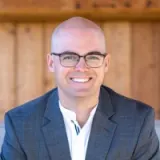
Jon Cook creates content about technology for financial advisors, including reviews of advisor software and interviews with wealthtech founders for Advisor Story.
Jon Cook is most useful for specialist content about advisor technology and CRM for independent financial advisors.
Best for
A wealthtech CRM or advisor operating system campaign aimed at independent financial advisors.
Not for
Consumer financial apps seeking broad US consumer awareness or guaranteed reach for a fixed fee.
Key takeaways
Cook did a four-month review of advisor platform demos, including Zocks, Altruist, Wealthbox and others.
A wrong tax year upload showed document processing could reduce client, admin and advisor delays.
At Cambridge Ignite, Cook focused on whether AI demos could prove useful to advisors.
Check first: Ask for pricing, deliverables, lead times, audience demographics, and comparable sponsored post performance.
Main ideas
The traditional advisor CRM is giving way to an all-in-one "advisor operating system" · AI claims have to survive live demos, and measured adoption beats a splash · Fewer tools, better connected, in service of advisor-client relationships
Jon Cook creates content about technology for financial advisors, including advisor-software comparisons and founder interviews for Advisor Story.
Their posts examine what tools do in practice: Cook describes a four-month review of advisor-platform demos and uses a wrong-tax-return upload to show how document processing could reduce delays.
At Cambridge Investment Research’s Ignite, Cook focused on whether AI demonstrations could prove useful to advisors and noted the importance of relationships at the event.
These posts offer a practical way to follow changes in advisor technology and the people building it.
Cook connects product claims to concrete advisor processes, then follows up with perspectives from founders and industry events.
The wrong-year tax-return example makes the promise of an advisor operating system tangible; the Ignite posts counter AI hype with measured adoption and demonstrations that prove results.
Cook also revisits an initial impression: a closer look at Slant CRM’s agentic features and training approach prompted a more favorable view.
Jon Cook writes about technology for financial advisors, with recurring arguments about consolidation and proof.
Read more
The most detailed is a four-month comparative review of advisor CRM and AI platforms built around the question "Is the traditional CRM dead?"
The same themes appear in conference field notes from Cambridge Investment Research’s Ignite event and founder interviews published under Advisor Story.
The through-line: fewer disconnected tools, demos that prove results, and technology that serves advisor-client relationships rather than replacing them.
The traditional advisor CRM is giving way to an all-in-one "advisor operating system"
Jon Cook spent four months reviewing demos from Zocks | AI for Advisors, Jump - Advisor AI, Altruist, Hamachi.ai, Advyzon, Wealthbox and others to answer one question: Is the traditional CRM dead?
Read more
The argument: an all-in-one interface connecting the tech stack will serve advisors better than another standalone tool, and a platform’s handling of ordinary workflows matters more than its feature list. The platform-by-platform findings appear in a linked video, not in the post.
A client uploads a tax return to storage, and hours later someone discovers it’s for the wrong year.
With an advisor operating system, the system scans the document for accuracy of intent and asks the client to upload the correct year.
Cook estimates this saves the client, admin and advisor at least three hours of delay, frustration and friction.
AI claims have to survive live demos, and measured adoption beats a splash
Reporting from Cambridge Investment Research's Ignite event in Orlando, Cook describes the expo hall, main sessions and breakouts as dominated by AI, but says the twenty-minute demos in four theaters were where providers faced "prove it" moments — a revolving door of requests to show how the technology gets advisors the results their firms need now.
Read more
Cook favors a deliberately paced approach, moving the right talent and processes into place over a year, over broker-dealers that raced forward in a "splash" of new tech.
Cook writes that Cambridge’s work with Zocks and another strategic partner across nearly all of Cambridge’s custodian-sided technology is about to make more than 4,000 advisors happy. They name Slant CRM, GReminders, Zocks, Vanilla and Orion as standout providers, with a nudge not to sleep on Denali AI.
Fewer tools, better connected, in service of advisor-client relationships
The recurring claim across the posts is not that advisors need more software, but that they need less.
Read more
Summarizing a discussion with Slant CRM co-founder Thomas Clawson at Ignite, Cook describes the way forward as "consolidation of tech and expansion of relationships."
In the post about the Clawson interview, they note that "relationships matter" is more than a mantra for that team.
The point aligns with the advisor operating system thesis: technology matters because of the relationships it frees up.
Cook calls Ignite the most family-conscious environment they have seen at an advisor event, with advisors’ families treated as part of what the industry is built around.
Cook’s posts show a willingness to revise an impression publicly.
Read more
One post makes attention itself the theme: other platforms are getting the spotlight, but Slant CRM’s work on the agentic side of an AI-native CRM environment is impressive and warrants closer attention.
Cook opens with a Shaq quote — "I owe you an apology. I wasn't really familiar with your game." — and singles out the Slant University approach as top-notch, praising Max Metcalf’s presenting.
Across the posts, a relationship develops: a public admission of unfamiliarity, praise for the product’s customer education, reporting that Slant won XYPN’s AdviceTech Competition and that more than 2,000 advisors had switched to it in the past year, and finally a founder interview.
Founder conversations and self-published content are the working method
The recurring format is a LinkedIn post pointing to an on-camera conversation with a wealthtech founder, published on YouTube under Advisor Story.
Read more
Cook also treats content creation as an asset: at Ignite, they were surprised by how little content anyone recorded or created on site, and count founder interviews and commentary as the after-party to an event that was largely missed. In the Clawson interview, the guest’s arguments — "slop grenades" in advisor tech and the shift from legacy CRMs to AI-native platforms — carry through Cook’s platform.
In the Ignite recap, Cook states the rule for the work: "Create to help people first, and you can't go wrong."
This shows how Jon Cook approaches comparative advisor-tech analysis.
Read more
Start here to see the method: a stated research period, named products, a clear thesis, and a practical workflow example.
Jon Cook says the post draws on four months of reviewing demos from Zocks, Jump - Advisor AI, Altruist, Hamachi.ai, Advyzon, Wealthbox, and more.
The central question: Is the traditional CRM dead?
Cook describes the promise of an "Advisor Operating System" as an all-in-one interface that connects a firm's tech stack.
They offer a concrete example of document processing: instead of a client uploading a tax return to storage and someone discovering hours later that it was the wrong year, the system scans for accuracy of intent and tells the client it looks like the 2023 return instead of the 2025 return.
Cook says that saves the client, admin, and advisor at least three hours of delay, frustration, and friction, and links to a video snapshot of the findings.
For brands planning a campaign
A CRM vendor can use Cook's comparative demo review to position an AI-native CRM around document handling and workflow relief, rather than a broad AI claim. The wrong-tax-return example offers ready-made campaign material.
This shows what Jon Cook looks for when judging advisor technology at a live event: AI claims, demo scrutiny, advisor-family context, and standout vendors.
Read more
Cook reports back from Cambridge Investment Research's Ignite event in Orlando with nine takeaways.
The Expo Hall, several main sessions, and breakouts were about AI, mostly in-platform capabilities, while 20-minute demos in four theaters created "prove it" moments for providers.
Cook praises Cambridge's intentionally measured AI approach and says its work with Zocks and another strategic partner across custodian-sided tech is about to make 4,000+ advisors happy.
Cook also notes the event was the most family-conscious environment seen at an advisor event, calls the vendor merchandise "meh," and names tech providers that stood out: Slant CRM, GReminders, Zocks, Vanilla, and Orion, with a note not to sleep on Denali AI.
Cook adds that YouTube and LinkedIn are real connectors, and expresses surprise at how little on-site content was recorded across parties.
For brands planning a campaign
A wealthtech company can sponsor or brief Cook around conference season for a "prove it" demo review and post-event mention.
The post shows that Cook values measured adoption, real advisor outcomes, and family-conscious event experiences.
Lead partnership messaging with demonstrable results, not AI theatre.
This shows how Jon Cook connects a market event to a longer founder conversation: a competition win and adoption number set up a discussion of product philosophy and industry language.
Read more
Cook notes that Slant CRM won XYPN's AdviceTech Competition and that over 2,000 advisors have already switched to Slant CRM in the past year.
That caught their attention for a recent interview with Thomas Clawson, co-founder of Slant.
The conversation covers "slop grenades" in advisor tech, the shift from legacy CRMs to AI-native platforms like Slant, and why "relationships matter" is more than a mantra for Thomas and the team.
Cook links to the interview on YouTube.
For brands planning a campaign
An event-tied founder interview with Cook can position a CRM after third-party validation or a visible momentum metric. For a wealthtech company, the campaign angle is earned media around a conference win, customer adoption, and a candid discussion of legacy-versus-AI-native positioning.
This shows how Jon Cook responds when a product earns a second look: they revise their view after closer inspection and identify product capability and customer education as reasons.
Read more
Cook opens with a Shaq quote: "I owe you an apology.
I wasn't really familiar with your game."
They say other platforms are getting the spotlight, but Slant CRM's work on the agentic side in an AI-native CRM environment is impressive.
Cook calls the Slant University approach top-notch and says Max Metcalf does an excellent job presenting.
They close by saying they will be paying closer attention.
For brands planning a campaign
Brands can use Cook for informed second-look reviews rather than launch-day hype. A partnership around agentic workflows or customer education can fit this pattern, especially if the product has been under-covered relative to competitors.
This shows where Jon Cook's advisor-tech thesis appears in a short event post: fewer disconnected tools, stronger relationships, and founder conversations as the follow-up.
Read more
Cook describes a solid discussion about the future of advisor operating systems with Slant CRM co-founder Thomas Clawson at Cambridge Investment Research's Ignite event. They summarize the direction as consolidation of tech and expansion of relationships, and say a YouTube interview with Thomas is coming soon to Advisor Story.
For brands planning a campaign
Pair a conference presence with Cook's event commentary and a follow-up video interview. For a CRM or advisor operating system, the frame is tech consolidation plus relationship expansion, with Cook carrying the discussion from the show floor to Advisor Story.
Platform consolidation and relationships as the industry direction3
AI-native CRM platforms and sustained attention to Slant CRM2
Founder interviews as a recurring content format2
Whether the traditional advisor CRM is still viable1
Conference field reporting on AI adoption at broker-dealers1
Whether the traditional advisor CRM is still viable
Jon Cook's most detailed post describes spending four months reviewing demos from Zocks, Jump - Advisor AI, Altruist, Hamachi.ai, Advyzon, Wealthbox and others to answer the question "Is the traditional CRM dead?"
Read more
They frame "Advisor Operating Systems" as an all-in-one interface that connects a firm's tech stack, and use a concrete document-processing scenario: a client uploads the wrong tax return, the system flags the mismatch and asks them to retry, saving hours of delay. The full platform-by-platform snapshot sits in a linked video rather than in the post itself.
Multi-platform demo review, comparing how each product works and what it produces for firms.
For brands planning a campaign
A CRM or wealthtech vendor pitching independent advisors should expect to be assessed as one option in a crowded field, on how the product handles real workflows such as document intake, not on feature lists. A partnership angle that supplies the firm's own AI or document-processing evidence for a comparative review would fit this format.
AI-native CRM platforms and sustained attention to Slant CRM
Jon Cook has returned repeatedly to Slant CRM.
Read more
One post calls its agentic work in an AI-native CRM environment impressive and singles out the Slant University approach and Max Metcalf's presenting, saying they will be paying closer attention. Another reports Slant CRM winning XYPN's AdviceTech Competition and more than 2,000 advisors switching in a year, alongside an interview with co-founder Thomas Clawson about "slop grenades" in advisor tech and the shift from legacy CRMs to AI-native platforms.
Direct product observation plus a founder interview.
Attention is concentrated on one vendor; other platforms named in the demo review receive only a mention. Ask for the linked videos to assess the deeper analysis.
For brands planning a campaign
Cook gives a single platform repeated coverage across posts and an interview, which suits a vendor that can supply product access and a founder for an on-camera conversation. A competing CRM would be entering a conversation where Slant is already the named AI-native reference point, so the pitch needs a distinct proof point rather than a general AI claim.
Interviews with wealthtech founders run under Advisor Story and are published to YouTube, with the LinkedIn post acting as a pointer to the conversation.
Read more
The Thomas Clawson interview covers product history, an award, adoption numbers and the state of advisor tech; a separate post previews an interview recorded at Cambridge Investment Research's Ignite event and says it is coming soon to Advisor Story.
On-camera founder interviews distributed through YouTube with LinkedIn promotion.
For brands planning a campaign
A founder-led wealthtech company can be evaluated for a sit-down interview on product direction and the advisor-tech market. The LinkedIn post teases the video, so the reach comes from both the interview and the social framing around it.
Conference field reporting on AI adoption at broker-dealers
A nine-point recap of Cambridge Investment Research's Ignite event in Orlando reports that the expo hall, main sessions and breakouts centered on AI, mostly in-platform capabilities, and that twenty-minute vendor demos created "prove it" moments.
Read more
Cook describes Cambridge as taking an intentionally measured approach to AI, with work involving Zocks and another strategic partner positioned to benefit more than 4,000 advisors, and lists Slant CRM, GReminders, Zocks, Vanilla and Orion (Denali AI) as standout tech providers. They also note how little content was being recorded on site by others.
Attendee field notes from sessions, vendor demos and conversations, written as a numbered takeaway list.
For brands planning a campaign
A vendor exhibiting at an advisor conference could seek inclusion in this kind of post-event recap, where booth presence, demo quality and broker-dealer adoption are what get judged. To address Cook's note that little content was being recorded on site, a partner could offer founder interviews or commentary during the event.
Platform consolidation and relationships as the industry direction
Across the posts, the recurring argument is not that advisors need more tools but that they need fewer, better-connected ones.
Read more
The Ignite recap quotes the theme of tech consolidation and expansion of relationships as the way forward; the Slant interview post repeats that "relationships matter" is more than a slogan for that team; and the CRM post treats an all-in-one advisor operating system as the direction worth investigating.
For brands planning a campaign
Messaging that positions a product as reducing tool sprawl and supporting advisor-client relationships is likely to land with this audience. A vendor whose pitch is an additional standalone tool sits against the grain of the argument Cook keeps making.
The posts feature editorial mentions rather than sponsorships, affiliate deals, or client work.
Read more
Slant CRM appears most often, as the subject of repeated analysis and founder interviews, while Cambridge Investment Research is the conference whose event coverage anchors several posts. No post states a paid or commercial relationship with any brand.
Slant CRM
Mention
Jon Cook has covered Slant CRM repeatedly: calling its agentic work in an AI-native CRM impressive, praising Slant University, interviewing co-founder Thomas Clawson after Slant won XYPN's AdviceTech Competition, and recording a second interview with Clawson at Cambridge Investment Research's Ignite event.
Read more
The posts describe coverage and interviews, not a paid engagement.
Attended Cambridge's Ignite event in Orlando as an observer and published a nine-point takeaway post on the firm's measured approach to AI, its work with Zocks and other custodian-side technology, and its advisor culture.
Jon Cook’s posts offer a running field report on the software independent financial advisors actually use.
Read more
Start with the four-month platform review built around the question “is the traditional CRM dead?”
It walks through demos from Zocks, Jump, Altruist, Hamachi, Advyzon, Wealthbox and others; the platform-by-platform detail is in the linked video.
Then read the numbered takeaways from Cambridge Investment Research’s Ignite event, where Cook separates AI marketing claims from demos that had to prove results on the spot.
Two themes connect the work: consolidation (fewer tools, connected better) and relationships (technology is judged by what it frees advisors to do with clients).
Follow the work through founder conversations published on YouTube under Advisor Story and promoted on LinkedIn; the Thomas Clawson interview on Slant CRM shows how Cook turns a product question into a longer conversation.
WealthtechAI in advisor technologyAdvisor CRM platformsPlatform consolidationFounder interviewsConference field notesProduct demo reviewsFinancial advisorsWealthtech vendors
Philip Gale
Gale writes for the same audience as Cook—leaders at advisory firms and the wealthtech vendors selling to them—and makes a similar argument: the industry built strong systems for managing assets and weak ones for acquiring clients.
Read more
Both focus on the operating infrastructure of an advisory firm in short LinkedIn posts that point to longer interviews or coverage elsewhere.
Gale writes as a founder making the case for VastAdvisor, their own product.
Their posts focus on client acquisition, growth ROI and firm valuation rather than product selection.
Cook doesn’t sell or run a platform; they test platforms through demo reviews, then bring a founder on camera to make the case.
Their angle is closer to analyst and interviewer than vendor advocate.
Cardenas addresses the same readership in the same register—wealth-management firm leadership—with short LinkedIn analyses that name a problem, break it into parts and end with an argument about alignment rather than a tactic.
Read more
Both write about firms’ operating choices for people who run or staff advisory businesses.
Cardenas writes about the people side of running an advisory firm: recruiting channels, referral pipelines, retention and board reporting.
Cook covers the software side: CRM and AI platforms, vendor demos and conference tech.
Their work is complementary rather than overlapping: a reader looking for how to staff a firm has little use for Cook’s platform comparisons, and vice versa.
For a wealthtech company trying to reach independent financial advisors, Jon Cook is worth evaluating as a specialist voice on advisor technology.
Read more
The posts focus on CRM and advisor operating-system comparisons, interviews with founders such as Slant CRM's Thomas Clawson, conference reporting from Cambridge Investment Research's Ignite, and commentary on AI and vendor consolidation.
That makes Cook a fit for educational placements about CRM selection or changes in the advisor-tech category, rather than broad consumer campaigns.
Their LinkedIn profile showed 7,799 followers on 9 October 2026, but the posts provide no audience demographics, engagement rates, employer, occupation, or seniority.
Before buying, request recent LinkedIn audience survey results or platform demographics, plus performance data for comparable sponsored posts about CRM and advisor technology.
Jon Cook's posts show commercially oriented content—software reviews, vendor commentary, and interviews with wealthtech founders—but document no partnership or sponsorship formats, policy, rates, or booking process.
Read more
Ask directly for pricing, deliverables, and lead times before planning a campaign.
A wealthtech company selling a CRM or advisor operating system wants to reach independent financial advisors and position its product amid the shift away from traditional CRM tools.
Read more
Jon Cook fits this need, with conditions attached.
The clearest example is a four-month comparative review of advisor CRM demos — Zocks, Jump - Advisor AI, Altruist, Hamachi.ai, Advyzon, Wealthbox and others — built around the question of whether the traditional CRM is dead.
It offers a practical example rather than a feature list: a client uploads the wrong tax year, the system scans for accuracy of intent and asks them to try again, saving the client, admin and advisor hours of delay.
That is the kind of content a CRM vendor wants to join: comparison, named alternatives and a concrete before-and-after.
They also conduct founder interviews published to YouTube under Advisor Story, with LinkedIn posts acting as pointers.
The Slant CRM conversation with co-founder Thomas Clawson used a competition win and an adoption figure — over 2,000 advisors switching in a year — as the hook, then moved into product philosophy and industry language.
A founder-led wealthtech company has a template to step into.
Two conditions matter.
First, Slant CRM already occupies the AI-native CRM reference point in these posts: three of the five posts concern it, including two separate endorsements.
A competing CRM enters a conversation where part of the comparison set is already framed, so the pitch needs a distinct proof point rather than a general AI claim.
Second, the posts don’t describe sponsorship terms, formats or a booking route.
Confirm pricing, deliverables and lead times directly before planning a campaign.
The available audience information is limited to reach: 7,799 LinkedIn followers observed 9 October 2026.
Ask for demographics, engagement rates, and employer and seniority data to assess how many followers are advisors or decision-makers.
When to choose a specialist
A consumer financial app — a mass-market savings or retirement product, for example — wants broad awareness among general US consumers, with a guaranteed reach figure for a fixed fee.
Read more
Jon Cook is a poor fit for this need.
The posts are specialist trade material for people who work in, or sell into, advisory firms: platform comparisons, broker-dealer conference reporting, and founder interviews about CRM and advisor-operating-system strategy.
A campaign that needs consumer relevance has no basis here.
The measurable audience is 7,799 LinkedIn followers as of 9 October 2026, but its composition is unproven: there is no demographic breakdown, engagement data or survey data by employer, occupation or seniority.
A campaign requiring guaranteed impressions cannot be underwritten from that.
Ask for audience data and evidence of reach before considering a guaranteed-impressions campaign.
The posts don’t describe sponsorship or partnership formats, rates or a booking process.
Ask directly for a media kit, pricing and standard deliverables; a campaign requiring these cannot be planned without them.
A worked campaign example
A worked angle for a campaign aimed at independent financial advisors. Objective: position an AI-native CRM with independent financial advisors through comparative analysis and a founder conversation rather than a standalone ad.
1. Show proof, not a pitch. Give Cook product access and a practical example of the kind already described — document intake catching the wrong tax year, for instance — because the clearest post turns on exactly that kind of concrete before-and-after, not capability claims.
2. Enter the comparison. Ask for inclusion in a demo review alongside the platforms already named. Expect the product to be judged on what it produces for firms. Because Slant CRM is the established AI-native reference point in these posts, lead with a proof point Slant does not already own — a practical metric, a migration story, or a specific integration — rather than a general AI claim.
3. Follow with a founder interview on Advisor Story, promoted by a LinkedIn post. The hooks that worked in the posts were an award win or an adoption number followed by product philosophy, so bring comparable third-party validation or a momentum figure to the conversation.
4. Time it to conference season. The Ignite recap shows how they read a show floor: twenty-minute demos created "prove it" moments, and they named the providers that stood out while noting how little content other parties were recording on site. A vendor willing to provide founder interviews or on-the-ground commentary during the event has a direct opening.
5. Carry the recurring theme. Their consistent argument is fewer, better-connected tools and expanded advisor-client relationships, repeated across the CRM post, the Slant interview and the conference recap. A vendor positioning an additional standalone tool runs against that argument.
Before committing, confirm sponsorship terms and formats, audience composition by occupation and seniority, and whether the linked videos and interviews reach the same audience as the LinkedIn posts. The videos were referenced but not included, so ask for their reach data.
Choose Paul Cardenas over Jon Cook when the campaign targets a wealth-management CEO, board or recruiting leader with a message about growth, retention and recruiter alignment rather than CRM selection.
Read more
The posts speak directly to that audience: they frame recruiting as a board-level growth conversation, argue that a lack of recruiting becomes a retention problem, and explain why self-sourcing, internal sourcing and third-party recruiting all fail. That is a stronger match for a CRM vendor positioning its product as the firm's operating system for alignment and pipeline visibility, or for a campaign aimed at decision-makers who own recruiting budgets.
The tradeoff is category distance and audience uncertainty.
Paul Cardenas does not review CRM platforms, compare advisor-tech products or demonstrate CRM workflows; the content focuses on recruiting, retention and firm alignment.
A CRM-to-advisor campaign would have to recast the product as recruiting and retention infrastructure.
The posts do not publish audience demographics, engagement rates or commercial formats, so ask for reach and buyer-composition data.
Choose Philip Gale over Jon Cook when the campaign sells growth infrastructure, client-acquisition systems or an RIA valuation story to firm leaders rather than CRM workflows to advisors.
Read more
The posts make a direct infrastructure case: most RIAs depend on referrals and lead buying, client acquisition is an infrastructure problem, and RIAs with systematic organic growth engines were valued at 2x peers without one. If the wealthtech product is positioned as growth infrastructure and the proof point is measurable client acquisition, this is a closer narrative fit than Jon Cook's CRM demo reviews.
Philip Gale's posts are attached to VastAdvisor, a growth-infrastructure product, and do not compare CRMs or offer neutral advisor-tech evaluations.
A CRM vendor may be seen as adjacent to, or competing with, the growth stack rather than as the subject of the analysis.
Angela Hodgson is not a better choice for a campaign selling advisor-tech CRM.
Read more
Consider them only if the campaign shifts to manufacturing employers, women in industry or retaining experienced technical talent. The posts address those subjects directly: leaving Bentley to start Ignite Improvement, backing your own expertise, charging for value, and speaking at Women in Manufacturing UK about keeping women in manufacturing through career stages.
For the stated wealthtech CRM decision, Angela Hodgson has no advisor relevance.
The posts contain no wealth management, independent-advisor, CRM or advisor-tech material, and no audience data showing financial-advisor reach.
Choosing Angela Hodgson would require a different buyer, channel and message.
This profile draws on five LinkedIn posts from linkedin.com/in/keynotecontent, covering a four-month comparison of advisor CRM and AI platform demos, reporting from Cambridge Investment Research's Ignite event in Orlando, and two posts about Slant CRM tied to a founder interview with co-founder Thomas Clawson.
Jon Cook has 7,799 LinkedIn followers as of 9 October 2026.
The posts themselves carry no publication dates, so no timeline is claimed.
The YouTube interviews and multi-platform demo video that three posts link to are not included here, so claims about those videos rest on the post text alone and the videos' reach is unverified.
No sponsorship formats, rates, or booking routes appear in the posts here, so nothing is claimed about commercial offers.
The posts here do not establish whether Jon Cook has signature books, shows, or earlier work beyond Advisor Story.
Two creators in the same readership, Paul Cardenas and Philip Gale, were used as comparison points in the similar-creators section.