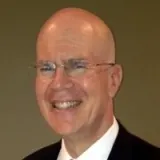
John Coe works in commercial real estate and hosts the Icons of DC Area Real Estate podcast. His posts focus on career development, mentorship, leadership and the long-term value of trust and relationships in the industry. He also describes founding Coe Enterprises and the Iconic Journey in CRE community.
John Coe is a commercial real estate professional and host of Icons of DC Area Real Estate.
In their posts and podcast descriptions, they explore how people build careers in the industry—and what they pass on through mentorship, leadership, and community.
They describe founding Coe Enterprises, starting the podcast in 2019, and launching the Iconic Journey in CRE community in 2021.
Their recurring framework—Clarity, Connection, Leadership, and Legacy—asks professionals to choose their direction, earn trust, develop others, and consider the value they leave behind.
Coe turns familiar CRE subjects—deals, capital, and career transitions—into prompts for examining judgment, trust, and purpose.
Instead of asking which transaction was biggest, they ask which deal changed you, inviting readers to treat both setbacks and successes as lessons worth passing on.
John Coe writes and speaks about how commercial real estate careers develop, returning to a few core arguments: careers should be designed rather than reactive; judgment, trust, reputation and relationships compound like capital but cannot be bought; and experience is worth examining for what it taught, not just for how much it earned.
Read more
Their account of their career runs from decades in DC capital markets to founding Coe Enterprises in 2015, starting the Icons of DC Area Real Estate podcast in 2019 and launching the Iconic Journey in CRE community in 2021. The most recent post turns that thinking into an invitation to a small advisory cohort for experienced professionals in transition.
Design your career around four questions, not a title
Coe describes career development through four recurring ideas—Clarity, Connection, Leadership and Legacy—and frames each as a question: where am I going, how do I become worthy of trust, how do I help others become more capable, and what am I here to pass forward?
Read more
The reasoning is that commercial real estate is a capital business, but capital moves toward judgment and credibility.
Authority follows proven reliability rather than being seized.
Coe presents this as a framework to apply deliberately instead of reacting to whatever opportunity appears.
In one post, Coe lays out Clarity, Connection, Leadership and Legacy, pairing them with the Sigmoid Curve lesson: start your next curve while the current one still works. In the podcast episode, the same arc expands into five principles, including solving for people first and earning trust before authority.
In synthesis episodes, they revisit earlier conversations and draw out a theme, testing the career framework against multiple practitioners rather than one guest's opinion. The ideas are distilled from many careers, not presented as one person's preference.
Coe describes Episode 151 of Icons of DC Area Real Estate as drawing on past conversations with current and former leaders of the JBG Companies, now JBG SMITH—Matt Kelly, Moina Banerjee, Todd Rich, Grant Ehat, Brian Jackson and Evan Regan-Levine—to assemble what they call the JBG Career Operating System, organised into four levels and five principles.
Coe starts with the power of compound interest, a familiar idea in commercial real estate, and asks whether the industry has been compounding the wrong things.
Read more
Their argument: judgment, trust, reputation, relationships, curiosity and generosity appreciate over decades but cannot be purchased; they accumulate one decision, conversation and act of integrity at a time. Coe draws this conclusion from their own long career and interviews, then puts the question to the reader.
Coe says that after a 46-year career and more than 150 conversations with industry leaders, enduring success was rarely explained by financial engineering alone.
They list judgment, trust, reputation, relationships, curiosity and generosity as quietly appreciating assets.
The post asks what has compounded most in the reader's own career besides capital.
Coe distinguishes the largest transaction, the best return and the reputation-making project from a different question: which deal changed you?
Read more
Their reasoning is that the most important transactions are often not the highest-returning ones but those that alter how a person thinks, whom they trust, what they value and how they make the next decision. Coe treats setbacks and walk-aways as sources of usable wisdom, not things to leave out of a career story.
Coe lists the kinds of deals they mean: an investment that failed and taught humility, a partnership that tested judgment, a transaction abandoned because something felt wrong, a project that introduced a mentor or forced someone to become one, and a difficult market cycle that showed reputation and relationships outlast any single closing. The post asks readers to identify such a transaction and consider who could benefit from hearing the story.
Financial freedom is a starting point, not a destination
Coe asks what financial freedom is for once careers are built, capital accumulated and control over time gained.
Read more
Their argument is that the interesting question begins once enough has been accumulated: whether to use that freedom to withdraw or to invest more intentionally in people, ideas, institutions, communities and the next generation. In commercial real estate, they extend the question to how the spaces someone owns shape local economies and small businesses.
The post contrasts withdrawing with investing beyond returns, then offers a specific 90-day assignment: identify one way to use time or capital to create value beyond financial returns, write it down and schedule the first step. To assess how the idea applies in practice, ask for a specific deal, asset class or market.
Start the next curve while the current one still works
Coe applies the Sigmoid Curve to careers: start the next phase while the present one is still succeeding, not after it flattens.
Read more
They draw on their own decisions rather than offering a general maxim, and the posts have moved from reflection toward a concrete offer for people in the middle of that transition.
Coe describes deciding in 2015, after decades in DC capital markets, whether to join another platform or build one.
They founded Coe Enterprises, started the podcast in 2019 and launched the Iconic Journey in CRE community in 2021, when networking and mentoring disappeared overnight.
In the most recent post, Coe says they are preparing to convene a small inaugural cohort of the CRE Career Stewardship Advisory for experienced professionals navigating a transition, taking on greater leadership responsibility or asking what their accumulated experience is calling them to do.
They invite readers to send a message with the word Stewardship.
The move from reflective writing to a named cohort is the clearest change across the posts.
Earlier posts make the case philosophically; the newest turns the same framework into an invitation to a specific advisory cohort. The podcast, too, has shifted from single interviews to synthesised themed episodes.
This is the clearest statement of the question John Coe keeps returning to: what is commercial real estate experience for, beyond the size of a transaction?
Read more
Newcomers can use this post to understand the reflective, mentorship-led lens they bring to the podcast and advisory material.
Coe contrasts the biggest deal, the best return and the reputation-making project with a different question: which deal changed you?
Examples include an investment that failed and taught humility, a partnership that tested judgment, a transaction someone walked away from because something felt wrong, a project that introduced a mentor or forced someone to become one, and a difficult market cycle that showed reputation and relationships matter more than any single closing.
Across a 46-year career, Coe says, the most important transactions are often not those with the greatest financial returns, but those that change how people think, whom they trust, what they value and how they make the next decision.
The post invites readers to identify that transaction and ask who could benefit from hearing the story.
For brands planning a campaign
For a career development or mentorship initiative, use this post as a discussion prompt or workshop opener for experienced professionals. It supports a campaign built around lessons from career-defining deals, not just deal volume or returns.
This post shows the ideas Coe treats as career assets: judgment, trust, reputation, relationships, curiosity and generosity.
Read more
It helps explain why their material focuses less on technical underwriting and more on long-term professional conduct.
Coe starts with the familiar power of compound interest in commercial real estate, then asks whether the industry has been compounding the wrong things.
After a 46-year career and 150 conversations with industry leaders, they say enduring success was rarely explained by financial engineering alone.
The post lists judgment, trust, reputation, relationships, curiosity and generosity as assets that quietly appreciate over decades.
Unlike financial capital, Coe notes, these cannot be purchased; they accumulate one decision, conversation and act of integrity at a time.
The closing question asks what has compounded most in the reader’s career besides capital.
For brands planning a campaign
This is a strong source for content about relationship-driven leadership, mentorship and long-term credibility. A brand can align with reflective conversation formats rather than hard performance metrics; the post offers concrete language on why experienced operators value trust and judgment.
This original broadens the subject from career advancement to purpose and community impact.
Read more
It shows general readers that Coe’s career stewardship framework covers what people do with accumulated freedom, not only how they build it.
Coe asks what financial freedom is for and why people spend decades pursuing it.
The post describes the familiar path of building careers, accumulating capital, creating security and gaining control over time, including investing in commercial real estate for income, appreciation and a tangible sense of control.
Then comes the question: what will I do with the freedom I have earned?
Coe contrasts withdrawing with investing more intentionally in people, ideas, institutions, communities and the next generation.
In commercial real estate, that can mean looking beyond returns to how owned spaces shape local economies, support small businesses and influence communities.
The post ends with a specific 90-day question about using time or capital to create value beyond financial returns.
For brands planning a campaign
This supports campaign themes around legacy, purpose, community impact and next-generation talent. It can anchor a mentorship or thought-leadership program that moves beyond wealth accumulation to address what experienced professionals can now make possible with their resources and experience.
This post offers the clearest look at Coe’s podcast method and framework.
Read more
It shows how they turn multiple practitioner conversations into a structured career discussion, helping readers judge whether the work is substantive or just promotional.
Coe introduces Episode 151 of Icons of DC Area Real Estate in a different format: instead of a single interview, the episode synthesizes past conversations with current and former leaders of the JBG Companies, now JBG SMITH, to uncover what they call the JBG Career Operating System.
It draws on Matt Kelly, Moina Banerjee, Todd S.
Rich, Grant Ehat, Brian Allan Jackson and Evan Regan-Levine.
Coe examines the material through four levels—Clarity, Connection, Leadership and Legacy—and five defining principles: solving for people first, earning trust before authority, learning judgment in the room, sharing the pie to increase the pie, and building beyond yourself.
The post points readers to the episode.
For brands planning a campaign
For a podcast, employer brand or industry association, this shows Coe can convene and synthesize senior practitioner voices into a usable framework. A campaign could propose an episode-led career development resource or a discussion guide based on the four levels and five principles.
This original connects Coe’s personal story to the current advisory offer.
Read more
It is the most direct starting point for understanding what they run, when the podcast and community began, and how the career stewardship framework is being applied.
Coe asks whether a career curve is still developing someone or whether they have started protecting a version of success that is flattening.
In 2015, after decades in DC capital markets, they faced a choice: join another platform or build one.
Coe founded Coe Enterprises, started the podcast in 2019 and launched the Iconic Journey in CRE community in 2021, when networking and mentoring disappeared overnight.
The post lays out a framework of Clarity, Connection, Leadership and Legacy, using the Sigmoid Curve lesson to start the next curve while the current one still works.
Coe says they are preparing to convene a small inaugural cohort for the CRE Career Stewardship Advisory later that month, for experienced commercial real estate professionals navigating a transition, taking on greater leadership responsibility or asking what their accumulated experience is calling them to do.
Interested readers can send a LinkedIn message or email with the word Stewardship.
For brands planning a campaign
This is the operational anchor for a campaign brief.
It outlines the advisory cohort format, the podcast and community history, and the framework Coe uses with experienced professionals.
A brand evaluating them for a career development or mentorship initiative can propose a cohort collaboration, podcast episode or discussion resource tied to the Clarity, Connection, Leadership and Legacy material.
Trust, relationships and judgment as assets that compound3
Reflective prompts that end in a concrete next step3
Career stewardship: a four-part framework2
The Icons of DC Area Real Estate podcast as the main vehicle2
Stewardship beyond returns: community and legacy2
Career transition and the CRE Career Stewardship Advisory cohort2
Career stewardship: a four-part framework
Coe returns to the same four ideas to describe how commercial real estate careers develop: Clarity, Connection, Leadership and Legacy.
Read more
One post frames Clarity as "where am I going?", Connection as "how do I become worthy of trust?", Leadership as "how do I help others become more capable?" and Legacy as "what am I here to pass forward?". A podcast episode builds the same arc into five principles: solve for the people first, earn trust before authority, learn judgment in the room, share the pie to increase the pie, and build beyond yourself.
A repeatable framework applied across posts and at least one full episode, not just a one-off opinion.
For brands planning a campaign
A brand selling career development, coaching, mentoring or leadership training can plug into an existing, repeatable structure rather than commission a new one; a four-part article or event series maps directly onto it.
The Icons of DC Area Real Estate podcast as the main vehicle
Coe hosts a podcast that mixes single interviews with synthesis episodes.
Read more
Episode 151 gathered past conversations with current and former leaders of the JBG Companies (Matt Kelly, Moina Banerjee, Todd Rich, Grant Ehat, Brian Jackson and Evan Regan-Levine) into a themed episode about the "JBG Career Operating System". They describe founding Coe Enterprises in 2015, starting the podcast in 2019 and launching the Iconic Journey in CRE community in 2021.
Archived interviews are repackaged into topical episodes, letting one theme draw on many guests and years of material.
For brands planning a campaign
Sponsorship or guest placement reaches an audience of experienced CRE professionals. Brand executives who can speak to leadership or market judgment suit the interview format, while a thematic episode can carry one message across several conversations.
Trust, relationships and judgment as assets that compound
In posts about what compounds besides capital and about the deal that changed you, Coe argues that judgment, trust, reputation, relationships, curiosity and generosity accumulate like money and cannot be bought.
Read more
They cite a 46-year career and more than 150 podcast conversations as the basis for that view, and say capital ultimately moves toward judgment and credibility.
For brands planning a campaign
Brands whose pitch rests on credibility, service quality or long-term relationship value align with this framing; return-first or purely transactional messaging would sit awkwardly against it.
Reflective prompts that end in a concrete next step
Several posts close with a direct question — which deal changed you, what has compounded besides capital — and push for action, such as writing down an answer and scheduling the first step within 90 days.
Read more
Short counsel, then a question, then an assignment with a deadline.
For brands planning a campaign
A sponsor can supply the worksheet, prompt card or cohort intake that follows the question, since Coe already asks readers to act, not just read.
A post on financial freedom asks what that freedom is for and suggests directing time or capital toward people, institutions and communities, including considering how owned spaces shape local economies and small businesses.
Read more
Ask for a named deal, asset class or market example; this post stays philosophical about money and names none.
For brands planning a campaign
Community-impact, placemaking or legacy-oriented programs have a natural opening; brands focused on measurable returns should ask how to frame their message in stewardship terms.
Career transition and the CRE Career Stewardship Advisory cohort
Coe describes deciding in 2015, after decades in DC capital markets, whether to join another platform or build an independent one, then founding Coe Enterprises and later the podcast and community.
Read more
The cited "Sigmoid Curve" lesson is to start the next curve while the current one still works. They are convening a small inaugural cohort of the CRE Career Stewardship Advisory for experienced professionals in transition or taking on greater leadership responsibility.
For brands planning a campaign
A brand offering assessment, coaching or peer-cohort tools can position alongside the advisory; the cohort itself is a defined, high-touch audience of senior CRE professionals.
John Coe's posts name no third-party sponsors, affiliates or clients.
Read more
They identify Coe Enterprises, founded in 2015; the Icons of DC Area Real Estate podcast, started in 2019 and hosted by Coe; and Iconic Journey in CRE, a commercial real estate community launched in 2021.
Coe also convenes a small CRE Career Stewardship Advisory cohort; inquiries go through the Coe Enterprises email.
The only outside company mentioned is JBG SMITH, discussed in a podcast episode rather than as part of a commercial relationship.
The posts disclose no compensation or formal partnership with an outside brand.
Because they are undated, ask Coe to confirm the current status of these ventures and the advisory cohort.
Coe Enterprises
Owned business
John Coe states they founded Coe Enterprises in 2015 after weighing whether to join another platform or build their own.
Read more
The business is the contact point for their work. They invite readers interested in the CRE Career Stewardship Advisory, a small inaugural cohort they were preparing to convene, to message them on LinkedIn or email john@coeenterprises.com.
John Coe states they started and host this commercial real estate podcast, which launched in 2019.
Read more
Episode 151 synthesizes past conversations with current and former leaders of the JBG Companies, using a career framework they call the CRE Career Stewardship Advisory thesis.
JBG SMITH is the subject of podcast Episode 151, which draws on past conversations John Coe recorded with current and former leaders of the JBG Companies.
Read more
The posts establish it as an editorial subject, not sponsorship, employment or client work, and disclose no commercial relationship.
To get a quick read on John Coe, start with the posts that lay out their career-stewardship framework: Clarity, Connection, Leadership and Legacy.
Read more
The description of Episode 151 of Icons of DC Area Real Estate shows how they turn many interviews into one themed argument, while the posts on what compounds besides capital and on the deal that changed you showcase their reflective, question-led style.
Readers seeking practical career development will find useful material on trust, judgment, relationships and starting a new career curve before the current one flattens.
The strongest entry points are the framework posts, followed by the podcast episode description and the 90-day reflective prompt.
Both turn development into a named, step-by-step framework and ask readers to act on it.
Read more
Mbunya promotes Design to Succeed, a 90-day Discover, Develop and Deploy journey built around daily practice and accountability; Coe’s framework uses Clarity, Connection, Leadership and Legacy and closes with a 90-day assignment. Both write short, reflective LinkedIn essays that end with a question or a commitment.
Mbunya focuses on personal purpose and fulfillment for a broad audience, with a book and coaching as the destination. John Coe focuses on commercial real estate careers, through interviews with industry leaders, a CRE community and an advisory cohort rather than a general self-development book.
Both write as real estate professionals who connect career progress with relationship-building.
Read more
Pierre describes investing in relationships, attending commercial real estate events, serving in a bar association and launching a law firm; Coe writes about trust, reputation and career stewardship in commercial real estate.
Pierre’s posts cover practice-building and legal-service marketing: a firm launch, landlord-tenant and transaction work, and consultation invitations. Coe’s posts focus on reflective career frameworks and podcast episodes rather than legal services.
Gelb also writes for commercial real estate professionals on LinkedIn and teaches a decision through concrete comparisons.
Read more
One post contrasts bank and institutional or life-company loan proceeds on the same $500,000-NOI property; the other summarizes a capital-strategy event. Coe likewise uses specific examples and questions to make a career argument.
Gelb offers capital-markets and financing advice, with loan sizing and lender choice as the practical takeaway. Coe focuses on career development and mentorship rather than lending or capital-structure instruction.
John Coe's posts show what the content covers and which professional world it addresses.
Read more
The only firm audience figure is a LinkedIn following of roughly 3,463, recorded on 7 October 2026.
For a career-development and mentorship initiative in commercial real estate, the topic match is a reasonable starting signal.
Across five LinkedIn posts dated 6 July to 6 October 2026, they address CRE professionals directly: career design, mentorship, trust, judgment, and the difference between a successful career and a significant one.
Episode 151 of Icons of DC Area Real Estate synthesised prior conversations with current and former leaders of the JBG Companies, including Matt Kelly, Moina Banerjee, Todd Rich and Grant Ehat.
The posts also carry hashtags such as #iconsdc, #ULI and #CRECareers.
A separate post advertises a small inaugural cohort for the CRE Career Stewardship Advisory.
Together, these details suggest a DC-region commercial real estate readership rather than a general business audience.
The posts do not report readers' seniority, employers, functions or locations, or how many consume the podcast compared with the LinkedIn feed.
They also provide no figures for likes, comments, shares, click-throughs or episode downloads.
The follower count alone does not show whether a particular topic or format drove results.
Before booking, ask for recent results on comparable material: reach and engagement on the career-stewardship posts and episodes, podcast or newsletter audience size, and any audience survey capturing job function or seniority.
The five posts contain no advertising, sponsored-content or media-buy offer, and no sponsor disclosure, rate card or media-kit reference.
Read more
The one commercial offering is a small, conversation-gated advisory cohort: the CRE Career Stewardship Advisory, which Coe says they were preparing to convene for experienced commercial real estate professionals in transition, taking on greater leadership responsibility, or asking what their accumulated experience now calls them to do.
The Icons of DC Area Real Estate podcast and the Iconic Journey in CRE community are presented as their own projects, not as inventory a brand can buy into; the posts describe no sponsorship route for either.
Ask directly about partnership formats, pricing, availability and contract terms.
CRE Career Stewardship Advisory cohort
Buyer requirement
Coe describes convening a small inaugural cohort built around four themes — clarity, connection, leadership and legacy — for experienced commercial real estate professionals navigating a transition or taking on greater leadership responsibility.
The only stated way to join is to contact them directly: send a LinkedIn message or email john@coeenterprises.com with the word "Stewardship" to receive a short description and decide whether a conversation makes sense.
An October 2026 post says the cohort was to convene later that month but does not publish the price, seat count, session dates or deliverable format.
Ask for those terms before committing budget or people.
Brief: a commercial real estate investment firm is building a career-development and mentorship initiative for experienced professionals — a cohort programme, an internal leadership curriculum, or a content series — and wants an industry voice with standing to anchor it.
Read more
Decision: strong fit for the substance of the work.
Coe's material is already organised around a teachable structure rather than scattered opinions.
The same four-level arc — Clarity (where am I going?), Connection (how do I become worthy of trust?), Leadership (how do I help others become more capable?), Legacy (what am I here to pass forward?) — runs across the posts and is rebuilt in a podcast episode as five principles: solve for the people first, earn trust before authority, learn judgment in the room, share the pie to increase the pie, and build beyond yourself.
A brand can plug into that spine instead of commissioning a framework from scratch.
The format matches the goal.
The Icons of DC Area Real Estate podcast mixes single interviews with synthesis episodes, and Episode 151 gathered past conversations with current and former leaders of the JBG Companies — Matt Kelly, Moina Banerjee, Todd Rich, Grant Ehat, Brian Jackson and Evan Regan-Levine — into one themed episode.
That is a useful model for a mentorship campaign: one message carried across several senior practitioner voices.
The posts end in assignments, not just reflections — one asks the reader to name the deal that changed them, another asks for one thing they will do in the next 90 days — so a worksheet or cohort intake can follow the content without changing its tone.
The message suits a firm that wants to talk about judgment, relationships and long-horizon credibility: they argue that judgment, trust, reputation, relationships, curiosity and generosity compound, and that capital moves toward judgment and credibility.
Before committing budget, ask for audience engagement, podcast downloads, demographics and seniority data; the only measured figure is a LinkedIn following of about 3,463 recorded on 7 October 2026.
The CRE Career Stewardship Advisory, their cohort for experienced professionals in transition or taking on greater leadership responsibility, is available only by direct message or email; ask for its price, seat count, dates and deliverable format.
The clear route in is a direct approach, not a media buy.
When to choose a specialist
A national consumer finance or property-technology brand wants broad-reach awareness with direct-response tracking — a high volume of impressions and clicks, hard conversion numbers, and a message built on returns, product performance or a limited-time offer.
Read more
Decision: poor fit for that need.
Reach is the main problem.
The only audience figure stated is a LinkedIn following of roughly 3,463 on 7 October 2026, with no engagement counts, podcast download figures or audience demographics.
The posts do not describe sponsorship or advertising inventory.
No rate card, media kit or sponsor disclosure appears, and the podcast and the Iconic Journey in CRE community are presented as Coe's own projects rather than something a brand can buy into.
Ask whether sponsorship or advertising inventory is available and request audience and conversion data before planning a campaign that needs volume and proof.
Message is the second problem.
Coe's framing consistently puts returns second: the post on compounding asks what appreciates besides capital; the post on financial freedom asks what the freedom is for and points toward people, institutions and communities; the post on career-defining deals says outright that the most important transactions are often not the ones with the greatest financial returns.
A return-first or urgency-driven pitch would either be diluted or read as off-key.
The audience described is also specific — commercial real estate professionals in and around Washington, DC — rather than a national consumer audience.
A worked campaign example
A worked angle for the good-fit brief: a “Career Stewardship” content and cohort series co-produced with Coe.
Shape of the campaign: three podcast episodes built as one arc — an opening episode on the deal that changed you, a middle episode on earning trust before authority, and a close on building beyond yourself — each using the synthesis format to draw on several practitioner conversations rather than a single guest.
Around them, a one-page discussion guide carrying the four levels (Clarity, Connection, Leadership, Legacy) with blank prompts, so a learning-and-development team or an association chapter can run a session without further help.
If the firm runs its own mentorship cohort, the “which deal changed you” prompt works as the intake conversation and the guide as the first session's material.
The 90-day question — name one way you will use time or capital beyond financial returns and put the first step on the calendar — gives the programme an ending that asks for action.
Why it works: the framework already exists and is repeatable, the podcast format allows one theme across several senior voices, and the prompts convert reflection into a next step, which a mentorship programme needs from its content.
Before committing, ask whether podcast sponsorship or co-production is available and on what terms; confirm the price, seat count, session dates and deliverable format of the CRE Career Stewardship Advisory if the cohort is part of the plan; establish whether Coe will take part in a firm-branded cohort or prefers to run an independent one; and agree on a measurement plan in advance, since the starting audience figures are sparse.
Francis Mbunya instead when the initiative is closer to a personal-development and accountability programme than a commercial real estate leadership curriculum—for example, a 90-day cohort for emerging professionals who need help turning recognised talent into visible output. The posts describe a daily 30-minute commitment, a 90-day Discover, Develop and Deploy arc, and a book, Design to Succeed, that could provide weekly structure and a common text.
John Coe's posts focus on purpose and fulfilment coaching, not commercial real estate.
They offer no CRE deal experience, investment perspective or senior practitioner network.
A firm seeking sector-specific judgment from experienced real estate leaders would trade industry standing for general coaching structure.
Choose Shakiva Pierre when the initiative is aimed at early-career real estate lawyers or professionals who need a visible example of building a practice, and when legal subject matter or professional-development mentoring is central.
Read more
Her posts document launching her own New York real estate law firm after nearly a decade in the field, chairing the Real Estate Law Section of the Metropolitan Black Bar Association, supporting Legal Outreach students, and a practice spanning landlord-tenant matters, transactions and litigation.
She is a legal practitioner, not a career-stewardship voice for investment professionals.
Her posts show no cohort curriculum, podcast series or framework for experienced CRE leaders.
A firm would gain legal and entrepreneurial credibility but lose the senior investment-industry framing Coe provides; ask for evidence of a curriculum suited to experienced CRE leaders.
Choose Stuart Gelb when the initiative is really capital-markets training for deal teams and the buyer needs a practitioner who can teach financing structures with concrete numbers.
Read more
His posts show independent representation across banks, life companies, CMBS, debt funds and private capital, and a worked comparison in which the same property with $500,000 of net operating income produced about $3.8 million in usable proceeds from a bank versus about $5.1 million from institutional or life-company financing—a difference of about $1.3 million.
The content teaches transaction and capital strategy, not career development or mentorship.
The posts show no coaching format, cohort design or reflection prompts.
For a mentorship initiative, Gelb could sharpen a technical module but would not carry the career-stewardship arc Coe's material supplies; ask for a separate plan for that arc.
John Coe's five LinkedIn posts describe Coe's own account of founding Coe Enterprises in 2015, starting the Icons of DC Area Real Estate podcast in 2019 and launching the Iconic Journey in CRE community in 2021; his four-part career framework of Clarity, Connection, Leadership and Legacy; and his writing on trust, judgment, what compounds beyond capital, financial freedom and the deals that change people.
Podcast content is known only through Coe's own episode descriptions; Coe's posts do not include episode transcripts.
The posts have no visible publication dates, so the profile describes what Coe states about Coe's career and businesses rather than a dated timeline.
Claims about Coe's work rest on Coe's own posts; no media kit, rate card, audience demographics or third-party verification appear in the posts here.
A separate section compares Coe with three other creators, using posts dated July to October 2026 where dates were available.
The one measured audience figure, a LinkedIn following of about 3,463, was recorded on 7 October 2026.