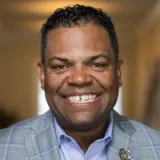
Jason O. Harris is a leadership speaker and coach who helps leaders build trust, communicate through uncertainty, and develop people. His work includes keynotes, workshops, and coaching for leaders and organizations.
15.2K followersLeadershipBased on 8 posts · latest Sep 2026
Jason O. Harris is most useful for keynotes, workshops, and coaching on trust, accountability, and leading through ambiguity.
Best for
Leadership-development brands or campaigns for managers in operational, safety-driven, or field-based organizations.
Not for
Consumer brand sponsored posts, ambassador packages, or short-form product videos judged on reach and clicks.
Key takeaways
Trust is earned in a sequence, and accountability comes last.
Leaders should be accountable for the conditions they create.
Wait the full minute before you respond.
Check first: Ask for recent results from comparable engagements and audience data showing industries and roles.
Main ideas
Trust is earned in a sequence, and accountability comes last · Leaders should be accountable for the conditions they create · Ambiguity reveals how leaders actually behave
Harris is a leadership speaker and coach whose work focuses on building trust, communicating through uncertainty, and helping people learn to lead.
Across posts about leadership decisions, workplace safety, and personal experience, Harris makes those subjects concrete: a leader’s response to bad news, the way a team evaluates trust, or whether someone knows their employees’ work well enough to advocate for them.
Follow Harris for practical leadership lessons grounded in specific workplace situations rather than leadership advice in the abstract.
Harris connects trust to observable choices and conditions at work.
In one post, a story about returning an accidental $2,000 overpayment turns the idea of integrity into a decision with a real cost.
In another, the account of a board retreat argues that connection and commitment come before accountability, and describes how the keynote drew on personal transplant stories to make trust relevant to the audience.
Harris also offers short, usable prompts: wait a minute before sending an angry email, ask whether leaders create clarity or add confusion, and know people’s work well enough to speak up for them.
The range is not only corporate leadership: examples draw on military experience and field-based roles such as a lineman promoted to foreman.
A personal post about returning from deployment and experiencing autumn after missing it for years shows a reflective, personal side beyond the workplace lessons.
Together, these examples give readers a way to judge the work: it pairs memorable stories with questions and actions leaders can apply to how they respond, communicate, and support their teams.
Harris argues that trust is not something leaders are entitled to but an outcome they earn in a particular order, and that most of the work is behavioral: communicating without all the answers, holding a standard when it costs money, and knowing your people's work well enough to speak for them.
Across the posts reviewed, the recurring sequence is connection, then commitment, then accountability — with accountability placed near the end rather than the start, which is the opposite of how most organizations treat it.
Harris also treats leadership as a taught skill rather than a promotion perk, and uses Air Force training, aviation practice, and a coaching case to make that point concrete.
Trust is earned in a sequence, and accountability comes last
Harris describes a repeating pattern he hears inside organizations: connection leads to commitment, commitment leads to accountability, and accountability is what actually earns trust.
Read more
His argument is that teams treat accountability as step one, and that skipping ahead produces the anxiety, frustration, and communication problems he sees in the room. He is not claiming trust is a feeling people should simply have; it is the result of a sequence that has to be worked through in order.
Harris spent a full week with the Center for Organ Recovery & Education, sitting through the entire board retreat instead of flying in for a keynote and leaving the next morning, and facilitated a panel with leaders from the Association of Organ Procurement Organizations, the Eye Bank Association of America, and the Association for Advancing Tissue and Biologics before giving the Friday keynote.
The keynote used photos of three people alive because someone said yes: a cousin after a kidney transplant, a mentor after a heart transplant, and a friend who donated a kidney to his mother-in-law.
What surprised Harris was that people came up afterward to talk about psychological safety rather than transplants, repeating the same thread — connection, commitment, accountability, trust.
The post closes with a question to readers: where is your team trying to skip ahead?
Leaders should be accountable for the conditions they create
Harris argues that trust is usually discussed as something people hope to experience rather than something leaders are expected to cultivate, and that this shows up in what organizations choose to measure.
Read more
The distinction he draws is between a leader who hits a number while people are afraid to speak up and a leader who gets results because the team trusts the training, the processes, and one another.
Both may hit the same quarterly target, so he wants leaders judged on the conditions they build, not only the outcomes they report.
The survey figure he cites comes from his own National Study on Trust and Leadership and should be attributed to him rather than presented as independent research.
Harris opens with the standard list of leadership metrics — revenue, productivity, safety, retention — and asks what about trust.
He reports that in his National Study on Trust and Leadership, 86% of working Americans surveyed said managers and leaders should be evaluated on their ability to foster trust within their organizations.
He ends by asking where trust shows up in how leadership is evaluated.
Harris's position is that the real test of a leader is what they do when they do not have all the information they want.
Read more
He attributes the anxiety and frustration in organizations not to people failing to care but to being asked to lead, decide, communicate, and look after their people without the facts they feel they need. Ambiguity, in his framing, exposes behavior rather than causing it, which is why he turns it into questions leaders can answer about themselves.
Leading a session called Leading Through Ambiguity at the National Asphalt Pavement Association IMPACT Leadership Group Conference, Harris ran an exercise that surfaced anxiety, frustration, and communication challenges, then posed four questions: do we communicate more or retreat, do we create clarity or add to the confusion, do we trust our people or tighten our grip, and do we remain adaptable when the plan inevitably changes. He notes the conversations continued over lunch and again at an evening networking event hosted by WIRTGEN GROUP, and closes by saying the industry's future needs leaders who can operate when the answers are not obvious.
Being promoted into leadership is not the same as being prepared for it
Harris's argument is that organizations teach people how to do their jobs but not how to lead, so strong individual contributors arrive in supervisory roles without the training the job requires.
Read more
He points to Air Force practice, where nobody gets a seat without the training and process behind them, as the contrast: trust the training and the process first, and then you can trust your people. His coaching method follows from that — the fix is usually a change in stance, not more technical expertise.
The scenario Harris starts with: a top lineman is promoted to foreman, and six months later nobody wants to work for him.
He then describes coaching a utility manager who came up from the field and kept trying to be the smartest person in the room; he told her to walk in as the most interested person instead, and nine sessions later her crews were talking to her again.
The post closes with "lead people, not boss people around" and a safety line about everyone going home with ten fingers, ten toes, two arms, and two legs.
Harris argues that careers are lost in the first minute of a hard moment, not because of a lack of skill but because nobody stopped to think about the cost of the immediate response.
Read more
He borrows the aviation saying "slow is smooth, and smooth is fast" to explain that crews who rush an emergency stack up mistakes, while crews that handle it cleanly sound calm and perform better. The practical implication for leaders is that the people they lead learn what is safe to bring them from how they handle bad news, so the response itself is a leadership act.
Harris writes that they have watched people end their own careers in about ninety seconds with one angry email sent in the heat of the moment.
The same pattern applies on the ground, they argue: a hard email lands, a meeting blindsides you, a project goes sideways, and the brain wants to answer right now with almost always the wrong answer.
The advice is to wait the full minute and step away from the keyboard, because what you say in the sixty-first second is better than what you would have said in the first.
Know your people's work well enough to fight for them when they are not in the room
From his time as a squadron commander deciding who stayed in the service and who was moved out, Harris draws a conclusion about advocacy: the people cut first were the ones nobody in the room could vouch for.
Read more
His argument is that knowing your people's work is not a soft gesture but the thing that determines whether anyone can argue for them when they are absent. The image he uses makes the point without abstraction — a thick folder means someone knew the person's work well enough to say what would be lost.
Harris describes signing the paperwork that ended someone's career, and says the moment that mattered most in those rooms was when someone had to pick up a person's folder and argue for them.
Some folders were thick and some were thin, and the thin ones were easy to circle.
The post ends with the question of whose folder you are carrying right now, and whether it is thick enough, and points readers to a free two-minute leadership assessment in the comments.
Values are proven when holding them costs something
Harris argues that leadership is demonstrated by decisions made when you could easily justify doing something else, not by a title or a stage or what you say when people are watching.
Read more
He applies the same test he puts to other leaders to his own business, which is what makes the argument more than a stage line. The reasoning is economic in a plain sense: a relationship, a reputation, and someone's trust are worth more than the money at stake.
A client told Harris they had paid two thousand dollars more than their budget allowed.
Harris reread the contract and found the amount paid matched what the contract said, so the money was technically theirs to keep.
They sent it back right away, without negotiating with themselves, and were not upset when the client asked — two thousand dollars is not worth compromising a relationship, a reputation, or the trust someone has placed in them.
The post turns the episode into the question Harris puts to leaders: will you be the person you say you are when there is an actual cost attached?
Not every post is a lesson, and that matters for reading the rest
Most of Harris's writing is instructional and ends with a question to the reader, but one post is purely personal and carries no lesson and no offer.
Read more
Noting the difference keeps the instructional material from being read into everything: in the reflective post, the point is endurance and appreciation rather than a leadership method. The tension is worth stating plainly because it shows the range of the writing and where the teaching voice stops.
Harris writes about fall becoming one of his favorite seasons, tracing it to 2011, when they returned from an eleventh combat deployment and saw the North Carolina leaves change color for what turned out to be the first time in eight years — every previous autumn had been spent deployed. The post ties the season to resilience, to still being here, and to making it through whatever comes next, and asks readers what their favorite season is and why.
This answers the most basic question a newcomer has — what does this person actually do at an engagement — and it contains the trust sequence that shows up across the rest of the material.
Read more
Harris describes spending an entire week in Pennsylvania with the Center for Organ Recovery & Education, sitting through the full board retreat rather than flying in for a keynote and leaving the next morning, including an afternoon of sporting clays with the group.
They facilitated a panel with leaders from the Association of Organ Procurement Organizations, the Eye Bank Association of America, and the Association for Advancing Tissue and Biologics before giving the Friday keynote.
The keynote used photos of three people alive because someone said yes — a cousin after a kidney transplant, a mentor after a heart transplant, and a friend who donated a kidney to his mother-in-law — to show the room that the subject was not abstract.
What surprised Harris was that people came up afterward to talk about psychological safety rather than transplants.
One idea repeated all week: connection leads to commitment, commitment leads to accountability, and accountability is what earns trust.
Harris argues accountability is closer to step four than step one, and closes by asking where a team is trying to skip ahead.
For brands planning a campaign
Use this to set expectations with a client: the example shows an embedded, multi-day engagement, not a one-hour appearance, and the trust sequence (connection, commitment, accountability) can serve as the spine of a workshop on psychological safety.
It shows the argument underneath the trust talks and gives a client a statistic and a framing they can reuse in their own internal case for the session.
Read more
Harris opens with the usual list of leadership metrics — revenue, productivity, safety, retention — and asks what about trust.
They cite their National Study on Trust and Leadership, reporting that 86% of working Americans surveyed said managers and leaders should be evaluated on their ability to foster trust within their organizations.
The contrast drawn is between a leader who hits numbers while people are afraid to speak up and one who builds a team that delivers consistently because people trust the training, the processes, and one another.
The closing argument: leaders should be accountable for the conditions they create, not simply the outcomes they report, and if trust matters, it should show up in how leadership is evaluated.
For brands planning a campaign
A ready-made hook for a workshop or keynote on measuring trust: the 86% figure and the conditions-versus-outcomes distinction give a corporate audience something concrete to act on. Attribute the survey to Harris's own study rather than presenting it as independent research.
This is the clearest single example of the problem Harris solves and of the coaching that follows it, so it is the fastest way to judge whether the material fits a field or trades audience.
Read more
The scenario: a top lineman is promoted to foreman and six months later nobody wants to work for him, because organizations teach people their jobs but not how to lead.
Harris points to Air Force practice — nobody got a seat without the training and process behind them — and then to a specific coaching case: a utility manager who came up from the field and kept trying to be the smartest person in the room.
Harris told her to walk in as the most interested person instead, and nine sessions later her crews were talking to her again.
The post closes with "lead people, not boss people around" and a safety line about everyone going home with all their fingers, toes, arms, and legs.
For brands planning a campaign
Strong fit for construction, utility, and industrial clients: a workshop module on promoting strong individual contributors into leadership, framed in safety-and-field language. The nine-session coaching case also shows the format extends beyond a single speaking date.
It is the shortest demonstration of the pressure behavior Harris teaches, and it lets a reader see in a minute whether the advice is practical or just motivational.
Read more
Harris writes that they have watched people end their own careers in about 90 seconds with one angry email sent in the heat of the moment, and that it was not a skill problem but a failure to stop and think about the cost.
The aviation saying "slow is smooth, and smooth is fast" is used to make the point that crews moving fastest in an emergency stack up mistakes, while crews that handle it cleanly sound calm and actually perform better.
The same pattern applies on the ground: a hard email, a blindsiding meeting, a project going sideways, and a brain that wants to answer right now with almost always the wrong answer.
If you lead people, they are watching what you do in that first minute and learning what is safe to bring you.
The advice is to wait the full minute and step away from the keyboard, because what you say in the 61st second is better than what you would have said in the first.
For brands planning a campaign
A tight opener or breakout module on self-regulation under pressure that works for almost any audience; the aviation analogy carries the point without requiring industry-specific knowledge.
It shows how Harris handles the hardest leadership decisions and provides a concrete image that transfers well to a stage, which matters for a client evaluating keynote material.
Read more
Harris describes signing the paperwork that ended someone's career while serving as a squadron commander, sitting in rooms deciding who stayed in the service and who was moved out.
The moment that mattered most was when someone had to pick up a person's folder and argue for them.
Thick folders meant someone in the room knew that person's work and could say what would be lost; thin folders meant the name was easy to circle.
The people cut first, in Harris's account, were the ones nobody could vouch for.
The lesson for leaders is to know their people's work well enough to fight for them when they are not in the room, ending with the question of whose folder you are carrying and whether it is thick enough.
The post also points readers to a free two-minute leadership assessment in the comments.
For brands planning a campaign
Keynote material on advocacy and knowing your people, built on a story most audiences have not heard before. The free assessment link is worth noting for a client who wants pre-event engagement or a lead-capture asset; treat it as an existing practice of the speaker, not as a sponsorship offer.
It is the clearest evidence that the trust message is something Harris applies to their own business, which is what a skeptical client will want to see before booking a talk about trust.
Read more
A client told Harris they had paid $2,000 more than their budget allowed.
Harris reread the contract and found the amount paid matched what the contract said, so the money was technically theirs to keep.
They decided quickly to send it back, without negotiating with themselves or quibbling.
When the client asked whether they were upset, Harris was not: two thousand dollars is not worth compromising a relationship, a reputation, or the trust someone has placed in them.
The post turns the decision into the same question Harris puts to leaders — whether you will be the person you say you are when there is an actual cost attached — and argues that leadership is proven by decisions made when you could easily justify doing something else, not by a title or a stage.
For brands planning a campaign
A story the speaker can tell on stage or in a workshop about holding a standard when it costs something, and a useful signal that Harris presents as a business owner as well as a former officer.
It shows what a session looks like in practice and names the industry audiences Harris works with, which helps a reader picture the room rather than just the topic.
Read more
Harris spent a day with the National Asphalt Pavement Association IMPACT Leadership Group Conference leading a session on Leading Through Ambiguity.
An exercise surfaced anxiety, frustration, and communication challenges, which Harris attributes not to people not caring but to being asked to lead, decide, and communicate without all the information they want.
The session posed four questions: do we communicate more or retreat, do we create clarity or add to the confusion, do we trust our people or tighten our grip, and do we remain adaptable when the plan inevitably changes.
The conversations continued over lunch and at an evening networking event hosted by WIRTGEN GROUP.
Harris closes by praising leaders who build things, solve problems, and get their hands dirty, and says the industry's future needs leaders who can operate when the answers are not obvious.
For brands planning a campaign
Evidence of the association-conference format and of named industry relationships, useful for trade associations considering a session on decision-making with incomplete information. The four questions can be reused directly as a workshop diagnostic.
Trust built through connection, commitment, and accountability
Harris treats trust as an outcome leaders have to earn in sequence, not a starting assumption.
Read more
After sitting through a full board retreat with an organ-donation organization, he reported one thread repeating across the room: connection leads to commitment, commitment leads to accountability, and accountability is what actually earns trust — not the other way around. In a separate post he cites a National Study on Trust and Leadership finding that 86% of working Americans surveyed said managers and leaders should be evaluated on their ability to foster trust, and argues leaders should be accountable for the conditions they create, not only the results they report.
For brands planning a campaign
A keynote or workshop on trust and psychological safety can be built around this sequence rather than generic trust language, and the survey figure gives a client-ready anchor for why trust belongs in how leaders are measured.
Harris led a session called Leading Through Ambiguity at the National Asphalt Pavement Association IMPACT Leadership Group Conference.
Read more
The exercise surfaced anxiety, frustration, and communication challenges that show up when people are asked to lead and decide without all the information they want.
He frames ambiguity as revealing how leaders actually behave, with four questions: do we communicate more or retreat, create clarity or add confusion, trust our people or tighten our grip, and stay adaptable when the plan changes.
The conversations continued over lunch and at a networking event after the session ended.
Facilitated group exercise that surfaces participants' own reactions to missing information, then debriefs them against the four questions.
For brands planning a campaign
This is a ready-made workshop shape — facilitated exercise, debrief, and informal follow-through — for clients in operational or safety-driven industries where decisions get made before all the facts arrive.
Harris opens with the promoted lineman: six months in the role and nobody wants to work for him.
Read more
His point is that organizations teach people how to do their jobs but not how to lead, and he draws on Air Force training as the model — trust the training and the process before trusting your people.
He describes coaching a utility manager who came up from the field and kept trying to be the smartest person in the room; he told her to walk in as the most interested person instead, and after nine sessions her crews were talking to her again.
The post closes on safety language about everyone going home to their families.
One-to-one coaching with a specific behavioral reframe — from the smartest person in the room to the most interested person.
The safety framing and trades-industry examples point to a defined audience rather than a general corporate one.
For brands planning a campaign
Strong fit for clients promoting field or technical staff into supervision, and for any brief that wants a coaching engagement with an observable before-and-after rather than a one-off talk.
Harris writes about watching people end their own careers in about 90 seconds with a single angry email, and stresses it was never a skill problem — it was not stopping to think about the cost.
Read more
He borrows the aviation phrase "slow is smooth, and smooth is fast" to argue that crews who rush an emergency stack up mistakes, and that the same applies when a hard email lands or a project goes sideways. His advice is to wait the full minute and step away from the keyboard, because people you lead learn what is safe to bring you from how you handle bad news.
For brands planning a campaign
A compact, memorable segment for a keynote or a workshop exercise on response discipline and psychological safety, and easy for an audience to repeat afterward.
As a squadron commander, Harris sat in rooms deciding who stayed in the service and who was moved out, and signed the paperwork that ended careers.
Read more
He says the moment that mattered most was when someone had to pick up a person's folder and argue for them: thick folders belonged to people whose work someone knew, thin folders were easy to circle.
His conclusion is that leaders must know their people's work well enough to fight for them when they are not in the room.
The post ends by pointing readers to a free two-minute leadership assessment in the comments.
For brands planning a campaign
A high-impact story for manager development and retention briefs; the assessment link also shows Harris already runs a lightweight audience-capture asset a partner could coordinate with rather than duplicate.
Harris describes a client who realized they had overpaid him by two thousand dollars against their own budget.
Read more
The contract said the amount was his to keep, and he returned it immediately, with no negotiation. He uses the episode to argue that leadership is proven by the decisions you make when you could justify doing something else, and that the ideas he presents on stage about hearing, understanding, and acting on what matters do not count if they only show up when convenient.
For brands planning a campaign
Useful for sessions on integrity and values under pressure, and as a plain-spoken proof point that the trust message is not only a stage talk.
Harris writes about fall becoming one of his favorite seasons, tracing it to 2011, when he returned from his 11th combat deployment and saw the North Carolina leaves change color for what turned out to be the first time in eight years — he had been deployed every previous autumn.
Read more
He ties the season to resilience, to still being here, and to making it through whatever comes next, then asks readers what their favorite season is and why.
This post carries no leadership lesson and no commercial offer; it is a personal register rather than the instructional one his other posts use.
For brands planning a campaign
Shows he will use personal, reflective storytelling and direct questions to readers, which suits briefs that want engagement and warmth rather than a purely promotional post.
Harris's posts name a few organizations he has worked with directly.
He spent a full week with the Center for Organ Recovery & Education at its board retreat and delivered the closing keynote, and he led a session on leading through ambiguity for the National Asphalt Pavement Association's IMPACT Leadership Group Conference.
WIRTGEN GROUP hosted the networking event at that conference.
His Air Force service — squadron command and repeated combat deployments — is the experience he draws on most in his leadership work.
The reviewed posts show no sponsorship, affiliate, or investment arrangement.
Client work also appears without a business name, including a coaching client and a contract dispute he resolved by returning money, so no brand can be attached to those examples.
Center for Organ Recovery & Education
Client
Harris spent a full week with the organization at its board retreat in Pennsylvania rather than flying in for a keynote, facilitated a panel of industry association leaders, and delivered the Friday keynote.
Read more
He used photographs of three people alive because of transplants — his cousin, a mentor, and a friend who donated a kidney — to make the trust material concrete for the audience.
Harris led a session on Leading Through Ambiguity at the association's IMPACT Leadership Group Conference, working through an exercise on how leaders respond when they lack information.
Read more
He continued the discussion with attendees over lunch and at the evening networking event.
Harris's posts describe his Air Force service directly: returning from an 11th combat deployment, signing the paperwork that ended careers as a squadron commander, and the training culture he says gave people a seat only when the training and process backed them up.
Read more
He uses that background to explain why trust in a team starts with knowing each person's work well enough to argue for them.
For related perspectives, Sabrina Busch writes about trust through faith and her experience as a living kidney donor.
Lauren LeMunyan, MCC connects psychological safety and leadership to cybersecurity’s zero-trust approach.
Sage Ke'alohilani Quiamno draws on Hawaiian cultural concepts to discuss communication, relationships, and team leadership.
Harris’s work is most distinct in its practical leadership lessons drawn from military, aviation, coaching, and workplace examples.
LeadershipTrustPsychological safetyAccountabilityLeading through ambiguityDeveloping leadersDecision-making under pressureResilienceKeynote speakingWorkshop facilitationLeadership coachingShort written postsPersonal storytellingFacilitated group exercisesPeople managersCorporate leadership teamsIndustrial and trades workplaces
Sabrina Busch
Both write about trust through personal experience rather than abstract advice.
Read more
Busch’s account of donating a kidney to a stranger shows how she thinks about generosity and purpose; Harris’s account of returning a client’s overpayment makes a workplace decision the proof of a leadership principle.
Busch frames her writing through faith, scripture, and spiritual fulfillment. Harris focuses on practical leadership, drawing on military, aviation, and workplace examples.
Both treat psychological safety and trust as practices leaders must build.
Read more
LeMunyan’s comparison between cybersecurity’s zero-trust model and workplace feedback loops offers a distinct lens on a concern Harris addresses through leadership training, accountability, and the conditions that help people speak up.
LeMunyan applies these ideas to cybersecurity and technology, especially security culture and verification. Harris’s examples center on leadership development in operational, industrial, and military settings.
Both turn workplace experiences into lessons about how trust and connection shape teams.
Read more
Quiamno describes trust as something built through time together, rather than messaging alone—a close complement to Harris’s account of trust growing through shared time beyond formal sessions.
Quiamno focuses on communications and brand work, interpreting business relationships through Hawaiian cultural concepts such as aloha, talk story, kuleana, and kilo. Harris’s posts focus on leadership development and workplace practice.
For a corporate leadership-development client, the supplied evidence gives one clear read: Jason O.
Read more
Harris's audience evidence is concentrated on LinkedIn, where roughly 15,000 followers see a steady stream of posts about trust, accountability, and leading through ambiguity.
Instagram is far smaller, at about 2,200 followers.
The posts show which topics draw responses — trust, psychological safety, and everyday leadership behavior — but they do not measure who the audience is.
No demographics export or audience survey was supplied, so employer, occupation, and job seniority are unverified.
Before booking a keynote or workshop on trust and psychological safety, ask for recent results from comparable engagements (same topic, same format) and for any audience survey or registration data showing the industries and roles in the room.
Selected examples: the Center for Organ Recovery & Education board-retreat post and the National Asphalt Pavement Association post describe rooms of leaders in organ procurement and construction, but those are Jason O.
Harris's descriptions of events attended, not measured audience composition.
Harris is booked for speaking and leadership-development work rather than for social-media sponsorships.
The reviewed posts show four paid engagement formats: keynotes, workshops and facilitated sessions, multi-day retreat work, and coaching for individual leaders.
One post describes a contracted client engagement in which he returned a two-thousand-dollar overpayment, which shows he works from written agreements, though no rate card, sponsor policy, or public partnership inquiry page appears in the material reviewed.
The only public call to action in the posts is a free two-minute leadership assessment offered in a comment, which is a lead-generation tool rather than a partnership offer.
A buyer planning a sponsored-post or brand-ambassador campaign should treat this profile as unverified for that format.
Keynote
Buyer requirement
Plan for a full session rather than a short appearance, and expect the talk to be built around the client's own context.
At a Center for Organ Recovery & Education board retreat, Harris opened with photographs of three people alive after transplants to make trust concrete for that specific audience.
Supply background on the organization and on the trust or ambiguity problems the audience actually faces so the material can be tailored before the event.
Workshop or facilitated session
Buyer requirement
Expect participants to work through exercises, not just listen.
In a session for the National Asphalt Pavement Association IMPACT Leadership Group, an exercise surfaced anxiety, frustration, and communication problems, and the discussion continued over lunch and an evening networking event.
Budget time for conversation after the formal session, and provide a room that allows group work.
Facilitated panel
Buyer requirement
Harris can moderate a panel of the client's own leaders in addition to speaking.
At the same board retreat he facilitated a panel with leaders from the Association of Organ Procurement Organizations, the Eye Bank Association of America, and the Association for Advancing Tissue and Biologics before delivering the keynote.
Provide panelists and topics in advance so the discussion feeds into the talk instead of repeating it.
Multi-day retreat engagement
Buyer requirement
This format requires access to the leadership group between sessions.
Harris describes sitting through a full board retreat from start to finish and says trust in the room was built in the time between sessions, including an afternoon of sporting clays, rather than in the sessions themselves.
Book agenda time and travel for informal contact instead of a single keynote slot.
Executive coaching
Buyer requirement
Coaching runs across multiple sessions with one leader and targets how that person leads.
Harris describes coaching a utility manager who had come up from the field and kept trying to be the smartest person in the room; after nine sessions, he says, her crews were talking to her again.
The buyer needs a named leader, a willingness to work on that person's behavior, and a schedule spanning months.
Strong fit. This is the brief the reviewed material is built for.
Read more
Brief
A leadership-development company is selecting a speaker for a keynote or half-day workshop on trust and psychological safety, aimed at managers in operational, safety-driven, or field-based organizations — utilities, construction, industrial services, or member associations in those industries.
Reasons
The trust argument is already structured as a session, not a slogan. The board-retreat post lays out a sequence — connection leads to commitment, commitment leads to accountability, and accountability is what earns trust — and explicitly places accountability near the end rather than at step one. That gives a workshop a spine the client can name on a slide.
There is a documented facilitated format, not just a talk. At the National Asphalt Pavement Association IMPACT Leadership Group conference, a session on Leading Through Ambiguity used a group exercise that surfaced anxiety, frustration, and communication problems when people are asked to decide without full information, followed by a debrief against four questions: communicate more or retreat, create clarity or add confusion, trust people or tighten control, stay adaptable when the plan changes. The conversation continued over lunch and an evening networking event.
The material is tailored, not generic. Harris sat through an entire board retreat with the Center for Organ Recovery & Education, including a panel with leaders from three organ-procurement organizations, before giving the Friday keynote, and opened with photographs of three people alive after transplants. The client should expect to supply background and expect the talk to be rebuilt around it.
There is a client-ready number. Harris cites his own National Study on Trust and Leadership, reporting that 86% of working Americans surveyed said managers and leaders should be evaluated on their ability to foster trust, and argues leaders should be accountable for the conditions they create rather than only the outcomes they report. Attribute this to Harris's study, not to independent research.
The coaching case gives the workshop a before-and-after. A utility manager promoted from the field kept trying to be the smartest person in the room; after being told to walk in as the most interested person, Harris says her crews were talking to her again nine sessions later. That story bridges a one-off session to a longer engagement.
Practical conditions are visible. A buyer should plan for a full session rather than a short appearance, provide a room that allows group work, budget time after the formal session for conversation, and name a specific leader if a coaching track is wanted.
One caveat belongs in the booking conversation, not in the pitch: no recorded session, transcript, or dated engagement history was in the reviewed material, so spoken delivery and live-room results are unverified.
When to choose a specialist
Poor fit on the evidence reviewed.
Read more
Brief
A consumer brand wants a paid sponsored post and ambassador package: several short-form videos promoting a product to a large consumer audience, with performance judged on reach, clicks, and impressions.
Reasons
No sponsored or brand-partnered post appears anywhere in the material. Every reviewed post is either a reflection on leadership or a description of a speaking, panel, or coaching engagement. The documented commercial model is booked engagements under written agreements — one post describes returning a $2,000 client overpayment against the contract — plus a free two-minute leadership assessment offered in a comment as a lead-capture tool, not a sponsorship offer.
The formats that are documented are keynotes, workshops and facilitated sessions, multi-day retreat work, and one-to-one coaching. None of these is a social-media sponsorship, and no rate card, media kit, or partnership inquiry page was included.
Audience scale and composition do not support a reach-based consumer campaign. The account snapshots show roughly 15,000 LinkedIn followers and about 2,200 on Instagram, and no demographics export or audience survey was supplied, so employer, role, and seniority are unknown. A consumer brand would be buying an unverified audience.
The content form works against a short-form video brief. The reviewed posts are long reflective passages and teaching stories; no video, audio, or short-form clip is present in the material, so there is nothing to judge a video treatment against.
This is a fit judgment about the reviewed material, not a claim that Harris never accepts sponsorships. A buyer who wants that answer needs a direct conversation and any existing partner history, which is a gap this packet does not close.
A worked campaign example
Angle
Build the session around the promotion problem rather than around trust as a topic. The promise to the room is narrow and testable: you were promoted for doing the work, and the job you have now is a different job.
Brief
A regional utility or industrial contractor is promoting experienced field staff into supervisory roles and keeps losing crew engagement in the first six months. The client wants a session for about 40 new foremen and superintendents, with a follow-on option for two named leaders.
Buyer preparation
Give Harris the client's own context — the promotion process, recent incidents, and what supervisors actually struggle with — since the reviewed engagements show the material is rebuilt around the audience.
Provide a room that allows group work and a schedule with space for informal conversation afterward.
Name the two leaders for the follow-on coaching track before the session, so the coaching has a subject and a behavior to work on.
How to judge it
Ask for results from a comparable engagement on the same topic and format, since no dated engagement history is in the reviewed material.
Ask whether the session can be tied to the client's own safety and retention measures, using the 86% survey finding and the conditions-versus-outcomes argument as the internal case for running it.
Treat spoken delivery as unverified until the client sees it: no recording or transcript was available here, so a short pre-event call or reference conversation is the sensible check.
Session shape
Open with the promoted lineman: a top performer becomes foreman, and six months later nobody wants to work for him. Harris's explanation is that organizations teach people their jobs but not how to lead, with Air Force practice — nobody gets a seat without the training and process behind them — as the contrast.
Run the ambiguity exercise from the NAPA session. Ask participants to describe a recent decision they had to make without full information, then debrief against the four questions: communicate more or retreat, create clarity or add confusion, trust people or tighten control, stay adaptable when the plan changes.
Add the first-minute discipline. The ninety-seconds-to-end-a-career post uses the aviation line "slow is smooth, and smooth is fast" and the instruction to wait the full minute and step away from the keyboard, on the argument that people learn what is safe to bring you from how you handle bad news.
Close with the folder question from the squadron-commander post: the people cut first were the ones nobody could vouch for, so know your people's work well enough to argue for them when they are not in the room.
Leave time after the formal session. In Harris's own account of the board retreat, the trust in the room was built between sessions, not during them.
Choose Lauren LeMunyan when the room is cybersecurity, information security, or technology-risk staff, or when the event is a conference session rather than a workshop for field supervisors.
Read more
The reviewed material shows the same subject approached from the audience's own vocabulary: Zero Trust treated as a leadership practice and not only a technical architecture, delivered at the ISSA Colorado Springs Peak Cyber Conference, with the argument that if a culture punishes people for flagging a mistake or asking whether to double-check, the organization has built a fortress with an open back door.
LeMunyan names the 4 Stages of Psychological Safety and the line that fear does not produce accountability, it produces better hiding, and recounts an attendee's unscripted remark that culture is something a team creates rather than something that comes from socializing.
For a security or tech audience that already speaks in zero-trust terms, that framing does work Jason O.
Harris's material does not start from.
The reviewed material is framed entirely around cybersecurity and technology audiences.
The zero-trust analogy and the conference setting travel less directly to a room of utility foremen or construction superintendents, and neither post covers promoting frontline staff into supervision, safety-critical operations, or field crews.
Jason O.
Harris's reviewed posts carry the promoted-lineman problem, the aviation line that slow is smooth and smooth is fast, and the squadron-commander story about folders nobody could vouch for, which map onto operational supervisors more directly.
Harris also documents a multi-day board retreat and a one-to-one coaching case; the LeMunyan material shows conference speaking, not a workshop or coaching track.
Delivery and live-room results are unverified for both.
Choose Sabrina Busch when the client's audience is a faith-based or mission-driven group and the session should be a personal story about purpose, giving, and preparation rather than a management framework.
Read more
The reviewed material shows a first-person account of becoming a non-directed living kidney donor, including the detail that the recipient never made contact and the reframing that a thank-you would have counted as repayment the donor had set out to avoid, plus a post arguing that stress and exhaustion come from trying to trust without the Holy Spirit and closing with a written prayer.
Busch also describes writing Faithful Fulfillment, presented in the post as a number-one Amazon bestseller.
For an association or nonprofit whose members respond to testimony and calling, that is a different and possibly stronger session than a trust framework delivered by an outside speaker.
Nothing in the reviewed material addresses workplace trust, psychological safety, or managing people, and no speaking or workshop format is documented, so a leadership-development buyer would be trading a structured session on manager behavior for a personal narrative.
Jason O.
Harris's reviewed material is the reverse: it has a sequence the client can put on a slide, connection leads to commitment, commitment leads to accountability, and accountability is what earns trust, plus a facilitated exercise on leading through ambiguity and a coaching case where a utility manager's crews started talking to her again.
If the client wants the room to leave with a repeatable management practice, the Harris material fits the brief more closely.
Choose Sage Ke'alohilani Quiamno when the brief is about culture and connection inside a technology company, or when the client wants a panelist on women in tech and inclusive leadership rather than a keynote for operational managers.
Read more
The reviewed material shows a Hawaii Tech Week panel appearance and a translation of Hawaiian concepts into business terms, with Aloha read as customer success and kuleana, talk story as stakeholder management, and kilo as reading the room before speaking, plus a post on a company retreat where marketing golfed alongside customer success and engineers sang karaoke with sales, arguing that trust is not built in Slack but in real time spent together. For a software or startup client whose problem is siloed teams and weak cross-functional relationships, that framing lands closer to daily work than a session built on field crews.
The trust content is about internal team culture and connection, not about how a manager handles a hard email, a blindsiding meeting, or a promotion decision.
There is no material on psychological safety as a leadership practice, on safety-critical operations, or on developing new supervisors, and no standalone keynote or workshop on trust is documented.
A client hiring for the stated brief, managers in utilities, construction, or industrial services, would be moving away from the operational examples and the session structure in Jason O.
Harris's reviewed material toward a culture-and-belonging talk aimed at a technology audience.
This page draws on nine collected posts by Jason O.
Harris: eight from his LinkedIn account and one Instagram post whose text repeats a LinkedIn post, counted once as an example.
The material covers trust and psychological safety, leading through ambiguity, promoting technical staff into supervision, response discipline under pressure, advocating for the people you lead, a business decision about money, and one personal reflection.
Account information for both channels was observed in October 2026; the posts themselves carry no visible dates in this evidence, so no chronological development of the ideas can be established.
No keynote recording, session transcript, rate card, media kit, sponsorship record, or audience-demographics export was available, so spoken delivery, pricing, sponsorship willingness, and audience composition are not described.
The reviewed posts contain no quoted guests, and the survey figure that appears in one post is Harris's own study, attributed to him rather than presented as independent research.
The supplied material also does not establish whether Harris has signature books, shows, or other earlier work beyond these posts.
The page describes only what the reviewed posts show, without verifying employers or credentials beyond them.
Recent engagement
Across their last 7 LinkedIn posts, the median post got 36 reactions and 7 comments. Checked 2026-11-02.