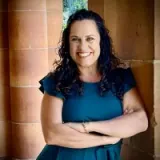
Roseanna Galindo teaches at Butte College and works with the North Valley Health Education Foundation to connect organizations, educators and students around rural health and healthcare workforce development.
1.4K followersRural healthBased on 11 posts · latest Sep 2026
Roseanna Galindo is most useful for connecting rural health organizations, educators, students, and healthcare leaders around workforce development.
Best for
A rural health workforce nonprofit or campaign needing a workshop, advisory seat, or co-hosted session.
Not for
A national telehealth device vendor seeking paid multi-channel sponsorship with tracked clicks and demo requests.
Key takeaways
Rural health workforce shortages call for regional alignment, not standalone programs.
Policy and funding decisions are workforce-pipeline decisions.
Education should test synthesis and leadership, not recall.
Check first: Confirm whether they take paid speaking or partnership work and ask for audience demographics.
Main ideas
Rural health workforce shortages call for regional alignment, not standalone programs · Policy and funding decisions are workforce-pipeline decisions · Education should test synthesis and leadership, not recall
Roseanna Galindo teaches at Butte College and works with the North Valley Health Education Foundation on rural health and healthcare workforce development.
In their posts, they connect regional organizations, educators, students, and healthcare leaders, and explain how their work can support rural communities.
Their writing is worth following for concrete accounts of that collaboration and for reflections on teaching that emphasize synthesis, clear thinking, and communication.
Galindo makes broad workforce and rural-health challenges easier to grasp by linking them to people, places, and practical examples.
In a post about a California rural health conference, they move from a line about the state’s rural character to policy updates, workforce priorities, behavioral-health shortages, and examples of local innovation.
In another, they name regional organizations and describe alignment, information-sharing, and student opportunities as ways to strengthen the healthcare workforce.
Their teaching reflection adds a different perspective: after more than 30 years of teaching, they argue that assessment should test students’ ability to connect ideas and communicate under pressure, not just recall facts.
Together, these posts show a connector who brings regional healthcare work into view and a teacher who values applied judgment.
Roseanna Galindo's public posts argue that rural healthcare workforce problems are regional alignment problems, policy and funding decisions are pipeline decisions, and education should measure synthesis and leadership rather than recall.
Read more
The recurring priority is connection: naming the organizations and people already doing the work, connecting students to opportunities, and documenting hard capacity gaps alongside innovation.
Rural health workforce shortages call for regional alignment, not standalone programs
Galindo argues that rural healthcare “doesn't work in silos” and no single organization can solve the workforce challenge alone.
Read more
The answer, in this account, is alignment: sharing information, connecting students to opportunities, and building partnerships that strengthen the whole ecosystem. They name the North Valley Health Education Foundation as a vehicle for visibility and connection across the region.
A post describes Zoom conversations with Hailey Mendoza at the Health Alliance of Northern California, Emmie Johnson at Healthy Rural California, Sam Mello at the Sierra Sacramento Valley Medical Society, and Bridget McBride at the Butte-Glenn Medical Society.
Galindo draws a shared goal from those conversations: ensuring communities have the healthcare workforce they need.
The post invites anyone working in healthcare workforce development, scholarships, or rural health education to get in touch.
Policy and funding decisions are workforce-pipeline decisions
Galindo's conference recap links Capitol Hill and state funding changes to who can enter and remain in healthcare professions.
Read more
Borrowing limits, loan terms, and state initiative priorities ripple through the pipeline for advanced practice nursing, occupational therapy, and other fields.
The post reports updates from Caroline Cochran-McClain of the National Rural Health Association on HR1 and changes to borrowing caps for professional degree loans, affecting fields such as advanced practice nursing and occupational therapy. It also summarizes the California Rural Health Transformation Initiative through HCAI's Peggy Wheeler and Hovik K., listing transformative care, workforce development, and technology and tools as its focus areas.
Education should test synthesis and leadership, not recall
Reflecting on more than 30 years of teaching, Galindo argues that finals are not really about recalling content.
Read more
They are about synthesis: thinking clearly under pressure, connecting ideas, and communicating what matters when it counts. They call those leadership skills, not just academic ones.
The post describes administering exams at Butte College and notes that Galindo's first finals as an instructor were in Fall 1996 at California State University, Chico. It closes by asking readers what their own finals weeks taught them.
Galindo contrasts the tools and students of three decades ago with those of today, while holding the responsibility constant. The argument is that assessment should measure durable judgment, not changing formats or content delivery.
Galindo's conference recap pairs grim statistics with hopeful examples.
Read more
It states behavioral health shortages and access gaps plainly, then describes libraries, hospitals, and researchers trying new approaches.
The post lists a 2,000-bed behavioral health shortage across California, 24 counties with no beds at all, and only 15 counties with adolescent beds. It also describes Lisa Lindsay's case for libraries as unexpected rural health partners; a Marshall Medical Center case study that urged building slowly so you can scale fast and assessing digital readiness to bridge the telehealth divide; and Pauline DeLange Martinez's account of higher chronic condition prevalence among rural aging populations.
Connecting students to opportunities is the practical unit of workforce development
Galindo treats mentorship, internships, and student placement as concrete pipeline work, not just a general value.
Read more
The posts return to who is being brought into the field and how they are connected to real settings.
In the conference recap, Galindo writes about bringing an intern, Mariah Molina, and notes that their son Micah Kuhn joined while interning with Adventist Health in Paradise.
They also reconnect with Candy Pahua, a former intern from ten years earlier who now leads in rural healthcare.
The collaboration post identifies connecting students to opportunities as a practice that works and invites people in workforce development, scholarships, and rural health education to get in touch.
Rural health is a statewide California issue, not a niche one
Galindo uses a conference speaker's reframing to argue that rural health deserves broad attention: if 57 of 58 California counties contain rural communities, then rural health is a California issue.
Read more
The post builds from that point to workforce, policy, and capacity details rather than treating rural health as a specialty concern.
The recap opens with a line Galindo attributes to Peggy Wheeler: “California is a rural state with three large metro centers.” Galindo then notes that 57 of 58 counties contain rural communities, making rural health a statewide concern.
This is the clearest window into Galindo's work in rural health and their connections.
Read more
It shows they are not just commenting on the field but meeting with people who make decisions.
Galindo opens on a line from Peggy Wheeler, "California is a rural state with three large metro centers," and builds the post around it: 57 of 58 California counties contain rural communities, so rural health is a statewide issue rather than a niche one.
The post then moves through concrete conference content rather than generalities — Caroline Cochran-McClain of the National Rural Health Association on HR1 and changes to borrowing caps for professional degree loans affecting advanced practice nursing and occupational therapy; HCAI's Peggy Wheeler and Hovik K. on the state's Rural Health Transformation Initiative and its three focus areas of care transformation, workforce development, and technology; and hard numbers on behavioral health capacity, including a 2,000-bed shortage across the state, 24 counties with no beds at all, and only 15 counties with adolescent beds.
Galindo also records specific presentations — Lisa Lindsay on libraries as rural health partners, a Marshall Medical Center case study on building slowly to scale fast and assessing digital readiness to close the telehealth divide, and Pauline DeLange Martinez on higher rates of chronic conditions among rural aging populations.
The closing section is personal: Galindo brought an intern, Mariah Molina, and their son Micah Kuhn, then interning with Adventist Health in Paradise, and reconnected with Candy Pahua, a former intern from ten years ago now leading in rural healthcare, plus new contacts from Chico State's School of Social Work.
For brands planning a campaign
A workshop or advisory partnership gets a convener, not just a speaker.
Galindo already brings students, interns, regional providers, and state agency staff together at events and documents the work in detail.
A sponsor can tap into that network — for example, by underwriting a student track or workforce session at a rural health gathering — instead of building an audience from scratch.
This post shows how Galindo frames the problem they work on and what kind of partner they seek.
Read more
It is the most directly relevant piece for anyone considering an approach.
Galindo writes that rural healthcare "doesn't work in silos" and describes Zoom conversations with regional leaders: Hailey Mendoza at the Health Alliance of Northern California, Emmie Johnson at Healthy Rural California, Sam Mello at the Sierra Sacramento Valley Medical Society, and Bridget McBride at the Butte-Glenn Medical Society.
Medical societies, foundations, colleges, hospitals, and community organizations across Northern California share a goal — enough healthcare workforce for the region — but no single organization can achieve it alone.
In Galindo's account, progress comes from alignment: sharing information, connecting students to opportunities, and building partnerships that strengthen the whole ecosystem.
They name the North Valley Health Education Foundation as a vehicle for that visibility and connection work.
The post invites anyone in healthcare workforce development, scholarships, or rural health education to get in touch and share where collaboration is making the biggest difference.
For brands planning a campaign
This is an invitation to collaborate, not a passive profile.
A nonprofit can join a conversation already underway with four named regional organizations.
The practical move is to bring a specific contribution — a scholarship slot, a clinical placement pipeline, or a workshop session — rather than a general partnership request.
The post shows Galindo values concrete connection-making over messaging.
This is the strongest evidence of Galindo as a teacher rather than an administrator or networker.
Read more
It shows what they believe education is for, a useful signal if you are considering them for an educator-facing workshop.
Writing about administering finals at Butte College, Galindo notes that their first finals as an instructor were in Fall 1996 at California State University, Chico — more than 30 years of teaching.
They argue that finals test more than recall: students must think clearly under pressure, connect ideas, and communicate what matters when it counts.
Galindo frames these as leadership skills, not just academic ones.
The post closes with an old photo of their college office from before laptops and learning management systems, and a question to readers about what their own finals weeks taught them.
For brands planning a campaign
Galindo teaches applied judgment, not just content.
A workshop built around a live problem — such as a regional workforce exercise where participants synthesize incomplete information and argue for a recommendation — fits their approach to learning.
Roseanna Galindo's posts return to one argument: rural healthcare problems are solved through alignment, not by single organizations.
Read more
One post describes Zoom conversations with leaders at the Health Alliance of Northern California, Healthy Rural California, the Sierra Sacramento Valley Medical Society and the Butte-Glenn Medical Society, all working toward the same goal: ensuring communities have the healthcare workforce they need. A conference recap carries the same theme, listing medical societies, foundations, colleges, hospitals and community organizations working on the problem.
Names the organizations and people in the coalition, states their shared goal, then asks readers where collaboration could make the biggest difference.
For brands planning a campaign
A brand entering this space should join an existing regional coalition rather than make a standalone pitch. Sponsoring a convening or supplying something the coalition already needs fits what Galindo publicly supports.
Galindo's conference recap reports Capitol Hill updates from the National Rural Health Association, including HR1 and changes to borrowing caps for professional degree loans in fields such as advanced practice nursing and occupational therapy.
Read more
It also lays out the California Rural Health Transformation Initiative's stated priorities, attributed to HCAI: transformative care, workforce development, and technology and tools. The through-line is that policy and funding decisions directly affect workforce pipelines.
For brands planning a campaign
Brands with a workforce funding, education finance or policy angle could be briefing or program partners. The strongest fit is a product or grant tied directly to a workforce pipeline the posts already track.
Conference recaps with named speakers and takeaways
One post recaps the California State Rural Health Association conference in full.
Read more
It quotes a framing line about California being a rural state with three large metro centers, names speakers alongside their organizations, and separates sobering capacity statistics from examples of innovation: libraries as unexpected health partners, a hospital case study, and research on chronic conditions among aging rural populations.
Quotes a memorable line, names each speaker and organization, then groups takeaways into positives and warnings with checkmark and stop-sign markers.
For brands planning a campaign
A recap naming speakers and sessions gives sponsors visible credit alongside credible institutions. Brands can secure concrete placement by sponsoring sessions, booths or travel at regional rural health conferences.
Access gaps, behavioral health capacity and the telehealth divide
The recap presents hard numbers: a 2,000-bed behavioral health shortage across California, 24 counties with no beds at all, and only 15 counties with adolescent beds.
Read more
It also relays a hospital presentation's warning to build slowly so you can scale fast and assess digital readiness. Research cited in the post points to higher chronic condition prevalence among rural aging populations, driven partly by access gaps.
The post sets those deficits alongside examples of innovation and hope in the same section, keeping the framing from becoming purely negative.
For brands planning a campaign
Data-heavy problem framing suits brands selling capacity, telehealth or digital-readiness solutions. The numbers invite scrutiny, so any claim placed alongside them needs to hold up.
Teaching, assessment and leadership as a long-run practice
A separate post reflects on administering finals at Butte College and more than 30 years of teaching, including a first finals week in Fall 1996 at California State University, Chico.
Read more
Galindo argues that finals measure synthesis — thinking under pressure, connecting ideas, communicating what matters — and calls those leadership skills, not just academic ones. The post closes by asking readers about their own finals weeks.
For brands planning a campaign
Education, credentialing and leadership development brands have an obvious hook: guest teaching, workshop co-design, or sponsorship of assessment and pipeline programs. The audience includes instructors and workforce educators as well as students.
Galindo writes about bringing an intern to a conference, reconnecting with a former intern now leading in rural healthcare, and meeting another attendee interning with a health system.
Read more
The collaboration post names connecting students to opportunities as one effective practice and invites people in workforce development, scholarships and rural health education to get in touch.
For brands planning a campaign
Scholarship, internship and mentorship programs are the most direct sponsorship fit: a partner can fund placements rather than awareness. Ask how the pipeline works: who gets placed, where, and what follows.
The posts identify Butte College as a teaching workplace and describe Roseanna Galindo’s work with the North Valley Health Education Foundation on rural health workforce connections.
Read more
They do not describe sponsorships or affiliate promotions.
Butte College
Employment
A post says Roseanna Galindo was administering exams at Butte College and reflects on more than 30 years of teaching.
Read more
It supports a teaching connection, not a sponsorship.
Roseanna Galindo's posts offer a running view of how rural health workforce work gets organised in Northern California.
Read more
The conference recap maps the organisations, speakers and capacity numbers in one place.
The collaboration post lists the medical societies, foundations and colleges they talk with, and ends with an open invitation to anyone working in workforce development, scholarships or rural health education.
A separate post on administering finals at Butte College shows the teaching and assessment argument behind the workforce talk: testing should measure synthesis and judgement, not recall.
Together, the three posts show a consistent habit of naming the people and bodies doing the work rather than describing the problem in the abstract.
Vercauteren approaches the same problem from the employer side.
Read more
Their posts describe building healthcare career pathways with high schools, community colleges, universities, workforce boards and community organisations, reaching the same conclusion as Galindo: no single organisation can solve workforce shortages alone. Both write conference takeaways that credit named institutions and speakers.
The vantage point is a health system's own talent pipeline and apprenticeship programs, and the conference circuit is national and cross-industry rather than regional. Galindo works at the coalition and education level in Northern California, bringing state policy, behavioral health capacity and classroom assessment into the pipeline discussion.
Builds arguments from published research, naming the study and the numbers before saying what should change.
Read more
Galindo takes the same evidence-first approach with rural capacity figures and policy updates in the conference recap. Both write for health system, payer and public programme audiences about gaps in who can reach care.
Haeri focuses on clinical maternal health — maternal mortality, severe maternal morbidity, Medicaid coverage and telehealth for high-risk pregnancy — with a call to action for health plans, FQHCs and rural health systems that buy clinical services. Galindo focuses on who enters and stays in the health workforce, and how regional organisations coordinate around it.
Writes about leadership, workplace wellbeing and organisational change in the same relationship-first register: small rooms, named colleagues and things leaders do not usually say out loud.
Read more
Brenda S. also mixes career reflection with an explicit invitation for readers to make contact, as Galindo does at the end of the collaboration post.
The setting is care-at-home operations and leadership culture across Southern California and Hawaii, rather than rural health coalitions, policy or education. The posts lean personal and programmatic, with fewer public statistics and named regional partners than Galindo's conference recaps.
Roseanna Galindo’s posts support a campaign aimed at a small, professionally specific Northern California network, not broad reach.
Read more
The three posts target healthcare workforce, education and rural health practitioners: they name medical society, foundation, college and public-agency colleagues, address students entering the field, and invite readers to reply with examples of collaboration.
The only measured audience figure is a LinkedIn follower count of 1,402, recorded 8 October 2026.
The posts report no impressions, engagement rates or follower breakdowns by employer, occupation, seniority, age or location.
They cannot show whether followers work at a particular hospital, county health department, campus or workforce program.
Before sizing a workshop, advisory or co-hosted event around this audience, ask for LinkedIn follower demographics—location and, where available, seniority and employer type—or reach and engagement figures for posts on workforce pipelines and rural health conferences.
If you need employer, occupation or seniority data, ask whether they have audience survey results or another documented source, and request the specific breakdown relevant to your campaign.
LinkedIn followers
1,402
Follower count recorded on Roseanna Galindo's LinkedIn profile · 2026-10-08
Roseanna Galindo works as a connector, convening and aligning medical societies, foundations, colleges, hospitals, and community groups around rural healthcare workforce goals.
Read more
They host and attend regional conversations and hold Zoom discussions with healthcare leaders.
Their posts don’t publish a rate card, media kit, sponsored-post format, or paid-placement terms, or disclose sponsorship of their own content.
Brands, health systems, and workforce nonprofits should approach them about a working program collaboration with shared objectives—such as a co-hosted workshop, advisory involvement, or joint convening tied to workforce pipeline and education goals—rather than a standard influencer deliverable with defined pricing.
Ask directly about the organization’s terms and any budget or in-kind requirements.
A rural health workforce nonprofit needs a partner who can work with regional educators — through a conference workshop, an advisory seat, or a co-hosted session.
Read more
Roseanna Galindo fits that need for three reasons evident in the posts.
First, they can run and document a session.
The conference recap shows them recording specific policy details — HR1 and borrowing-cap changes affecting advanced practice nursing and occupational therapy — and writing up named speakers and presentations from the National Rural Health Association, HCAI and Marshall Medical Center.
A co-hosted workshop needs someone who can hold a room and give the audience useful notes; this post shows they can.
Second, they are an educator, not just a networker.
They have taught for more than 30 years, administer finals at Butte College, and argue that assessment is about synthesis: thinking clearly under pressure, connecting ideas and communicating what matters.
A workshop built around a live scenario rather than a slide deck fits their approach to learning.
Third, they bring a network.
The collaboration post names leaders at the Health Alliance of Northern California, Healthy Rural California, the Sierra Sacramento Valley Medical Society and the Butte-Glenn Medical Society, and identifies the North Valley Health Education Foundation as the vehicle for convening.
A nonprofit responding to that post can join a conversation already in progress rather than cold-pitching.
Ask whether they take paid speaking or advisory engagements, what they cost, and how many educators a session might draw.
When to choose a specialist
A national telehealth device vendor needs a paid, multi-channel sponsorship — sponsored posts, a product walkthrough, tracked link clicks and a measurable path to demo requests.
Read more
Galindo is a poor fit for that brief.
The posts offer no rate card, media kit, sponsored format or disclosed commercial partnership, and no way to inquire about one.
The audience data are also too thin for a reach-based campaign: the only figure reported is 1,402 LinkedIn followers on 8 October 2026, with no impressions, engagement rates or follower breakdowns by employer, occupation or location.
A campaign judged on impressions or click-through has no baseline.
There is a content mismatch, too.
Their posts explain and convene — covering policy updates, conference takeaways and coalition building — rather than promote products.
Telehealth and digital readiness do appear, but as a hospital's caution to build slowly and assess readiness first, a message that favors patience over a fast adoption push.
A narrower version could work: sponsor a workforce session or student track at a regional gathering, and measure success by participation and follow-through rather than reach.
A worked campaign example
Worked angle: a co-designed half-day workshop at a regional rural health conference, with an exercise an educator can take back to the classroom.
Objective: put the nonprofit's name on a working session that regional educators and workforce programs will use, and leave behind a repeatable exercise they can run again.
Why this shape: it builds on what Galindo already does publicly.
The conference recap shows them attending, gathering and writing up sessions in detail.
The collaboration post shows them convening medical societies, foundations, colleges and hospitals around a shared goal.
The teaching post shows they treat assessment as synthesis under pressure.
A workshop that asks participants to solve a messy rural workforce problem, rather than listen to slides, fits all three.
Outline: Galindo opens with the regional picture (the "California is a rural state with three large metro centers" framing, and 57 of 58 counties containing rural communities) and current pipeline pressures, including the loan borrowing-cap changes that affect advanced practice nursing and occupational therapy.
Participants then work through a written scenario in small groups — for example, a county with no adolescent behavioral health beds and a fixed budget must propose a workforce plan.
Groups present and defend their recommendations.
The nonprofit supplies the scenario data and a co-facilitator; Galindo convenes, teaches and closes.
Assets produced: a one-page scenario sheet, a blank planning template for participants to take away, and a short written recap that Galindo publishes, naming the nonprofit and the session.
First step: ask about terms, whether a conference slot or advisory seat is available, and whether the North Valley Health Education Foundation or a named medical society would co-host. Confirm the expected audience size and educator mix at the target gathering before committing budget.
Vercauteren is the stronger pick when the work moves beyond a one-off workshop to building a pipeline programme with employers.
Read more
The posts describe youth career-exploration efforts, early introductions to healthcare careers, formal partnerships with high schools, community colleges, universities, workforce boards and community organisations, and apprenticeships.
The most recent post is from a national workforce conference, where Vercauteren compares notes with other health systems running similar programmes.
For a nonprofit seeking a partner who can turn a workshop exercise into real placement pathways—or an employer-side voice alongside educators—Vercauteren fits.
The material is also the most current of the three alternatives, from June and September 2026.
The employer is a Massachusetts health system, so the regional Northern California educator network gives way to a New England perspective.
The posts focus on running workforce programmes inside a health system rather than teaching a room or designing curriculum.
Nothing in the material shows classroom teaching or assessment design, and no speaking, advisory or sponsorship arrangement is described.
A nonprofit choosing Vercauteren gets programme-design credibility; ask for a teaching partner to supply the classroom expertise.
Haeri is the better choice for clinical maternal care: a workshop or advisory seat on teleMFM, Medicaid coverage, FQHC and rural health system partnerships, or the gap between general maternal-wellness apps and high-risk obstetric care.
Read more
The posts cite published research: a JAMA Health Forum study of 172 venture-backed maternal health startups, a Commonwealth Fund brief on severe maternal morbidity, and a professional meeting presentation reporting a 34% reduction in severe maternal morbidity where teleMFM was introduced at hospitals with no prior MFM coverage. Haeri writes directly to Medicaid health plans, FQHCs and rural health systems and invites those leaders to make contact, offering a live route to a co-hosted clinical session.
The subject is narrower and more clinical.
A rural workforce nonprofit seeking a broad pipeline conversation or an exercise educators can take into a classroom will find less here: the posts offer analysis and argument, not teaching methods.
Haeri’s stated position is medicine rather than wellness, a market stance the nonprofit would need to be comfortable endorsing in a co-branded session.
Ask about availability, rates and engagement format.
Brenda S. is the better fit when the deliverable is a small, facilitated peer gathering rather than a conference workshop.
Read more
One post describes a six-person dinner in San Diego with nurse leaders, a quality executive and a consultant, held without titles or presentations, and an offer of ten seats at the next one.
The format suits a leadership or donor convening where the value lies in the room and the conversation.
S.’s background spans workforce wellbeing programmes for large employers, cross-functional implementation, executive communications and a published book.
They have just stepped into a director role covering Care at Home across Southern California and Hawaii, bringing a California health-system operator into the discussion.
The public material focuses on leadership, career and convening, not rural health or workforce pipelines.
The nonprofit would be buying facilitation and a metro leadership network rather than pipeline or educator expertise.
The convening is deliberately small, with ten seats.
Ask about cost, sponsorship format and inquiry route before deciding.
Roseanna Galindo's LinkedIn posts here include a California State Rural Health Association conference recap, a post on regional healthcare workforce collaboration conversations, and a reflection on administering finals at Butte College.
The LinkedIn profile showed a follower count of [figure] on 8 October 2026.
The posts here do not include publication dates, so themes are described without dating them.
Posts by three other creators were read only to judge subject-matter similarity, not as information about Galindo.
Other channels and long-form work are not available here, so it is unclear whether signature books, shows or earlier career work explain name searches.
No rate card, sponsorship terms or inquiry route for paid work is published in the posts here, and the posts do not give audience figures beyond the follower count.