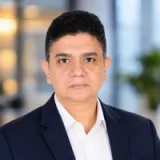
Mohammad Ramzy covers technology for ArabOverclockers, publishing analysis and interviews about PC hardware, enterprise technology, and AI infrastructure. Ramzy's coverage includes COMPUTEX reporting and engineering-focused features on companies such as Synology and Seasonic.
Mohammad Ramzy is useful for editorial coverage of AI infrastructure, enterprise storage, power and trade-show trends.
Best for
Enterprise IT infrastructure vendors seeking MENA and international reach through English and Arabic editorial.
Not for
Consumer brands wanting guaranteed reach, short-form video, or conversion from a personal social following.
Key takeaways
AI infrastructure depends on memory, networking, cooling and power, not only processors.
Synology interview covers enterprise storage, private AI, cyber resilience and Middle East growth.
Seasonic feature focuses on power-supply engineering and reliability rather than specifications alone.
Check first: Confirm recent results for comparable placements in each language and any audience demographic data.
Main ideas
AI infrastructure, not faster parts, is the real industry story · Reporting should explain the reasoning behind the products · Storage vendors are becoming AI and data-protection platforms
Mohammad Ramzy covers technology for ArabOverclockers, connecting PC hardware, enterprise technology and AI infrastructure to broader changes shaping computing.
Their COMPUTEX coverage looks beyond product launches to the systems behind AI, including semiconductors, memory, cooling, power and data centers.
They also share interviews with technology executives and engineering-focused company features.
Read their work for context on how products and industry decisions fit into larger shifts in technology.
Ramzy’s coverage links technologies to the systems and industry choices around them.
In their COMPUTEX analysis, they argue that AI infrastructure depends on more than processors: memory, networking, cooling and power are also becoming strategically important.
Their event reflections add a reporting perspective, highlighting supply chains, partnerships and engineers’ practical challenges that product announcements can miss.
Elsewhere, they interview Synology’s Middle East sales manager about enterprise storage, private AI and cyber resilience, and present a Seasonic feature focused on power-supply engineering and reliability rather than specifications alone.
The work spans formats while exploring the context behind technology.
Ramzy's recurring argument is that computing's most interesting questions have shifted from individual components to how AI systems are assembled and run.
Read more
They frame reporting as an explanation of engineering decisions and industry strategy, rather than product announcements, and publish in English and Arabic for MENA readers and a global audience. Enterprise storage, private AI and cyber resilience recur as infrastructure subjects that warrant analysis in their own right, not just launch coverage.
AI infrastructure, not faster parts, is the real industry story
Ramzy argues that COMPUTEX 2026 was defined not by faster processors or more powerful GPUs but by a shift toward complete AI ecosystems.
Read more
Memory, optical interconnects, cooling and power delivery—once treated as supporting details—now shape what AI systems can do. The industry, they argue, must be understood as a system, not a list of products.
The post lists the areas underpinning the argument: semiconductors and memory technologies, optical interconnects, advanced cooling, power delivery, AI factories, robotics and on-device AI. Ramzy argues Taiwan has moved beyond manufacturing to become an engineering and strategic center where next-decade technologies are developed and combined.
Reporting should explain the reasoning behind the products
Ramzy argues that announcements and spec sheets often obscure more than they reveal; the useful details lie in the conversations and decisions behind a product.
Read more
Companies now present decade-long plans rather than next products, they say, and engineers discussing failed prototypes and compromises can reveal more than a press release.
In the closing piece of the COMPUTEX series, Ramzy says the show’s biggest story was its own transformation: conversation shifted from processors, graphics cards and launch dates to AI infrastructure, manufacturing capacity, energy, supply chains and long-term planning. Meeting rooms and private discussions became as important as the exhibition floor.
Storage vendors are becoming AI and data-protection platforms
Ramzy treats enterprise storage as a strategic subject, not just a hardware category.
Read more
The Synology coverage argues that a NAS company becomes a data-infrastructure provider when it sells storage, backup, governance and AI tools as one managed ecosystem for enterprises and SMBs.
The booth report connects the next-generation DSM platform, Private AI work, ActiveProtect 2.0, PAS7700 enterprise storage, GS Series scale-out infrastructure and surveillance, concluding that Synology is positioning itself as a complete data-infrastructure provider for the AI era.
In a separate interview post, Ramzy summarises points raised by Mike Chen, Synology's senior sales manager for the Middle East: the GS Series entry into large-scale scale-out storage, AI productivity tools and future AI agents in the Synology ecosystem, enterprise and private AI infrastructure, cyber resilience with immutable backups and disaster recovery, and Middle East market growth.
These are Chen's positions as relayed in the post, not Ramzy's own claims.
Engineering heritage is a better hook than a spec sheet
Ramzy argues that unglamorous components underpin the systems built on top of them, and that a company's engineering history explains its current products better than a feature list.
Read more
The Seasonic article focuses on R&D, design and manufacturing choices rather than benchmarks.
The post calls power supplies the most overlooked PC component, despite their foundational role in stability, efficiency and long-term performance. It traces Seasonic's history since 1975 through the evolution of power conversion, Active PFC, PRIME, ATX 3.1, 80 PLUS certification and the 80 PLUS Ruby milestone.
This is the clearest statement of Ramzy's argument about AI hardware and their approach to trade-show coverage: a trend argument rather than a product roundup.
Read more
Newcomers should start here for the thesis that underpins the other posts.
After four days on the COMPUTEX 2026 show floor in Taipei, Ramzy argues that the show was defined less by faster processors than by a shift toward complete AI ecosystems.
The post names the areas behind that argument: semiconductors and memory, optical interconnects, advanced cooling, power delivery, AI factories, robotics and on-device AI.
It also casts Taiwan's role as shifting from manufacturing hub to a place where next-decade technologies are assembled, and reports that the resulting editorial was published in English and Arabic for international and MENA readers.
For brands planning a campaign
A sponsored feature can sit within this trend-argument format rather than read like a launch summary.
The English/Arabic pairing gives one placement reach across international and MENA audiences.
Infrastructure categories such as cooling, power, memory and networking fit this framing better than a single consumer product.
The interview shows what a conversation with Ramzy looks like and that they get time with a regional vendor executive, not just a product manager.
Read more
It's the best starting point for judging whether they can tell a company's enterprise story in its own words.
Ramzy writes about sitting down with Mike Chen, Synology's Senior Sales Manager for the Middle East, and lists the topics they covered: the new GS Series and entry into large-scale scale-out storage; AI productivity tools and future AI agents within the Synology ecosystem; a pivot toward enterprise and private AI infrastructure; cyber resilience, immutable backups and disaster recovery; and growth in the Middle East market. The post presents the interview as a video and describes Synology as evolving from a NAS vendor into a broader data management, AI and cybersecurity provider.
For brands planning a campaign
A vendor seeking a regional enterprise narrative could build a sponsored interview around a named executive and a topic list like this one. The Middle East framing and the storage-plus-security-plus-AI scope give enterprise IT buyers a reason to read beyond the launch.
The post shows the other half of the Synology relationship: booth-based reporting that turns product names into a single positioning claim.
Read more
It lets readers see how Ramzy handles a vendor's portfolio without reducing it to a spec sheet.
During a visit to the Synology booth in Taipei, Ramzy covers the next-generation DSM platform, Private AI initiatives, ActiveProtect 2.0, the PAS7700 enterprise storage line, GS Series scale-out infrastructure and intelligent surveillance.
Rather than simply listing them, the post argues that the company is positioning itself as a complete data infrastructure provider for the AI era, serving enterprises, SMBs and modern digital environments.
It points to a full English and Arabic analysis.
For brands planning a campaign
Event-floor coverage works as a sponsorship format when a brand wants several products covered under one story rather than in separate announcements. The structure suits a portfolio or platform message spanning storage, protection and AI.
The feature shows that Ramzy can write seriously about an unglamorous component, and is their clearest example of an engineering-history format outside AI infrastructure.
Read more
Readers seeking evidence of depth rather than show coverage should start here.
Ramzy argues that power supplies are the most overlooked PC component, despite underpinning stability, efficiency and long-term performance.
The feature covers Seasonic's history since 1975, the evolution of power conversion, Active PFC, PRIME, ATX 3.1, 80 PLUS certification and the 80 PLUS Ruby milestone.
It explicitly focuses on engineering, R&D, design and manufacturing, not just specifications.
For brands planning a campaign
Component and hardware vendors with a manufacturing or R&D story can get coverage without benchmark claims. The format supports a "why this part matters" narrative, useful when reliability matters more to the buying decision than raw performance.
The post explains what Ramzy sees as the source of industry news, and the access and framing they pursue in other pieces.
Read more
It's a short read that makes their working method explicit.
To close the COMPUTEX 2026 series, Ramzy argues that the biggest story was how the exhibition changed: conversations shifted from processors, graphics cards and launch dates to AI infrastructure, manufacturing capacity, energy, supply chains and long-term planning. The post says companies now present a decade-long vision rather than a next product, that meeting rooms and private discussions matter as much as the floor, and that engineers discussing failed prototypes and compromises reveal more than a press release.
For brands planning a campaign
Brands that offer behind-the-scenes or engineer-level access can get a differentiated story rather than another announcement summary. The format also suggests that long-horizon strategy messages travel better with this outlet than launch-date news.
Enterprise storage and data infrastructure: Synology2
Hardware engineering deep dives: Seasonic power supplies1
COMPUTEX 2026 show-floor trend analysis
Ramzy's COMPUTEX coverage treats the Taipei exhibition as an industry-direction story rather than a product roundup.
Read more
After four days on the floor and meetings with product managers, engineers and executives, they argued that the show's central theme was the shift from isolated hardware components to integrated AI infrastructure: semiconductors, memory, optical interconnects, cooling, power delivery, AI factories and on-device AI treated as one system.
They also frame Taiwan as an engineering and strategic center, not only a manufacturing base, and note that private meeting-room conversations produced insights that never reached the exhibition floor.
The multi-part editorial series was published in both English and Arabic.
On-site reporting with executive and engineer interviews, followed by long-form editorial analysis across a series rather than single-announcement posts.
For brands planning a campaign
Brands seeking association with AI infrastructure and data-center narratives—not a single launch—can commission show-floor analysis or an interview-and-analysis package that places their products in the broader ecosystem story.
Enterprise storage and data infrastructure: Synology
Ramzy covered Synology at COMPUTEX 2026 twice.
Read more
In a sit-down interview with Synology's senior sales manager for the Middle East, they explored the GS Series scale-out storage line, AI productivity tools and future AI agents inside the Synology ecosystem, the pivot toward enterprise customers and private AI infrastructure, and cyber resilience, immutable backups and disaster recovery.
A separate booth analysis extended the coverage to DSM, Private AI, ActiveProtect 2.0, PAS7700 enterprise storage and surveillance, presenting Synology as a complete data-infrastructure provider for the AI era rather than a NAS vendor.
Both pieces carry a MENA-market angle.
Executive interview plus booth-based vendor analysis, published in English and Arabic.
For brands planning a campaign
Vendors moving from point products to platforms, especially in storage, data protection and private AI, can use this format to reach enterprise and SMB buyers in the Middle East with a credible technical narrative instead of a launch notice.
Hardware engineering deep dives: Seasonic power supplies
Ramzy's Seasonic feature treats power supplies as an engineering subject rather than a spec sheet.
Read more
It traces the company's history since 1975, the evolution of power conversion technologies, Active PFC, PRIME, ATX 3.1, 80 PLUS certification and the 80 PLUS Ruby milestone, framing the article around R&D, design and manufacturing expertise. The stated approach is not to focus on specifications alone, and the piece was published in English and Arabic.
Company-history and engineering-philosophy feature based on technical background research rather than a product review.
For brands planning a campaign
Component makers with a long engineering heritage can use this profile format to explain why their design decisions matter—an approach suited to brands selling reliability and efficiency to enthusiast and system-builder audiences.
Bilingual English and Arabic publishing for MENA technology audiences
Across the COMPUTEX series, the Synology analysis and the Seasonic feature, Ramzy consistently publishes the same editorial in English and Arabic, describing the pairings as serving international and MENA audiences.
Read more
Arabic-language links appear for every substantive piece in the posts here. This bilingual approach is the clearest recurring format signal, tied to the stated goal of reaching Middle East technology buyers alongside a global readership.
Paired English and Arabic publication of each long-form editorial.
For brands planning a campaign
Brands prioritizing MENA reach can make Arabic-language distribution part of the deliverable rather than an afterthought, an unusual approach among English-first hardware creators.
Ramzy's posts describe an editorial instinct that favors interpretation over announcement coverage: private conversations with engineers about failed prototypes, compromises and solutions that reveal more than a press release; meeting rooms treated as equal to the show floor; and articles examining technological, engineering and economic trends rather than summarizing launches.
Read more
They also publish interviews with named vendor executives, as in the Synology discussion, and point readers to the full analysis rather than reproducing it in the post.
Named-source interviews and trend interpretation, with the post pointing readers to the full article.
For brands planning a campaign
Brands seeking to explain an executive's strategy to a technical audience, rather than simply list a product, are a natural fit. The format supports thought-leadership placements and executive positioning.
Posts describe an ongoing affiliation with ArabOverclockers and editorial coverage of Synology and Seasonic.
Read more
Ramzy publishes hardware and enterprise-technology analysis at ArabOverclockers, the outlet behind the COMPUTEX 2026 coverage and the Synology and Seasonic articles.
The posts do not specify whether Ramzy is the owner, an employee or a contributor.
Synology appears in an interview and booth coverage; Seasonic is the subject of an engineering feature.
The posts disclose no sponsorship, affiliate, investment or commercial partnership.
ArabOverclockers
Disclosed partnership
Posts describe editorial work published at ArabOverclockers: a COMPUTEX 2026 analysis series in English and Arabic, and coverage written as “we” and “our” by the outlet.
Read more
The posts do not specify whether Ramzy is the owner, an employee or a contributing editor.
Ramzy covered Synology in an interview with the company’s Senior Sales Manager for the Middle East on enterprise storage, AI and cybersecurity, and in a Taipei booth visit covering DSM, Private AI, ActiveProtect 2.0 and scale-out storage.
Read more
The coverage discusses the company’s products and strategy; it does not disclose a sponsorship or commercial arrangement.
Ramzy wrote an engineering-focused feature on Sea Sonic Electronics, tracing the company’s power-supply history from 1975 through Active PFC, PRIME, ATX 3.1 and 80 PLUS certification.
Read more
The piece presents the company’s engineering as independent analysis, not a partnership.
Start with the two COMPUTEX 2026 reflections: one argues that the show’s real subject was integrated AI infrastructure rather than faster parts; the closing piece explains how the exhibition itself has changed and why the conversations behind a product matter more than the announcement.
The Synology interview and booth analysis apply the same approach to one vendor’s storage, backup and private-AI strategy, while the Seasonic feature traces a component’s engineering history rather than reviewing it.
Every substantive piece in the posts here appears in both English and Arabic, so Arabic-speaking readers can follow the same reporting.
For more on this ground, the three creators below cover the infrastructure behind AI build-outs, structured comparisons of emerging technology markets, and UK and European data center delivery.
AI infrastructureCOMPUTEXEnterprise storageCyber resilience and data protectionSemiconductors and memoryData centers and AI factoriesPower supply engineeringTaiwan's technology industryTechnology journalismTrade show reportingExecutive interviewsLong-form analysisEnglish and Arabic publishingVendor booth coverageVideo interviewsMENA technology readersEnterprise IT buyersPC and hardware enthusiasts
Michael Freedman
Freedman, like Ramzy, treats AI infrastructure as a systems story: power, cooling, water and grid capacity determine what compute can actually run, not just chips and launches.
Read more
Both write at length about how changes in the physical layer alter the strategic logic above it.
Freedman writes from inside the infrastructure data business at Tiger Data, tracking electricity and the operational data layer down to industrial control systems.
Ramzy reports from trade floors on vendor strategy, storage and components.
Freedman’s reviewed posts are in English and focus on energy planning and operations; their coverage is bilingual and aimed at hardware and enterprise IT readers.
Lee produces the kind of structured comparison Ramzy builds around vendor ecosystems.
Read more
They assess five trapped-ion quantum companies against six systems-engineering dimensions and turn a conference programme into a readable account of where a technology market stands and which commercial paths companies are pursuing.
Lee focuses specifically on quantum computing, presenting evaluation frameworks and infographics, often through a European industrial-policy lens. Ramzy covers a wider field, including AI infrastructure, enterprise storage and PC components, with more on-site reporting, named executive interviews and Arabic editions alongside English.
Allen approaches the same underlying subject from the delivery side: power equipment, chips, cooling, grid constraints and supply chains that shape data center and AI build-outs.
Read more
Like Ramzy, they use conference appearances and panel discussions to explain where the industry is heading.
Allen speaks as a participant, co-founding the Quantum Infrastructure Council and moderating industry panels.
Their posts focus sharply on UK and European planning, procurement and policy.
Ramzy writes as an editor covering vendor products and show-floor themes for a MENA and international audience, publishing in both Arabic and English.
Placement decision: the material supports Ramzy as an editorial fit for a MENA-facing enterprise IT audience, but provides little evidence about who reads the work.
Read more
The COMPUTEX 2026 posts say the analysis was published in both English and Arabic for international and MENA readers.
Their coverage focuses on AI infrastructure and data centres, Synology enterprise storage and cybersecurity, and Seasonic power-supply engineering—topics suited to a campaign aimed at MENA enterprise IT audiences.
The only measured audience figure in the posts here is 827 LinkedIn followers recorded on 11 October 2026.
That is a small base, so sponsorship would rely on ArabOverclockers' editorial channel and its Arabic/English distribution rather than their personal following; a buyer seeking reach from the profile alone should look elsewhere or plan for paid amplification.
Before committing budget, ask for recent results on comparable placements—impressions, views and engagement for AI-infrastructure, storage and hardware-analysis pieces in each language—and whether Ramzy or the publication has an audience survey or platform demographic data covering geography, age and gender.
If the campaign depends on reaching a specific job function or seniority level, ask for documented survey data on employer, occupation and seniority; follower counts and platform demographic data cannot establish those attributes.
Mohammad Ramzy's posts on ArabOverclockers cover technology brands, including a recorded interview with a Synology sales manager at COMPUTEX 2026 and engineering-focused features on Synology and Seasonic.
Read more
They frame brand contact as reporting and analysis through interviews, show-floor meetings, and long-form articles released in English and Arabic.
The posts disclose no sponsorship, paid placement, advertising rate, or formal partner arrangement; they also publish no media kit, sponsor policy, or inquiry route.
A buyer considering sponsored editorial on AI infrastructure and COMPUTEX trends should ask ArabOverclockers whether paid placements are available, what they include, and how they are disclosed.
An enterprise IT infrastructure vendor — in storage, networking, power or data-centre hardware — wants to reach technology buyers in the Middle East and internationally with a sponsored editorial on AI infrastructure and trade-show trends.
Read more
Reasons
The COMPUTEX 2026 coverage already puts this brief into practice: a show-floor argument that computing has moved from isolated components to integrated AI infrastructure, with semiconductors, memory, optical interconnects, cooling, power delivery, AI factories, robotics and on-device AI presented as one system. This framing lets a vendor join a category narrative rather than request a product roundup.
Interview access is documented: a recorded conversation with Synology's senior sales manager for the Middle East on scale-out storage, private AI, cyber resilience and Middle East growth. A vendor with a regional or product executive can use this proven format.
A second format suits component and hardware makers whose case rests on reliability and engineering rather than benchmark numbers. The Seasonic feature covers power conversion, Active PFC, PRIME, ATX 3.1 and 80 PLUS certification through the company's history and R&D, explicitly looking beyond specifications.
Publishing in both English and Arabic is the clearest recurring pattern in Mohammad Ramzy's posts, directly supporting a MENA reach goal rather than treating Arabic as an afterthought.
The stated editorial instinct favours interpretation over announcement coverage, with engineers discussing failed prototypes and compromises and meeting rooms treated as equal to the show floor. That supports thought-leadership placement.
Before proceeding, ask for audience geography, occupation and seniority data: the only measured audience figure available is 827 LinkedIn followers, recorded on 11 October 2026, and the posts provide no further audience data. Ask ArabOverclockers directly for its rate card, media kit, sponsor policy and disclosure practice; none appears in the posts.
Verdict
Strong fit on subject, format and language. Reach and commercial terms remain unconfirmed.
When to choose a specialist
A consumer brand — such as a gaming peripheral or phone maker selling directly to a young general audience — wants guaranteed reach and conversion from the creator's own social following. It wants a short-form video or meme-led post, measured in impressions, clicks and sales within a fixed window.
Read more
Reasons
The reviewed output is long-form technical editorial published through ArabOverclockers, with each social post pointing to an English and Arabic article or a video interview. The material shows no standalone short-form consumer content.
The material includes no engagement, impression or conversion history, so a reach guarantee cannot be assessed or underwritten.
The only measured audience figure is 827 LinkedIn followers. That base will not carry an impressions-based campaign on its own; budget separately for paid amplification.
The material documents no audience demographics, so the campaign could not be targeted by age, interest or purchase behaviour.
The posts describe no sponsorship product: no rate card, media kit, disclosure policy or inquiry route. Ask ArabOverclockers directly whether it offers a purchasable slot.
The editorial approach favours trend interpretation and engineering depth over product hype, working against the requested format.
Verdict
Poor fit for this brief as it stands.
What would change the verdict
Ask for documented audience demographics and platform-level analytics, past performance figures for comparable placements, and a confirmed paid-format offer with disclosure terms.
A worked campaign example
Angle
"AI infrastructure is the story, not the launch." Commission a COMPUTEX-style trend editorial that treats the sponsor's category — data-centre cooling, power delivery or networking — as one structural layer in the shift to integrated AI infrastructure, alongside memory, optical interconnects and on-device AI. Pair it with a named-executive interview, as in the Synology conversation. Publish the package in English and Arabic.
Deliverables
Long-form analysis in English and Arabic: one argument-led piece on what the show or quarter reveals about AI infrastructure, with the sponsor's product category presented as one layer rather than as a listed product.
A video interview and accompanying write-up with a sponsor executive responsible for a region or product line, covering strategy and trade-offs — the model behind the Synology discussion of scale-out storage, private AI and cyber resilience.
Two LinkedIn posts pointing to the articles and carrying the trend framing, not a promotion.
If the sponsor's case rests on R&D and reliability rather than benchmark numbers, use an engineering deep dive modelled on the Seasonic feature: company history, design decisions and certification milestones instead of a specification table.
Goal
Place an enterprise infrastructure vendor inside an argument about where AI computing is heading, reach MENA technology buyers in their own language, and build credibility with a technical readership rather than buy a banner.
Measurement and next step
Set the success metric before signing. Ask ArabOverclockers for impressions, views and engagement on comparable AI-infrastructure, storage and hardware-analysis placements in each language, and for any audience survey covering geography, age and gender. If the brief requires guaranteed reach or a specific job function, budget for paid amplification and ask for documented employer, occupation and seniority data; follower counts cannot establish those.
Sequence
Agree on the angle and interview questions before field work starts.
Arrange access to the show floor, engineers and executives.
Draft the English analysis and review it with the sponsor for factual accuracy, not messaging.
Translate and localise it for Arabic publication, then release both versions together.
Publish, then run the LinkedIn posts across two windows to extend the first week.
Sponsor integration rule
Provide access and technical depth: engineers, compromises and roadmap context. Don’t ask for a spec sheet or copy approval of the argument. The format works because the analysis can reach its own conclusion.
When the sponsored editorial is about the physical constraints on AI computing — power, cooling, water, grid interconnects, backup generation — and the sponsor sells data-centre power, cooling or infrastructure software rather than a mainstream IT product.
Read more
Ramzy's strongest argument is that power has shifted from something compute optimises to the binding constraint, supported by two concrete cases: hyperscalers refusing server expansion requests because of regional power capacity limits, and the proposed $67B NextEra–Dominion deal being read explicitly as a response to AI data-centre electricity demand.
A sponsor whose product sits in that layer gets a writer who frames the whole systems problem rather than one component, drawing on a distributed-systems, networking and storage background to explain why the compute layer and the physical plant are now one architecture.
The conference talk on industrial control paired with a time-series database points the same way for an industrial automation or operational-data buyer: the argument is about operating real-time plant data at scale, not launch specifications.
Language and reach do not match the MENA goal.
Ramzy's posts are in English, with no Arabic publication or Middle East market focus, while they publish each major piece in English and Arabic and name the Middle East as a growth market.
The register is commentary from inside a data-platform company and an academic systems background, not trade-show floor reporting; a sponsor expecting COMPUTEX-style access, executive interviews and bilingual placement would be buying a different kind of asset.
Ask for audience figures, engagement data and commercial terms; none are published in the posts here.
When the campaign is specifically about quantum computing and the sponsor sells into research institutions, national programmes or the quantum supply chain rather than general enterprise IT.
Read more
The reviewed work includes a structured competitive assessment of five commercial trapped-ion quantum hardware companies — IonQ, Quantinuum, Oxford Ionics, Universal Quantum and AQT — judged against six named engineering and commercial dimensions and presented as an infographic, framed around the path to fault-tolerant machines.
It also includes a detailed account of a European quantum conference, covering the Commission's move toward industrial strategy, the supply-side landscape, multiple qubit modalities and an end user's readiness work in optimisation, simulation and cryptography.
A sponsor that needs its category positioned inside a competitive map, or wants quantum treated as an emerging critical infrastructure question alongside talent, supply chains and skills, gets that here.
The buyer task is technical evaluation and readiness planning.
Quantum procurement is a narrower and slower buyer task than mainstream AI-infrastructure hardware, so a general storage, networking or power vendor would be addressing a small slice of its own market and a buyer with a long evaluation cycle.
Ramzy's posts are English-only with no documented MENA distribution, and take the form of analyst and conference summaries — a vendor taxonomy and a recap of other people's presentations — rather than firsthand testing or named-executive interviews.
For show-floor access, regional reach or bilingual publication, keep that work with them.
When the campaign targets UK and European digital-infrastructure delivery and the sponsor's problem is scarcity — power equipment, chips, cooling, supply chains and skilled people — rather than a forward-looking technology trend.
Read more
Ramzy's posts include attendance at a UK infrastructure event representing the Quantum Infrastructure Council alongside its co-founder David Snelling, with the UK frame treated as the reason the conversations were actionable: planning reform, grid constraints, regional growth, investment appetite and skills.
They also announce moderating a Capacity Europe 2026 panel on scaling under scarcity, which puts the sponsor's category — delivery constrained by equipment, chips, cooling and procurement — in front of a connectivity, cloud and data-centre audience.
Allen treats quantum readiness as a practical infrastructure question about power, cooling and site design, which suits a sponsor selling into data-centre construction and operations.
A conference platform plus an industry-body association gives a campaign more than a byline.
Geography is the deciding difference, and it is not MENA: Ramzy's posts are grounded in UK planning and grid conditions and in a European audience measured in thousands of decision-makers.
Their output is event attendance and panel preparation, not published long-form analysis; establish separately what would be written about the sponsor's category.
There is no Arabic-language publication or Middle East commentary in the posts.
Ask for audience and sponsorship figures, which are not published, and confirm how an industry-body role would be disclosed alongside sponsored editorial before commissioning.
Five posts on Mohammad Ramzy's LinkedIn account during the COMPUTEX 2026 cycle cover show-floor trend analysis, a closing reflection on how the exhibition is changing, a Synology executive interview, a Synology booth report, and a Seasonic power-supply feature.
The longer English and Arabic articles and the video interview they link to are not described here beyond what the posts say about them.
The posts carry no individual publication dates.
LinkedIn showed 827 followers on 11 October 2026.
The posts do not provide audience demographics, engagement figures, a rate card or sponsorship terms; where those gaps affect a decision, this page names them rather than filling them by inference.