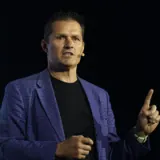
Jay McBain contributes to and hosts events for the technology channel industry, bringing together managed service providers, vendors, and other partners to discuss business growth, channel economics, and routes to market.
Jay McBain is most useful for analyst-led channel events and discussions on partner economics.
Best for
Channel-partnerships software brands seeking keynotes or advisory on partner programs and MSP economics.
Not for
Consumer or prosumer launches aimed at small-business owners outside the partner ecosystem.
Key takeaways
Channel events should be judged by curated meetings and independent analysis, not expo scale.
MSP business economics deserve the stage more than AI.
Cloud-born, community-led companies can reach unicorn scale far from Silicon Valley.
Check first: Ask for post-level engagement on comparable keynotes or webinars before committing budget.
Main ideas
Channel events should be judged by curated meetings and independent analysis, not expo scale · MSP business economics deserve the stage more than AI · Cloud-born, community-led companies can reach unicorn scale far from Silicon Valley
Jay McBain contributes to and hosts events for the technology channel industry.
In their posts, they bring together managed service providers, vendors and other partners to discuss how the channel grows and changes.
One post explains why Canalys Forums emphasizes analyst-led perspectives and pre-arranged meetings; another describes an MSP Summit panel focused on profitability, marketplaces and channel economics.
These examples offer a starting point for understanding their event work.
The posts connect big channel trends to practical business questions.
At Canalys Forums, McBain contrasts curated one-to-one meetings with the chance encounters of an expo floor.
At MSP Summit, the discussion moves past AI hype to profitability, marketplace models, changing partner programs and private-equity effects.
These examples show how they frame conversations for senior channel and MSP audiences.
Before making broader claims about their public identity, ask whether books, shows, businesses or earlier work are also central.
Jay McBain's ideas focus on where value sits in the technology channel: the vendors, distributors, managed service providers, resellers and integrators who sell through partners.
Read more
Two arguments run through the posts: channel events are worth attending for curated one-to-one meetings and an independent analyst agenda, not the expo floor; and the money questions inside MSP businesses — profitability, marketplaces, program economics and private-equity funding — deserve the stage more than AI branding.
They also argue from counts, citing 352 channel events worldwide and the nineteenth year of one European franchise, and write from inside events as a host, contributor and team member.
Another recurring observation is that cloud-born, community-led companies can reach billion-dollar scale far from Silicon Valley.
Channel events should be judged by curated meetings and independent analysis, not expo scale
Jay McBain argues that a channel event’s value lies not in its expo floor or chance encounters but in pre-arranged one-to-one meetings between vendors, partners and distributors.
Read more
An independent, analyst-led agenda separates these gatherings from vendor-led conferences.
The case rests on who is in the room: an invite-only audience of more than 1,000 senior executives from EMEA's largest partners and distributors, plus global channel chiefs, can commit investments for the following year.
A regional cadence argument follows: one flight per region in the fourth quarter lets vendor partner executives meet most of their addressable market.
They write about this as a contributor and team member, not as a reporter.
Canalys Forums 2026 in Barcelona, described as its nineteenth year in Europe, opened with keynotes from Omdia and executives at Google Cloud, Microsoft and TD SYNNEX. Jay McBain contrasts its model with vendor conferences, notes the opening-night dinner that attendees call "Davos for the channel," and lays out the sequence: Barcelona, Scottsdale for the Americas in November, then Bali for APAC in December.
MSP business economics deserve the stage more than AI
Hosting a panel at MSP Summit, Jay McBain deliberately framed it as a "No AI-Zone" to keep the conversation on how managed service providers actually make money: their businesses, profitability, marketplaces, changing programs and economics, services multipliers, and the impact of private-equity funding.
Read more
The argument is that these decisions shape MSP companies, while AI-first programming crowds them out.
The first day of MSP Summit in Orlando, run by Informa, where Jay McBain hosted three companies from the MSP industry: Kyle Hanslovan, CEO of Huntress; Stephanie Benzik, senior marketing for MSPs at NinjaOne; and Rob Rae, CVP of community at Pax8.
This is a counter-position to AI-heavy channel conference programming rather than a settled theme; a reader should not assume AI-led narratives are Jay McBain's default angle.
Cloud-born, community-led companies can reach unicorn scale far from Silicon Valley
From the same MSP Summit panel, Jay McBain draws a pattern across the three companies represented: all were born in the cloud, founded 11 to 15 years earlier, reached valuations above a billion dollars, began thousands of miles from Silicon Valley, and grew through a grass-roots community approach in the MSP space.
Read more
The point is that a repeatable route to scale exists outside the venture-and-hype model usually associated with technology growth.
Huntress, NinjaOne and Pax8 were represented on the panel by Kyle Hanslovan, Stephanie Benzik and Rob Rae, respectively. Jay McBain identifies founding and valuation as characteristics shared by the three companies.
Claims about the channel should be measured against a tracked market
Jay McBain argues for a franchise's distinctiveness by counting rather than asserting.
Read more
The Canalys Forums post places one event within a tracked universe of 352 channel events worldwide, points to longevity as evidence, and presents the event's senior audience and meeting format as structural choices rather than marketing language. The MSP Summit post makes a similar case for another franchise, calling Channel Partners Expo in Las Vegas the largest channel event in the world and describing MSP Summit as a premier fall event paired with it each spring.
The posts cite 352 channel events tracked around the world and the nineteenth year of Canalys Forums in Europe. The MSP Summit post adds the event's two-decade evolution and credits the team behind it, including Kelly Danziger and Robert DeMarzo.
This is a clear explanation of what Jay McBain does in the channel world and why the events they work on differ from vendor conferences.
Read more
A newcomer looking for an introduction should start here.
Jay McBain describes opening the 2026 Barcelona edition of Canalys Forums — the 19th year in Europe — and explains the format.
It is an invite-only gathering of more than 1,000 senior executives from EMEA's largest partners and distributors, plus global channel chiefs, with keynotes from Omdia and executives at Google Cloud, Microsoft and TD SYNNEX.
The value, they argue, is not the expo floor but pre-arranged 1:1 meetings between vendors, partners and distributors.
An independent, analyst-led agenda sets the event apart from vendor-led conferences among the 352 channel events the post says are tracked worldwide.
The post also lays out the regional cadence: Barcelona, Scottsdale in November for the Americas, then Bali in December for APAC — one flight per region for vendor partner executives to meet most of their addressable market.
McBain signs off as a contributor and team member.
The same text also appears on Instagram.
For brands planning a campaign
A channel-partnerships software vendor can use this as a reference for what senior partner audiences value: curated meetings over spectacle. It supports a keynote or analyst-led webinar built around measurable meeting outcomes rather than a product pitch, and gives a co-authored channel-trends report a concrete frame: analyst-led independence plus the three-region Q4 calendar for presenting partner data.
It shows what Jay McBain discusses with managed service providers rather than global vendors, and the specific detail they bring to a panel.
Read more
A recap of the first day of MSP Summit in Orlando, run by Informa, centered on a panel Jay McBain hosted with Kyle Hanslovan of Huntress, Stephanie Benzik of NinjaOne and Rob Rae of Pax8.
The post's point about the three companies: all were born in the cloud, founded 11 to 15 years earlier, reached billion-dollar valuations and grew through grassroots community work far from Silicon Valley.
The panel was deliberately run as a 'No AI-Zone' to keep the conversation on MSP businesses — profitability, marketplaces, changing programs and economics, services multipliers and the effect of private equity funding.
The post also places MSP Summit alongside Channel Partners Expo in Las Vegas, which it calls the largest channel event in the world.
For brands planning a campaign
For a vendor selling into the MSP channel, this shows the topics Jay McBain can cover for a partner audience without defaulting to AI hype: unit economics, marketplaces and program design. It offers a template for a moderated webinar or a co-authored report section on how cloud-born, community-led MSP vendors scaled, using the three named companies as cases.
Both Canalys Forums posts describe an invite-only gathering of more than 1,000 senior executives from EMEA's largest partners, distributors and global channel chiefs.
Read more
They contrast it directly with vendor-led conferences: the value is an independent, analyst-led view of AI, cybersecurity, managed services, partner economics and changing routes to market.
The differentiator is meetings, not an expo floor: curated, pre-arranged one-to-one meetings between vendors, partners and distributors.
The posts also describe a regional rhythm—Europe in Barcelona, the Americas in Scottsdale and APAC in Bali—framed as one flight per region in the fourth quarter.
First-person event walkthroughs compare event models and name audience segments: vendors, distributors, MSPs, resellers, systems integrators and ISVs across hardware, software, OT, cyber, IT services and telecom.
For brands planning a campaign
A keynote or analyst-led webinar built around independent channel analysis fits this positioning. The meeting-led format points to a co-hosted executive session with pre-booked one-to-one meetings, rather than a booth or expo presence.
The Canalys Forums posts support their claim with a tracked count of 352 channel events worldwide and the event's longevity, noting its nineteenth year in Europe.
Read more
They make the case for its value through its structure (invite-only, deliberately senior audience, pre-arranged meetings) and experience design, including an opening-night dinner described as "Davos for the channel." The posts state that the author is a contributor and team member.
Quantified comparison against a tracked set of competitor events, with a stated rationale for the audience and format.
For brands planning a campaign
Useful for a partner-marketing brief that needs an analyst to frame a company's event or partner program against a measured competitive landscape, not just promote it.
The MSP Summit post lists the subjects covered by a hosted panel: MSP businesses, profitability, marketplaces, changing programs and economics, services multipliers, and the impact of private equity funding.
Read more
Deliberately framed as a "No AI-Zone," the discussion focused on how MSPs make money and how vendor programs and marketplaces are changing.
Panel hosting and moderation, with the host's topic list stated explicitly.
The panel explicitly excluded AI, a deliberate counter-position to AI-heavy channel programming. Brands seeking an AI-led narrative should ask whether another format is available.
For brands planning a campaign
A co-authored channel-trends report on MSP economics, marketplace shifts or private-equity effects would build on this expertise. The "No AI-Zone" framing also offers a useful angle for vendor audiences tired of AI-first programming.
Cloud-born, community-led growth outside Silicon Valley
The MSP Summit post identifies a pattern across three companies represented on the panel: founded between 11 and 15 years ago, cloud-native from the start, valued above a billion dollars, founded thousands of miles from Silicon Valley, and grown through a grass-roots community approach in the MSP space.
Read more
It names the executives hosted: Kyle Hanslovan of Huntress, Stephanie Benzik of NinjaOne and Rob Rae of Pax8.
Cross-company pattern-spotting from a hosted panel, with named participants and stated founding and valuation attributes.
For brands planning a campaign
A strong hook for partner-program and community-led growth messaging aimed at vendors, particularly those positioning against a Silicon Valley default.
The MSP Summit post describes the event as having evolved over a couple of decades into a premier fall event, paired with Channel Partners Expo in Las Vegas each spring, and credits the team behind it, including Kelly Danziger and Robert DeMarzo.
Read more
Jay McBain's posts describe this as a second event franchise alongside Canalys Forums, presenting both from the perspective of a host or contributor rather than an attendee.
For brands planning a campaign
Supports a moderator or conference-host engagement across multiple channel event franchises, with a campaign calendar spanning spring and fall event seasons.
Jay McBain’s posts name two organizations they belong to: Informa, whose team runs the MSP Summit they attended in Orlando, and Canalys, where a Canalys Forums post signs off with “Honored to be a contributor and team member.”
Read more
Other companies appear only as keynote speakers or panel guests: Google Cloud, Microsoft and TD SYNNEX at Canalys Forums, and Huntress, NinjaOne and Pax8 on an MSP Summit panel. Ask for confirmation before treating those appearances as evidence of a working relationship.
Informa
Employment
A post about the first day of the MSP Summit in Orlando calls it an event run by “our Informa team,” placing Jay McBain within the organizing group.
Read more
The post also describes hosting a panel of three cloud-born MSP companies and links the MSP Summit to Channel Partners Expo in Las Vegas as paired channel-industry events.
Original disclosure
Great first day at MSP Summit in Orlando with our Informa team.
Two versions of a post about Canalys Forums 2026 in Barcelona describe the analyst-led, invite-only format, pre-arranged 1:1 meetings and the Americas edition in Scottsdale and APAC edition in Bali later in 2026.
Read more
Both close by identifying Jay McBain as a team member, placing the post within the organization that tracks channel events and runs the forums.
Jay McBain's published work is channel-industry commentary from inside the events themselves: recaps of Canalys Forums in Barcelona and MSP Summit in Orlando, along with related panel and hosting work.
Read more
The event posts make two recurring arguments: channel events are worth attending for curated one-to-one meetings and independent, analyst-led agendas rather than expo scale; and MSP profitability, marketplaces, program economics and private-equity funding matter more than AI branding.
The tags group the material by subject, type of work and intended audience, making it easy to follow either the channel-ecosystem or MSP-economics thread.
The three creators listed alongside McBain work in the same channel and IT-services world, but offer different perspectives: a vendor program executive writing partner-enablement recaps, a practitioner writing sales and account-management frameworks, and a conference-going community contributor writing practical advice for MSPs and partners.
Channel ecosystemMSP business economicsPartner programs and marketplacesChannel events and conferencesCommunity-led growthIndependent channel analysisEvent hosting and moderationEvent recapsFirst-person industry commentaryChannel and partner executivesMSP owners and leaders
Steve Sipos - M.B.A.
Steve Sipos writes first-person recaps of partner and reseller events inside the same channel ecosystem Jay McBain covers.
Read more
Both explain a program model, not just report on an event. Sipos describes TD SYNNEX sales-team days, a mobility co-sell program, and why resellers and distributors should care—the same event-plus-program approach McBain takes in writing about Canalys Forums.
Steve Sipos writes from inside a vendor's channel program, explaining what Verizon Business offers resellers and how partners can participate.
The posts read as sales-team enablement.
Jay McBain writes at industry level, comparing event formats and measuring one franchise against a tracked market of hundreds of others.
Readers looking for a partner-facing program walkthrough will get more from Sipos; those seeking independent market framing will get more from McBain.
Roger Collins writes for the same managed-services and IT-channel audience Jay McBain addresses, and both turn personal experience into a reusable structure.
Read more
Collins's post on running quarterly business reviews lays out a step-by-step agenda covering business update, security, service experience, roadmap, risk and recommendations. McBain shows the same instinct when they name the subjects an MSP panel should cover.
Roger Collins offers practitioner instruction: how an account manager should prepare for and run a client meeting, and how a sales career setback proved useful.
Jay McBain offers industry commentary on where value sits across the channel and which events are worth a vendor's time.
The advice differs in altitude: client-level execution versus market-level judgment.
Joe Markert writes for the MSP and channel-community audience about conferences and customer success.
Read more
Both Markert and Jay McBain make the conference itself a subject: Markert explains how to network before and during a first event, while McBain explains why one event's meeting-led format differs from another's expo floor. Both also contribute to industry books and frameworks rather than only commenting from the outside.
Joe Markert writes as an attendee and community member, offering practical conference advice and contributing an essay on the Six Disciplines of customer success.
Jay McBain writes as a host, contributor and team member, describing how an event is designed and positioned.
Readers looking for advice on attending a conference should follow Markert; those seeking the case for an event's design should follow McBain.
Jay McBain's posts point to professional channel reach on LinkedIn rather than broad social scale.
Read more
Their LinkedIn account has 63,295 followers (observed 9 October 2026) and their Instagram account has 1,783 followers (observed 12 October 2026).
For a keynote, analyst-led webinar, or co-authored channel-trends report aimed at vendors, distributors, managed service providers, and resellers, LinkedIn is where the substantive professional audience sits; Instagram adds little measurable reach.
The posts indicate who the content is aimed at, but not who follows the accounts.
One recaps hosting a panel at the MSP Summit in Orlando with Kyle Hanslovan of Huntress, Stephanie Benzik of NinjaOne, and Rob Rae of Pax8.
It covers MSP profitability, marketplaces, partner economics, and private-equity funding, and refers to "our Informa team."
The other describes Canalys Forums in Barcelona as an invite-only gathering of 1000+ senior executives from EMEA's largest partners, distributors, and global channel chiefs.
It positions the event against vendor-led conferences and identifies Jay McBain as a contributor and team member.
Together, the posts point to a senior partner-and-channel readership, but describe event audiences rather than follower composition.
Ask Jay McBain for recent LinkedIn audience demographics (industry, seniority, and region) for posts on channel economics and partner programs, engagement data for comparable keynotes or webinars, and attendee composition figures for events they host or contribute to.
If those data are unavailable, ask whether audience surveys or documented attendee lists can show employer, occupation, and job seniority.
LinkedIn followers
63,295
LinkedIn profile audience count, account-level record · 2026-10-09
Instagram followers
1,783
Instagram profile audience count, account-level record · 2026-10-12
Jay's partnership activity in these posts is event-based, not a published sponsorship programme.
Read more
They hosted a panel at MSP Summit in Orlando for the Informa team, bringing together executives from Huntress, NinjaOne and Pax8, and describe being a contributor and team member at Canalys Forums, the analyst-led channel event held in Barcelona, Scottsdale and Bali. Before committing budget, ask about sponsorship packages, rates, exclusivity terms and the partnership contact route.
Hosting conference panels with channel vendor executives
Buyer requirement
The panel Jay hosted at MSP Summit featured senior executives from Huntress, NinjaOne and Pax8, described as cloud-born companies founded 11 to 15 years earlier that grew through grassroots community work in the MSP space.
A brand seeking this kind of slot should bring a senior executive speaker with a channel-community story, not a product pitch.
Before planning, ask the event organiser how the panel was booked, who decides the line-up and whether brands can request a seat.
Contributing to analyst-led channel forums
Buyer requirement
Canalys Forums is described as invite-only, capped at roughly 1,000 senior executives from EMEA's largest partners, distributors and global channel chiefs, and built around pre-arranged one-to-one meetings rather than an expo floor.
Jay describes being a contributor and team member, so the forum programme—not Jay alone—decides brand participation.
Ask the forum about sponsorship tiers, meeting quotas and costs before building a plan around them.
This is a strong fit for a B2B channel-partnerships software company seeking a recognized channel-ecosystem analyst for a keynote and advisory role.
Read more
Three elements of Jay McBain's posts support that.
First, the positioning matches.
The Canalys Forums post argues that the event's value lies in independent, analyst-led content rather than a vendor-led agenda, and that pre-arranged one-to-one meetings do more for partner relationships than an expo floor.
The claim is anchored in a tracked set of 352 channel events worldwide and a nineteenth year in Europe.
That is the argument a channel-partnerships vendor is trying to make about its own category, delivered by someone who already makes it in public.
Second, the topics line up with partner-programme selling.
The MSP Summit post lists the subjects Jay hosted a panel on: MSP businesses, profitability, marketplaces, changing programmes and economics, services multipliers, and the effect of private-equity funding.
Those are the buying decisions a partner-programme vendor's prospects are making.
Third, the audience channel fits.
Jay's LinkedIn account has 63,295 followers (observed 9 October 2026), compared with 1,783 on Instagram (observed 12 October 2026).
Both posts are written for senior vendor, distributor, MSP, reseller, systems-integrator and ISV readers.
LinkedIn is where an audience for a campaign aimed at channel decision-makers sits.
Before committing budget, ask for post-level engagement on comparable keynote or webinar content, attendee-composition figures for events Jay hosts or contributes to, and details on sponsorship packages, rates, exclusivity and the partnership inquiry route.
Canalys Forums is described as invite-only, with the programme deciding participation, so a vendor slot cannot be assumed.
When to choose a specialist
A consumer or prosumer product launch aimed at small-business owners outside the partner ecosystem—for example, a lifestyle brand or a general-business app seeking short-form video reach and a high-volume creator campaign—is a poor fit for Jay McBain's posts.
Read more
Every post is channel-ecosystem event commentary for vendors, distributors, managed service providers, resellers, systems integrators and ISVs.
The posts don't address consumers, general small-business owners or product-led demand generation.
The MSP Summit panel was deliberately run as a "No AI-Zone" so the conversation stayed on partner economics, a counter-position to AI-led programming rather than a hook for an AI-first product launch.
The Instagram account has 1,783 followers (observed 12 October 2026), but the posts provide no evidence about video performance or engagement, so they don't support a promise of reach, format or conversion on that channel.
If a consumer product launch aimed at small-business owners is genuinely on the table, confirm directly whether sponsorship work is available and what formats and rates are offered.
A worked campaign example
A worked campaign angle for channel-partnerships audiences, using the three requested formats.
Anchor keynote. Build it around the meeting-led argument Jay McBain already makes in public: independent, analyst-led content and pre-arranged one-to-one meetings beat expo-floor spectacle. The keynote frames where senior partner attention goes across the channel event landscape, then directs the audience into booked meetings rather than a product pitch.
Analyst-led webinar. Run 45 to 60 minutes on the subjects covered by the MSP Summit panel: MSP unit economics, marketplaces, changing programmes and economics, services multipliers, and private-equity effects. Use Huntress, NinjaOne and Pax8 as the three named cases of cloud-born, community-led growth described in that post—founded 11 to 15 years ago, with billion-dollar valuations, and built far from Silicon Valley. The vendor's own partner data supplies the new material; the analyst frame supplies the credibility.
Co-authored channel-trends report. Follow the regional cadence set out in the Canalys Forums post—Europe, the Americas, APAC across one quarter—and give each region a section on partner programme economics, independent analyst-led agendas, and meeting-led formats. The vendor contributes partner-performance data for the analyst to interpret.
Sequence and measurement. Hold the keynote first, the webinar within a few weeks, and launch the report after the webinar to capture the questions asked. Track pre-arranged one-to-one meetings as the primary success metric, using registration-to-meeting conversion rather than impressions.
Before committing, confirm whether a vendor can book a presence at the forums and on what terms; sponsorship tiers and costs; exclusivity; the scope and fee of the advisory arrangement; and comparable engagement figures for past keynotes or webinars.
Choose Steve Sipos when the campaign needs a partner-program practitioner rather than an independent analyst.
Read more
Both posts show field-level channel enablement: presenting Verizon Business channel programs to a distributor's enterprise, SMB, and public-sector sales teams, and working a distributor symposium with reseller partners. If the ask shifts from market framing to rolling out a specific partner program — explaining co-sell mechanics, connected-device offers bundled into complete solutions, partner compensation, and what reseller reps should do next — someone who does that work at distributor events matches the task more directly than an analyst delivering a market keynote.
The tradeoff is scope and independence.
The material is tied to one vendor's programs and distributor relationships, giving it vendor-program detail but not a cross-ecosystem view.
It also does not show keynote-stage or independent research credentials.
For a brief whose headline deliverable is an analyst-led trends report, this is a supporting enablement voice rather than the centrepiece.
Choose Roger Collins when the audience is MSP account teams and the deliverable is an operational playbook.
Read more
The reviewed quarterly-business-review post offers a step-by-step framework — standardised deck template, business update, executive-summary metrics, security review, service-experience review, roadmap progress, risk review, and recommendations — aimed at turning a $3,000-a-month client into a $10,000-a-month strategic account.
The career post adds a persistence story about returning to an account-executive role and finishing a year at roughly 170% of target.
That combination suits a webinar, workshop, or enablement piece that teaches MSPs how to run a business-review motion more than a market-analysis keynote.
The tradeoff is altitude and audience.
The content is tactical and MSP-facing, without channel-ecosystem forecasts, vendor program economics, or independent analyst authority aimed at vendor and distributor executives.
A channel-partnerships vendor would get practical resonance with MSPs but lose the top-tier analyst framing needed for a campaign aimed at vendor and distributor executives.
Choose Joe Markert when the goal is MSP-community presence and conference-circuit engagement.
Read more
One post is a practical networking guide for first-time conference attendees; the other describes contributing an essay, "The Two Chasms," to a customer-success book for MSPs and sets out its six disciplines — strategy, health, deliverables, process, people, technology — as an operating system MSPs can run. That mix suits a campaign that wants to meet MSPs in person, build community around a customer-success message, and co-create practical content with a contributor to MSP thought leadership.
The tradeoff is authority and platform scale.
The voice is that of a community practitioner rather than an independent analyst; the material shows conference networking advice and a book contribution, not original market research or cross-vendor ecosystem data.
As a community and customer-success partner alongside an analyst-led keynote, this works.
Substituting it for the analyst centrepiece would leave the market-analysis and independent-credibility requirements unmet.
This page rests on two distinct posts by Jay McBain, both published in October 2026: a recap of MSP Summit in Orlando and a post about Canalys Forums 2026 in Barcelona.
The Canalys post appeared twice with identical text, on LinkedIn and on Instagram, so it counts as one post rather than two, and the section coverage notes treat the duplicate copies the same way.
Account follower counts were observed on 9 October 2026 (LinkedIn) and 12 October 2026 (Instagram).
Three comparable creators in the same channel and IT-services world — Steve Sipos, Roger Collins and Joe Markert — published six further posts, published between August 2024 and September 2026, used only to explain similarity and difference, not to rank alternatives or to trace longer-term change.
Gaps that remain: no transcripts, keynote recordings, video, long-form writing or wider post archive were available, and no rate card, sponsor terms, engagement figures or audience demographics.
The posts also say nothing about a signature book, show or business, or about earlier career history, so name-search coverage stays incomplete.