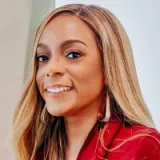
Bianca B. King is an entrepreneur, speaker, and writer who helps women rethink ambition and build success around their own priorities. Her work includes Joyful Ambition, a framework for pursuing success with intention and joy.
Most useful for women-focused professional development keynotes or workshops on joyful ambition and sustainable success.
Best for
A women-focused professional development company seeking a keynote or workshop on joyful ambition.
Not for
A B2B software paid social series needing product promotion, click-through guarantees, and verified audience demographics.
Key takeaways
Ambition can pull toward a wanted future or push into exhaustion.
Receiving an opportunity can be as hard as creating one.
Test both readiness and fit before saying yes.
Check first: Ask for the full framework, audience analytics, and any commercial terms.
Main ideas
Let ambition pull toward a chosen life, not push toward endless achievement · Receiving an opportunity can be as hard as creating one · Test both readiness and fit before saying yes
King is an entrepreneur, speaker, and writer known for Joyful Ambition, an approach to pursuing success in line with your own priorities rather than the conventional push for more at any cost.
Their work draws on experience in commercial real estate and building a marketing agency, and speaks especially to women who want ambition without exhaustion.
Start with their writing for a personal account of the ideas, or their LinkedIn posts for concise statements of the framework and its origins.
King connects ambition to decisions readers can picture.
In one LinkedIn post, they contrast success measured by transactions, revenue, and recognition with the question of whether ambition is pulling someone toward a wanted future or pushing them into exhaustion.
In their newsletter, they make that distinction practical through a personal story about declining speaking invitations: being capable of saying yes is different from deciding whether an opportunity fits the life one is building.
The story complicates a simple “say yes to more” message; King’s point is to receive opportunities without mistaking fear for misalignment, while protecting real priorities.
The result is a mix of personal narrative, a named framework, and questions readers can use to examine their choices.
Ask for the full framework and the referenced podcast episode to assess them; the posts describe a four-part framework but explain only two of its five A’s.
King argues that success should be measured against a person’s own priorities, not just conventional milestones.
Read more
Their writing connects that idea to sustaining ambition, deciding which opportunities to accept, and learning to receive recognition without sacrificing the life one wants to build.
Let ambition pull toward a chosen life, not push toward endless achievement
King contrasts what they call traditional ambition—doing more and moving faster, yet feeling there is never enough—with “Joyful Ambition,” which they define as pursuing success in line with one’s ideals.
Read more
Their point is not to abandon diligence, but to choose what success is for.
In a LinkedIn post, King lists business results and media recognition, then argues that checking conventional boxes can still leave someone exhausted or regretful. They ask whether ambition is pulling a person toward a wanted future or pushing them into exhaustion.
Receiving an opportunity can be as hard as creating one
King argues that work can become visible before its creator feels ready to accept the opportunities it attracts.
Read more
They describe hesitation as something that can sound like humility or good manners while still closing a door. Their account makes receiving—not only striving—a part of ambition.
King recalls turning down a major conference invitation in 2016, saying they were not ready.
In 2024, after gaining more public experience, they initially declined a TED-style talk in Montreal too; a friend persuaded them to do it.
King says the fear remained, but they stopped letting it make the decision.
King separates two questions: whether someone can do an opportunity and whether it fits the life they are building.
Read more
They warn against treating fear as a reason to decline, but also against accepting an opportunity that requires contorting family or personal commitments. The distinction gives their argument a practical limit: not every open door should be taken.
King suggests picturing the actual week an opportunity would require, including where one would sleep and who would cover responsibilities. Their earlier conference refusal was about feeling unready; the later test asks whether a yes also fits the person’s life.
Sustaining success matters more than ambition alone
King frames durable success as a different problem from simply being ambitious.
Read more
They say a question from a woman in their community—how they sustained success through years of change—prompted a four-part framework.
In a LinkedIn post, King recounts launching an agency in 2008 during the Great Recession with $700 and rebuilding after having $38 in their account. They connect that story to nearly 30 years in business and say the resulting framework was featured on Entrepreneur Media.
It answers the two questions a newcomer to the name is most likely to have: what has this person actually done, and what exactly does "Joyful Ambition" mean?
Read more
The definition King uses here is the one their work builds on.
In this short post, King stacks up the conventional scoreboard: a commercial real estate team that closed over $1.4 billion in transactions, a marketing agency launched during the Great Recession that they say has generated over $280 million in client revenue, features in Forbes, Fast Company, Entrepreneur, and SUCCESS Magazine, and Forbes Business Council membership.
Then they turn: checking every box can still leave you feeling the game is rigged.
They contrast "traditional ambition" — pushing harder and faster with a low hum of never-enoughness — with what they call real ambition, a pull forward built on intention, clarity, and joy.
Here, King defines Joyful Ambition in their own words: "the joyful, diligent pursuit of success informed by your ideals, not someone else's."
The post asks whether your ambition is pulling you toward the future you want or pushing you into exhaustion, and frames 2026 as the year ambition becomes an ally rather than an enemy.
For brands planning a campaign
For a professional-development buyer planning a keynote or workshop, this post supplies the headline claim and a ready-made before-and-after structure: the traditional-ambition checklist versus the joyful-ambition alternative. It can open a session and give the audience a shared definition to work from.
It is the shortest answer to "what is the basis of King's authority on sustainable success, and where did King's framework come from?"
Read more
The origin story is specific — a $700 start, a $38 low point — rather than a general claim about resilience.
A compact biographical post.
King says they left home at 13, built a commercial real estate career over more than a decade, and launched their agency in 2008 during the Great Recession with $700, rebuilding from a low point of $38, according to their account.
They tie nearly 30 years and $1.6 billion in transactions to a question from a woman in their community — how have you sustained success through all of it? — and say the answer became a four-part framework now featured on Entrepreneur Media.
The post states the theme plainly: most entrepreneurs are ambitious, very few build something that lasts.
For brands planning a campaign
This gives a keynote or workshop its resilience thread and origin story, which a professional-development audience can relate to. It frames the session around durability rather than motivation alone and points to a four-part framework the buyer can ask King to walk through live.
This is the clearest place to see the framework applied to a single real decision rather than described in the abstract.
Read more
It shows how King talks, what they are willing to admit about themselves, and the specific distinction — readiness versus alignment — that their speaking and writing appear to turn on.
A long first-person piece from King's Pretty Damn Ambitious newsletter.
King describes a 2016 phone call inviting them to speak at a major industry conference, and their answer: "I don't think I'm ready for that yet" — warm, humble, and, as they put it, false as it left their mouth.
They trace the pattern that followed: referrals sent to someone "better suited," panels declined, a podcast invitation starred and left sitting in the inbox for weeks.
King names two of the "5 A's of Joyful Ambition" — Attraction, which brings something to your door, and Abundance, the capacity to receive it — and argues that receiving is where most people stall.
They distinguish readiness ("can I do it?") from alignment ("does it fit the life I am building?"), noting that a yes which passes the first and fails the second spends the freedom you just got back.
King then recounts doing it again eight years later: by 2024 they had Fast Company bylines and several TV interviews, but declined a friend's invitation to give a TED-style talk in Montreal with the same conviction as in 2016.
The friend refused to accept the no, and King made their international solo speaking debut on that stage.
They say the fear of speaking has not gone away, cite a recent invitation to speak in New Orleans, and say what changed was that one person heard the no and refused it.
The piece references a podcast episode, Ep.
4 "Truth + Ambition," which covers the years between 2016 and 2024.
For brands planning a campaign
The invitation story can serve as the spine of a keynote or workshop: it gives the session a narrative instead of a list of tips, and the readiness-versus-alignment test is a practical takeaway an audience can apply to their own calendars. It also shows the personal disclosure King is willing to make on stage, which matters when a buyer is deciding whether the speaker will land with an audience of women entrepreneurs.
King’s central idea is Joyful Ambition, which they define in a LinkedIn post as "the joyful, diligent pursuit of success informed by your ideals, not someone else's."
Read more
They contrast it with traditional ambition, which they say pushes people "harder, faster, more" and carries "a low hum of regret and never-enough-ness." A second post says the four-part framework was featured on Entrepreneur Media and draws on nearly 30 years of business experience.
Bianca B. King contrasts what they call traditional ambition with real ambition, then names and defines their own term as the alternative.
For brands planning a campaign
A keynote or workshop can center on the four-part framework, giving the session a ready structure, a memorable label and a visible source in Entrepreneur Media for clients to cite in promotion.
King says they are "redefining ambition for women" because "too many of us are succeeding publicly while suffering privately."
Read more
The newsletter piece describes accomplished women answering "not yet" when they mean yes, and traces that reflex to early training to understate readiness. They pair Attraction, which brings an opportunity to your door, with Abundance, the capacity to accept what arrives, and say receiving is where most people stall.
Written in the second person for a women-entrepreneur readership, the piece moves from a personal anecdote to a broader claim about how women are trained to respond.
For brands planning a campaign
Best suited to women-entrepreneur and professional-development audiences. The material addresses the gap between outward achievement and private exhaustion rather than startup mechanics, making it a direct fit for briefs on confidence, visibility or receiving opportunities.
The newsletter article separates two reasons for declining an opportunity.
Read more
Readiness asks whether you can do it; alignment asks whether it fits the life you are building.
King argues fear can disguise itself as good manners, and that a refusal should be reopened only when the calendar, family and body can absorb the yes.
They illustrate the point with their 2016 decline of a major conference invitation and a 2024 TED-style talk in Montreal that happened only after a friend refused their refusal.
Bianca B.
King teaches through a first-person story, then offers a two-question test readers can apply to their own decisions.
They close with a physical check: picture the week the yes would happen and notice whether your shoulders drop or your jaw tightens.
For brands planning a campaign
Gives a workshop a concrete participant exercise: participants can apply the readiness-versus-alignment test to an invitation they are considering and leave with a clearer decision.
A LinkedIn post asks why few entrepreneurs build something that lasts, then answers with King’s history: leaving home at 13, spending more than a decade in commercial real estate, launching a marketing agency in 2008 during the Great Recession with $700 and rebuilding from a $38 account balance, and reaching nearly 30 years and $1.6 billion in transactions.
Read more
Another post cites $1.4 billion in commercial real estate closings and more than $280 million in client revenue from the agency.
Bianca B. King uses their own career timeline to support a claim about durability, then names the question a community member asked them, "how have you sustained success through all of it," as the prompt that produced the framework.
The two posts frame the record differently. One leads with credentials and recognition; the other starts with the low point of $38 and the rebuild, offering a more narrative account of the same history. Choose the version that fits the audience’s stage.
For brands planning a campaign
Supports a keynote on sustaining success across decades rather than a launch-stage talk. The figures give clients quotable specifics; ask for documentation before using them as verified results.
King publishes short reflective posts on LinkedIn and a newsletter, Pretty Damn Ambitious, featuring long-form first-person essays and links to companion audio episodes, including one labeled "Ep.
Read more
4, Truth + Ambition." The newsletter essay ends with a listening link and a direct invitation to reply.
A recurring format pairs a written essay with a spoken episode; the writing stands on its own for readers who don’t play the audio.
For brands planning a campaign
A brand can assess written and spoken formats built from the same material. The essay-and-episode pattern can adapt a theme into a guest piece, recorded conversation or live talk, giving a campaign multiple placements from one content idea.
King writes about ambition that fits a person's priorities rather than someone else's scorecard.
Two LinkedIn posts offer a quick introduction: one defines Joyful Ambition and contrasts it with nonstop achievement; the other recounts building a business through the Great Recession and asks how to sustain success over decades.
The Pretty Damn Ambitious newsletter develops these ideas in more depth, with a first-person essay on turning down and later accepting high-profile speaking opportunities, a practical readiness-versus-alignment test, and a companion audio episode.
For nearby voices, see Amna Shabbir on well-being and boundaries in high-pressure workplaces, Anca Platon Trifan on the personal cost of demanding production careers, and Loren Lahav on leadership, mentorship, and a definition of success that includes other people.
Joyful AmbitionWomen entrepreneursSustainable successReadiness and alignmentLinkedIn postsNewsletter essaysAudio companion episodesSpeaking
Dr. Amna Shabbir,MD,NBC-HWC
Shabbir and King write about sustaining performance under pressure and defining success through well-being rather than external output.
Read more
Shabbir's posts on guilt-free boundaries for healthcare workers and a podcast conversation about microskills, failure friends, and self-advocacy overlap with King's focus on readiness, alignment, and avoiding burnout.
Shabbir's evidence is grounded in healthcare leadership and clinical workplaces; King's draws on commercial real estate, agency ownership, and a named framework for women entrepreneurs.
Trifan and King reflect on the personal cost of demanding careers and challenge romanticized ambition.
Read more
Trifan's posts on Encore's IPO and AV production economics, along with a Devil Wears Prada reflection, draw on production-industry experience to ask how ambition can be pursued without sacrificing life outside work.
Trifan's material focuses on event and AV production and the economics of that industry; King's draws on commercial real estate, agency ownership, and a broader Joyful Ambition framework for women entrepreneurs.
Lahav and King define success beyond individual wins and write about lifting others.
Read more
Lahav's posts on mentorship, seeing potential in others, and ambition growing beyond the individual align with King's argument that receiving and supporting others belong in a working definition of ambition.
Lahav's evidence centers on leadership, speaking and coaching, and group mentorship; King's centers on the Joyful Ambition framework and a practical readiness-versus-alignment test.
For a women-focused professional development keynote or workshop, Bianca B.
Read more
King's posts indicate an awareness- and interest-stage placement, but do not verify a match on job seniority or employer type.
Their posts and newsletter speak to ambitious women, entrepreneurs, and business owners, including a listener community around the Joyful Ambition framework.
The only audience figure stated is 8,252 LinkedIn followers as of October 8, 2026.
Ask for recent LinkedIn analytics on posts comparable to the proposed topic and format, newsletter list size and open/click rates, and any survey or registration data on job title, company size, revenue, geography, age, or gender.
LinkedIn followers
8,252
LinkedIn profile listed for Bianca B. King · 2026-10-08
King's posts do not describe a sponsorship, advertising, or brand-partnership program or publish formats, deliverables, rates, audience guarantees, exclusivity terms, or a media kit.
They show that invitations come through existing relationships and introductions: King's newsletter describes a conference organizer calling in 2016 with a speaking invitation, a friend recruiting them for a TED-style talk in Montreal in 2024, and a recent invitation to speak in New Orleans.
Their LinkedIn posts point readers to a link in the comments for the Entrepreneur Media piece carrying their framework.
A brand interested in a keynote, workshop, or sponsored placement should contact King directly to discuss scope, deliverables, and terms.
Ask for a partnership inquiry route; none appears in the posts.
Need: a women-focused professional development company wants a keynote or workshop on joyful ambition and sustainable success for women entrepreneurs.
Read more
Decision: King is a strong fit on topic, format, and teaching method; their posts are already built for this need.
Reasons.
(1) The topic is named and defined in their own words.
Joyful Ambition is described in one post as “the joyful, diligent pursuit of success informed by your ideals, not someone else's,” set against traditional ambition that pushes “harder, faster, more” and leaves “a low hum of regret and never-enough-ness.”
A keynote can use that definition as its spine.
(2) They have a stated session structure, not just a subject.
A second post says the framework has four parts and was featured on Entrepreneur Media, giving the client a promotional hook and a sequence to book.
(3) They teach through a diagnostic.
The newsletter essay separates readiness (“can I do it?”) from alignment (“does it fit the life I am building?”), then asks readers to picture the week the yes would happen and notice whether their shoulders drop or their jaw tightens.
Participants can apply that exercise to an invitation they are considering and leave with a practical tool.
(4) Their first-person narrative suits an audience of women entrepreneurs: they say they are “redefining ambition for women” because “too many of us are succeeding publicly while suffering privately.”
The 2016 conference decline, the friend who refused their no in 2024, and the Montreal TED-style debut give the session a story arc with real stakes.
(5) They also address durability: leaving home at 13, a decade in commercial real estate, an agency launched in 2008 during the Great Recession with $700 and rebuilt from $38, and the framing question “how have you sustained success through all of it?”
A campaign about sustainable success can pair the four-part framework with this resilience story.
Before booking, agree scope and terms directly: their posts document no sponsorship or partnership program, deliverable list, rates, or published inquiry route.
The only measured audience figure is 8,252 LinkedIn followers as of October 8, 2026.
For a workshop targeting a specific seniority band, ask for recent analytics or survey data; no age, gender, geography, occupation, seniority, or engagement data is provided.
Their posts cite $1.4 billion in transactions, $280 million in client revenue, and media features as their own statements; ask for substantiation if those claims will appear in campaign materials.
When to choose a specialist
Need: a B2B software company wants a paid short-form social series promoting a product, with click-through or signup guarantees and verified audience demographics covering job title, company size, and geography.
Read more
Decision: do not book King for this campaign based on the available information.
Reasons.
(1) There is no documented commercial format to match: no sponsorship, advertising, or brand-partnership program, deliverables, rates, audience guarantees, exclusivity terms, media kit, or published inquiry route.
(2) The available audience data cannot answer this campaign need.
The only measured figure is 8,252 LinkedIn followers as of October 8, 2026; there is no occupation, employer, seniority, geography, or engagement detail.
Ask for verified job-title and company-size reach before considering the campaign.
(3) The content is not product promotion.
The posts feature long-form first-person essays paired with audio episodes on the same themes.
King teaches through personal decisions, not feature walkthroughs, comparisons, or offer-driven calls to action.
A short-form conversion series would require a voice the posts do not demonstrate.
(4) The stated audience is women entrepreneurs and business owners working on confidence, visibility, and receiving opportunities—not technical buyers researching a tool.
Those audiences are not interchangeable, and the campaign's success measures may not suit the material.
If the company still wants to work with King, a better fit would be a recorded conversation or contributed essay tied to their themes, with scope and terms agreed directly and no performance guarantees.
A worked campaign example
A worked campaign angle for the women-focused professional development company's need: a keynote and workshop package titled around King's own story, “The Invitation Found the Work: Ambition That Lasts.”
Session arc, 45 to 60 minutes.
Open with the 2016 phone call and the sentence they say was false as it left their mouth: “I don't think I'm ready for that yet.”
Name the pattern that followed, including the podcast invitation starred and left in the inbox for weeks.
Then give the shared definition: traditional ambition pushing harder and faster versus real ambition as a pull forward, along with the four-part framework they say was featured on Entrepreneur Media.
Move to the readiness-versus-alignment test and have participants apply it live: write down one unanswered invitation or opportunity, identify which question is blocking it, then picture the week the yes would happen and note where the tension lands.
Close with the durability thread: the $700 agency start, the $38 low point, and the framing question a woman in their community asked, “how have you sustained success through all of it?”
End on the 2024 Montreal talk as proof that the reflex can be retired.
Participant takeaway. A one-page worksheet with the two test questions and the picture-the-week prompt, filled in during the session and reusable afterward.
Promotion hook for the client. Lead with the named framework and its source, then the story: an accomplished business owner who declined the same kind of stage twice, eight years apart.
Post-session follow-up.
A short email restating the two questions and inviting replies, following the essay-and-audio pattern their newsletter already uses.
The theme could also be adapted into a guest piece or recorded conversation.
Next steps for the buyer.
No partnership program or inquiry route is published, so approach King directly and agree scope, deliverables, and terms.
Ask for recent LinkedIn analytics on posts comparable to the session topic, any audience survey covering job title, company size, revenue, or geography, and speaker references.
Request relevant newsletter, audio, and past speaking or workshop materials before making a final booking decision.
Amna Shabbir when a professional development company's audience is healthcare leaders and the session goal is sustainable well-being, guilt-free boundaries, burnout prevention, or leadership under clinical pressure.
The posts show a talk for the North Carolina Medical Society Academy for Advanced Healthcare Leaders on sustaining well-being through confident boundaries for healthcare workers, and a podcast episode on microskills, personal boards of directors, resilience, and self-advocacy in medicine.
For a healthcare-system client, that is a more precise match than a general women-entrepreneur ambition theme: every example sits in the clinical workplace.
The teaching context is healthcare leadership and physician well-being, not building or scaling a company.
A women-entrepreneur audience would get relevant boundary and burnout advice, but miss the commercial real estate and agency story, the Joyful Ambition definition, and the readiness-versus-alignment exercise in Bianca B.
King's posts.
Buyers should ask for evidence of entrepreneurship, business ownership, revenue history, or a named ambition framework if those are important to the session.
Choose Anca Platon Trifan when the audience works in event production, AV, live events, or technical production, or when a campaign should connect sustainable ambition to the operational realities of venue contracts, AV budgets, labor, logistics, and production schedules.
Read more
The posts show 24 years in AV and technical production, experience as both an outside production partner and an in-house AV provider, and a direct critique of the culture that expects women and mothers to absorb constant absence. That is a sharper fit for an events-industry professional development company than a broader women-entrepreneur keynote.
The posts offer strong cultural critique and industry detail, but less direct evidence of running and scaling a non-event business or structured teaching. Buyers seeking a step-by-step session on ambition as a daily practice should ask whether Anca can provide a framework, such as a Joyful Ambition-style approach, a four-part sustainable success model, or a workshop exercise.
Choose Loren Lahav when the session is about leadership, mentorship, legacy, women supporting women, or helping high performers recognize potential in themselves and others.
Read more
The posts center on leading Crew, seeing talent before people see it themselves, mentorship, and a definition of success that expands to include other people's launches, speaking wins, and business starts. The speaker, MC, and executive coach positioning fits a leadership-development workshop where the outcome is confidence and sponsorship rather than entrepreneurship mechanics.
The posts do not define joyful ambition or sustainable success for business owners, or show the entrepreneurship history, revenue story, or readiness-versus-alignment diagnostic that anchors Bianca B.
King's campaign fit.
If those elements are essential, buyers should ask for relevant examples; otherwise, the session would need to shift toward mentorship and leadership legacy.
For a fixed focus on joyful ambition for women entrepreneurs, Bianca B.
King's posts here include two LinkedIn posts and one Pretty Damn Ambitious newsletter article; account details are dated October 8 and 9, 2026.
The LinkedIn posts are available in full.
The newsletter article is available only in part and stops mid-sentence inside a practical exercise, so the analysis of that piece covers what is present.
Career figures such as transaction volume and client revenue, the media features, and the four-part framework behind Joyful Ambition appear as King's own statements in those posts rather than as independently confirmed data.
The wider newsletter archive, the audio episodes the essay points to, past speaking or workshop materials, and audience detail beyond LinkedIn follower counts are not covered here.